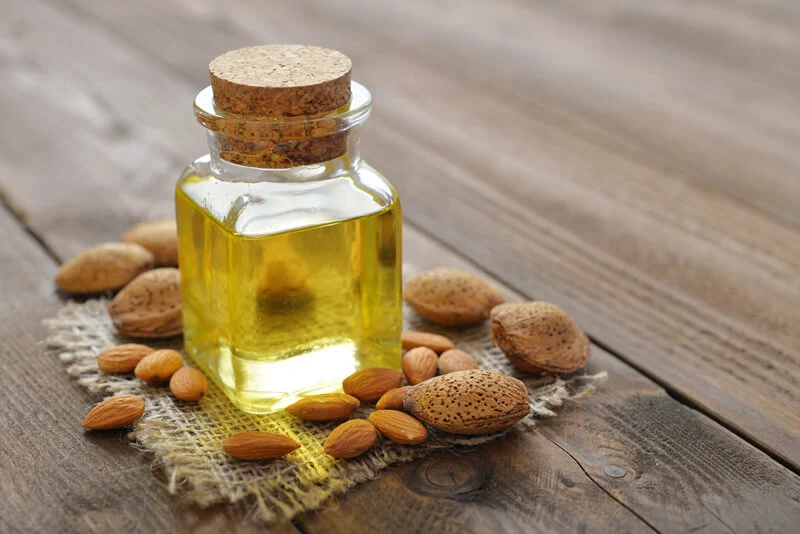
Straight answer first: no clinical trial has shown almond oil grows new hair. Reputable sources covering this ingredient are consistent on that point, and it’s worth knowing before the rest of this piece, not after.
The Growth Claim, Put to the Test
Almond oil is genuinely rich in vitamin E, oleic acid, and linoleic acid, and it does carry some biotin. That’s not in dispute. What’s missing is any clinical trial connecting that nutrient profile to actual follicle stimulation or measurable hair growth. Compare that to rosemary oil, which at least has one small randomized trial behind it, and this one doesn’t have an equivalent to point to.
Biotin gets cited constantly in the marketing around this ingredient, and it’s mostly beside the point. Biotin deficiency can affect hair, true, but most people aren’t deficient, and applying it topically through an oil doesn’t have strong evidence of reaching the follicle in a way that matters. Vitamin E content matters more here, just for a different reason than “growth,” and it’s worth understanding why before deciding whether the ingredient earns a place in your routine at all.
None of this makes the ingredient a waste of money. It just means the marketing copy and the actual research are answering two different questions, and conflating them is how expectations end up mismatched from the start.
The Real Payoff: Shine, Strength, and Scalp Comfort
Here’s where it earns its reputation, legitimately. As an emollient, it smooths the hair shaft and cuts down on the friction that causes breakage and split ends during brushing or styling. Less breakage means hair holds onto its length longer, which reads as “growth” to a lot of people even though nothing new is actually sprouting from the scalp.
The scalp benefits are real too, if modest. It calms irritation and moisturizes dry skin, which helps with flaking and itchiness, sometimes linked to conditions like dandruff or mild scalp psoriasis. None of this is a cure for those conditions. It’s supportive, not corrective, and it works better alongside a proper treatment than instead of one.
Shine and manageability round out the actual case for using it. The fatty acid profile fills in small gaps along the hair cuticle, which is what produces that smoother, glossier look people notice within a wash or two, well before anything resembling a growth timeline would even be relevant.
Stacked Against Rosemary, Castor, and Coconut
| Oil | Growth Evidence | Best Actual Use |
| Almond Oil | None (clinical trials) | Shine, breakage reduction, scalp comfort |
| Rosemary Oil | One small trial, comparable to minoxidil | Scalp stimulation, possible density support |
| Castor Oil | Anecdotal | Scalp conditioning, popular reputation |
| Coconut Oil | None (clinical trials) | Deep conditioning, coarse or damaged hair |
Almond oil sits firmly in the conditioning category rather than the growth category, and that’s not a knock against it. It’s just a more accurate label than what shows up on most bottles.
The Allergy Risk Nobody Mentions on the Bottle
Nut allergies matter here in a way they don’t with most hair oils. Anyone with a tree nut allergy should skip almond oil entirely, on the scalp or anywhere else, since topical exposure can trigger a reaction even without ingestion. A patch test on the inner arm 24 to 48 hours before a full application is worth the ten minutes it takes, especially for anyone who’s never used it before.
Heavy application before heat styling is worth avoiding too, since oil left on the hair shaft can interact poorly with high heat, sometimes leaving strands looking scorched rather than smooth. Applying it after styling, or well ahead of it as an overnight treatment, sidesteps that problem entirely.
Anyone currently on a course of treatment for a diagnosed scalp condition should mention it to a dermatologist before adding a new oil into the mix as well, since even gentle, natural ingredients can interact with prescription topicals in ways that are worth checking first rather than discovering by accident.
Conclusion
A small amount, warmed between the palms, applied from mid-length to ends after washing traps in moisture and cuts down on the frizz that shows up through the day. For scalp benefit specifically, massage a few drops directly into the scalp and leave it on for twenty to thirty minutes before rinsing, or longer as an overnight treatment once a week.
This particular almond oil is sold pure rather than pre-diluted, which suits either use case, scalp treatment or length conditioning, without paying for a blend built around a claim the ingredient can’t actually back up.
Almond oil earns a place in a hair routine for what it genuinely does well: less breakage, more shine, a calmer scalp. Expecting it to grow hair that isn’t growing on its own is where the disappointment starts, and that expectation was never coming from the research in the first place.