Introduction
The phrase new driveway rule change has quickly become a high-interest search topic in the UK because it touches a real everyday problem rather than a distant policy debate. Millions of people live in terraced streets, flats, and built-up neighbourhoods where a private driveway is not available, yet they still want the convenience and lower running costs that come with charging an electric vehicle at home. Recent UK reporting and government announcements have pushed this issue into the spotlight by focusing on easier access to cross-pavement charging solutions.
What makes the story especially important is that home charging is usually far cheaper than relying on public charging networks. Government and news sources have highlighted that domestic charging can bring electricity costs down dramatically, helped further by lower VAT on home energy than on public charging. That gap has made access to a safe, lawful home-charging route more than just a convenience issue. It has become a fairness issue for households without off-street parking.
This article explains the rule change in plain English, shows why it matters to households without driveways, explores planning permission and council involvement, and looks at costs, grants, risks, and practical next steps. The goal is to give readers a complete and readable guide that feels useful whether they are already driving an EV, considering the switch, or simply trying to understand what the new driveway rule change could mean for their street and their budget.
What the New Driveway Rule Change Actually Means
Despite the wording, the new driveway rule change is not mainly about every homeowner suddenly building a new driveway at the front of their property. The heart of the issue is electric vehicle charging for homes that do not have private off-street parking. The UK government has been consulting on, and is now publicly promising, changes to permitted development rules so that cross-pavement charging solutions and associated domestic chargepoints can be installed more easily without the full planning burden that has often slowed projects down.
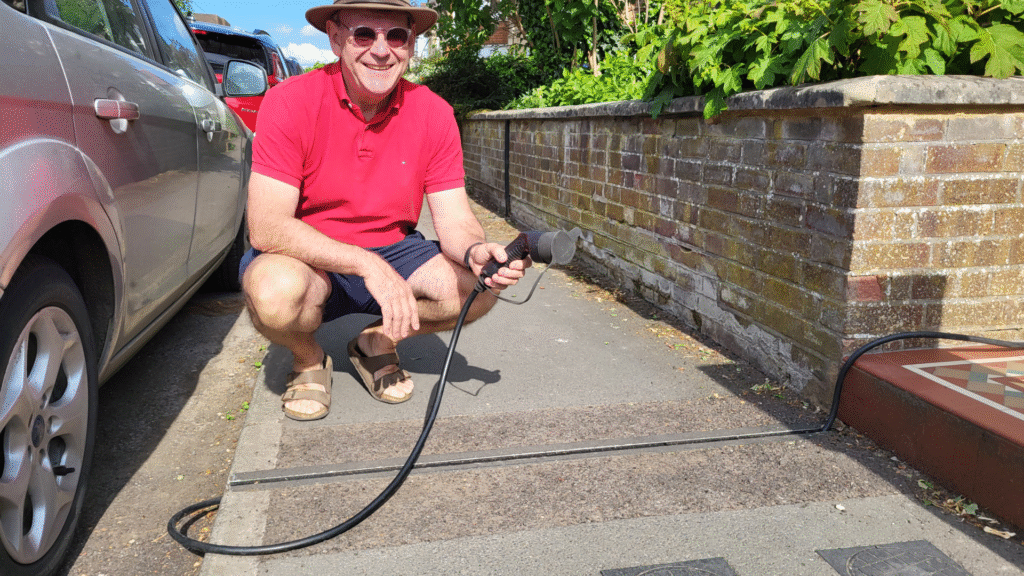
In practical terms, this means a household may be able to run a charging cable from the home to a car parked outside by using a covered channel or “gully” built into the pavement, rather than leaving a cable stretched unsafely across a public footway. News coverage in April 2026 reports that the government intends to legislate in summer 2026 to allow these gullies without the need for planning permission, which would remove one of the biggest procedural hurdles facing EV drivers without driveways.
That distinction matters because many readers search for driveway rule updates when what they really want is an answer to a more personal question: can I charge my electric car at home if I do not have a driveway? The new policy direction suggests the answer is becoming more positive, but the change should still be understood as a targeted EV access reform, not a blank cheque for every type of driveway or pavement alteration.
Why Homes Without Driveways Are at the Centre of This Story
Homes without driveways sit at the centre of this discussion because they have long faced a built-in disadvantage in the move toward electric vehicles. Drivers with a private driveway can usually install a charger at home and benefit from cheaper overnight tariffs and more convenient charging routines. By contrast, drivers who park on the street have often had to depend on public chargers, on-street infrastructure that is not always nearby, or awkward workarounds that councils may not permit. That imbalance is exactly what current UK reforms are trying to address.
The scale of the issue is large enough to shape national policy. Reporting on the government’s push for pavement gullies notes that about 9.3 million UK households do not have an off-street parking space. That is not a niche minority. It is a major section of the housing stock, especially in older urban areas where terraced homes and dense street parking are common. Any serious attempt to widen EV adoption in Britain has to deal with that reality.
This is why the debate has moved beyond environmental messaging and into practical household economics. For many people, the question is no longer whether electric cars are interesting. It is whether the switch can be made affordable and workable in the real street layout they already live with. By making lawful home-style charging more accessible to residents without driveways, ministers are trying to remove one of the most stubborn everyday barriers to EV ownership.

How Pavement Gullies and Cross-Pavement Charging Work
A pavement charging gully is essentially a narrow channel cut into the pavement surface with a cover over it. The idea is simple: instead of leaving a charging cable across the footpath, the cable runs through the protected channel from the home side to the kerbside, where the vehicle is parked. This design aims to reduce trip hazards, improve safety for pedestrians, and give residents a more orderly way to use domestic electricity for charging.
The daily use case is easy to imagine. A homeowner parks outside or near the property, opens the covered channel, feeds the charging cable through the gully, plugs the vehicle in, and then closes or secures the surface cover so the pavement remains passable. Councils and specialist providers have already been piloting or installing these systems in various areas, which is one reason the government has moved toward a broader permitted-development framework rather than treating each case as a novel exception.
What makes gullies especially appealing is that they try to balance two competing needs. On one side is the driver who wants access to lower-cost domestic charging. On the other side is the public right to a safe, usable pavement. The gully approach is popular because it speaks to both needs at once. It does not eliminate every concern, but it is far more acceptable than an exposed cable laid across a walkway.
Planning Permission and the Rules That Are Changing
Planning permission has been one of the most confusing parts of this subject, which is why search interest around the new driveway rule change has grown so quickly. Under current government consultation documents, permitted development rights are being reshaped to allow the installation of cross-pavement solutions and associated domestic chargepoints. Permitted development rights matter because they let certain works go ahead without a standard planning application, which can save both time and money.
Government statements issued in late 2025 made the policy direction clear: ministers wanted to consider removing the planning permission currently needed for discreet cross-pavement charging gullies, while also making it easier for renters and leaseholders to install chargepoints in other contexts. By April 2026, national reporting stated that legislation was expected in summer 2026 to make these gullies possible without planning permission, showing the proposal had moved from consultation language toward active legislative commitment.
However, readers should not mistake “no planning permission” for “no rules at all.” Even where planning hurdles are reduced, there may still be highway permissions, installer standards, technical safety requirements, and local council procedures to deal with. The public pavement remains a managed public space, and that means local authorities still have a role. The smartest interpretation of the change is that it reduces red tape, but it does not remove every layer of oversight.
Who Stands to Benefit Most
Homeowners in streets without off-street parking are the clearest winners if the reform works as intended. For this group, the change could turn an impractical idea into a realistic charging routine. Instead of depending entirely on public infrastructure, they may finally be able to charge from home electricity while parking on the road outside. That shift can improve convenience, lower weekly running costs, and remove one of the most frustrating disadvantages of living in a property without a driveway.
Renters and flat owners may also benefit, especially because the government has separately expanded grant support and signalled a broader effort to make charging easier for people who do not fit the traditional suburban-driveway model. A February 2026 government announcement said flat owners, landlords, renters, businesses, and homeowners without driveways could get grants of up to £500 per charge point, with support extended until March 2027. That broadens the audience well beyond owner-occupiers in detached houses.
Landlords and leasehold property stakeholders are part of the picture too, although the practical path may still be more complex for them. Ownership, permission to alter a building, rights over parking spaces, and management-company approval can all affect what is possible. Even so, the wider direction of policy suggests the government wants fewer people excluded from home-style charging simply because of tenure type, housing design, or the absence of a private drive.
Costs, Grants and the Real Money Question
Cost is one of the biggest reasons this story has gained traction. It is not enough for a charging option to be legal. It also has to make financial sense. The good news for drivers is that the government has linked its policy shift with grant support and repeated messaging around lower domestic charging costs. Official announcements in 2026 say eligible groups can claim up to £500 per charge point, and that expanded access to home charging can help drivers tap cheaper domestic electricity rates.
News reports suggest that a full gully installation with labour can come to around £1,000, although the exact figure will vary by location, pavement design, installer, and any council-specific requirements. That means a grant may not wipe out the whole bill, but it can materially reduce the upfront burden. For many households, the investment becomes easier to justify when weighed against the ongoing cost difference between home charging and frequent use of public rapid chargers.
The running-cost advantage is central to the appeal. Government material says some drivers can run an EV for as little as 2p per mile using domestic rates, while a January 2026 campaign highlighted possible running-cost savings of up to £1,400 a year compared with a similar petrol car. News coverage also notes that home electricity is charged at 5% VAT while public charging usually faces 20% VAT, which helps explain why people without home-charging access often feel financially penalised.
Why Public Charging Is Not Always a Good Enough Substitute
Public charging has improved in coverage, visibility, and technology, but it is not a complete substitute for home charging in the eyes of many drivers. Public chargers can be more expensive, may require detours, and often turn charging into a separate task rather than a quiet overnight routine. For drivers with unpredictable schedules or family demands, that difference matters. Convenience is not a luxury in this context. It shapes whether owning an EV feels smooth or stressful.
There is also a psychological factor. People are more likely to switch to an electric car when they feel confident they can charge it regularly without friction. If every charge feels like a hunt for infrastructure, confidence drops. The government has openly recognised charging access as a barrier to adoption, which is why it has paired planning reform with grants, signage changes, and wider messaging aimed at reducing anxiety about where and how drivers will plug in.
For households without driveways, then, the new rules are not just about convenience. They are about parity. Drivers who cannot charge at home have historically paid more and planned more. Cross-pavement charging does not solve every problem, but it narrows the gap between households with a private driveway and households living in streets where on-road parking is the only realistic option. That is why the reform is being treated as meaningful rather than cosmetic.
Practical Limits, Objections and Local Concerns
Even a sensible reform brings practical concerns, and this topic is no exception. Some councils have historically been cautious about cross-pavement charging because of pedestrian safety, maintenance responsibilities, and the simple question of who remains responsible when a private charging arrangement touches public land. Those concerns have not disappeared. They are one reason policy has moved gradually, through consultation, pilot experience, and targeted changes to permitted development rules rather than an instant nationwide free-for-all.
A second issue is parking certainty. A resident may live in a home without a driveway, but that does not guarantee they can always park directly outside the property. On crowded streets, available space may shift daily. If a driver cannot usually park close enough to use the gully, the value of the installation drops. This is one reason the reform will work brilliantly for some households and only moderately well for others. The street pattern matters almost as much as the legal framework.
There are also fairness and maintenance questions. If some councils approve installations quickly and others remain hesitant, the country could still end up with a postcode lottery. Likewise, if local authorities worry about repairing pavements, policing standards, or resolving disputes after damage, approvals may still move cautiously. So while the new driveway rule change is promising, it should be seen as a major step forward rather than a magical end to every obstacle.
What Homeowners Should Check Before Doing Anything
Before acting, homeowners should first check whether their property layout genuinely suits cross-pavement charging. The most promising situations are usually homes where the resident regularly parks close to the front boundary and where the pavement arrangement is straightforward. A narrow, predictable route from the property to the kerb is easier to assess than a complicated frontage, heavy footfall zone, or unusual parking pattern. Legal reform helps, but geometry and routine still decide how practical the setup will be.
The second step is to check local guidance. Even with more generous permitted development rights, councils may still publish their own process for highway approvals, safety standards, or acceptable products. Some councils already have experience with approved gully providers, while others may still be developing policy. Homeowners should also verify whether an OZEV-related grant, installer requirement, or property-specific condition affects their application or the economics of installation.
Finally, it is wise to think beyond the first installation bill and ask a broader lifestyle question. Will the setup work through the week, in winter, when parking is tight, or when the household changes car? A good charging solution should fit daily life without constant improvisation. The best decisions come from combining the new policy opportunity with practical honesty about how the street works and how the home is actually used.
What This Means for Renters, Leaseholders and Landlords
Renters are often left out of property-policy stories, but here they are directly named in government support announcements. The February 2026 grant update said renters, flat owners, residential landlords, households with on-street parking, and businesses could all receive higher grants of up to £500 per charge point. That matters because it signals a deliberate effort to spread EV access beyond traditional owner-occupier households with simple parking arrangements.
Leaseholders and flat residents may still face added complexity, however, because a legal right to avoid a planning application does not automatically give someone the right to alter a building, shared land, or common access areas. Freeholders, management companies, lease terms, and parking allocations can all shape what is possible. In other words, the policy direction is becoming more inclusive, but housing tenure can still create real-world friction that has nothing to do with national planning reform.
For landlords, the shift is both a challenge and an opportunity. On one hand, they may need to think more carefully about charging provision for existing and future tenants. On the other hand, a property that supports convenient EV charging may become more attractive in the years ahead. As the market matures, charging access could start to resemble broadband quality or energy efficiency: not always the deciding factor, but increasingly part of what tenants and buyers expect.
How This Rule Change Fits into the Wider UK EV Push
The new driveway rule change makes most sense when viewed as part of a larger UK strategy rather than a one-off pavement measure. The government has been combining planning reform, grant support, public messaging, and infrastructure funding to make electric driving easier and more attractive. The same policy stream includes support for chargepoint grants, work on permitted development rights, encouragement for councils to adopt gullies, and broader public campaigns highlighting the savings available to EV drivers.
This broader context also explains why ministers speak about removing barriers rather than merely promoting technology. EV adoption does not depend on one factor alone. It depends on vehicle price, charger access, running costs, and public confidence. News coverage in April 2026 even linked the gully reform to wider concern about fossil-fuel price volatility and household energy pressure, showing that the policy is being framed not just as green ambition, but as economic resilience and household protection too.
That wider framing gives the story durability in search. People searching the new driveway rule change are often doing more than following a news headline. They are trying to judge whether the UK is finally designing EV policy around the way ordinary British housing actually works. In that sense, the reform is symbolic as well as practical. It shows a shift from idealised infrastructure talk toward solving a problem visible on everyday pavements.
Common Misunderstandings to Avoid
One common misunderstanding is that the reform means anyone can now build or convert a driveway without restriction. That is not what current official materials and reporting describe. The reform is focused on cross-pavement charging solutions and related domestic chargepoints, not unlimited freedom to reshape the front of every property. Readers who confuse those two ideas may end up expecting rights the policy never promised in the first place.
Another misunderstanding is the idea that planning reform removes the council from the equation completely. In reality, the government’s own consultation language is about permitted development rights for specific charging-related works, while public pavements remain under local oversight. Highway consent, product suitability, and safety standards can still matter. Anyone reading headlines alone could miss that nuance and assume all local processes vanish the moment legislation changes.
A final misunderstanding is that every home without a driveway will benefit equally. Some homes have an ideal parking pattern, while others do not. Some councils have experience and approved routes, while others are still cautious. Some households will save quickly, while others may decide the upfront cost is not worth it. The reform is best understood as a powerful enabling measure, not a uniform outcome that looks identical on every street in Britain.
Conclusion
The new driveway rule change matters because it tackles a problem that has been both ordinary and expensive. For years, drivers without off-street parking have faced a simple disadvantage: they often could not access the cheapest and easiest form of EV charging. By moving toward permitted development for cross-pavement charging gullies, and by pairing that with grant support and broader pro-EV measures, the government is trying to make the transition to electric driving more realistic for the shape of UK housing as it actually exists.
At the same time, the reform should be read with clear eyes. It promises less red tape, not zero complexity. Local councils, parking patterns, installer quality, property tenure, and pavement safety will still influence what happens on the ground. Even so, this is a meaningful change. It moves the debate from “people without driveways are stuck” to “people without driveways may finally have a workable route to home-style charging.” That is why this topic is likely to remain one of the most important UK EV policy stories of 2026.
FAQs
What is the new driveway rule change in the UK?
The phrase usually refers to the government’s move to make cross-pavement EV charging easier for homes without driveways. The policy direction described in official consultation material and recent reporting is to allow cross-pavement charging gullies and associated domestic chargepoints through permitted development rights, reducing the need for a standard planning application in qualifying cases.
Does the new driveway rule change mean I can build a driveway without permission?
Not necessarily. The current reform discussion is mainly about EV charging access for properties without private off-street parking, not a blanket right to create a brand-new driveway or alter every frontage without controls. Readers should separate driveway construction rules from the specific changes being proposed for charging gullies and domestic chargepoints.
Do I still need planning permission for a pavement charging gully?
Recent official and media sources indicate the government is moving toward allowing these gullies without planning permission through permitted development rights. However, that does not automatically remove every approval step. Highway permissions, local council processes, and technical safety requirements may still apply depending on the property and the authority involved.
How much can a gully installation cost?
Reported figures suggest the total cost can be around £1,000 when labour is included, although prices can vary depending on the site and installer. Grants can reduce that burden, and the government says eligible groups can receive up to £500 per charge point under the updated support announced in February 2026.
Why is home charging cheaper than public charging?
The advantage comes from both tariff structure and tax treatment. Government and news sources point to lower domestic electricity rates and note that home energy carries 5% VAT, while public charging generally carries 20% VAT. That difference can make home charging substantially more affordable over time.
Who can benefit from the current grants?
Government guidance says support has been extended to renters, flat owners, residential landlords, households with on-street parking, and businesses, with grants of up to £500 per charge point available until March 2027. That wider eligibility is designed to help people who were previously disadvantaged by not having a conventional driveway setup.
Will renters and leaseholders find it easier to install charging?
In many cases, yes, but the answer depends on more than planning policy. The government has signalled easier charging access for renters and leaseholders, yet tenancy terms, lease conditions, management-company consent, and parking rights can still affect what is possible. The reform improves the landscape, but it does not erase private property relationships.
Is this change enough to solve EV charging for everyone without a driveway?
It is a major improvement, but it is not a perfect universal solution. Some households do not reliably park near their home, some councils may move faster than others, and some pavements or frontages may be harder to adapt. The change reduces a serious barrier, but practical outcomes will still vary from one street and property to another.
You may also read: What the 25th Amendment Covers