Introduction
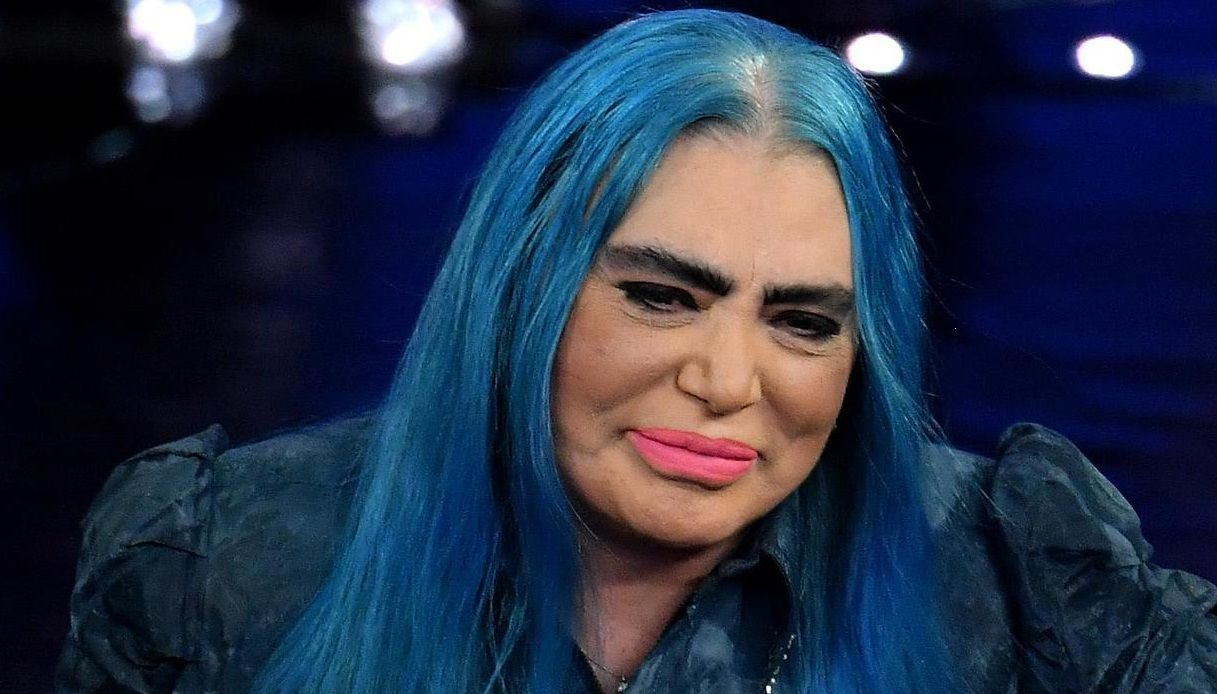
Loredana Bertè has held public attention for decades because her career is larger than a simple timeline of albums and appearances. Born on 20 September 1950 in Bagnara Calabra, she grew into one of Italy’s most recognisable singers, songwriters, and performers, known for moving between pop, rock, reggae, and theatrical stage expression. Official biographical material and major reference sources both present her as an artist whose long career has been shaped by bold stylistic choices, memorable songs, and an unusually resilient public image.
For readers in the UK and elsewhere who may know Italian music only in fragments, her story is especially interesting because it combines celebrity, experimentation, family history, personal setbacks, and cultural staying power. She is not remembered only for one era or one chart run. Instead, she remains relevant because every generation seems to rediscover a different side of her: the rebellious singer, the emotional interpreter, the pop provocateur, the television personality, or the survivor who keeps returning to the stage.
Who Is Loredana Bertè?
At the most basic level, she is an Italian singer-songwriter and actress whose career stretches back to the late 1960s and continues into the present. Standard reference sources describe a performer who collaborated with prominent Italian writers and musicians, crossed genre boundaries, and built a public identity that never looked or sounded conventional. That description matters because it explains why she is often discussed as more than a singer of hits. She became a symbol of attitude, individuality, and emotional risk in a music culture that has often rewarded polish and restraint.
Her name also carries family and cultural weight. She was the sister of acclaimed singer Mia Martini, and that connection places her inside one of the most emotionally charged family narratives in Italian popular music. At the same time, she is very much her own figure, with a performance style that leaned into disruption, sharp self-presentation, and fearless reinvention. That combination of personal mythology and genuine artistic longevity is a major reason why search interest around her biography remains strong.
Early Life and Family Roots
Official biographical material says she was the third of four daughters and spent her childhood first in Porto Recanati and later in Ancona, before her family situation changed and she moved to Rome with her mother and sisters. Both parents were teachers, and the background described by the official site is not one of glamour but of ordinary beginnings. That matters because many later elements of her public image, including toughness and independence, become more meaningful when placed beside a comparatively modest early life.
Rome became the real starting point of her artistic formation. The official biography explains that after her parents separated, she began studying at an art institute while also pursuing entertainment work, supported by the friendship circle that included Renato Zero and her sister Domenica, later famous as Mia Martini. The move to Rome did not instantly produce stardom, but it put her inside the right creative environment. It gave her access to theatre, television, music, and the kind of youth culture that could turn personality into performance.
Age and Personal Profile
Anyone searching for a quick personal profile usually starts with age, and that part is clear. Because she was born on 20 September 1950, Loredana Bertè is 75 years old as of April 2026. She is Italian, was born in Bagnara Calabra, and is commonly described in reliable sources as a singer, songwriter, actress, and performer whose active years span from 1969 to the present. That kind of longevity is not a decorative fact. It is the central frame through which her public story should be read.
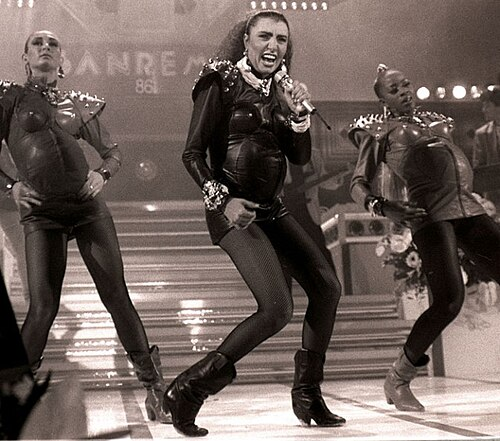
Her profile also stands out because it mixes artistry with image. Reference sources repeatedly note her eccentric stage clothing and genre range, from pop and rock to reggae and funk. Even readers who do not know her discography often recognise the outlines of her persona: outspoken, theatrical, and emotionally direct. In search terms, that helps explain why people do not look only for one fact such as age or songs. They look for the whole package, because her identity has always been presented as inseparable from the music.
How Her Career Began
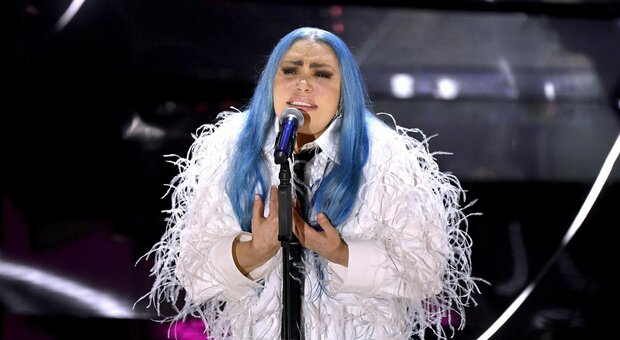
Her earliest professional years were built in performance spaces that demanded flexibility rather than immediate stardom. The official biography says she appeared in television and radio contexts such as Bandiera Gialla and Stasera Rita, and that she made her stage debut in the Italian version of Hair in 1969. These details are important because they show she did not arrive fully formed as a recording artist. She came through performance culture first, learning how to occupy a stage, hold attention, and turn personality into presence before she became widely known for records.
The transition to recording took shape in the early 1970s. According to the official site, producers Alfredo Cerruti and Enrico Riccardi helped her make the first LP, Streaking, released in 1974. That debut did not instantly make her a legend, but it gave her a foothold in the industry and positioned her for the song that would change everything. The official biography is very direct on this point: soon after, “Sei bellissima” arrived and altered her trajectory for good. That is the moment when background promise became public impact.
Breakthrough Years and Rise to Fame
The mid to late 1970s were the years in which her name moved from the margins into Italian mainstream recognition. “Sei bellissima,” released in 1975 and included on the 1976 album Normale o super, became the breakthrough most biographies return to first. From there, later singles such as “Dedicato” and “E la luna bussò” helped shape a run of songs that expanded both her audience and her artistic credibility. She was no longer simply a striking newcomer. She was developing into a distinctive voice with a catalogue that kept widening in mood and texture.
The early 1980s took that success to another level. Official and reference sources note that she spent time in New York, met Andy Warhol, and saw the Factory contribute to the video for “Movie,” one of the more unusual intersections between Italian pop and global art-world mythology. Around the same period, she scored major success with songs such as “In alto mare” and “Non sono una signora,” the latter becoming one of the signature titles of her career. These years were not only commercially strong; they defined her legend as an artist who could be daring without losing public reach.
Loredana Bertè Songs and Career Milestones
Any serious article on her has to stop and listen closely to the songs, because that is where the reputation was built. “Sei bellissima” remains one of the foundational titles, a song so central that later official material still circles back to it in live settings and commemorative projects. “Dedicato,” “E la luna bussò,” “In alto mare,” “Il mare d’inverno,” and “Non sono una signora” are also part of the essential map. Together they show the breadth of her catalogue: intense, melodic, emotionally sharp, sometimes playful, sometimes wounded, and often more daring than standard pop structures would suggest.
Another reason the catalogue matters is that it tracks her restlessness. Reference sources describe her as an artist who moved through rock, pop, reggae, and funk rather than remaining fixed in a single sound. That helps explain why different audiences remember different songs as definitive. One listener may think first of the rebellious punch of “Non sono una signora,” while another may return to the winter melancholy of “Il mare d’inverno” or the rhythmic lift of “In alto mare.” Her songbook works because it leaves room for contradiction, and contradiction is one of the deepest patterns in her art.
The catalogue has also kept growing in ways that connect the past with newer listeners. Official biography pages highlight later projects including the album LiBerté, television exposure, collaborations, remastered releases, and more recent singles such as “Figlia di…,” “Sogno incredibile,” and “Pazza.” That continued output is significant for SEO intent because it shows she is not only a legacy act remembered for older hits. She is an artist whose newer material still generates conversation, especially when tied to major television or festival appearances.
Musical Style and Artistic Identity
Her voice is one of the main reasons she has lasted. Even in short biographical summaries, she is described as singular rather than interchangeable, and that is exactly the right way to understand her. She does not fit neatly into a single vocal stereotype. At times she sounds rough-edged and confrontational, at times wounded and intimate, and at times almost defiantly playful. This versatility allowed her to sing material that might have felt too theatrical for one performer and too raw for another, yet completely convincing in her hands.
Image has always mattered too, but not in a shallow way. Reliable sources consistently mention the eccentric clothing and strong visual signature that became part of her stage identity. The clothes, hair, gestures, and attitude were not decorations added after the music was written. They were extensions of the music’s refusal to be neatly behaved. In that sense, her artistry anticipated a modern understanding of pop as total presentation, where sound, style, body language, and personal mythology all work together. She made spectacle feel expressive rather than empty.
What makes her artistic identity especially durable is that it never depended on chasing one fashionable era. Instead of becoming trapped inside a single successful formula, she kept modifying the balance between vulnerability and defiance. That is why she can be read as rebellious without feeling one-dimensional. There is power in the image, but there is also bruised feeling beneath it. The audience hears both. That emotional duality is a major reason she is still discussed as an icon rather than merely remembered as an old star.
Loredana Bertè Husband and Relationship History
Searchers often want a direct answer about marriage, and the clearest public association is with tennis legend Björn Borg. Entertainment databases and biographical summaries identify Borg as a former spouse, placing the marriage around the turn of the 1990s. That relationship remains the one most commonly surfaced in public discussion because Borg was already globally famous, and the pairing linked two high-profile worlds: Italian music and international sport. Even now, much of the online interest around her private life still routes through that marriage.
Some public databases and archival image records also indicate an earlier marriage to Roberto Berger. Because sources differ in how much detail they provide, the safest summary is that biographies commonly list two marriages, with Borg being the more publicly known former husband. That distinction matters for accurate writing. A good biography should not treat her personal life as gossip material, but it should also recognise that marriage and relationships became part of the public narrative around her, especially in periods when media attention intensified around celebrity pairing and separation.
The best way to handle this topic is with proportion. Her relationship history is relevant because readers search for it and because it forms part of the celebrity record. Yet it should never overshadow the music, which is the larger reason she remains significant. Reducing her life to a husband question misses the more interesting truth: public curiosity about the marriage exists mainly because she had already become a major figure in her own right. The biography is not a footnote to someone else’s fame. It is the other way around.
Challenges, Loss and Reinvention
No honest biography of her can ignore the darker passages. One of the deepest emotional ruptures in her story is the death of her sister Mia Martini in 1995, an event that reference sources describe as devastating for her. Because the two sisters occupy such an important place in Italian music history, that loss is never just a private detail added to a public career. It changes the emotional atmosphere around her later work and public image. The grief sits behind many readings of her resilience and explains why her survival carries unusual emotional weight.
Career challenges also formed part of the long arc. The 1990s and 2000s did not follow a simple upward line, yet official biography pages make clear that she kept working across theatre, recordings, collaborations, and live performance. In the new millennium she appeared in stage productions, returned to recording projects, and later received renewed recognition through television and music releases. The important point is not that every phase was equally dominant. It is that she repeatedly found ways to re-enter public conversation without needing to erase older versions of herself.
Reinvention became even more visible in the 2020s. Official sources describe her involvement in television, charity activity during the pandemic period, new singles, resumed tours, and renewed festival visibility. That pattern shows an artist who does not merely survive by nostalgia. She repositions herself for the present. The image stays recognisable, but the context keeps changing. That is a rare skill in any music industry, and it helps explain why later chapters of her career still feel active rather than archival.
Loredana Bertè and Her Influence on Italian Music
Influence is sometimes an overused word in celebrity writing, but in her case it is justified. She helped normalise the idea that an Italian female performer could be aggressive, ironic, sensual, theatrical, and emotionally bruised without being forced into one safe category. Sources describe a catalogue that crossed styles and a stage identity that embraced eccentricity rather than smoothing it away. That combination opened cultural room for later artists who wanted to perform strength and vulnerability at the same time, rather than choosing one role approved by tradition.
Her contribution also matters musically, not only visually. Songs such as “E la luna bussò” are repeatedly cited in discographic material as important moments, and broader biographies note her experimentation with reggae, funk, rock, and pop. In national music cultures, influence often comes from making a sound feel possible before it becomes standard. She did that several times. She was willing to try tonal and stylistic blends that could have looked commercially risky, then turn them into defining parts of her repertoire. That is one reason critics and fans continue to treat her catalogue as living material rather than museum content.
There is also an influence of attitude that cannot be reduced to sales or chart history. Official materials from recent years still frame her as a figure associated with rights, freedom, and refusal to conform. Whether one reads that in political terms, gender terms, or purely artistic terms, the message is similar: she came to represent a certain kind of refusal. She would rather be unmistakable than agreeable. In cultural memory, that often lasts longer than ordinary popularity, because it gives later audiences a model as well as a soundtrack.
Recent Work and Why She Still Matters
Recent visibility is one of the strongest reasons interest in her remains high. Official pages document continued touring into 2025 and 2026, and the site’s tour listings show that she is still presented as an active live artist rather than a retired legend. That matters for anyone asking whether she still performs. The answer is yes, and not in a symbolic one-off sense. Her official channels continue to publicise dates, projects, and ongoing activity, showing a performer who remains in motion.
Her recent song “Pazza” added another layer to that relevance. Reliable sources show the track was released in 2024, entered Sanremo 2024, and received major attention, including the Critics’ Prize named after Mia Martini. For a long-established artist, that kind of festival moment is significant because it connects biography, family history, and contemporary visibility all at once. It tells newer listeners that she is not simply someone their parents admired. She is still capable of stepping into a current national conversation with new work.
There is also a modern discoverability factor at work. Streaming, television clips, social media snippets, festival performances, and official video releases make it easy for younger audiences to encounter her outside the usual album-by-album route. Once they arrive, they often find more than a curiosity from another generation. They find a performer whose confidence, drama, and emotional directness feel strikingly contemporary. That is why her relevance has lasted. She can be historical and immediate at the same time.
Legacy and Public Image
Legacy, in her case, is built from several strands rather than one single triumph. There is the legacy of the hitmaker, anchored by songs that remain instantly identifiable inside Italian pop culture. There is the legacy of the stylist, whose visual identity made every appearance feel authored. There is the legacy of survival, shaped by family tragedy, career turbulence, and repeated returns. And there is the legacy of cultural attitude, the sense that she represented a way of being public without becoming obedient. When those strands are woven together, they create a far stronger image than fame alone ever could.
Her public image has always balanced excess with authenticity. In lesser careers, spectacle can feel like camouflage for weak material, but that is not the case here. The spectacle worked because there were real songs beneath it and real biography behind it. The glamour had edge, the rebellion had scars, and the theatricality had musical substance. That balance is why she continues to interest both casual readers and serious music followers. She can be approached as a personality, but she rewards being studied as an artist.
For UK readers especially, her legacy may be best understood by comparison with artists whose importance exceeds language barriers. One does not have to know every lyric to recognise presence, conviction, and cultural consequence. She belongs to that category of performer whose biography helps explain the songs, while the songs keep the biography from becoming static. That circular power is rare. It is why her name still prompts questions about age, husband, songs, and identity instead of fading into niche nostalgia.
Conclusion
Loredana Bertè remains compelling because her life joins longevity with intensity. The bare facts are straightforward enough: born in 1950, active since the late 1960s, widely known for landmark songs, associated in public memory with famous relationships, and still visibly active through recent releases and tours. But facts alone do not explain the depth of her appeal. What makes her story endure is the way her career turns contradiction into coherence. She can be glamorous and wounded, confrontational and melodic, theatrical and sincere, familiar and still surprising.
That is why a search for age, husband, songs, and biography leads to more than a list of data points. It leads to an artist whose work and public image have carried unusual emotional force across decades. For biography writers, that is the key takeaway. The right article should not treat her as a curiosity from another era. It should present her as a continuing cultural figure whose music, image, and resilience still matter, both to those who grew up with her and to those discovering her now.
FAQs
How old is Loredana Bertè?
She was born on 20 September 1950, which makes her 75 years old as of April 2026. That date appears consistently in major reference sources and official biographical material.
Who was her husband?
The former husband most commonly mentioned in public sources is tennis star Björn Borg. Entertainment databases and biographical sources also list an earlier marriage to Roberto Berger, so the most accurate summary is that public records commonly mention two marriages.
What are her most famous songs?
Among the titles most strongly associated with her are “Sei bellissima,” “Dedicato,” “E la luna bussò,” “In alto mare,” “Il mare d’inverno,” and “Non sono una signora.” These songs appear repeatedly across biographies, discographies, and official pages because they define the public memory of her catalogue.
Why is she considered important in Italian music?
She is widely regarded as important because she combined long-term commercial visibility with genre experimentation and an unusually bold stage identity. Reference sources emphasise her movement across pop, rock, reggae, and funk, as well as the distinctive visual style that made her one of Italy’s most recognisable performers.
Is she still performing?
Yes. Her official website continues to list tours and theatre dates, including activity promoted through 2025 and 2026, which shows she remains active as a live performer rather than existing only through archival reputation.
What happened with “Pazza”?
“Pazza” was released in 2024 and served as her Sanremo 2024 entry. Reliable sources indicate that the song drew major attention, placed in the competition, and received the Critics’ Prize named after her sister Mia Martini, making it one of the most important recent moments in her later career.
What kind of music does she sing?
She is usually described as an artist whose work spans pop, rock, reggae, funk, and other crossover styles. That range is part of her appeal, because it allowed her to avoid being trapped inside one era or one formula.
Why does her biography still attract attention?
Her biography continues to attract readers because it combines enduring songs, a strong visual identity, famous relationships, family tragedy, and real recent activity. In other words, she is not only historically significant. She also remains current enough to keep generating fresh interest.
You may also read: Oleksandra Oliynykova face tattoos explained