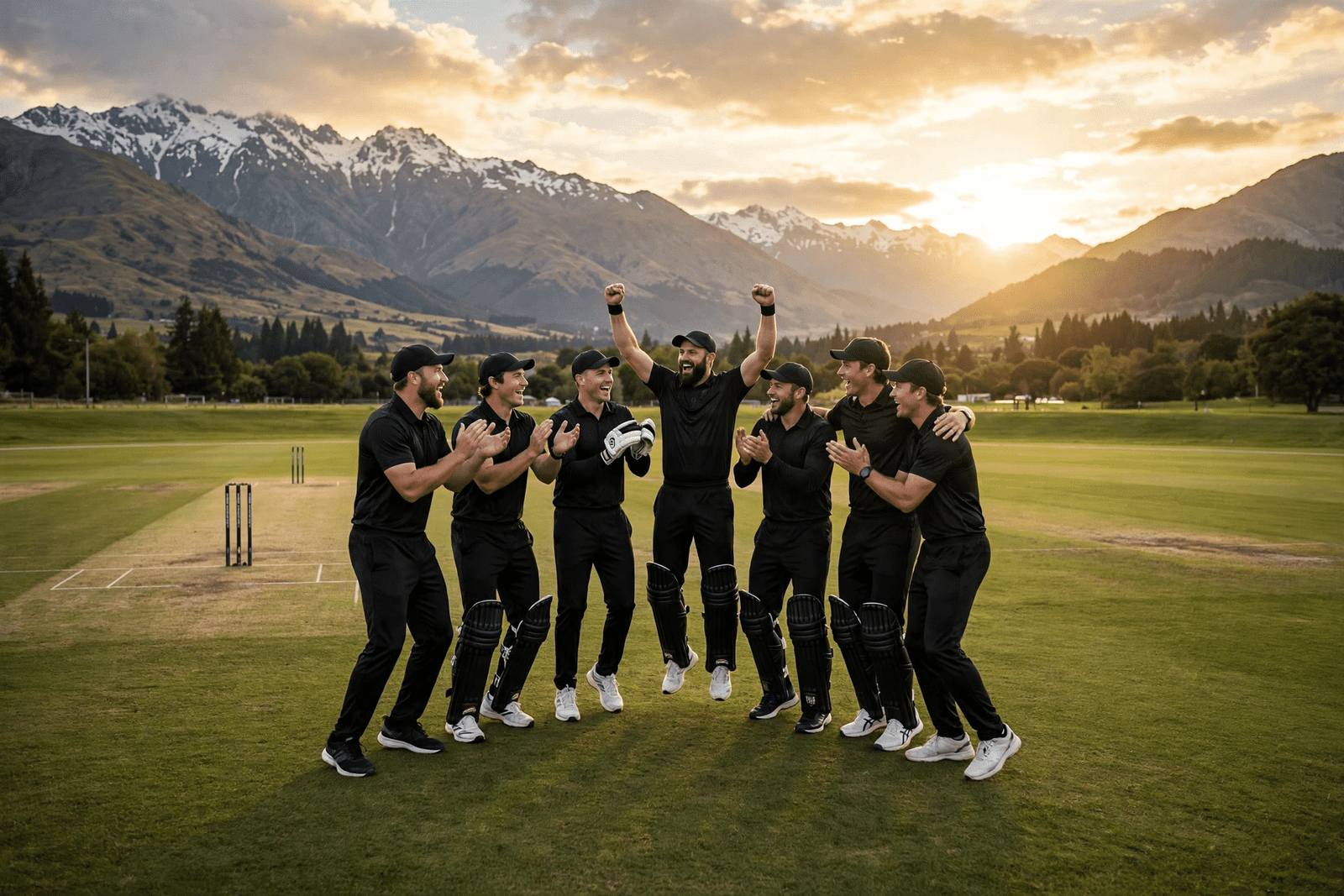
The New Zealand national cricket team — the Black Caps — holds a place in world cricket far larger than the country’s size would suggest. New Zealand has a population of around five million, a fraction of rivals such as India, Australia or England, yet its cricket team has reached the semi-finals or final of the Cricket World Cup with a consistency that embarrasses far bigger nations, won the inaugural World Test Championship, and produced some of the most admired players and sportsmanlike teams the game has known. Punching above your weight is a cliché in sport; for the Black Caps it is simply the permanent condition.
This guide is a complete overview of the New Zealand national cricket team: where the team came from, the trophies it has won and the finals it has heartbreakingly lost, the great players who built its reputation, the bowling tradition that defines its style, and the grounds and conditions that shape how cricket is played in New Zealand. Whether you are a new fan trying to understand why this small nation keeps appearing in the last four of global tournaments, or a long-time follower wanting the whole story in one place, the Black Caps reward the attention — few teams in sport are so consistently greater than the sum of their parts.
From 1930 to Full Member: A Short History of the Black Caps
New Zealand played its first Test match in January 1930, against England at Lancaster Park in Christchurch, and spent decades as international cricket’s most patient side: the team waited until 1956, and its 45th Test, for a first victory, beating the West Indies in Auckland. Full member status of the ICC and regular tours gradually built a competitive side, and the history of the New Zealand national cricket team records the milestones: a first series win in 1969 in Pakistan, the strong teams of the 1980s built around Richard Hadlee and Martin Crowe, and the adoption of the Black Caps name and black playing kit in the late 1990s, which gave the side the identity it carries today.
The modern era elevated the New Zealand national cricket team from respected competitors to genuine contenders in every format. Under Brendon McCullum, and then Kane Williamson, the side combined aggressive, fearless cricket with an emphasis on playing hard but fairly that won admirers everywhere — a reputation cemented when New Zealand was applauded for its sportsmanship even in the agony of the 2019 World Cup final. The team’s golden period delivered a first global white-ball trophy’s near-misses, a home World Cup final in 2015, another final in 2019, and finally the silverware itself in 2021, when the Black Caps beat India to win the first ever World Test Championship final at Southampton.
Trophies, Finals and the World Cup Story
The New Zealand national cricket team’s honours list is headed by the World Test Championship title of 2021, won by beating India by eight wickets in a rain-affected final — a victory built on the team’s traditional virtues of disciplined seam bowling, led by Kyle Jamieson’s player-of-the-match performance, and calm batting under pressure. Before that, the Black Caps’ one previous global title was the ICC KnockOut Trophy in 2000 in Nairobi, an early one-day crown that stood alone for two decades. Around those titles sits an extraordinary record of consistency: semi-finalists at World Cups in 1975, 1979, 1992, 1999, 2007 and 2011, and finalists in 2015 and 2019.
The 2019 final at Lord’s is the match that defines the team’s modern story. New Zealand tied England’s score, tied the Super Over as well, and lost the World Cup only on the boundary-countback rule — a tiebreak so contentious it was abolished afterwards — while earning worldwide respect for the grace with which the players accepted the cruellest result in cricket history. The New Zealand national cricket team also reached the T20 World Cup final in 2021, losing to Australia, making the Black Caps finalists in all three formats’ global events within a single era — a sweep no other side of their generation matched, and the clearest evidence that their success is structural, not luck.
Great Players Who Defined the Black Caps
Every era of the New Zealand national cricket team has been carried by a small number of exceptional players. Sir Richard Hadlee, the supreme fast-bowling all-rounder of the 1970s and 1980s, was the first New Zealander to be a genuinely world-dominant cricketer, finishing with 431 Test wickets and giving the side its first winning edge. Martin Crowe, an elegant batsman and visionary captain, led the beloved 1992 World Cup campaign and remains a benchmark for batting technique, while Stephen Fleming captained with tactical intelligence through the 2000s and Daniel Vettori’s left-arm spin and quiet leadership bridged the generations that followed.
The modern greats completed the transformation. Brendon McCullum reinvented the team’s identity with fearless captaincy and explosive batting — including a 54-ball century against Australia in 2016, the fastest in Test history — and Kane Williamson, his successor, became the New Zealand national cricket team’s finest batsman, its leading Test run-scorer and the calm centre of the side that won the World Test Championship. Ross Taylor’s longevity across formats, Shane Bond’s brief but terrifying pace, and Chris Cairns’ all-round power complete a roll of honour remarkable for a country of five million — a tradition of producing cricketers who are admired as much for how they play as for what they win.
The Bowling Tradition: From Hadlee to Boult and Southee
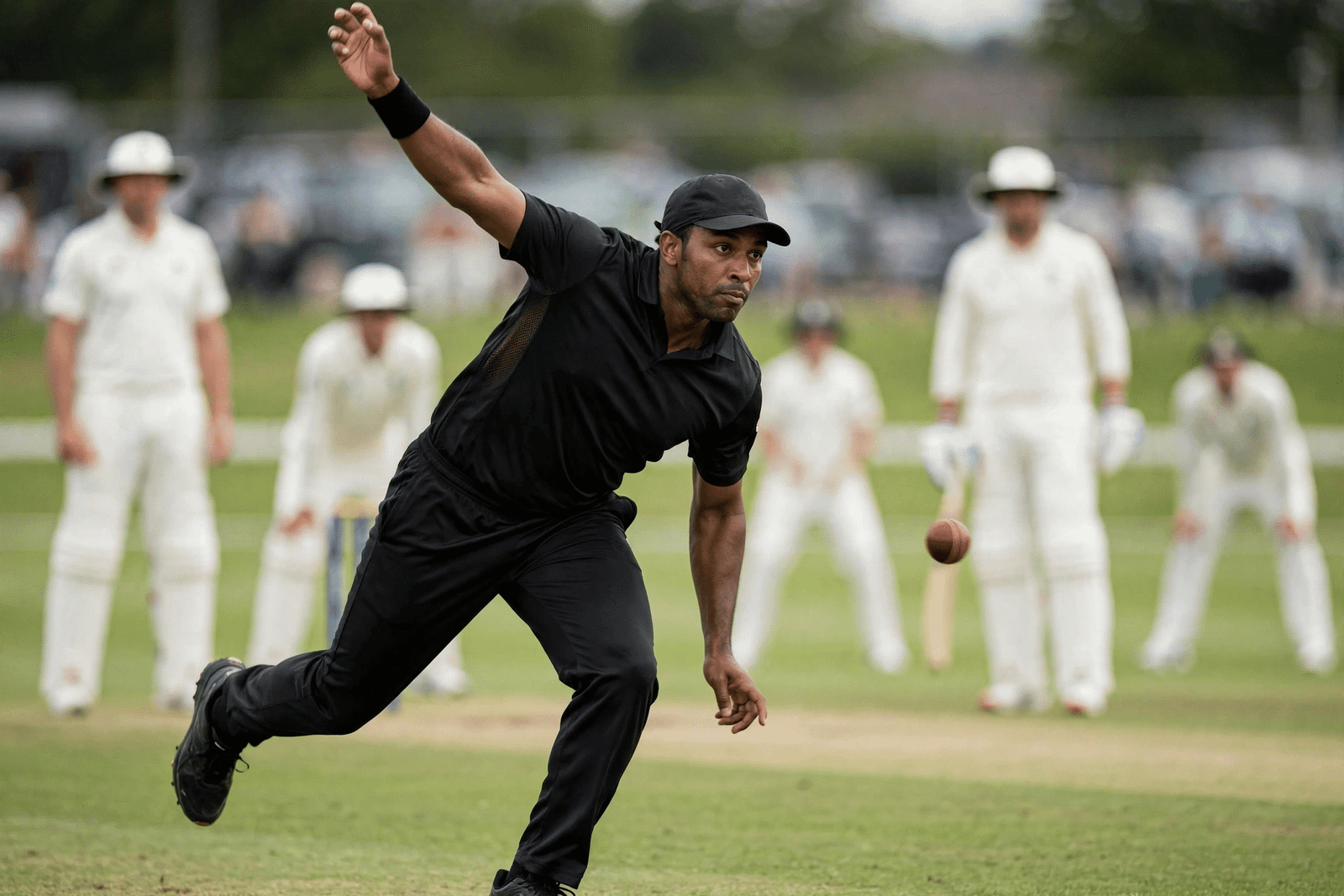
If one craft defines the New Zealand national cricket team, it is seam and swing bowling. New Zealand conditions — green pitches, humid air, coastal wind — reward bowlers who move the ball, and the production line has never stopped: Hadlee’s mastery of seam, Simon Doull and Dion Nash in the 1990s, Shane Bond’s out-and-out pace, and then the modern pairing of Trent Boult and Tim Southee, whose left-arm and right-arm swing combination tormented the world’s best batsmen for a decade, claiming hundreds of international wickets between them and leading the attack through the World Test Championship triumph.
That tradition shapes the whole team’s method. New Zealand sides are built to bowl teams out cheaply at home, to field brilliantly in support — the Black Caps are routinely rated among the best fielding sides in the world — and to bat patiently in conditions that punish impatience. In limited-overs cricket the same virtues translate: disciplined lines, clever changes of pace, and spinners such as Mitchell Santner who control the middle overs. The New Zealand national cricket team rarely wins by overwhelming firepower; it wins by accuracy, planning and collective execution, which is why its victories so often look, in hindsight, like a trap the opposition walked into.
Home Grounds and How to Follow the Black Caps
New Zealand’s home grounds are among the most scenic in world cricket and a real part of the team’s identity. The Basin Reserve in Wellington, a historic ground ringed by a traffic roundabout and exposed to the famous Wellington wind, is the spiritual home of New Zealand Test cricket; Hagley Oval in Christchurch, created after the 2011 earthquake destroyed Lancaster Park, is a picturesque village-green-style ground; Eden Park in Auckland is the largest stadium, short-boundaried and loud; and Seddon Park in Hamilton and the Bay Oval in Mount Maunganui complete a circuit where every venue has its own weather, pitch character and local flavour.
Following the New Zealand national cricket team is straightforward: fixtures, squad announcements, tickets and news are published by New Zealand Cricket, the governing body, while the ICC covers the team’s global tournament schedule. Recent years have seen the captaincy pass through the modern greats — Kane Williamson, then Tim Southee in Tests and Tom Latham after him, with Mitchell Santner leading the white-ball sides — as the team manages the transition from its golden generation to the next. The names change; the Black Caps’ formula of intelligent, disciplined, whole-hearted cricket, played in one of the world’s most beautiful cricketing countries, does not.
Conclusion
The New Zealand national cricket team is sport’s great overachiever story: a country of five million that turned patience, preparation and seam bowling into a permanent seat at world cricket’s top table. Its history runs from the 45-Test wait for a first victory to the World Test Championship trophy of 2021, by way of two World Cup finals, the astonishing tied final of 2019, and a line of great players from Hadlee and Crowe to McCullum and Williamson who were admired far beyond their own shores.
What endures is the method and the manner. The Black Caps win with discipline, fielding and collective intelligence, and they lose — on the rare occasions the whole world watched it happen, at Lord’s in 2019 — with a grace that strengthened rather than damaged their reputation. For anyone discovering the New Zealand national cricket team for the first time, the advice is simple: watch them closely, because few sides in any sport demonstrate so clearly how much of winning is built before the first ball is bowled.
Frequently Asked Questions
Why is New Zealand’s cricket team called the Black Caps?
The nickname comes from the black cap and black playing kit the team adopted in the late 1990s, echoing the naming style of other New Zealand national sides such as rugby’s All Blacks. Before the rebrand the team had no settled nickname; the Black Caps identity — black shirts in limited-overs cricket and the black cap tradition in Tests — is now recognised worldwide as the New Zealand national cricket team’s brand.
Has New Zealand ever won the Cricket World Cup?
Not the 50-over World Cup — New Zealand were runners-up in 2015, losing to Australia in Melbourne, and in 2019, losing to England at Lord’s in the tied final decided on boundary countback. The New Zealand national cricket team has, however, won two global titles: the ICC KnockOut Trophy in 2000 and, most prestigiously, the inaugural World Test Championship in 2021, beating India in the final.
Who is the most famous New Zealand cricketer?
Sir Richard Hadlee is generally regarded as New Zealand’s greatest ever cricketer — a fast-bowling all-rounder who took 431 Test wickets and carried the side through the 1970s and 1980s. In the modern era, Kane Williamson is the standout figure: the country’s leading Test run-scorer, long-serving captain and the batsman around whom the World Test Championship-winning team was built, admired worldwide for both his skill and his sportsmanship.
What is New Zealand’s playing style?
The New Zealand national cricket team is built on disciplined seam and swing bowling suited to home conditions, outstanding fielding, and collective, well-planned cricket rather than individual star power. Under captains such as Brendon McCullum and Kane Williamson the side added genuine aggression with the bat while keeping a famous emphasis on playing hard but fairly — a combination that made them one of the most respected teams in the world game.
Who governs the New Zealand national cricket team?
The team is governed by New Zealand Cricket, the national governing body based in Christchurch, which manages the international sides, domestic competitions and the Black Caps’ fixture programme. New Zealand is a full member of the International Cricket Council, which entitles the team to play Test cricket and to compete in all ICC global tournaments across the Test, one-day international and T20 international formats.
Where does New Zealand play its home matches?
The main home grounds are the Basin Reserve in Wellington, Hagley Oval in Christchurch, Eden Park in Auckland, Seddon Park in Hamilton and the Bay Oval in Mount Maunganui, with matches also staged in Dunedin, Napier and Nelson. Each ground has a distinct character — the Basin’s wind, Hagley’s green outfield, Eden Park’s short boundaries — and visiting teams consistently rate a New Zealand tour among the most enjoyable in world cricket.
To see how the Black Caps’ story reads in match-by-match detail, work through the New Zealand vs West Indies match scorecard guide and learn to read batting, bowling and fall-of-wickets records like an analyst. For more international cricket coverage on the site, our complete NZ vs West Indies scorecard breakdown is the natural next read after this team overview.