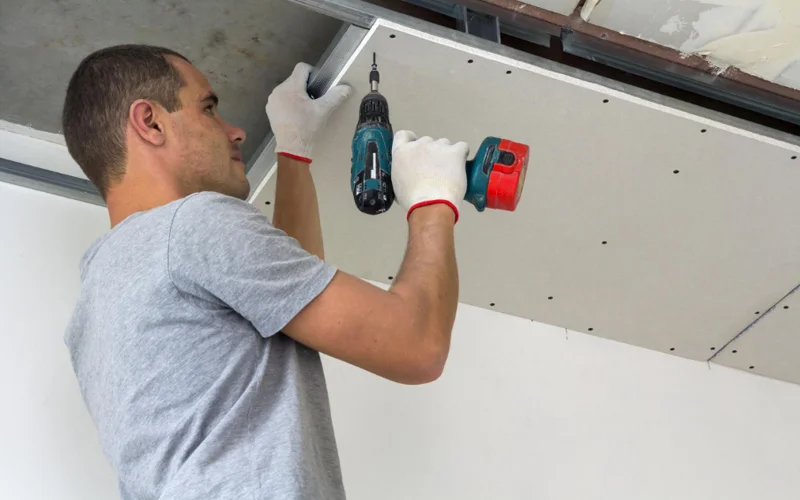
Drywall installation is one of the most important stages in interior construction, and its long-term strength depends heavily on fastening quality. Knowing how many screws per sheet of drywall is not just a technical detail but a critical factor that determines durability, surface smoothness, and resistance to cracks. When screws are properly spaced and correctly installed, the drywall remains firm, stable, and able to withstand everyday structural stress without failure or deformation.
Many beginners focus only on hanging drywall sheets but overlook fastening precision. This mistake often leads to sagging panels, visible screw pops, or weakened joints over time. Understanding how many screws per sheet of drywall helps builders and DIY users avoid these issues by ensuring consistent support across the entire surface. Whether working on residential walls or overhead ceilings, proper screw planning ensures a professional and long-lasting finish.
How Many Screws Per Sheet of Drywall? Exact Screw Count for Walls & Ceilings
The most commonly asked question in construction is how many screws per sheet of drywall are actually needed for a secure installation. For a standard 4×8 sheet installed on walls, professionals typically use around 32 to 36 screws. This amount provides balanced holding strength across all studs while maintaining proper spacing to prevent stress concentration in one area. It is considered the industry standard for residential wall applications.
When it comes to ceilings, the requirement increases due to gravitational force pulling the sheet downward. In this case, how many screws per sheet of drywall rises to approximately 40 to 50 screws per sheet. This higher screw count ensures the drywall remains firmly attached and prevents sagging over time. Ceiling installations always demand more fastening points because overhead weight distribution requires additional reinforcement.
Screw Count Based on Stud Spacing and Frame Structure
Stud spacing plays a major role in determining how many screws per sheet of drywall are needed in any project. In most residential buildings, studs are spaced 16 inches apart, which allows drywall sheets to be securely attached with fewer but strategically placed screws. This setup typically results in around 32 screws per standard sheet, ensuring each sheet is firmly anchored to the structure beneath.
However, in some modern or commercial framing systems where studs are spaced 24 inches apart, screw placement must be adjusted carefully. Even though fewer studs are available, installers must still maintain proper fastening strength. This means how many screws per sheet of drywall may slightly vary, but spacing rules remain strict to prevent flexing, movement, or long-term structural weakness.
Proper Screw Spacing Techniques for Strong Drywall Installation
Understanding screw spacing is just as important as knowing how many screws per sheet of drywall should be used. Proper spacing ensures even pressure distribution across the entire sheet, preventing weak points that can lead to cracks or surface imperfections. Typically, screws should be placed 12 to 16 inches apart along each stud to maintain consistent support and stability.
Edge spacing is equally critical in drywall installation. Screws should be placed approximately 2 to 3 inches from the edges of the sheet to avoid breaking or crumbling the drywall material. When calculating how many screws per sheet of drywall, professionals always consider both field spacing and edge reinforcement to achieve a balanced and durable installation.
Why Ceilings Require More Screws Than Walls
Ceiling installations demand more attention and fastening strength because gravity continuously pulls the drywall downward. This is why how many screws per sheet of drywall is always higher for ceilings compared to walls. Additional screws help distribute weight evenly and reduce the risk of sagging or sheet detachment over time, especially in larger rooms or commercial spaces.
While wall applications may only require around 32 to 36 screws per sheet, ceilings often require 40 to 50 screws or more depending on sheet size and structural conditions. This difference highlights the importance of reinforcement in overhead installations. Proper screw placement ensures the drywall remains secure, preventing future repair issues and maintaining a clean ceiling finish.
Impact of Drywall Sheet Size on Screw Requirements
The size of the drywall sheet significantly affects how many screws per sheet of drywall are needed for proper installation. Standard 4×8 sheets are the most commonly used and require fewer screws compared to larger panels. However, larger sheets such as 4×12 or custom sizes cover more surface area, requiring additional fastening points for structural stability.
For example, a 4×12 sheet may require anywhere between 50 to 60 screws depending on installation method and surface type. As sheet size increases, installers must adjust screw distribution to ensure the entire panel remains secure. This makes understanding how many screws per sheet of drywall essential for planning both material usage and installation strategy.
Professional Tips for Correct Drywall Screw Installation
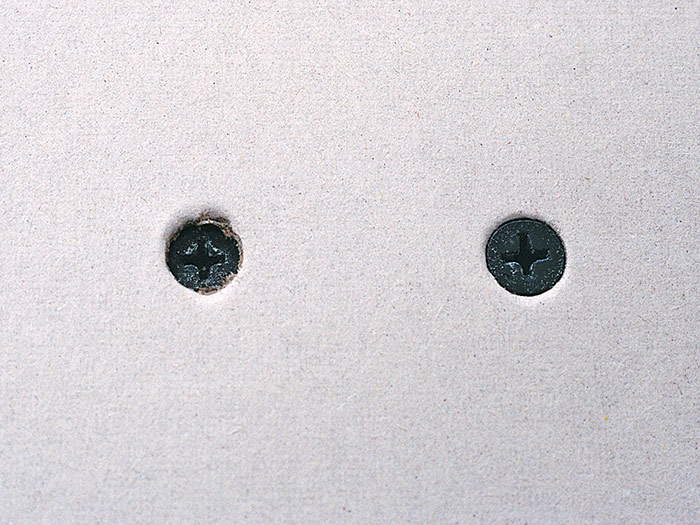
Proper technique is just as important as knowing how many screws per sheet of drywall are required. Screws should always be driven slightly below the surface of the drywall without tearing the paper layer. Overdriving screws can weaken the hold, while underdriving them can create bumps that affect finishing quality and painting results.
Using a drywall screw gun is highly recommended for achieving consistent depth and spacing. Professionals ensure that every screw is evenly placed and properly tightened to maintain uniform support. These techniques not only improve structural strength but also enhance the final appearance of the drywall surface.
Factors That Influence Screw Quantity in Drywall Projects
Several factors can change how many screws per sheet of drywall are required in a project. One major factor is the use of construction adhesive alongside screws, which can reduce the number of fasteners needed while still maintaining strong adhesion. However, screws are still necessary to provide mechanical support during curing.
Other influencing factors include building codes, wall height, moisture-resistant drywall, and fire-rated materials. Each of these conditions may require adjustments in screw placement or quantity. Therefore, understanding how many screws per sheet of drywall depends on evaluating the full installation environment rather than following a single fixed number.
Conclusion: Achieving Strong and Durable Drywall Installation
Knowing how many screws per sheet of drywall is essential for achieving a strong, stable, and professional-quality finish. Whether working on walls or ceilings, proper screw counts ensure structural integrity and prevent long-term issues such as sagging, cracking, or loose panels. This simple but crucial detail significantly improves the durability of any drywall project.
By following correct spacing guidelines, adjusting for sheet size, and applying professional installation techniques, builders can ensure consistent results across all surfaces. Ultimately, understanding how many screws per sheet of drywall helps create safer, stronger, and more visually appealing interior structures.
FAQs
What is the standard number of screws per sheet of drywall?
A standard 4×8 drywall sheet typically requires around 32 to 36 screws for proper wall installation.
Do ceilings need more screws than walls?
Yes, ceilings require more screws due to gravity, usually around 40 to 50 per sheet.
How far apart should drywall screws be placed?
Drywall screws are generally spaced 12 to 16 inches apart along studs for strong support.
Can I use fewer screws if I apply adhesive?
Yes, adhesive can reduce screw usage, but screws are still necessary for structural security.
How many screws are needed for a 4×12 drywall sheet?
A 4×12 sheet usually requires between 50 to 60 screws depending on installation conditions.
What happens if I use too few screws in drywall?
Using too few screws can lead to sagging, cracking, and weak joints over time.
What is the most common drywall screw mistake?
Overdriving screws is the most common mistake, which damages the drywall surface and reduces strength.
You may also read: Common Types of Door Swings