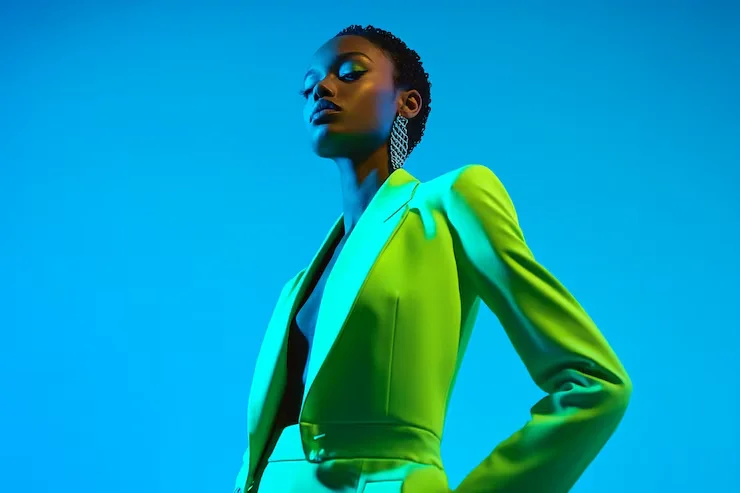
When people look at a fashion portrait, they usually notice the outfit first, then the model, the makeup and the pose. But long before they consciously register any of that, the background has already told them how to feel. A sun-washed coastal wall says relaxed summer luxury. A rain-slicked neon street says edgy and nocturnal. A minimal pale studio says clean, modern and expensive. The setting quietly frames the entire story of the image.
For years, choosing that setting meant booking locations, building sets or traveling with a full crew. Today, digital backgrounds and AI image editing give photographers, stylists and fashion brands a level of creative control that once required a large production budget. Here’s how backgrounds shape mood, and how to use that power well.
1. Evoking Emotion Through Location
Every location carries emotional associations. A pastel street lined with tiled facades in a Mediterranean town feels romantic and carefree. A black sand beach under heavy grey skies feels dramatic and editorial. A glowing neon alley in a big city at night feels bold, youthful and a little rebellious. A quiet courtyard with arches and lanterns feels warm, intimate and timeless.
The same outfit placed in each of these settings tells a completely different story. A flowing white dress becomes a holiday dream on the coast, a poetic statement on the black sand and a striking contrast in the neon city. Choosing the background is really choosing the narrative.
2. Creating Visual Harmony With Styling Choices
The best fashion portraits feel unified, with the background supporting the outfit rather than competing with it. Structured tailoring often looks strongest against architecture with clean lines and strong geometry. Soft, flowing fabrics pair beautifully with natural textures, gentle gradients or blurred landscapes. Bold prints usually need calmer backgrounds so the pattern can breathe, while minimalist outfits can handle richer, more detailed settings.
Color matters too. A camel coat glows against warm stone and autumn light. A cobalt suit pops against neutral concrete. Testing a few background options side by side is the fastest way to see which combination creates real harmony.
3. Immersing the Viewer in a Fashion Fantasy
Fashion has always sold dreams as much as clothes. Digital backgrounds make it possible to place a look in worlds that would be expensive, impractical or impossible to reach in real life: a desert at golden hour, a field of oversized flowers, a futuristic glass city, a misty forest at dawn. The same shoot can move from a soft romantic garden to a sharp urban rooftop in minutes, giving a collection a sense of range and storytelling without ever leaving the studio.
4. Elevating Brand Identity
For brands, backgrounds are part of identity. Luxury labels often favor refined interiors, marble, soft light and quiet elegance. Streetwear brands lean toward graffiti walls, skate parks and gritty city corners. Sustainable brands choose natural settings like woodland, meadows and coastlines that reflect their values. Tech-inspired or futuristic labels prefer sleek architecture, metallic surfaces and cool color palettes.
Keeping these environments consistent across a campaign helps customers recognize a brand instantly, whether they see a product page, a social post or a billboard.
5. The Power of Lighting and Color
A background doesn’t just sit behind the subject; it shapes how the subject looks. A warm sunset sky casts a golden glow that flatters skin and creates a romantic mood. A cool blue twilight feels calm and sophisticated. Deep shadows and a dark urban backdrop create cinematic drama, while soft pastel tones make an image feel light and playful.
The key is that light on the model must match the light in the background. A face lit by soft studio light placed against a harsh midday desert will always look slightly wrong. That’s why modern AI tools that adjust lighting together with the background make such a difference.
The Role of AI in Changing and Creating Backgrounds
The Ai Image Generator on Animx gives photographers and fashion creators a fast way to explore these ideas. You can upload your own fashion portrait and edit it while keeping the original composition: swap the background, change the lighting, remove distracting objects or even adjust clothing. That means one studio shot can be tested in a coastal town, a neon city and a minimalist interior in a single session.
Animx brings several leading image models into one workspace, including Google’s Nano Banana Pro for photoreal results up to 4K, Black Forest Labs’ Flux 2 Max for fine detail, ByteDance’s Seedream for close prompt adherence and multi-image edits, and GPT Image for versatile styles. Running the same request through different models and comparing them side by side helps you find the version with the most natural lighting and the best mood.
A few practical tips for convincing results:
- Describe the light, not just the place. “Coastal town at golden hour with warm side light” works better than “coastal town.”
- Match the perspective. Mention camera height and angle so the background sits naturally behind the model.
- Keep the subject untouched. Ask the model to preserve the person, outfit and pose exactly while changing only the setting.
- Use references for consistency. Seedream accepts up to 10 reference images, which helps keep a campaign’s look consistent across many portraits.
- Pick the right format early. Choose 3:4 or 4:5-style portrait layouts for editorial pages, 9:16 for stories and 16:9 for banners.
You can also take a finished portrait one step further. Click Animate to send it to Animx’s video workspace and add subtle motion, such as hair moving in the breeze or light shifting across the scene, for social media and lookbook videos.
Responsible Use in Fashion Imagery
Digital backgrounds are a creative tool, and like any powerful tool they should be used thoughtfully. Make sure models have agreed to how their images will be edited and published, avoid changes that mislead customers about how a garment actually looks, and keep the colors and details of the product itself accurate. Changing the world around the clothes is storytelling; changing the clothes themselves in a misleading way is not.
Final Thoughts: Shaping Fashion Portraits With Digital Backgrounds
Backgrounds are not a finishing touch; they’re a core part of the story a fashion portrait tells. They set the mood, support the styling, express brand identity and shape the light that falls on every fabric and face. Digital backgrounds and AI editing give photographers and brands the freedom to explore far more settings than any single shoot could offer, at a fraction of the time and cost. With tools like Animx and free credits to start, it’s easier than ever to test new worlds for your next collection and find the one that makes every look feel exactly right.