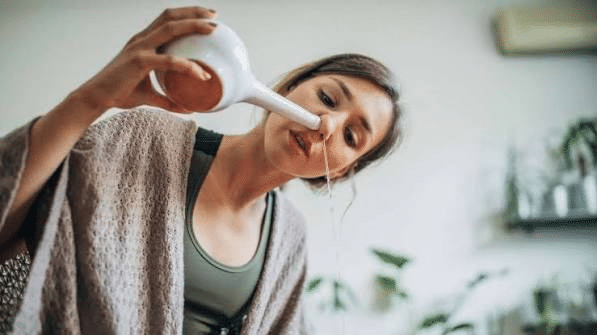
You have packed your charger, your passport and three outfits you probably will not wear. You are halfway to the airport when it hits you: your nasal rinse bottle is still drying on the bathroom counter at home. Or maybe you remembered the bottle but forgot about the water, and now you are standing in a hotel bathroom at 11 p.m., staring at the tap and wondering whether it is safe to use.
Travel has a way of breaking even the most solid routines. New time zones, unfamiliar bathrooms, packed schedules and different water supplies all conspire to push small daily habits off the list. Nasal rinsing is one of the first to go, simply because it depends on a few specific things being in the right place at the right time.
The good news is that a nasal rinse routine is one of the easiest habits to take on the road, as long as you plan for it before you leave. This guide covers everything you need: what to pack, how to get through airport security, how to handle water safely in hotels and rentals, and how to stay consistent when your days look nothing like they do at home.
Why packets are made for travel
If you mix your own rinse at home from a jar of salt, travel is where that system starts to strain. Loose salt is awkward to pack, can spill inside a bag, clumps in humid conditions and requires a measuring spoon that you will almost certainly forget.
Individually sealed, pre-measured packets solve all of these problems at once:
- They are flat and light. A week’s supply takes up less space than a paperback.
- They are easy to count. One packet per rinse makes it simple to pack exactly what you need, plus a few spares.
- They stay sealed. Each portion is protected from moisture until you open it.
- There is no measuring. You do not need to bring spoons or remember a recipe.
If you are choosing nasal rinse packets with travel in mind, look for single-use portions with clear directions printed on the box, so you do not need to remember measurements while you are away.
Your travel packing checklist
Before you zip up your suitcase, run through this list.
- Enough packets for the whole trip, plus two or three spares for delays or unexpected extra days
- Your rinse bottle or neti pot, washed and completely dry before packing
- A zip bag or small toiletry pouch to keep your rinse kit together and separate from everything else
- A plan for water, which is covered in detail below
- A small travel towel or a few paper towels for drying your bottle if you are not sure what your accommodation provides
- The product box or a photo of the directions, so you can check the water amount and warnings if you need to
It also helps to pack your bottle in its own bag rather than loose in your toiletry case. Shampoo, toothpaste and sunscreen have a habit of leaking in transit, and you do not want any of that residue ending up inside your rinse bottle.
Getting through the airport
Airport security can feel like a minefield when you are carrying anything unusual, but a nasal rinse kit is fairly straightforward.
Dry packets
Packets of dry powder are not liquids, so they are generally not affected by carry-on liquid limits. That said, airport security in some countries may pull larger quantities of powders for extra screening. To make the process smoother:
- Keep packets in their original box or a clear bag so they are easy to identify.
- Do not decant the powder into unlabeled containers.
- Place the packets near the top of your carry-on so they are easy to pull out if asked.
Your rinse bottle
An empty rinse bottle or neti pot is simple to carry through security. If you are bringing water for rinsing in your carry-on, remember that standard liquid limits apply to it.
Check before you fly
Security rules can change and vary by country and airline. It is always worth checking the current guidance from your airline and the airports you will pass through before you fly, especially for international trips.
Planning for water on the road
This is the part that matters most, and the part travelers most often overlook.
U.S. health authorities, including the FDA and CDC, advise against using untreated tap water for nasal rinsing. That advice does not change when you are in a hotel, a vacation rental or a friend’s guest room. Tap water is treated to be safe to drink, which is different from safe to put into your nasal passages.
You have a few practical options.
Buy distilled or sterile water on arrival
Most pharmacies, grocery stores and convenience stores sell distilled water, usually in gallon jugs. Pharmacies often stock sterile water too. A single gallon will usually last a short trip. Make sure the label says “distilled” or “sterile”; water labeled only as “drinking water” or “spring water” is not the same thing.
Boil and cool tap water
If your room has a kettle or you have access to a kitchen, you can boil tap water and let it cool. Bring the water to a rolling boil, then let it cool to lukewarm before mixing. The CDC recommends boiling for at least one minute, or three minutes at higher elevations.
Store boiled water properly
Pour cooled water into a clean, closed container. The FDA advises using previously boiled water within 24 hours. A simple routine is to boil water in the evening and let it cool overnight so it is ready for the morning.
Traveling somewhere with less reliable water
If you are visiting a region where the water supply is less reliable, sealed distilled or sterile water is the simplest and safest choice. Factor in a quick stop at a store on your first day.
Keeping your bottle clean away from home
Hotel bathrooms are shared spaces with plenty of moisture and limited counter space. A few habits keep your bottle clean:
- Wash after every use with hot soapy water. A small travel bottle of dish soap is useful if your room only has hand soap.
- Rinse thoroughly until no soap remains.
- Air dry on a clean towel, not directly on the counter or next to the sink where it can be splashed.
- Take it apart if your bottle has a removable cap and tube, so every piece dries fully.
- Store it in a clean pouch once dry, rather than leaving it out.
If you are moving between hotels every day or two, make sure the bottle is completely dry before you pack it. A damp bottle sealed inside a bag is not ideal.
Staying consistent across time zones
Jet lag can scramble your sense of time, and it is easy to lose track of small habits when your days shift. These strategies help keep your routine on track.
Anchor it to something you always do. Brushing your teeth happens at every destination. If you rinse right after brushing, the habit travels with you.
Set a reminder for local time. Once you land, adjust any phone reminders to the new time zone.
Keep your kit visible. Unpack your rinse kit on the first night and put it somewhere you will see it, rather than leaving it buried in your suitcase.
Do not double up to “catch up.” If you miss a rinse, simply carry on with your normal routine. Follow the frequency in your product’s directions.
Be flexible with timing. If your usual morning rinse does not fit a 6 a.m. tour departure, an evening rinse might work better while you are away.
Storing packets while you travel
Packets are durable, but a few simple precautions keep them in good condition:
- Keep them somewhere cool and dry, away from direct sunlight.
- Avoid leaving them in a hot car or on a sunny windowsill.
- Check the expiry or batch details on the box before a long trip.
- Keep them out of reach of children and pets, especially in shared accommodation.
Special situations
Road trips
Road trips make it easy to bring a gallon of distilled water along. Keep it upright, closed and out of direct sunlight in the car.
Camping
Camping adds a layer of complexity because water sources vary widely. Bring sealed distilled or sterile water specifically for rinsing, or plan to boil water thoroughly and let it cool in a clean, covered container. Keep your bottle in a sealed bag to protect it from dust and dirt.
Business travel
If your days are packed with meetings, the evening is often the easiest time to rinse. Pick up distilled water on the way from the airport so it is waiting in your room.
A quick pre-trip checklist
- Packets counted, plus spares
- Bottle washed, dried and packed in its own bag
- Water plan in place for your destination
- Directions saved on your phone
- Reminder adjusted for the new time zone
The bottom line
Traveling with a nasal rinse routine comes down to two things: packing sealed, pre-measured portions and having a reliable plan for safe water. Get those right and the rest falls into place. A little preparation before you leave means you will not be stuck staring at a hotel tap late at night, wondering what to do.
Always follow the directions and warnings on your product, and if you have questions about whether nasal rinsing is right for you, speak with a healthcare professional before your trip.