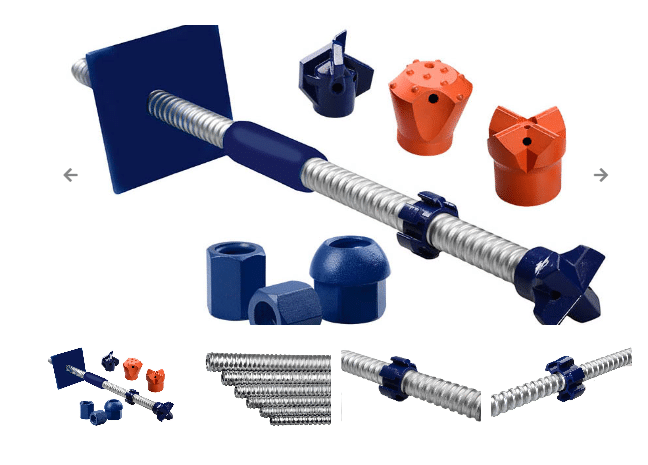
Hollow injection bars are specialized steel components used in ground engineering to improve stability in challenging soil and rock conditions. Their hollow interior allows grout to pass through the bar during installation, while their threaded outer surface supports connections and anchoring. These features make them useful for soil nailing, rock bolting, micropiling, and other ground reinforcement projects.
Understanding how hollow injection bar work can help contractors, engineers, and construction companies select suitable systems for their projects.
What Are Hollow Injection Bars?
A hollow injection bar is a steel bar with a central passage that allows grout or another specified injection material to flow through it. Many systems use continuous external threading, which allows bars to be connected with couplers and fitted with compatible nuts and bearing plates.
Unlike a conventional solid reinforcement bar, a hollow injection bar can serve as both a drilling component and a grout delivery channel when designed for self-drilling applications. This arrangement can simplify installation in certain ground conditions.
The exact design depends on the application, required load capacity, ground characteristics, and installation method.
How Do Hollow Injection Bars Work?
The installation process varies by system, but a typical self-drilling arrangement follows several stages.
First, the bar is connected to a suitable drilling rig and fitted with a compatible drill bit. The assembly advances into the ground while grout is delivered through the hollow center. The grout exits through openings in the drill bit and fills the surrounding space.
After reaching the required depth, the installer completes the grouting procedure according to the project specifications. Once the grout develops the required strength, the bar transfers loads between the surrounding ground and the supported structure.
This integrated process can reduce the need for separate drilling and grouting operations, although the actual benefits depend on ground conditions and equipment selection.
Key Benefits of Hollow Injection Bars
Efficient Installation
Combining drilling and grout delivery can simplify the installation sequence. In suitable conditions, this may reduce equipment handling and the number of separate operations required on site.
Improved Ground Reinforcement
The steel bar provides reinforcement, while properly installed grout helps establish contact between the anchoring system and the surrounding ground. The resulting load transfer depends on grout quality, installation practices, ground properties, and system design.
Adaptability to Difficult Ground
Self-drilling systems can be useful in loose or fractured ground where maintaining a conventional pre-drilled hole may be difficult. The appropriate drill bit and installation procedure must be selected for the actual site conditions.
Flexible System Configuration
Threaded bars, couplers, drill bits, nuts, and bearing plates can be combined into a compatible system. This allows engineers to specify arrangements suited to different depths and structural requirements.
Common Applications
Hollow injection bars are used in several areas of geotechnical engineering.
- Soil nailing: Reinforcing soil slopes and excavated faces.
- Rock bolting: Helping stabilize fractured or potentially unstable rock.
- Micropiling: Supporting foundations where conventional foundation solutions may be impractical.
- Tunnel construction: Reinforcing surrounding ground during excavation and stabilization.
- Slope stabilization: Reducing the risk of ground movement when incorporated into an engineered reinforcement system.
Not every hollow bar is suitable for every application. Load requirements, groundwater, corrosion exposure, and local construction standards must be considered before installation.
What Should Buyers Consider?
Choosing the right hollow injection bar requires more than comparing dimensions or prices. Buyers should check the steel grade, outside diameter, internal diameter, thread profile, connection compatibility, and specified load capacity.
They should also confirm whether the bar is suitable for the intended drilling method and whether its couplers, drill bits, and accessories meet the same system requirements.
Corrosion protection is another important consideration, particularly in aggressive soil or groundwater environments. Protective coatings and material selection should follow the project’s engineering specifications.
Conclusion
Hollow injection bar provide a practical option for ground reinforcement where drilling, grouting, and anchoring requirements must work together. Their hollow construction, threaded connections, and compatibility with self-drilling systems can support efficient installation in suitable conditions.
By evaluating ground conditions, load requirements, material quality, and system compatibility, construction professionals can choose a hollow injection bar solution that meets their project’s technical needs.