Introduction
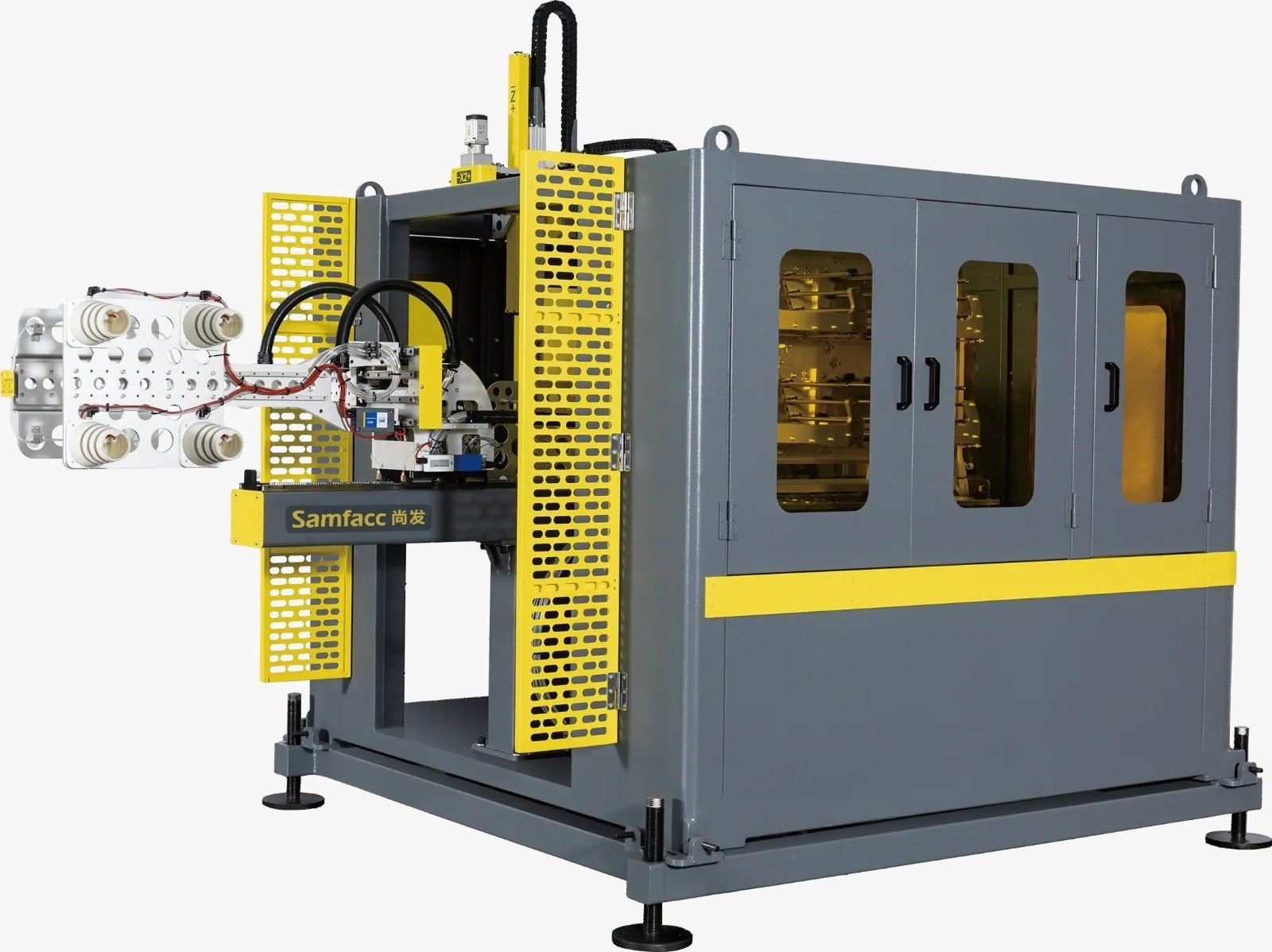
An IML robot is an important part of modern plastic packaging production. IML stands for In-Mold Labeling, a process in which a printed label is placed inside an injection mold before molten plastic forms the final product. Instead of applying a label after manufacturing, the label becomes integrated with the plastic container during molding. This approach helps manufacturers produce attractive, consistent packaging while reducing the need for separate labeling operations.
As packaging companies face increasing pressure to improve productivity, control production costs, and maintain consistent quality, IML robot automation has become an important manufacturing investment. When the robot, injection molding machine, mold, and label feeding system operate together correctly, the production line can achieve reliable output with less manual handling.
What Does an IML Robot Do?
An IML robot performs several coordinated tasks during the injection molding cycle. First, it collects a printed label from a magazine or feeding station. The robot then moves the label into the correct position inside the open mold. A suitable holding method, such as vacuum or electrostatic attraction, keeps the label in place while the robot withdraws.
Once the robot has cleared the mold area, the injection molding machine closes the mold and injects molten plastic. The plastic forms the container and bonds with the label under the designed process conditions. After cooling, the finished product is removed and transferred to the next production stage.
Depending on the system design, the robot may also remove finished containers, arrange products for stacking, or coordinate with conveyors and inspection equipment. Combining these activities helps reduce unnecessary movement and makes the overall production process more organized.
Improving Production Speed
Production speed is one of the main reasons manufacturers invest in an IML robot. Manual label placement can require additional labor and may introduce inconsistent handling times. Automated equipment performs repetitive movements according to programmed positions and coordinated machine signals.
However, a high-speed robot does not automatically guarantee a faster production line. The robot must complete label insertion and product removal within the available mold-open period. Mold movement, cooling time, injection speed, label pickup, and downstream handling also influence the total cycle.
Manufacturers should therefore evaluate the complete production process rather than focusing only on the robot’s maximum travel speed. A properly integrated system can help reduce idle time and maintain a stable rhythm across repeated production cycles.
Maintaining Consistent Label Placement
Packaging appearance has a direct effect on how customers perceive a product. Labels that are crooked, wrinkled, damaged, or incorrectly positioned can lead to rejected containers and additional inspection work.
An IML robot helps improve consistency by using controlled movements and application-specific gripping tools. The robot can be programmed to place each label at a defined position, while sensors and machine controls help coordinate the operation.
Correct label placement also depends on factors outside the robot itself. Label dimensions, film properties, static conditions, mold geometry, cavity design, and the behavior of the molten plastic all influence the final result.
Manufacturers should test the actual label and packaging material before approving a production setup. Checking products from every cavity can reveal alignment issues that may not appear when inspecting only one sample.
Reducing Manual Handling and Waste
Automated labeling reduces the need for operators to handle individual labels and containers during the molding cycle. This can help lower the risk of handling damage and improve consistency across large production runs.
A well-designed IML system may also reduce waste associated with misplaced labels, damaged containers, and repeated labeling operations. These improvements depend on the original process, the equipment configuration, and the effectiveness of quality control.
Waste reduction should be measured using production records. Manufacturers can compare rejected units, label consumption, downtime, and labor requirements before and after automation. This provides a more reliable assessment than assuming every automated installation will produce the same savings.
Applications Across Packaging Industries
IML robot technology is commonly used for plastic packaging that requires durable decoration and repeatable presentation.
Food packaging is one important application. Yogurt cups, ice cream containers, dairy tubs, and other molded packages can use in-mold labels to display product information, branding, and graphics.
Household and personal care products may also use IML containers for packaging powders, cleaning products, and other consumer goods. Industrial packaging, including selected buckets and tubs, can benefit from automated label placement when the product and mold design support the process.
Each application has different requirements. Food packaging may prioritize appearance, traceability, and suitable packaging materials, while industrial containers may require stronger construction and clear identification.
Choosing the Right IML Robot
Selecting an IML robot begins with understanding the product and production target. Buyers should identify the container dimensions, material, label size, number of mold cavities, required output, and available injection molding machine.
The robot configuration must provide enough reach, speed, payload capacity, and clearance for the intended application. Side-entry and top-entry systems can suit different mold layouts and container designs, so manufacturers should compare configurations with an automation specialist.
Integration is equally important. The robot must communicate reliably with the injection molding machine and operate within the planned safety system. Label magazines, gripping tools, conveyors, and stacking equipment should be considered during system design.
Service availability, spare parts, operator training, and technical support also affect the long-term value of the investment.
Maintenance and Quality Control
Regular maintenance helps keep an IML robot operating consistently. Operators should follow the manufacturer’s instructions for inspecting grippers, vacuum lines, sensors, cables, moving components, and label-feeding equipment.
The production team should also monitor common warning signs, including missed labels, inconsistent placement, repeated robot stops, and damaged containers. Recording these events can help maintenance staff identify recurring causes instead of repeatedly correcting individual symptoms.
Preventive maintenance should be performed under the required machine isolation and safety procedures. Operators must never enter a hazardous area or bypass an interlock to save production time.
Quality checks should include label position, surface appearance, product dimensions, and defects relevant to the packaging application.
Conclusion
An IML robot can help plastic packaging manufacturers improve automation, label consistency, and production organization. Its greatest value comes from coordinating label placement, injection molding, product removal, and downstream handling as one integrated process.
Before purchasing equipment, manufacturers should assess the complete production requirement, test the intended label and mold, and calculate potential savings using realistic operating data. A properly selected and maintained IML robot can support dependable manufacturing performance and help businesses respond to changing packaging demands.
Frequently Asked Questions
What is the main advantage of an IML robot?
It automates label placement inside the mold, helping reduce manual handling and support consistent packaging quality.
Can an IML robot work with different containers?
Many systems can handle multiple product formats, but changes may require suitable tooling, grippers, programs, and mold compatibility checks.
Does an IML robot reduce production costs?
It can reduce certain labor and waste costs, depending on output volume, integration quality, maintenance, and the original labeling process.