Introduction
An MPO fanout cable is an important component in modern fiber optic networks, especially in data centers, enterprise networks, telecommunications facilities, and high-density server environments. It allows multiple optical fibers carried through a single MPO connector to be distributed into individual connectors, such as LC or SC, making it easier to connect different types of network equipment.
As businesses continue to expand their digital infrastructure, network operators need cabling solutions that support high bandwidth, organized connections, and efficient installation. An MPO fanout cable helps address these requirements by simplifying the transition between multi-fiber connections and individual optical ports.
Understanding how this cable works, where it is used, and which specifications matter can help network engineers and IT professionals design reliable fiber optic infrastructure.
What Is an MPO Fanout Cable?
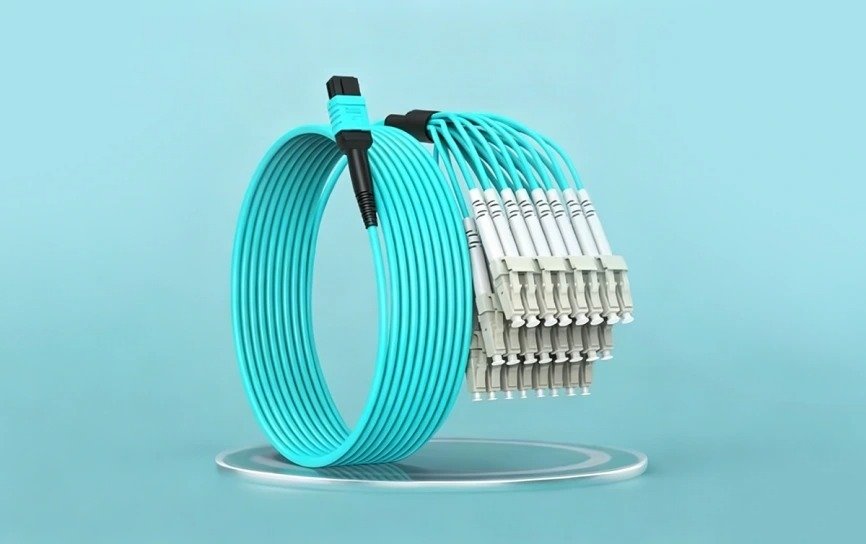
An MPO fanout cable is a fiber optic cable assembly that uses a multi-fiber MPO connector at one end and separates the fibers into individual branches at the other end. These branches may terminate in LC, SC, or other compatible connector types, depending on the application.
MPO stands for Multi-Fiber Push-On. The connector allows multiple optical fibers to connect through a compact interface, reducing the number of separate connectors required in high-density cabling systems.
A typical MPO fanout assembly includes a main cable, an MPO connector, a protected breakout section, and multiple branch cables. Each branch provides access to an individual fiber or fiber pair.
For example, a suitable MPO-to-LC assembly can connect a multi-fiber interface to several duplex LC ports. The exact number of branches depends on the fiber count and configuration.
How MPO Fanout Cables Work
The main purpose of an MPO fanout cable is to distribute optical connections between different interface types. The MPO end connects to compatible equipment, a trunk cable, or a fiber distribution system. The branch ends connect to individual optical ports or other designated connection points.
The fibers follow a predefined mapping through the assembly. This mapping determines which fiber at the MPO end connects to each branch.
Correct mapping is essential because the cable must match the transmit and receive paths required by the connected equipment. Connector fit alone does not guarantee that the optical link will work correctly.
MPO fanout cables are passive optical components. They do not independently convert network protocols, increase transmission speed, or create additional bandwidth. The connected transceivers, switches, and network configuration determine which transmission modes are supported.
Applications in Data Centers
Data centers are among the most common environments for MPO fanout cables. They contain large numbers of servers, switches, storage systems, and optical transceivers that require organized, reliable connectivity.
High-density MPO connections can consolidate many fibers into a compact connector. Fanout assemblies then distribute these fibers to individual equipment ports when the network architecture requires it.
This arrangement can simplify connections between backbone cabling and server or switch interfaces. It can also reduce the need to install numerous separate cables along the entire route.
For data center operators, better cable organization can make port identification, troubleshooting, and future upgrades easier. However, the benefits depend on choosing the correct fiber count, branch layout, connector type, and polarity.
Supporting High-Speed Network Connections
Modern networks use different optical interface architectures, including parallel-optics connections and duplex fiber links. MPO fanout cables can provide the physical connection needed when compatible equipment supports a breakout configuration.
For example, certain 40G or 100G parallel-optics systems can connect to multiple lower-speed duplex links using a suitable MPO-to-LC assembly. The precise configuration depends on the transceiver specification, fiber type, active fiber positions, and switch support.
Not every high-speed port supports breakout operation. Before purchasing a cable, network engineers should verify the optical module’s supported modes and the switch’s configuration requirements.
A passive MPO fanout cable cannot turn an unsupported interface into a compatible connection. Proper planning ensures that the cable assembly matches the intended network design.
Benefits of Using MPO Fanout Cables
One major benefit is high-density connectivity. Multiple optical fibers can share a single MPO interface, helping reduce connector congestion in racks and network cabinets.
Another benefit is installation efficiency. Factory-terminated assemblies can reduce the amount of field termination required and help standardize connection layouts. Predefined branch lengths can also make routing more organized.
MPO fanout cables may improve maintenance by allowing technicians to identify individual branches and connect them to designated equipment ports. Clearly labeled branches can reduce confusion during troubleshooting and equipment replacement.
They can also support network flexibility. When designed appropriately, fanout assemblies help connect high-density fiber infrastructure to equipment with different connector formats.
However, these benefits depend on correct specification, careful handling, and suitable installation practices.
Single-Mode and Multimode Options
MPO fanout cables are available with single-mode or multimode optical fiber. The correct choice depends on the network’s transceivers, transmission distance, and existing cabling infrastructure.
Single-mode fiber is commonly used for applications requiring transmission over longer distances or specific high-capacity optical architectures. OS2 is a common single-mode cabling category.
Multimode fiber is frequently used for certain short-reach connections within data centers. OM3, OM4, and other multimode grades have different performance characteristics and application requirements.
These fiber types should not be selected based on cable appearance alone. Network planners must match the cable to the connected optical modules and the required channel performance.
Important Connector and Polarity Considerations
Connector compatibility is a critical part of MPO fanout cable selection. Buyers should verify the MPO connector type, pin configuration, branch connectors, and required fiber mapping.
MPO connectors may be specified as pinned or unpinned, depending on the equipment and mating interface. The two ends must have compatible connector configurations.
Polarity is equally important because optical transmit and receive signals must reach their intended destinations. Incorrect polarity can prevent a link from operating even when every connector fits properly.
The cable’s insertion loss should also be appropriate for the optical link budget. Low-loss assemblies may be required for some high-performance applications, but the required value should come from the system design.
Installation and Maintenance Best Practices
Before installation, inspect the cable assembly and confirm that its labels match the network documentation. Fiber connectors should be inspected and cleaned using suitable tools before mating.
Technicians should route the cable without exceeding the manufacturer’s minimum bend radius or applying excessive pulling force. The breakout section and individual branches require particular care because damage can affect one or more optical channels.
Cable management systems should prevent branches from becoming tangled or compressed behind equipment. Each branch should be labeled clearly so technicians can identify its destination.
After installation, test the link using appropriate fiber inspection and optical testing procedures. Depending on the project, testing may include insertion-loss measurements, continuity checks, and polarity verification.
Choosing a Reliable MPO Fanout Cable Supplier
When selecting a supplier, provide the required fiber count, connector combination, fiber type, cable length, polarity, and installation environment.
Ask whether the assembly is available with the required connector gender and performance specifications. For large deployments, request product drawings and individual test reports where appropriate.
The supplier should also explain the cable’s construction, jacket rating, branch protection, and available customization options. These details help confirm that the assembly is suitable for the intended installation.
Technical support and consistent product quality can be especially valuable for projects involving many interconnected racks or distribution points.
Conclusion
An MPO fanout cable helps distribute high-density fiber connections into individual optical branches, making it useful for data centers, telecommunications systems, and enterprise network infrastructure.
Its effectiveness depends on matching the connector configuration, fiber type, polarity, and optical performance to the connected equipment. With proper planning, installation, and testing, MPO fanout cables can support organized, scalable, and reliable fiber optic connectivity.
Frequently Asked Questions
What is an MPO fanout cable used for?
It distributes fibers from a multi-fiber MPO connector into individual connectors such as LC or SC.
Can an MPO fanout cable support high-speed networking?
Yes, when its fiber configuration matches compatible transceivers and the intended network architecture.
What is the difference between single-mode and multimode MPO fanout cables?
They use different optical fiber types and support different application requirements. The connected equipment determines which type is appropriate.
Does an MPO fanout cable convert network speed?
No. It provides a physical optical connection. Supported speeds and breakout modes depend on the connected transceivers and network equipment.