Smoked Haddock Recipes: Classic Dishes and Easy Weeknight Ideas
Smoked haddock is one of the most versatile fish in the British kitchen, and it is also one of the most forgiving, because its firm flesh and gentle smoky flavour hold up to poaching, baking, grilling and frying without falling apart the way more delicate white fish can. Smoked haddock recipes have been part of British cooking for generations, from the creamy comfort of kedgeree and Cullen skink to a simple piece of fish poached in milk and served with mashed potatoes, and the fish works just as well in a quick midweek supper as it does in a dish made to impress guests. The secret to cooking it well is restraint, because smoked haddock is already seasoned by the smoking process and needs very little added salt, and it cooks quickly, so a few minutes too long in the pan is the difference between flakes that fall apart beautifully and flesh that turns dry and rubbery. This guide explains how to choose good smoked haddock, how to cook it properly, and which smoked haddock recipes are worth making first, whether you are cooking for one or feeding a family.
What Smoked Haddock Is
Smoked haddock is haddock that has been cured in brine and then smoked over wood, traditionally oak, which gives the flesh its pale golden colour and its distinctive savoury flavour. The fish is usually sold as fillets, either dyed a bright yellow colour or left undyed in its natural pale gold, and the undyed version is the better choice for most cooks because the dye adds nothing to the flavour and can stain sauces an unappetising yellow. Haddock itself is a member of the cod family, caught in the cold waters of the North Atlantic, and it has a slightly sweeter, more delicate flavour than cod, with flesh that flakes into large, satisfying pieces when cooked. The smoking process was originally a way of preserving the catch before refrigeration, and the great Scottish fishing ports of the north east, including Arbroath and Aberdeen, built their reputations on smoked fish. Today, most smoked haddock sold in British supermarkets comes from fish that has been cold-smoked, which means it still needs cooking, and it should always be treated as raw fish until it has been heated through properly.
How to Choose and Store Smoked Haddock
Good smoked haddock should smell pleasantly smoky and fresh, never sharp or sour, and the flesh should look moist and glossy rather than dry or dull at the edges. When you buy fillets, look for even thickness so that the fish cooks at the same rate all the way through, and check the skin side for any remaining pin bones, which are easy to remove with tweezers before cooking. Undyed smoked haddock is generally the better buy, because the bright yellow dye used on some fillets is purely cosmetic and can colour milk, cream and sauces in a way that looks artificial, whereas the natural pale gold of undyed fish keeps sauces looking clean and appetising. Fresh smoked haddock should be used within a day or two of buying it, stored in the coldest part of the fridge and wrapped loosely so that air can circulate, and it freezes well for up to three months if you wrap the fillets tightly and label them with the date. Always check the label for whether the fish has been cold-smoked or hot-smoked, because hot-smoked haddock is already cooked and only needs warming through, while cold-smoked haddock must be cooked fully before eating.
How to Poach Smoked Haddock in Milk
Poaching smoked haddock in milk is the classic technique that underpins many of the best smoked haddock recipes, and it is also the simplest way to cook the fish well, because the milk keeps the flesh moist and gently seasons it at the same time. Place the fillets skin-side down in a wide pan, pour in enough milk to come about halfway up the fish, add a bay leaf and a few peppercorns if you like, and bring the milk to the barest simmer over a medium heat, never letting it boil hard. The fish is done when the flesh turns opaque and flakes easily with a fork, which usually takes six to eight minutes for a fillet of average thickness, and the exact time depends on how thick the fillet is rather than on any fixed rule. Remove the fish carefully with a fish slice, because the flesh is delicate once cooked, and do not throw the milk away, because it is now full of smoky flavour and makes an excellent base for a sauce, a chowder or a fish pie filling. One common mistake is to add salt to the milk before tasting, but smoked haddock is already salty from the curing process, so always taste the finished dish before reaching for the salt, and remember that the milk will have absorbed some of that salt too.
Classic Smoked Haddock Recipes to Try First
The most famous smoked haddock recipes have survived for good reason, because each one shows off a different side of the fish, and together they make a useful starting point for anyone who is new to cooking it. Kedgeree is the Anglo-Indian classic of flaked smoked haddock folded through curried rice with boiled eggs, butter and fresh parsley, and it works as a brunch dish, a light lunch or a supper, with the curry spices warming the smoky fish without overwhelming it. Cullen skink is the thick Scottish soup made from smoked haddock, potatoes, onions and milk, named after the village of Cullen in Moray, and it is the kind of soup that tastes like it took hours even though it comes together in well under an hour. Smoked haddock fish pie is the great British comfort dish, with poached fish and sometimes prawns folded into a creamy sauce, topped with mashed potato and baked until golden, and it is one of the best ways to use up leftover poached fish. A simpler option is smoked haddock with a poached egg and spinach, which takes fifteen minutes and lets the fish speak for itself, and a smoked haddock and leek gratin, baked with cream and a crisp breadcrumb topping, is the dish to make when you want something that feels a little more special.
Smoked Haddock Chowder and Soup Ideas
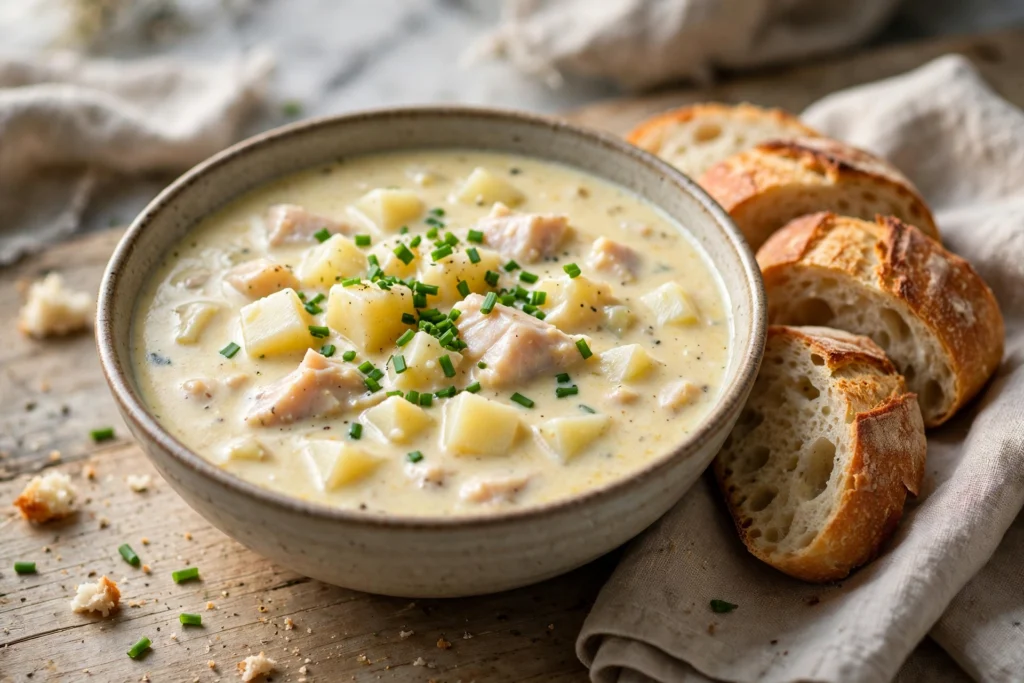
Smoked haddock makes an outstanding chowder, because the smoky flavour gives the soup a depth that plain white fish cannot match, and the fish holds its shape in the hot liquid rather than dissolving into flakes. Start with a base of softened onion, celery and potato cooked gently in butter, add the poaching milk from the fish along with a little stock, and then add the flaked fish at the very end so that it warms through without overcooking, finishing with a swirl of cream and a handful of chopped chives or parsley. The same approach works for a lighter soup, where the fish is poached in a clear fish or vegetable stock with sweetcorn and diced potato, which is closer to a traditional fish soup than to a creamy chowder and is a good choice for a lighter lunch. For a more substantial bowl, add smoked haddock to a leek and potato soup, or try a smoked haddock and sweet potato chowder, where the sweetness of the potato balances the saltiness of the fish in a way that surprises people who have never tried the combination. Whatever version you make, remember that the fish should always go in last, because smoked haddock that has been simmered for too long loses its texture and turns stringy, and the soup is at its best when the flakes are still distinct and tender.
Smoked Haddock for Breakfast and Brunch
Smoked haddock has a long history as a breakfast fish in Britain, and it deserves a place on the modern brunch table alongside the more familiar smoked salmon and kippers, because it is filling without being heavy and it pairs beautifully with eggs. The simplest breakfast version is a fillet poached in milk and served on buttered toast with a poached egg on top, where the runny yolk makes a sauce of its own and the whole dish takes less than fifteen minutes from fridge to plate. Smoked haddock and eggs on sourdough is a café-style upgrade, with the fish flaked over toasted sourdough, a soft scrambled egg and a scatter of chopped chives, and a smoked haddock omelette, with the flaked fish folded through the eggs along with a little grated cheese, is another quick option that works well for a weekend brunch. Kedgeree, as mentioned above, is the traditional smoked haddock breakfast dish, and it is worth making properly at least once, because the combination of rice, curry spice, egg and fish is one of the most satisfying breakfasts in British cooking. For a lighter start to the day, try smoked haddock with wilted spinach and a squeeze of lemon, which is light, fresh and ready in ten minutes, and proves that smoked haddock does not always need cream and butter to shine.
What to Serve With Smoked Haddock
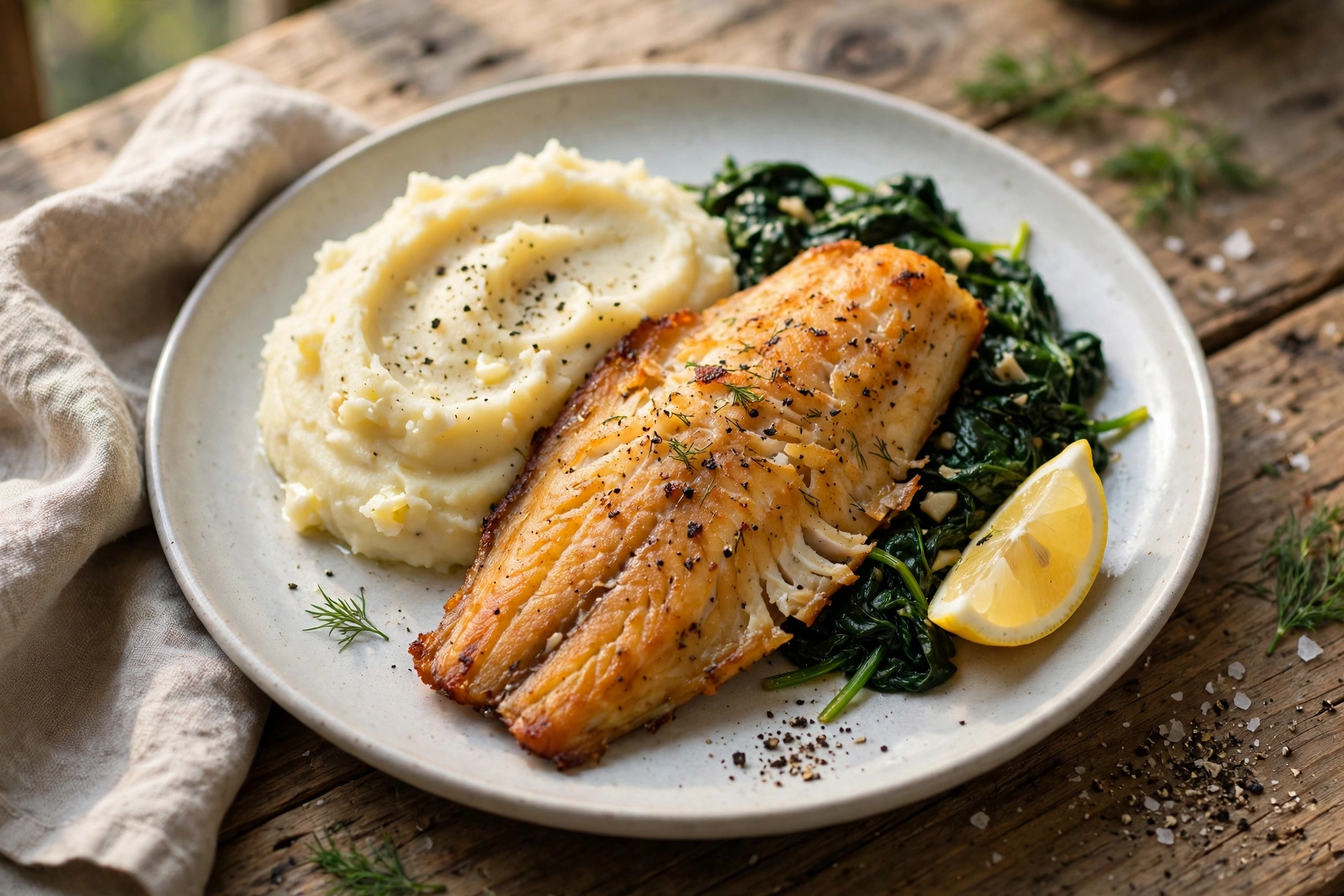
Smoked haddock is a rich, salty fish, so the best accompaniments are the ones that cut through that richness or soak up the sauce, rather than competing with the fish itself. Mashed potatoes are the classic partner, especially with a poached fillet and a little of the poaching milk spooned over the top, and buttered new potatoes with parsley are a lighter alternative that works well in summer. Steamed green vegetables, such as spinach, peas, green beans or broccoli, add colour and freshness to the plate and balance the saltiness of the fish, while a simple green salad with a sharp lemon dressing does the same job when the fish is served cold or at room temperature. Crusty bread is almost essential with any smoked haddock soup or chowder, because it is the best tool for mopping up the last of the broth, and a wedge of lemon is the simplest garnish of all, because the acidity lifts the smoky flavour and brightens the whole dish. For a more substantial meal, serve smoked haddock with rice, as in kedgeree, or with a baked potato and a crisp salad, and avoid heavy sauces or strong spices that would drown out the delicate smoky flavour that makes the fish special in the first place.
How to Cook Smoked Haddock Without Milk
Not every cook wants to poach smoked haddock in milk, and there are several good alternatives that produce excellent results, whether the reason is dietary, practical or simply a matter of taste. Baking is the easiest method, because you can wrap the fillets in foil or baking paper with a knob of butter, a squeeze of lemon and a few herbs, and bake them at around 180°C for twelve to fifteen minutes until the flesh flakes easily. Grilling works well for thicker fillets, brushed lightly with oil and cooked skin-side down for a few minutes under a medium grill, although the fish needs watching because it can dry out quickly under direct heat. Pan-frying is the fastest option, with the fillet cooked skin-side down in a hot pan with a little butter for three to four minutes, then flipped briefly to finish, which gives a crisp skin and tender flesh. Smoked haddock can also be cooked in the microwave, placed in a covered dish with a splash of water or milk and cooked on medium power for two to three minutes, which is the quickest method of all and works surprisingly well for a single fillet, although it is not the most elegant way to cook the fish for guests.
Common Mistakes When Cooking Smoked Haddock
The most common mistake with smoked haddock is overcooking it, because the fish goes from perfectly flaky to dry and tough in the space of a minute or two, and the best defence is to check the fish early and often rather than trusting a fixed cooking time. The second mistake is adding too much salt, because smoked haddock is already salty from the curing and smoking process, and a dish that tastes perfect before the salt goes in will be ruined by an extra pinch. A third mistake is buying dyed smoked haddock without realising it, and then wondering why the sauce has turned yellow, which is why undyed fish is the better choice for any dish where the sauce matters. Another common error is boiling the poaching milk hard, which can split the milk and toughen the fish, when a gentle simmer is all that is needed, and the same applies to soups and chowders, where the fish should always be added at the end. Finally, many cooks throw away the poaching milk, which is a waste of flavour, because that milk is the best possible base for a sauce or a soup, and keeping it is one of the simplest ways to make smoked haddock dishes taste as though they came from a professional kitchen.
Smoked Haddock and Health
Smoked haddock is a good source of lean protein, with a typical fillet providing around twenty grams of protein for relatively few calories, and it is rich in selenium, iodine and B vitamins, which makes it a nutritious choice as part of a balanced diet. Like other white fish, it is low in fat, and it contains useful amounts of omega-3 fatty acids, although less than oily fish such as salmon or mackerel, so it should not be relied on as a primary source of omega-3. The main nutritional drawback is the salt content, because the curing and smoking process adds sodium, and people who need to watch their salt intake should be aware that a fillet of smoked haddock can contain a significant proportion of the recommended daily amount. The NHS generally advises eating at least two portions of fish a week, including one of oily fish, and smoked haddock fits well into that pattern, provided it is eaten as part of a varied diet rather than every day. As with all smoked foods, it is best enjoyed in moderation, and pairing it with fresh vegetables and wholegrains, rather than with cream and butter every time, is the easiest way to keep smoked haddock dishes on the healthier side.
For more inspiration, the BBC Good Food collection is a useful starting point, because it brings together tested versions of the classics alongside newer ideas. You can browse the full set of recipes here: Smoked Haddock Recipes on BBC Good Food.
How Do I Stop Smoked Haddock Drying Out?
Smoked haddock dries out when it is cooked for too long or at too high a heat, so the answer is to cook it gently and to check it early, because the fish is done as soon as the flesh turns opaque and flakes easily with a fork. Poaching in milk is the most forgiving method, because the liquid keeps the flesh moist, and wrapping the fillet in foil or baking paper when baking it in the oven has the same effect. If you are grilling or frying, keep the heat moderate, brush the fish lightly with oil or butter, and take it off the heat a moment before you think it is ready, because the residual heat will finish the cooking. Letting the fish rest for a minute or two before serving also helps, because it allows the juices to settle back into the flesh, and serving it with a sauce, a squeeze of lemon or a spoonful of the poaching milk will mask any slight dryness. Above all, remember that a fillet of average thickness needs only six to eight minutes in simmering milk, and setting a timer is the simplest way to avoid the most common smoked haddock mistake of all.
Can I Eat Smoked Haddock Cold?
Smoked haddock that has been cold-smoked must be cooked before eating, so it should not be eaten cold straight from the packet, because cold-smoking flavours the fish without cooking it. Hot-smoked haddock, on the other hand, is already cooked during the smoking process and can be eaten cold, flaked over a salad or into a sandwich, although it is still worth checking the label to confirm which type you have bought. Cooked smoked haddock can be eaten cold the next day, provided it has been cooled quickly and stored in the fridge, and leftover poached fish is excellent flaked into a salad, folded through a pasta dish or used to make fishcakes. If you are unsure whether your smoked haddock is hot-smoked or cold-smoked, the label should say, and if it does not, the safest approach is to cook it before eating. As a general rule, treat smoked haddock like any other raw fish until you have confirmed otherwise, because food safety is not the place to take chances.
What Is the Difference Between Smoked Haddock and Smoked Cod?
Smoked haddock and smoked cod are both white fish from the same family, and they are often sold side by side, but there are real differences in flavour, texture and price that are worth knowing about. Haddock has a slightly sweeter, more delicate flavour and a finer flake than cod, which makes it the better choice for dishes where the fish is the star, such as a poached fillet or a kedgeree, while cod is a little firmer and milder, and holds up better in dishes with strong sauces or long cooking times. Smoked cod is often sold as cod loin or cod fillet and can be more expensive than smoked haddock, although prices vary by season and supplier, and the two fish are interchangeable in most recipes if you adjust the cooking time slightly. The most important difference for the cook is that haddock fillets tend to be thinner than cod loins, so they cook faster and need more careful watching, and the classic dishes associated with each fish reflect that difference, with haddock lending itself to quick poaching and cod to baking and roasting. Either fish will make a good fish pie or chowder, but if a recipe calls specifically for smoked haddock, it is usually because the author wants the delicate flavour and fine flake that only haddock provides.
How Long Does Smoked Haddock Last in the Fridge?
Fresh smoked haddock should be eaten within one to two days of buying it, stored in the coldest part of the fridge, ideally on a plate covered loosely with cling film or in a container that allows a little air to circulate. Once cooked, smoked haddock will keep for up to two days in the fridge, provided it is cooled quickly after cooking and stored in a sealed container, and it should be reheated thoroughly until it is piping hot all the way through. Smoked haddock freezes well, and a well-wrapped fillet will keep for up to three months in the freezer, although the texture may be slightly softer after defrosting, so frozen fish is best used in pies, soups and chowders rather than served as a plain fillet. To defrost, move the fish to the fridge overnight rather than leaving it at room temperature, and never refreeze fish that has already been defrosted. If the fish smells sour or sharp, feels slimy or has changed colour, it should be thrown away, because those are signs that it has gone off, and no amount of cooking will make it safe to eat.
Can I Use Smoked Haddock in a Fish Pie?
Smoked haddock is one of the best fish for a fish pie, because its firm flesh holds its shape in the creamy sauce and its smoky flavour gives the whole dish a depth that plain white fish cannot match. The classic fish pie combines smoked haddock with other fish, often cod and salmon, and sometimes prawns, folded into a white sauce made from the poaching milk, with hard-boiled eggs and a mashed potato topping that is baked until golden and crisp. To make it, poach the fish in milk first, reserve the milk for the sauce, flake the fish into large pieces and layer it in a baking dish with the sauce and any other fillings, then top with mashed potato and bake at around 190°C for twenty-five to thirty minutes. The key is not to overcook the fish in the first place, because it will cook further in the oven, so poach it briefly and let the baking finish the job. Smoked haddock also works well in a fish pie made with a pastry topping or a crumble topping, and it is one of the few fish that can carry a pie on its own, without needing a second fish to support it.
What Wine Goes With Smoked Haddock?
Smoked haddock pairs well with white wines that have enough acidity to cut through the saltiness and smokiness of the fish, and the classic choices are a dry white such as a Muscadet, a Picpoul de Pinet or a dry Riesling, all of which have the freshness to balance the rich flavour. A lightly oaked Chardonnay also works, particularly with creamy smoked haddock dishes such as fish pie or chowder, because the wine’s texture matches the creaminess of the sauce without overwhelming the fish. For a simpler pairing, a crisp lager or a dry cider is an excellent match, because the carbonation and acidity cleanse the palate between bites, and both are traditional companions to smoked fish in Britain. Sparkling wine is another good choice, especially with smoked haddock served as a starter or in a lighter dish, because the bubbles and acidity lift the smoky flavour. The general rule is to avoid heavy, tannic red wines, which clash with the saltiness of the fish and can leave a metallic taste, and to choose instead something light, dry and refreshing that lets the smoked haddock remain the focus of the meal.
Conclusion
Smoked haddock is one of the most rewarding fish to cook with, because it is quick, forgiving and full of flavour, and the smoked haddock recipes in this guide cover everything from the classic kedgeree and Cullen skink to a simple poached fillet with a poached egg. The most important lessons are to buy undyed fish when you can, to cook it gently and briefly, to taste before adding salt, and to keep the poaching milk for a sauce or a soup, because those four habits will improve every smoked haddock dish you make. Whether you are cooking a comforting fish pie for the family, a quick chowder for a weeknight supper or an elegant smoked haddock starter for guests, the fish itself does most of the work, and the recipes here are designed to let its smoky, delicate flavour shine. Start with a simple poached fillet, work your way up to kedgeree, and you will soon find that smoked haddock has earned a permanent place in your cooking.
For a different kind of sporting story, read our guide to rugby positions and what each role does on the field.