Approved Food: The UK Discount Grocer for Surplus and Short-Dated Stock
Approved Food is an online discount food retailer that has built its business on a simple idea: food that is near or just past its best-before date is usually still perfectly good to eat, and selling it cheaply saves shoppers money while keeping good food out of the bin. The company, based in Dodworth, South Yorkshire, describes itself as the UK’s largest online retailer for short-dated and residual stock, and it sells branded groceries, drinks, household goods, beauty products, pet supplies and alcohol at discounts that can reach up to 70% off the recommended retail price. Founded in 2009 by Dan Cluderay, Approved Food has grown from a market stall beginning into a fulfilment-centre operation that ships thousands of orders a week across the UK, Ireland and Europe, and it now has well over a quarter of a million registered customers. This guide explains what Approved Food is, how it works, whether it really saves you money, and how to shop there without wasting money on bargains you do not need.
What Approved Food Is
Approved Food is an online-only clearance retailer that buys surplus, discontinued and short-dated stock from suppliers and sells it through its website at clearance prices, and it is the UK’s largest online retailer for this kind of stock. The company was established in 2009 by former Ericsson shift support technician Dan Cluderay, who started the business on a market stall in Worksop before moving it online, and it now operates from a fulfilment centre in Dodworth, South Yorkshire, having moved there from Sheffield in 2019. Approved Food sells food and drink alongside a range of household goods, beauty products, pet supplies and alcohol, and its range changes constantly, because it depends on what surplus stock becomes available rather than on a fixed catalogue. The company says that every year in the UK more than seven million tonnes of food and drink are thrown away, much of which has passed its best-before date but would still be perfectly good to consume, and its mission is to rescue some of that food and sell it cheaply. Revenue was reported at £4 million in 2015, and the business has grown considerably since then, although more recent revenue figures are not publicly reported.
How Approved Food Works
Shopping at Approved Food works much like shopping at any other online retailer, with a few important differences that come from the nature of clearance stock. You browse the website, add products to your basket, and check out in the usual way, but the grocery order must reach at least £22.50 before checkout, and delivery should arrive within two to three working days after dispatch. Each product page displays the relevant best-before date, and Approved Food’s terms place the responsibility on the customer to check that information before buying, which means you should always look at the date before you add something to your basket. The company can refuse a refund when a past best-before date was displayed correctly on the listing, so the date is not a detail to skip over. Delivery is charged per box, with boxes holding up to 25kg, and free delivery is available on orders over £55, which is worth remembering if your order is close to that threshold. Stock is limited and changes daily, so a product that is available today may be gone tomorrow, and the same product may not be available on your next visit, which means Approved Food works better as an occasional clearance shop than as a dependable source for every weekly essential.
Best Before vs Use By: What Approved Food Sells
The most important thing to understand about Approved Food is the difference between a best-before date and a use-by date, because the whole business depends on customers understanding that distinction. A best-before date is a measure of quality, not safety, and food that has passed its best-before date is usually still safe to eat, although its taste, texture or appearance may have declined slightly. A use-by date, by contrast, is a safety date, and food should not be eaten after its use-by date has passed, because it may no longer be safe. Approved Food specialises in food that is near or just past its best-before date, along with surplus stock, discontinued lines and seasonal products that have become harder to sell, and it does not sell food past its use-by date. Some items on the site still have several months remaining before their best-before date and are reduced because they are seasonal or excess stock, while others are close to or just past the date, and the product page tells you which. Understanding this distinction is what turns Approved Food from a confusing website into a genuinely useful money-saving tool, and the company’s own messaging makes the same point, reminding customers that best-before is about quality, not safety.
Whether Approved Food Really Saves You Money
Approved Food can save you real money, but it is not automatically cheaper than a supermarket, and the honest answer is that the savings depend on what you buy and how carefully you compare prices. The headline discounts are impressive, with savings of up to 70% off the recommended retail price, and individual deals can be striking, such as a jar of Lotus Biscoff spread listed for £1 against a displayed reference price, or Maltesers Mini Bunnies reduced from £2 to 1p, although customers were restricted to one bag in that case. However, a product can be reduced against its recommended retail price while still matching a supermarket promotion or costing more per 100g, litre or individual item, so the displayed saving does not always mean the lowest price available. Delivery charges and the £22.50 minimum order also eat into the savings, especially on a small order, and the free delivery threshold of £55 means that a modest shop will carry a delivery cost. A comparison service such as Trolley can help you check current supermarket prices before you buy, and the most successful Approved Food shoppers are the ones who compare the price per unit, factor in the delivery cost, and only buy products they would have bought anyway. The company itself has suggested that customers can save as much as £700 a year by buying groceries from Approved Food, although that figure is the company’s own estimate and will depend heavily on how much of your shopping you do there.
What You Can Buy on Approved Food
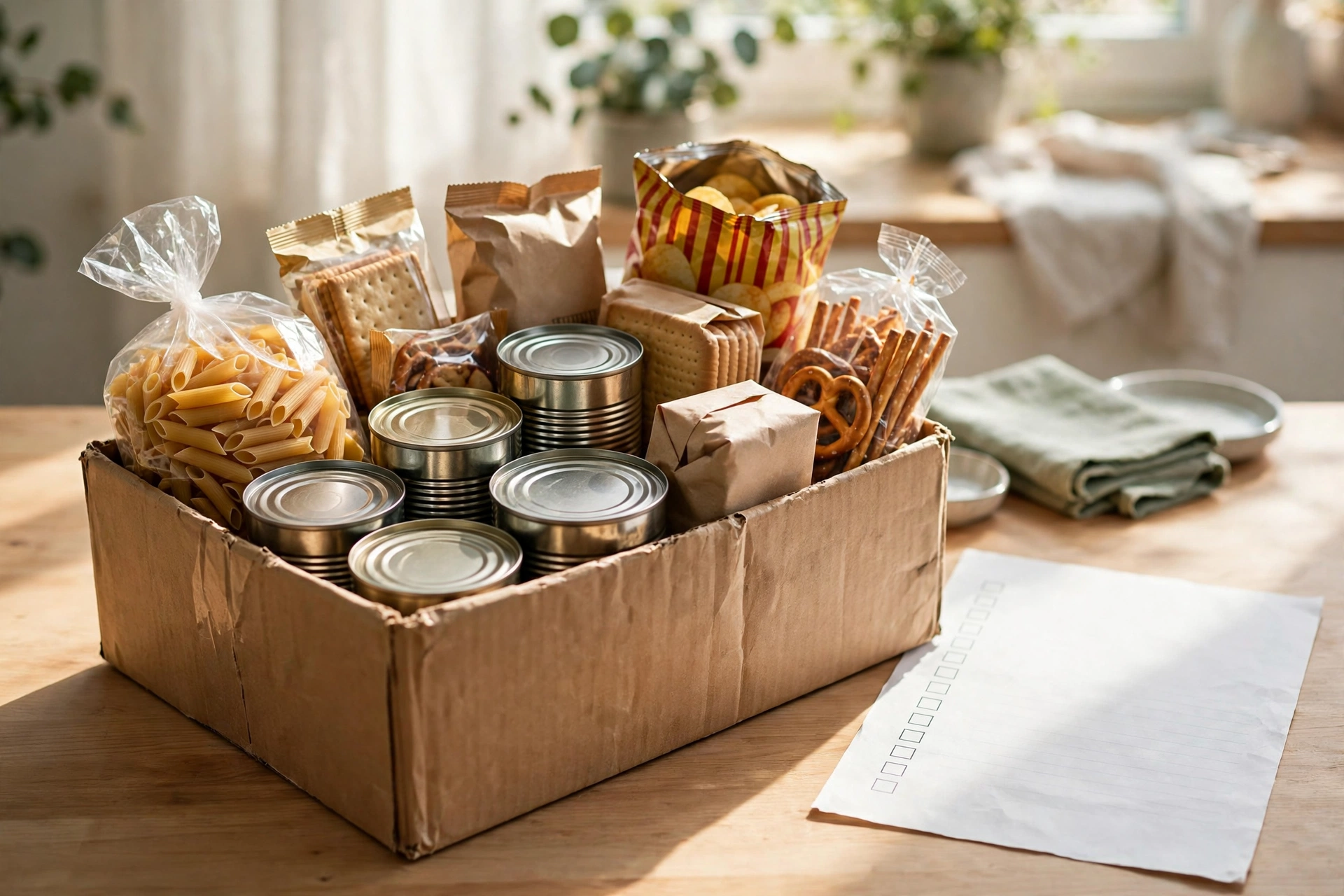
The Approved Food range covers far more than food, although food and drink are the core of the business, and the range changes daily as new surplus stock arrives. Cupboard essentials are the strongest category, with cereals, cooking sauces, soft drinks, tinned goods, rice, pasta and snacks appearing regularly at deep discounts, and branded products are common, which is part of the appeal for shoppers who want familiar names at clearance prices. Household goods are another strong area, with cleaning products, toilet rolls and other necessities often available at a fraction of supermarket prices, and beauty products, pet supplies and alcohol are also sold. The site runs a Hot Deals section where the biggest discounts appear, including products listed for as little as 1p for a limited time, and a daily deal that changes every day, which rewards regular visitors. There are also bulk-buy and multibuy savings, such as four items for £2 or twenty items for £5, which are useful for stocking up on cupboard staples. The changing range is both the strength and the weakness of the site, because it means you can find genuine bargains, but it also means you cannot rely on Approved Food for a specific item on a specific day, and the best approach is to browse what is available and build your order around the deals rather than around a fixed shopping list.
Approved Food Delivery, Minimum Order and Free Delivery
Approved Food charges delivery per box, with each box holding up to 25kg, and delivery should arrive within two to three working days after dispatch, which is slower than a supermarket delivery slot but reasonable for a clearance retailer. The minimum order is £22.50, which means you cannot place a very small order, and free delivery is available on orders over £55, which is the threshold to aim for if you want to avoid paying for delivery. The delivery cost matters when you are calculating whether a bargain is really a bargain, because a £2 saving on a product is wiped out if you are paying several pounds for delivery on a small order, and the best value comes from a larger order that qualifies for free delivery. Orders are tracked, so you can follow the delivery, and the company ships across the UK, Ireland and Europe, although delivery times and charges may vary outside the UK. If your order is close to the £55 free delivery threshold, it is often worth adding a cupboard staple you will use anyway rather than paying for delivery, because the extra item costs less than the delivery charge and you get something useful for the money.
Approved Food Discount Codes and First Order Offers
Approved Food offers a 10% discount on your first order when you sign up to the mailing list, which is the most reliable discount available and does not require a code, because the offer is applied when you join the list. The company also runs seasonal promotions and sales throughout the year, including Black Friday, when the bargains are even bigger, and the Hot Deals section carries the deepest discounts on fast-moving clearance stock. Cashback is another way to save, because going through a cashback site such as TopCashback can earn money back on top of the clearance prices, although using a voucher code that is not listed on the cashback site can stop the cashback from tracking, so it is worth checking the terms before combining offers. Voucher-code aggregator sites list Approved Food codes, but many of these are expired or unreliable, and the most trustworthy offers are the ones on the Approved Food website itself or in its own emails. The referral scheme, advertised as £5 for you and a friend, is another small saving for customers who introduce someone new to the site. As with any discount, the offer is only a saving if you buy something you would have bought anyway, and a 10% discount on a product you do not need is still money spent rather than money saved.
Approved Food Legitimacy and Safety
Approved Food is a legitimate, long-established UK retailer that has been trading since 2009, and it is a real company with a real fulfilment centre in Dodworth, South Yorkshire, not a fly-by-night website. The business is the UK’s largest online retailer for short-dated and residual stock, it has well over a quarter of a million registered customers, and it ships around 2,500 orders a week, which are figures that point to a substantial, established operation. Independent reviewers who have ordered from the site report that orders arrive as described, with the best-before dates displayed on the product pages matching the products received, and that the quality of the food is generally good, particularly for cupboard staples and drinks. The main risk is not legitimacy but expectation, because customers who treat Approved Food like a normal supermarket and expect a fixed range, a specific product or a guaranteed saving will be disappointed, while customers who understand that it is a clearance retailer with a changing range tend to be satisfied. The terms are clear that the customer is responsible for checking the best-before date before buying, and that refunds can be refused when a past best-before date was correctly displayed, so reading the product page carefully is part of shopping safely on the site.
Approved Food vs Supermarkets: Price Comparison
Approved Food is cheaper than a supermarket for the products it has in stock at clearance prices, but it is not a replacement for a supermarket, and comparing the two is not straightforward. A supermarket offers a fixed range, a guaranteed availability, a choice of delivery slots and the ability to buy fresh food, chilled food and frozen food, none of which Approved Food can match, because its range is limited to surplus and short-dated stock and it does not sell fresh produce. Approved Food’s advantage is price, because its clearance prices on branded cupboard goods, drinks and household items are often far below supermarket prices, with discounts of up to 70% off the recommended retail price, and the Hot Deals section can offer products for pennies. The best approach for most shoppers is to use both, doing the main weekly shop at a supermarket and using Approved Food as a top-up shop for cupboard staples, drinks and household goods that are available at a discount. That way, you get the savings without the frustration of trying to build a complete shop from a changing clearance range, and you avoid the trap of buying products you do not need simply because they are cheap. Approved Food is best thought of as an online version of a supermarket’s yellow-sticker reduced section, and like that section, it rewards shoppers who browse, compare and buy opportunistically.
Tips for Shopping on Approved Food
The most useful tip for shopping on Approved Food is to check the best-before date on every product page before you add it to your basket, because the date is displayed for a reason and the company’s terms place the responsibility on you. The second tip is to compare the price per 100g, litre or item with the supermarket price, because a product that looks cheap can still be more expensive per unit than a supermarket promotion, and a comparison service such as Trolley makes this easy. The third tip is to build your order up to the £55 free delivery threshold with cupboard staples you will definitely use, rather than paying for delivery on a small order, because the delivery charge can wipe out the saving. A fourth tip is to visit the Hot Deals section and the daily deal first, because that is where the deepest discounts are, and to check the site regularly, because new stock arrives daily and the best deals sell out quickly. Finally, only buy what you will use before it goes off or before you lose interest in it, because a bargain that sits in the cupboard for a year is not a saving, and the most successful Approved Food shoppers are the ones who treat it as a way to stock up on things they already buy, rather than as a reason to buy things they never needed.
For the latest deals and the full range, the Approved Food website itself is the best place to look, because the stock changes daily and no other site can show you what is available right now. You can browse the current range here: Approved Food.
Is Approved Food Worth It?
Approved Food is worth it for shoppers who understand what it is and use it in the right way, which means treating it as a clearance top-up shop rather than as a replacement for a supermarket. The savings are real, with discounts of up to 70% off the recommended retail price and individual deals that can be striking, but the savings depend on comparing prices, factoring in delivery, and only buying products you would have bought anyway. Customers who browse the Hot Deals section, check the best-before dates, compare the price per unit and build their order up to the free delivery threshold tend to save money, while customers who buy impulsively or pay for delivery on a small order may not. The business is legitimate, long-established and straightforward about what it sells, and its mission to reduce food waste is a genuine benefit alongside the savings. If you are happy to shop opportunistically and to let the available deals shape your order, Approved Food is a useful addition to your money-saving toolkit.
What Is the Minimum Order on Approved Food?
The minimum order on Approved Food is £22.50, which means your basket must reach that value before you can check out. This is an important detail, because it means you cannot place a very small order, and it encourages shoppers to build a larger basket, which is usually the best way to get value from the site anyway. The minimum order is separate from the free delivery threshold, which is £55, so an order of £22.50 will still carry a delivery charge, while an order over £55 qualifies for free delivery. If your basket is just below the minimum, adding a cupboard staple you will use anyway is a better choice than adding something you do not need, and the same logic applies when you are close to the free delivery threshold.
Does Approved Food Sell Food Past Its Use-By Date?
No, Approved Food does not sell food past its use-by date, and it is important to understand the difference between a use-by date and a best-before date. A use-by date is a safety date, and food should not be eaten after it has passed, while a best-before date is a quality date, and food that has passed it is usually still safe to eat, although its taste or texture may have declined. Approved Food sells food that is near or just past its best-before date, along with surplus and discontinued stock, and it displays the best-before date on every product page so that customers can check it before buying. The company’s terms place the responsibility on the customer to check that date, and refunds can be refused when a past best-before date was correctly displayed, so reading the product page is an essential part of shopping on the site.
How Long Does Approved Food Delivery Take?
Approved Food delivery should arrive within two to three working days after dispatch, which is slower than a supermarket delivery slot but reasonable for a clearance retailer that ships from a single fulfilment centre. Delivery is charged per box, with each box holding up to 25kg, and free delivery is available on orders over £55. Orders are tracked, so you can follow the delivery once it has been dispatched, and the company ships across the UK, Ireland and Europe. If you need groceries urgently, a supermarket delivery or a trip to the shops will be faster, but for a planned top-up shop of cupboard staples, the two to three working day timescale is usually fine.
Can You Get 10% Off Your First Approved Food Order?
Yes, Approved Food offers 10% off your first order when you sign up to the mailing list, and the offer is advertised on the company’s own website. There is no code to enter, because the discount is linked to joining the mailing list, and you will receive the offer by email after signing up. The first-order discount can be combined with the clearance prices, which means the saving is on top of the already reduced prices, and it is the most reliable discount available on the site. Seasonal promotions and sales, including Black Friday, offer further savings throughout the year, and the Hot Deals section carries the deepest discounts on fast-moving clearance stock.
Does Approved Food Deliver to Ireland and Europe?
Yes, Approved Food ships to Ireland and Europe as well as to the UK, and the company lists Ireland and a number of European countries among the areas it serves. Delivery times and charges may vary outside the UK, and customers ordering from outside the UK should check the delivery information on the website before placing an order. The range available may also vary by destination, because some products cannot be shipped internationally, so it is worth browsing the site from your delivery address to see what is available. The company’s fulfilment centre is in Dodworth, South Yorkshire, and all orders are dispatched from there.
Conclusion
Approved Food is a genuinely useful money-saving tool for shoppers who understand what it is and use it in the right way, because it turns surplus and short-dated food that would otherwise be thrown away into branded groceries at discounts of up to 70%. The business is legitimate, long-established and straightforward about its model, and its mission to reduce food waste is a real benefit alongside the savings. The key to getting value from Approved Food is to check the best-before date on every product, compare the price per unit with the supermarket, build your order up to the free delivery threshold, and only buy what you will actually use. Used that way, as a clearance top-up shop alongside a normal supermarket shop, Approved Food can save you real money, and it does so while keeping good food out of the bin, which is a benefit that goes beyond the price tag.
For a different kind of sporting story, read our guide to rugby positions and what each role does on the field.