Things to Do in Bath: Roman Baths, Georgian Streets and Spa Days
The best things to do in Bath combine two thousand years of history with one of the most beautiful city centres in Britain, and the best way to enjoy the city is to slow down and let its honey-coloured stone, steaming hot springs and elegant Georgian streets set the pace. Bath is the only city in the whole of the UK to be listed as a UNESCO World Heritage Site, and its compact centre means that the Roman Baths, Bath Abbey, the Royal Crescent and the Jane Austen Centre are all within easy walking distance of each other. Whether you have a single day or a full weekend, this guide covers the essential sights, the museums and spas that make Bath special, and the practical tips that will help you make the most of your visit.
Explore the Roman Baths
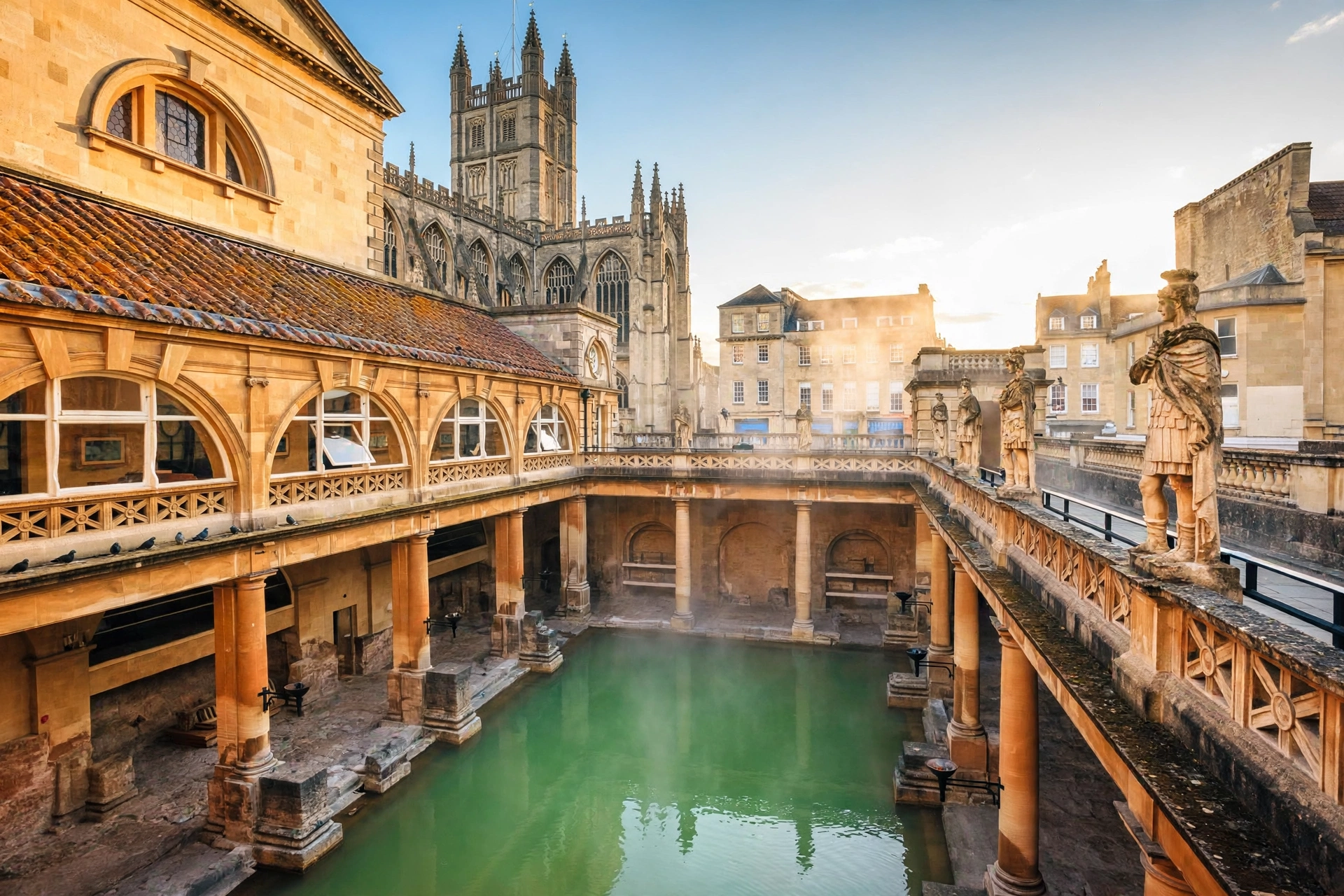
The Roman Baths are the reason Bath exists, and they are the first stop on almost every list of things to do in Bath, because nowhere else in Britain can you walk around a Roman bathing complex that is so remarkably well preserved. Nearly two thousand years ago, the Romans built a temple and bathing complex around the natural hot springs that bubble up from the ground at around 46°C, and the steaming Great Bath, surrounded by Victorian statues of Roman emperors, is still the centrepiece of the visit today. Below street level, the museum explains how the baths worked, with the remains of the temple, the original Roman drains, the gilded bronze head of the goddess Sulis Minerva, and the curse tablets that visitors threw into the sacred spring in the hope that the goddess would punish whoever had stolen their belongings.
You cannot swim in the Great Bath, because the water is untreated and is not safe for bathing, but you can taste the spa water in the Pump Room next door, and the museum is designed to be explored at your own pace with an audio guide that brings the Roman world to life. Allow at least two hours for a proper visit, and try to arrive early in the morning or later in the afternoon, when the crowds are thinner and the light falling across the steaming water is at its most atmospheric. Tickets can be booked in advance online, which is strongly recommended at weekends and during school holidays, and the Roman Baths are open throughout the year, although opening hours vary by season, so check before you set out.
Step Inside Bath Abbey
Standing right beside the Roman Baths, Bath Abbey is one of the finest examples of late Gothic architecture in England, and its soaring fan-vaulted ceiling and enormous windows make it one of the most impressive interiors in the country. The Abbey’s history stretches back to the seventh century, although the present building was begun in 1499 and completed in the early sixteenth century, and it has been a place of worship, coronation and community life ever since. The west front is famous for its carved stone ladders, showing angels climbing between heaven and earth, a detail that rewards a few minutes of close looking before you step inside to admire the vaulting, the memorials and the stained glass.
The Abbey also offers tower tours, which climb to the top of the tower for views across the rooftops of Bath towards the surrounding hills, and the climb is well worth the effort on a clear day, although it involves a large number of steps and is not suitable for everyone. Entry to the Abbey itself is free, with a suggested donation, and it remains a working church, so visitors should be respectful of services and events taking place during their visit. The Abbey sits at the heart of the city, and it makes a natural pairing with the Roman Baths next door, since the two together explain how Bath grew from a Roman spa town into one of the great cities of Georgian England.
Walk Up to the Royal Crescent and the Circus
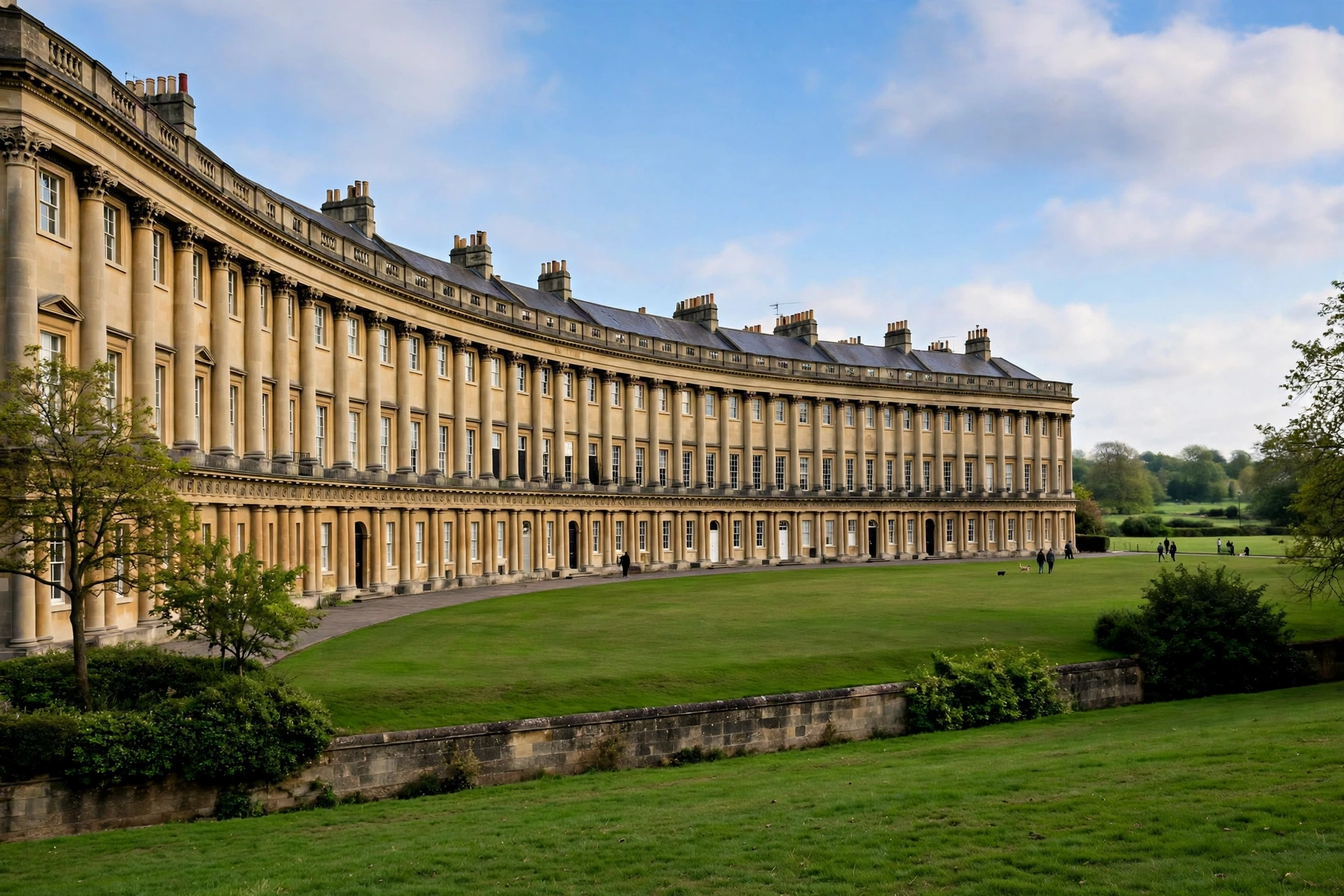
The Royal Crescent is the most famous view in Bath, a sweeping curve of thirty honey-coloured Georgian townhouses built in the 1760s and 1770s to the design of John Wood the Younger, overlooking a broad lawn and Royal Victoria Park. The Crescent is one of the finest examples of Georgian architecture in Britain, and it is best appreciated slowly, from several angles, whether you stand on the lawn and take in the full sweep of the curve, or walk along the pavement and admire the elegant symmetry of the windows and doors. The houses are private homes and a hotel, so you cannot wander inside them, but the exterior is free to enjoy at any time, and it is one of the most photographed places in the city.
A short walk from the Crescent brings you to the Circus, a ring of grand Georgian townhouses arranged in a circle, and to No. 1 Royal Crescent, a museum that recreates the home of a wealthy Georgian family, from the elegant drawing room upstairs to the servants’ kitchen below. The museum is the best way to understand what life was really like behind the beautiful facades, and it makes an excellent companion to a walk around the Crescent itself. The area around the Crescent and the Circus is also one of the most pleasant places in Bath simply to wander, with quiet streets, green spaces, and views across the city that reward anyone who takes the time to explore on foot.
Relax at Thermae Bath Spa
Thermae Bath Spa is the only place in Britain where you can bathe in naturally warm spa water, and it is one of the most relaxing things to do in Bath, offering a modern spa experience in the heart of the historic city. The spa is housed in a contemporary building that combines the original eighteenth-century Hot Bath with the modern New Royal Bath, and its facilities include the Minerva Bath, a large indoor pool fed by the natural thermal waters, a series of steam rooms, and the famous rooftop pool, where you can float in warm water while looking out across the rooftops of Bath towards the surrounding hills. The rooftop pool is particularly magical at sunset or on a winter evening, when the steam rises into the cold air and the city lights begin to appear.
A spa session needs to be booked in advance, and it is sensible to plan your visit around it, since the rooftop pool is the experience most visitors want and the most popular time slots fill up quickly. Admission to the main spa is for visitors aged sixteen and over, and spa treatments are available only to adults aged eighteen and over, so families with younger children will need to plan accordingly. Bring swimwear, and note that the spa provides towels, robes and lockers, so you do not need to carry much with you. After a session in the warm water, many visitors find that the rest of Bath feels even more enjoyable, which is exactly the effect the Romans were chasing nearly two thousand years ago.
Meet Jane Austen’s Bath
Jane Austen lived in Bath from 1801 to 1806, and she set two of her novels, Northanger Abbey and Persuasion, partly in the city, which makes Bath an essential destination for anyone who loves her writing. The Jane Austen Centre, on Gay Street, explores her life in the city and the Regency world she wrote about, with costumed guides, exhibitions about her family and her novels, and a tearoom where you can enjoy tea and cake in period style. The Centre is housed in a Grade II listed Georgian townhouse, and it is an accessible and entertaining introduction to Austen’s Bath, whether you are a devoted reader or simply curious about the society that produced her novels.
The Jane Austen Centre makes a natural addition to a walk towards the Circus and the Royal Crescent, and the streets around Gay Street, Queen Square and the Assembly Rooms are the very streets that Austen herself walked and wrote about. The city also hosts the annual Jane Austen Festival, a celebration of her life and work that includes costumed promenades, talks and balls, and it is one of the highlights of Bath’s events calendar for literary fans. Even if you visit outside festival time, you can follow in Austen’s footsteps by walking from the Centre to the Pump Room and the Assembly Rooms, and by imagining the balls, concerts and social occasions that fill the pages of her novels set in the city.
Cross Pulteney Bridge and Explore the Riverside
Pulteney Bridge is one of only a handful of bridges in the world that is lined with shops on both sides, and it is one of the most photographed places in Bath, offering views down the River Avon to the weir below. The bridge was completed in the eighteenth century and designed in the style of the Ponte Vecchio in Florence, and it connects the city centre with the streets on the far side of the river, where you will find independent shops, cafes and the Holburne Museum, a gallery and museum housed in a handsome Georgian building at the end of Great Pulteney Street. A walk across the bridge and along the river is one of the most enjoyable free things to do in the city, and it is especially beautiful in the early morning or late afternoon, when the light falls across the water and the stonework glows.
Beyond the bridge, Bath rewards visitors who explore a little further, whether that means a walk along the Kennet and Avon Canal, a visit to the Holburne Museum’s collections of art and decorative objects, or a trip to Mary Shelley’s House of Frankenstein, which tells the story of the author who created Frankenstein while she was living in Bath. The city also has a lively shopping scene, with independent shops in the Walcot artisan quarter and along Milsom Street, and a wide choice of cafes, pubs and restaurants, including Sally Lunn’s Historic Eating House, Bath’s oldest house, which is famous for its Sally Lunn bun. A good plan is to spend the morning on the main sights and the afternoon wandering the smaller streets, where the city’s character is at its most charming.
Practical Tips for Visiting Bath
Bath is a compact city, and almost everything in the centre is within easy walking distance, which makes it one of the easiest historic cities in England to explore on foot. The city is well connected by train from London Paddington, Bristol and other major cities, and Bath Spa station is only a short walk from the Roman Baths and the Abbey, so there is no need to drive into the centre, where parking is limited and expensive. If you do arrive by car, the park-and-ride services on the edge of the city are a practical alternative, and they drop you close to the main sights without the stress of finding a space in the centre.
Tickets for the most popular attractions, including the Roman Baths and Thermae Bath Spa, should be booked in advance online, because both can sell out at weekends and during school holidays, and booking ahead also lets you choose the time that suits you best. Opening hours and admission prices can change, so the official Visit Bath tourism website is the best place to check the latest information before you travel, since it lists attractions, events, places to stay and current offers in one place. One useful warning for visitors is that the Fashion Museum has closed while it prepares a new home, so do not plan a visit to its former displays at the Assembly Rooms, and check the official site for news of its reopening before including it in your plans.
What Is the Best Time to Visit Bath
Bath is enjoyable at any time of year, but spring and early autumn are often considered the best seasons, because the weather is mild, the crowds are smaller than in high summer, and the parks and gardens are at their most attractive. Summer brings the warmest weather and the longest days, along with the biggest crowds and the highest prices, while winter has a charm of its own, with the Christmas market, festive lights, and the sight of steam rising from the rooftop pool at Thermae Bath Spa on a cold evening. November and January are the quietest months, which can mean cheaper accommodation and shorter queues, although some attractions may have shorter opening hours. Whatever season you choose, booking tickets and accommodation in advance is the best way to make sure your visit goes smoothly.
How Long Do You Need in Bath
One full day is enough to see the main sights of Bath, including the Roman Baths, Bath Abbey, the Royal Crescent and a walk through the city centre, but two days are better, because they allow time for a spa session, a museum visit and a leisurely exploration of the smaller streets. A weekend break is the most popular way to visit the city, with the first day spent on the historic sights and the second day given over to the spa, the museums and the shops. Visitors who stay longer can use Bath as a base for day trips to Stonehenge, the Cotswolds, Wells and the Somerset countryside, all of which are within easy reach by car or public transport, and all of which make a rewarding addition to a longer stay.
Can You Visit Bath as a Day Trip from London
Yes, Bath is an easy day trip from London, with direct trains from London Paddington to Bath Spa taking around ninety minutes, although this journey time is a commonly published figure rather than a live timetable and travellers should check the current schedule before booking. The early trains arrive in Bath in time for the Roman Baths to open, and the city centre is a short walk from the station, so it is possible to see the main sights, enjoy lunch and be back in London in the evening. However, a day trip means missing the spa and the evening atmosphere of the city, so an overnight stay is worth considering if your schedule allows it, and Bath has a wide range of hotels, guesthouses and self-catering options to suit every budget.
How Much Does It Cost to Visit the Roman Baths
Admission prices for the Roman Baths change from time to time and vary by season, so the exact price should be checked on the official Roman Baths website before your visit rather than relying on a figure in a guide. Tickets can be booked online in advance, which is recommended, and there are usually concessionary rates for children, students and older visitors, as well as family tickets. Some visitors combine the Roman Baths with other attractions using a combined ticket or a city pass, and it is worth comparing the options if you plan to visit several sights, because a combined ticket can work out cheaper than buying each one separately.
Is Bath a Good Place to Visit with Children
Bath is a good destination for families, although the experience is best for older children and teenagers, who will enjoy the Roman Baths, the museums and the stories behind the city’s history. The Roman Baths have family-friendly audio guides, including versions designed for children, and the city has parks, riverside walks and attractions such as Mary Shelley’s House of Frankenstein that appeal to younger visitors. The main limitation is Thermae Bath Spa, which admits only visitors aged sixteen and over to the main spa, so families with younger children will need to plan a different activity while adults visit the spa, or choose a family-friendly hotel with a swimming pool instead.
Where Is the Best Place to Stay in Bath
The best place to stay in Bath depends on your budget and your plans, but staying in the city centre puts you within walking distance of the Roman Baths, the Abbey and the main sights, and it lets you enjoy the city’s atmosphere in the evening after the day visitors have gone home. The centre has a wide choice of hotels, from luxury spa hotels to smaller boutique hotels and guesthouses, while the streets around the Royal Crescent and the Circus offer some of the most elegant places to stay in the city. Budget travellers can find guesthouses and self-catering apartments a short walk from the centre, and there are also campsites and holiday cottages in the surrounding Somerset countryside for those who prefer a quieter base.
Conclusion
The things to do in Bath add up to one of the most rewarding city breaks in England, because the city offers history, architecture, literature and relaxation in a single compact centre that is easy to explore on foot. Start with the Roman Baths and Bath Abbey, walk up to the Royal Crescent and the Circus, take time for the Jane Austen Centre, and finish with a session at Thermae Bath Spa, and you will have experienced the very best of what Bath has to offer. Each of these sights tells a different part of the city’s story, from the Roman engineers who first harnessed the hot springs to the Georgian architects who turned Bath into the most fashionable city in England.
Bath is a city that rewards visitors who take their time, so resist the temptation to rush from one sight to the next and allow yourself an afternoon to wander the smaller streets, sit in a cafe, and enjoy the atmosphere that has drawn visitors to the city for two thousand years. Book your tickets in advance, check the latest opening times, wear comfortable shoes for the hills and the cobbles, and you will find that Bath lives up to its reputation as one of the most beautiful and welcoming cities in Britain.
For a change of pace after your city break, take a look at our guide to rugby positions and see how the fifteen players on a rugby team each have their own job on the pitch.