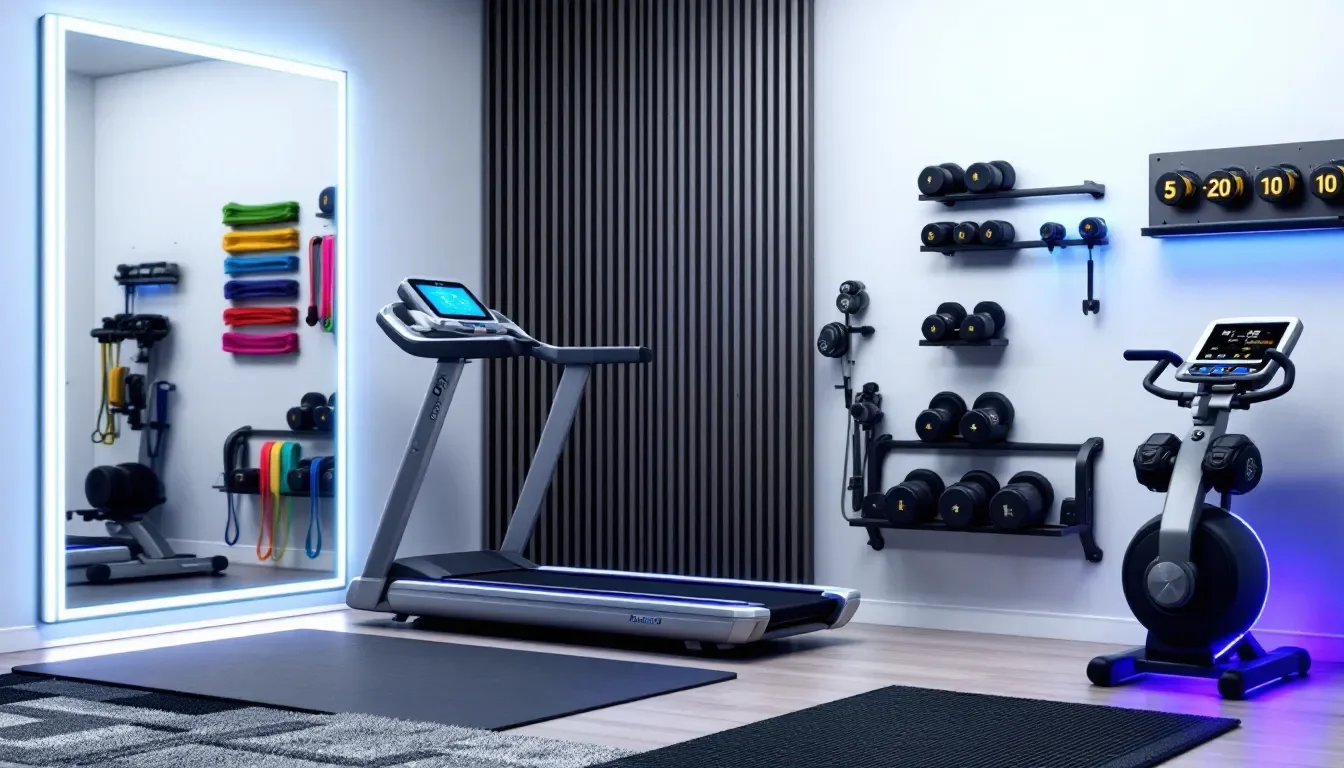
A small home gym does not need a wall of machines for consistent strength training. A good setup covers the main movement patterns, fits the available floor space, and stores safely between sessions. Choose equipment for regular use, adjustable loading, and multiple exercises. Before buying, measure the room, ceiling height, doorway, and storage area. Then build a compact setup around current training goals, with room to increase loads as strength improves.
1. Barbell and Plates
A barbell and weight plates support squats, deadlifts, presses, and rows, making them a practical starting point. Choose a bar that fits the room and plates that fit its sleeves securely. A focused selection of weight lifting equipment should match the planned lifts rather than duplicate tools with similar uses. A compact plate tree keeps weights off the floor.
A power rack provides a fixed setup for squats, bench presses, and overhead presses. Its safety bars catch the bar if a rep fails. Choose a rack that fits the available footprint and ceiling height. A folding rack frees floor space, but its wall must support the load, and installation must follow the manufacturer’s instructions. Leave enough room to load the bar and move around it safely.
2. Rack and Bench
A flat bench supports presses, dumbbell rows, step-ups, and seated exercises. Check its weight rating, pad width, and height; a bench that rocks or slides makes a stable setup harder. An adjustable bench adds incline and upright positions but needs more storage space and has extra hinges to inspect. In a tight room, a stable flat bench covers several exercises without taking up much floor space.
3. Adjustable Dumbbells
Adjustable dumbbells replace several fixed pairs and work for presses, rows, lunges, and curls. Choose a set with secure locks and clear weight increments. Check that its handles fit the included rack or tray. Compact storage suits apartments, though changing plates between sets slows circuits. Fixed dumbbells are simpler for quick load changes, provided the room has space to store them.
4. Bands and Storage
Resistance bands add pulling and warm-up exercises without taking much storage space. A light band works for face pulls and shoulder warm-ups; a heavier band adds resistance to rows or assists pull-ups. Check bands for cracks before each session, and attach them only to a fixed point rated for the load. Keep them away from sharp edges, and stand clear of the recoil path if a band slips.
5. Floor Protection
Floor protection matters when weights contact a residential surface. Rubber mats reduce slipping and protect flooring during routine use, but thin mats do not quiet or cushion heavy drops. Drop pads under a deadlift area absorb more impact and reduce noise. They also need storage space when the bar is not in use. Cover the area around the rack and lifting zone first.
6. Collars and Straps
Barbell collars secure plates during lifts that shift the bar, including squats and deadlifts. Choose collars that lock firmly and fit the bar’s sleeve diameter. A wall hook or small bin keeps collars, wrist wraps, and chalk close by without using a rack peg. Lifting straps help maintain a grip during high-repetition pulls, but they do not replace grip practice or sound technique on heavy sets.
7. Storage
Storage affects usable gym space as much as equipment choices. A vertical plate tree keeps discs off the floor, while a wall hook holds bands and a stored bar. Keep a clear walkway around the rack and leave exits unobstructed. Measure storage areas before buying, since the rack, bench, and bar need space beyond their resting footprints during setup and exercise.
8. Matching Equipment to Your Training Plan
Every purchase should address a specific training need. List the lifts performed each week, the available floor space, and the heaviest planned load before comparing equipment. Choose pieces that adjust for several exercises without slowing setup. Leave a clear route to the door and enough room to unrack a bar without hitting a wall. Test movements with an unloaded bar, then adjust the layout until each path is clear.
Conclusion
A small gym works best when each item earns its space through regular use. Start with a barbell, plates, and a rack if the room allows safe setup; add a bench and adjustable dumbbells for more exercise options.
Bands, collars, and floor protection address specific needs without taking much room. Before ordering, measure the lifting and storage areas, then mark the rack and bench positions with tape. This simple check can prevent costly rearrangement.