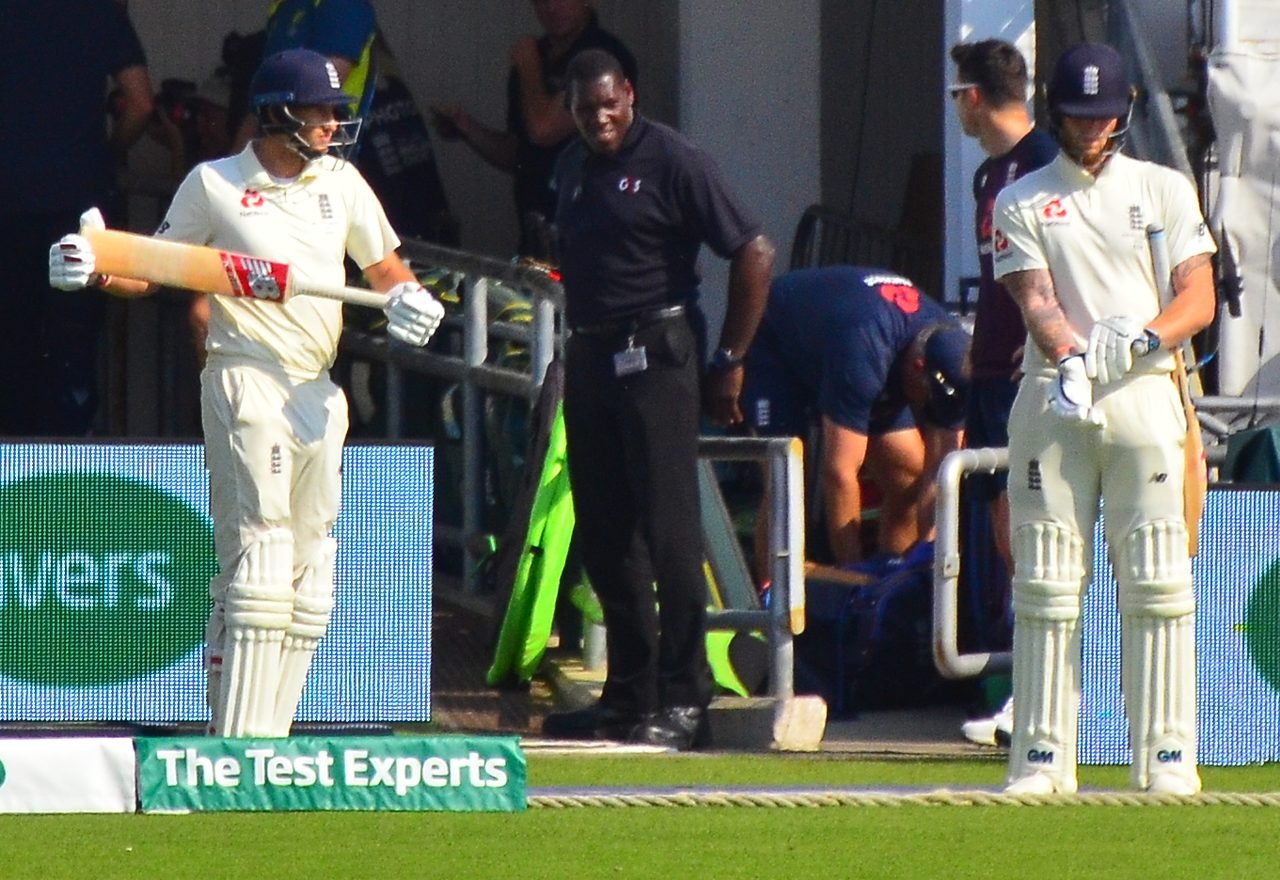
On the morning of 25 August 2019, Joe Root and Ben Stokes walked out together at Headingley with England chasing 359 to beat Australia in the third Ashes Test. England still needed 203 runs with seven wickets in hand. By the end of the day, Stokes would be unbeaten on 135 and England would have won by a single wicket in one of the greatest innings ever played. Root, who made 77 before falling, had done his part too. It was the perfect snapshot of the partnership that has defined England’s Test team for more than a decade: Root the run-machine, Stokes the all-rounder who refuses to accept defeat.
The two men could hardly be more different in style, background or temperament, yet their careers have been braided together since the early 2010s. Root is the calm technician from Sheffield who has scored more Test runs than any Englishman in history. Ben Stokes is the force of nature from Christchurch who bats like a storm, bowls with real pace and changes matches in a single session. Between them they have carried England through a World Cup triumph, an Ashes miracle and a complete reinvention of how the team plays Test cricket.
Two very different roads to the same dressing room
Benjamin Andrew Stokes was born on 4 June 1991 in Christchurch, New Zealand, the son of rugby league player and coach Gerard Stokes. He moved to England at 12, when his father took a coaching job with Workington Town, and grew up in Cockermouth, Cumbria. He made his first-class debut for Durham in 2010, his one-day and Twenty20 international debuts in 2011, and his Test debut against Australia at Perth in December 2013. He was an all-rounder in the classic mould: a left-handed batter and a right-arm fast-medium bowler.
Joe Root’s route was quieter but no less assured. Joseph Edward Root was born on 30 December 1990 in Sheffield and came through the Yorkshire academy, a product of the county’s famous production line of batters. He made his Test debut against India at Nagpur in December 2012, scoring 73 in his first innings, and looked at home in international cricket from the very first ball. Where Stokes arrived with noise and power, Root arrived with balance, timing and an apparently endless patience.
The contrast became the point. Root scores his runs with a straight bat and soft hands, and can bat for hours without ever looking hurried. Stokes scores his with clean hitting and a bloody-minded refusal to give his wicket away.
The summer that made them legends
The summer of 2019 turned both men from fine cricketers into national figures. It began at Lord’s on 14 July, in the Cricket World Cup final against New Zealand. Stokes, batting at number five, made an unbeaten 84 to drag England to a tie, then batted again in the Super Over as the scores finished level once more and England took the trophy on a boundary-count rule. He was named Player of the Match in a final many still call the greatest one-day game ever played. Root, steady at number three, was one of the quiet foundations of the campaign.
Six weeks later came Headingley, and the innings that will follow Stokes for the rest of his life. Chasing 359 against Australia, England slumped to 286 for nine, still 73 short. Stokes, then on 61, simply decided the match was not lost. With Jack Leach clinging on for a single run off 17 balls at the other end, Stokes farmed the strike and cleared the ropes again and again, finishing on 135 not out as England won by one wicket. The last-wicket stand was worth 76, and the series finished drawn at two all. Stokes was named BBC Sports Personality of the Year and the ICC Men’s Cricketer of the Year for 2019, and later received an OBE in the New Year Honours.
Captain, then captain again
Root’s own time as leader came first. He succeeded Alastair Cook as Test captain in 2017 and held the job for five years, winning 27 Tests in charge. It was a demanding tenure that included a famous series win in South Africa, but it ended in difficult circumstances in April 2022, after England had won only one of their previous 17 Tests and been beaten four-nil in Australia. Root stepped down saying the job had taken a toll, and almost immediately his batting flourished again, freed from the weight of leadership.
Stokes was the natural successor and was appointed Test captain in April 2022. Alongside the newly appointed head coach Brendon McCullum, he set about changing the way England played the game. The approach, quickly nicknamed Bazball after McCullum’s playing nickname, was built on aggression, positive intent and a refusal to play for draws. England won six of their first seven home Tests that summer and then completed a historic three-nil series whitewash in Pakistan at the end of 2022, a result no England side had ever achieved before. Root, freed from the captaincy, became one of the most fluent beneficiaries of the new style.
As captain he declared boldly, set attacking fields and trusted his batters to take the game on. His own milestones kept coming: his 258 against South Africa at Cape Town in January 2016 remains the highest score by a number six in Test history, made with Jonny Bairstow in a world-record sixth-wicket stand of 399. In February 2023 he passed McCullum’s tally of 107 sixes to become the leading six-hitter in Test history, and he played his hundredth Test against India in February 2024. He had already delivered England the Twenty20 World Cup with an unbeaten 52 in the 2022 final against Pakistan.
Root and the record that nobody thought would fall
While Stokes collected moments, Root collected runs, and the pile grew until it passed a mark that had stood for years. On 9 October 2024, during the first Test against Pakistan at Multan, Root passed Alastair Cook’s total of 12,472 runs to become England’s leading run-scorer in Test cricket. He reached the milestone with a straight drive for four off Aamer Jamal, in his 147th Test, and went on to make 262, his highest Test score and his sixth double hundred. Cook had held the record since 2015; Root went past it in 14 fewer Tests than Cook had needed to reach it.
The numbers since then have only grown more remarkable. In July 2025, during the fourth Test against India at Old Trafford, Root passed Ricky Ponting’s tally of 13,378 to move into second place on the all-time list of Test run-scorers, behind only Sachin Tendulkar. As of September 2026, after England’s home series against Pakistan, Root stood on 14,278 Test runs from 169 matches, at an average of 50.45, with 41 hundreds and a highest score of 262. That left him 1,643 runs short of Tendulkar’s record of 15,921, a gap that suddenly looks bridgeable for a batter still scoring heavily at 35.
What changed in 2026, and what did not
The story took an unexpected turn in the summer of 2026. Stokes, who had captained the Test side since 2022, announced his retirement from international cricket in June of that year, bringing down the curtain on a career defined by its great days. A month later, in July 2026, Root was handed the Test captaincy for a second time, returning to the role he had given up four years earlier. It was a remarkable twist: the run-machine liberated by losing the job was asked to lead again.
Root has been clear that the change is one of continuity rather than revolution. The attacking principles built under Stokes and McCullum, the willingness to chase wins rather than settle for draws, remain central to how England play. Where Stokes led with instinct and force of personality, Root leads with calm and the authority of a batter who has seen everything the game can throw at him. For a reminder of how a famous English double act can define an era, look no further than Gary Lineker and Alan Shearer, whose goalscoring partnership did something similar for English football a generation earlier.
The legacy of the double act
Whatever happens next, the record books will show what Stokes and Root achieved together. A World Cup won at Lord’s in the game’s most dramatic final. An Ashes Test won from a position that looked hopeless. A style of Test cricket that made the whole world sit up and take notice. And a batting record that may one day stand above every other.
Headingley in August 2019 remains the image that sums them up. Root showed that patience, technique and weight of runs can make you your country’s greatest batter. Stokes showed that courage, power and an unwillingness to accept defeat can win matches nobody else could win. Together, they showed that English cricket, at its best, can be both things at once: careful and fearless, steady and spectacular.