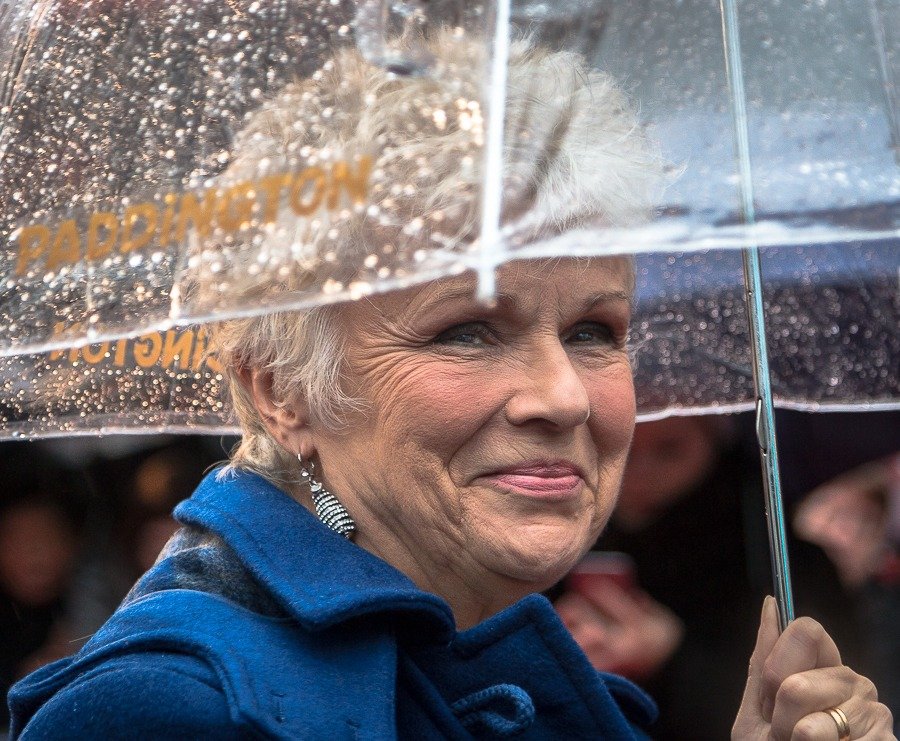
Some partnerships in British comedy are remembered fondly. A very small number are loved the way Julie Walters and Victoria Wood were loved. For more than three decades, Walters was the face Wood trusted most with her words. Together they made television still quoted across Britain, from Acorn Antiques to the canteen of dinnerladies. Victoria Wood died on 20 April 2016, aged 62, after a short and private battle with cancer. Julie Walters, her friend and collaborator of 45 years, is still with us — and still talks about her friend with undimmed warmth.
What made them special was never a single show or a single joke. Wood wrote about ordinary British life — the church hall, the supermarket queue, the cup of tea gone cold — and her characters sounded like people you actually knew. Walters brought them to life with a rare lack of vanity, happy to be unglamorous because the joke was always worth it. Between them, they made comedy that was clever without ever being cruel, and that is why it has lasted.
How Julie Walters and Victoria Wood First Met
Julie Walters was born Julia Mary Walters on 22 February 1950 at St Chad’s Hospital in Edgbaston, Birmingham, and brought up in Smethwick, where her family lived on Bishopton Road in Bearwood. The youngest of five children, she was the daughter of an Irish postal clerk from County Mayo and an English builder and decorator. She worked in insurance at fifteen, trained as a nurse in Birmingham, then studied English and drama at Manchester Polytechnic. It was there, in 1971, that she first met Victoria Wood, who had come to audition at the Manchester School of Theatre.
Wood had been born on 19 May 1953 in Prestwich, Lancashire, and brought up in nearby Bury, the youngest child of Stanley and Ellen Wood. A shy, bookish girl given a piano for her fifteenth birthday, she had a gift for songs that were funny, musical and sharply observed. She won the ITV talent show New Faces in 1974. The two women met again in 1978, in the revue In at the Death at London’s Bush Theatre, for which Wood wrote a sketch. It began a friendship and working relationship that lasted the rest of Wood’s life.
The success of that revue led to Wood’s first full-length play, Talent, and a television adaptation in 1979 in which Walters took the lead role as a disillusioned talent-show contestant. Granada Television then asked Wood to write a sketch show for the two of them, and the result was Wood and Walters in 1981. They were not a double act in the old music-hall sense, but a writer and her perfect interpreter.
Acorn Antiques and Mrs Overall
The partnership reached its widest audience in the mid-1980s, when Wood moved to the BBC and was given her own sketch series, Victoria Wood: As Seen on TV, which ran on BBC Two from 1985 to 1987. Wood wrote every episode, with Walters, Celia Imrie, Duncan Preston and Patricia Routledge at its core. The show won BAFTAs and gave Britain sketches that have never gone away: Acorn Antiques, the “Two Soups” waitress sketch, and Wood herself at the piano.
Acorn Antiques was Wood’s loving spoof of low-budget daytime soap, modelled on the long-running Crossroads, and Walters played its beating heart: Mrs Overall, the tea lady with the mac, the bun and the endless stream of homely wisdom. It became one of Walters’ best-known roles. So loved was it that, twenty years later, Wood turned it into a West End musical, Acorn Antiques: The Musical (2005), with Walters back as Mrs Overall and earning an Olivier nomination.
The songs mattered just as much as the sketches. Wood’s best-known number, “The Ballad of Barry and Freda”, also known as “Let’s Do It”, was a seven-minute comic song about a long-married couple — Freda hungry for romance, Barry less keen — building to the punchline about being beaten on the bottom with a Woman’s Weekly. She sang it at the piano in her live shows for years, calling it a joy to write, a sod to learn, and a song she dared not finish a show without.
dinnerladies and the Later Years Together
They kept working together through the 1990s, including the television film Pat and Margaret (1994), in which Walters played a brash former glamour model opposite Wood’s quiet Margaret. But their great later collaboration was dinnerladies, the BBC sitcom Wood wrote and starred in from 1998 to 2000. Set in a Manchester factory canteen, it was a warm ensemble piece, and Walters played Petula Gordeno, whose glamour-model past provided some of the show’s biggest laughs. It ran for two series and is still regarded by many as the finest sitcom Wood ever wrote, and their last work together was Victoria Wood’s Mid Life Christmas in 2009.
Julie Walters Beyond the Partnership
While the Wood collaboration was the spine of her television career, Walters built a film career that would be remarkable on its own. She had originated the title role of Educating Rita on stage, and the 1983 film version, opposite Michael Caine, made her famous around the world. She won a BAFTA and a Golden Globe for the performance and was nominated for an Academy Award for Best Actress.
The film roles kept coming. She starred opposite Liza Minnelli in Stepping Out (1991), and in 2000 earned her second Oscar nomination, for Best Supporting Actress, as Mrs Wilkinson in Billy Elliot, which also won her a BAFTA. A new generation knew her as Molly Weasley in the Harry Potter films (2001–2011). She was one of the women of Calendar Girls (2003), sang through Mamma Mia! (2008), and was Mrs Bird in Paddington (2014) and its 2017 sequel. The honours matched the work: OBE in 1999, CBE in 2008, Dame in 2017, four BAFTA Television Awards, two BAFTA Film Awards and the BAFTA Fellowship in 2014.
Victoria Wood’s Writing Genius
Wood’s own career, away from Walters, was just as extraordinary. She was a stand-up comic who performed sitting at the piano, a songwriter, a playwright, a screenwriter, a director and a dramatic actress of real power. Her television drama Housewife, 49, broadcast in 2006 and based on the wartime diaries of Nella Last, won her two more BAFTA awards, including Best Actress. She won BAFTAs for As Seen on TV and An Audience with Victoria Wood, and was made OBE in 1997 and CBE in 2008. What tied it together was her ear for how ordinary people actually spoke. She married magician Geoffrey Durham in 1980; they had two children, Grace and Henry, before separating in 2002.
Losing Victoria Wood
Wood was diagnosed with terminal cancer in late 2015, and kept her illness private. She withdrew from public life, and her death on the morning of 20 April 2016 shocked even many who had worked with her. Her publicist said she had died peacefully at home in Highgate, north London, with her family around her, after a short but brave battle with cancer. She was 62. The tributes were immediate: the Prime Minister called her a national treasure, and comedians of every generation spoke of how much she had meant to them.
Julie Walters led the tributes, describing Wood’s loss as “incalculable” and speaking of a friend she had known for 45 years. A statue of Wood was later unveiled in Bury, her home town, in May 2019. Their partnership belongs beside the great British comedy double acts, and is often mentioned alongside Dawn French and Jennifer Saunders, another pair whose friendship produced decades of work audiences took to their hearts. But Walters and Wood were something slightly different: a writer and her muse, a friendship that was also a working partnership.
Julie Walters Today
Walters has faced her own health battles since losing her friend. In February 2020 she revealed that she had been diagnosed with stage three bowel cancer in 2018, while filming The Secret Garden, and had undergone surgery and chemotherapy before being given the all-clear. She had kept the diagnosis secret, even from her daughter, and spoke movingly about the shock of it and how it changed her view of work. She urged the public to get any worrying symptoms checked.
She has worked more selectively since, and remains one of Britain’s most respected and best-loved actresses. But for millions, she will always be half of one of the great partnerships: the woman who stood beside Victoria Wood, in sketch, sitcom and song, and made it funnier and warmer than it could ever have been alone. Wood wrote the words, Walters gave them life, and together they made comedy that still feels like home. That is why, ten years after her death, Victoria Wood is still missed — and why Julie Walters, still here and still magnificent, is still cherished.