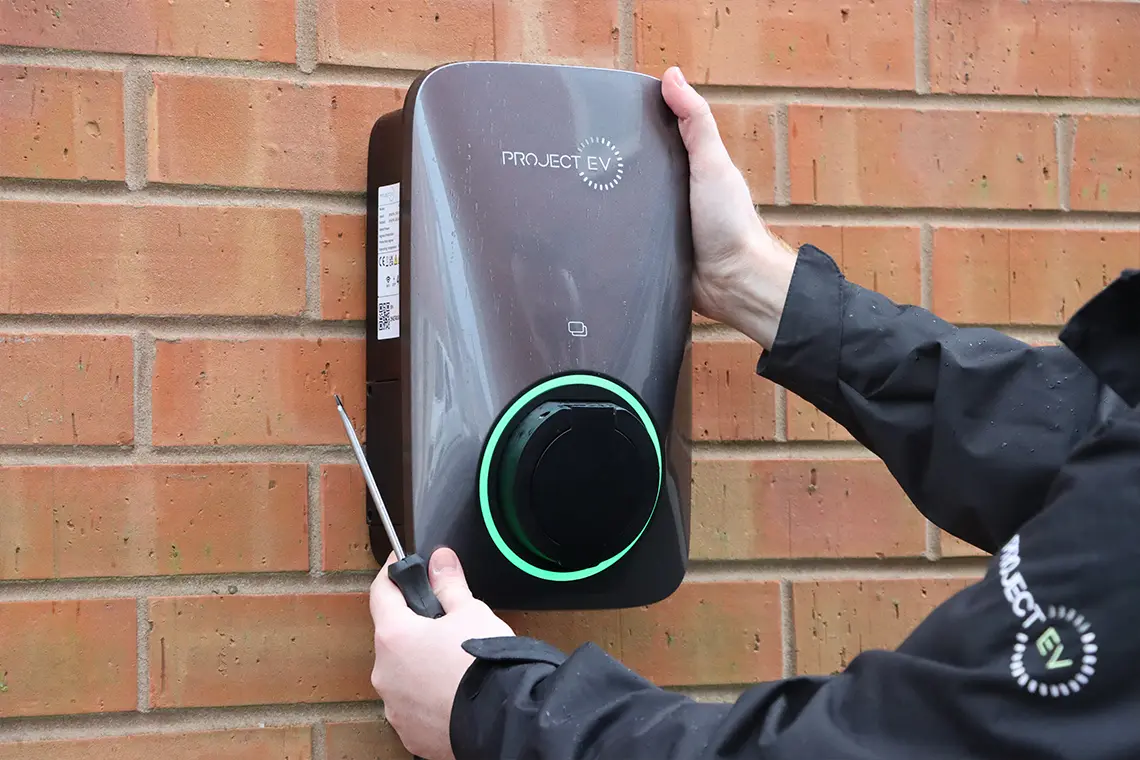
Electric vehicles are now a permanent part of the UK transport landscape, which makes home and workplace charging a long-term investment rather than a short-term accessory. Choosing the right EV charger involves more than looking at charging speed or price. Factors such as safety compliance, reliability, grid compatibility, and real-world usability matter far more over time.
The Project EV Charger range has become a common choice in the UK, particularly among professional installers and property owners looking for dependable charging hardware. This article provides a clear, current, and unbiased overview of Project EV chargers, explaining how they work, what they offer, and who they are best suited for today.
Understanding Project EV as a Charging Brand
Project EV is a UK-based manufacturer focused on electric vehicle charging equipment for residential, commercial, and fleet use. Rather than positioning itself as a lifestyle or consumer-tech brand, Project EV operates primarily as an infrastructure-focused company, supplying chargers that prioritise safety, compliance, and long-term reliability.
This positioning has made Project EV popular with installers who value predictable performance and straightforward installation. The chargers are designed to meet UK electrical standards and smart charging requirements, which is increasingly important as grid regulations evolve.
Project EV’s product range is not built around a single flagship charger. Instead, it offers multiple models designed to suit different electrical supplies, property types, and usage demands.
Project EV Charger Types and Power Options
Project EV chargers are mainly available in AC charging configurations, which are the standard for home and workplace installations in the UK. The most common option for residential use is the 7.4kW single-phase charger, which is compatible with the majority of UK homes and electric vehicles.
For locations with greater electrical capacity, such as offices or shared parking facilities, Project EV also offers 22kW three-phase chargers. These models allow faster charging when used with compatible vehicles and infrastructure, although not all EVs can take full advantage of this power level.
Chargers are available in tethered versions, which include a fixed charging cable, and untethered versions, which require the user to supply their own cable. The choice typically depends on convenience, aesthetics, and maintenance preferences rather than performance.
Real-World Charging Performance
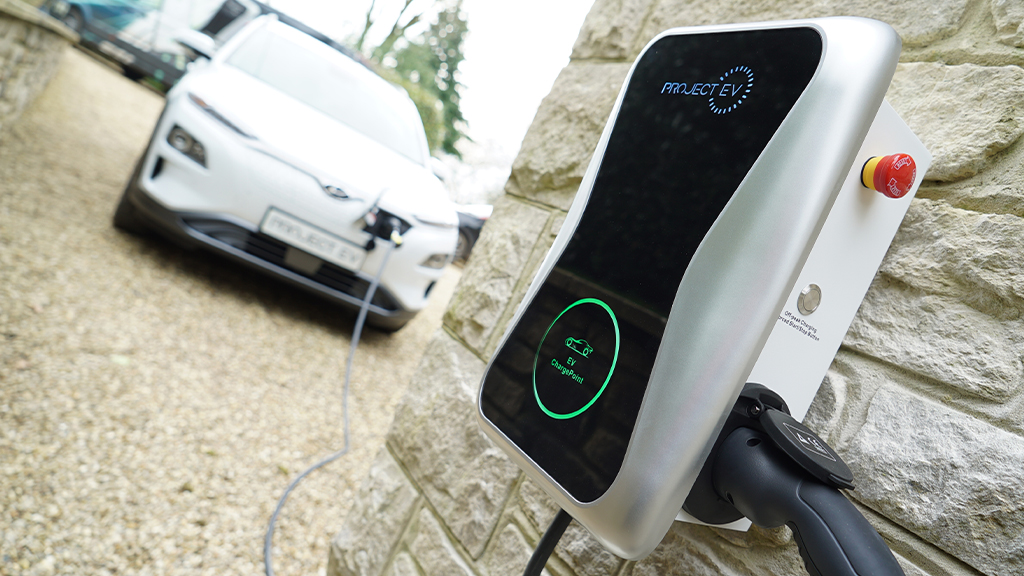
In practical terms, a 7.4kW Project EV charger can add approximately 25 to 30 miles of range per hour, depending on the vehicle and driving conditions. For most drivers, this means an overnight charge is sufficient for daily use without needing rapid charging infrastructure.
The higher-powered 22kW models can significantly reduce charging times in suitable environments, but real-world performance is always limited by the vehicle’s onboard charger and the available electrical supply. This is why professional assessment is essential before selecting a higher-capacity unit.
Project EV chargers are designed to deliver consistent and stable power, rather than chasing maximum output figures that are rarely achievable in everyday settings.
Smart Charging Capabilities
Smart charging has become a regulatory requirement in the UK, and Project EV chargers are built to meet these standards. Smart functionality allows users to schedule charging sessions, avoid peak electricity hours, and manage energy usage more efficiently.
Most Project EV chargers support app-based control, enabling users to start or stop charging remotely and view basic usage data. These features are particularly useful for households on variable electricity tariffs, where charging during off-peak periods can significantly reduce costs.
For commercial installations, smart charging helps prevent electrical overload and allows multiple chargers to operate safely on the same supply. While the software experience is designed to be functional rather than complex, it covers the core needs of most users.
Safety and Compliance Standards
Safety is one of the strongest aspects of the Project EV charger range. The chargers are built to comply with UK wiring regulations (BS 7671) and include essential protection features such as residual current detection and fault monitoring.
Many models also include PEN fault protection, which reduces the need for additional external safety devices in certain installations. This not only simplifies the installation process but can also reduce overall costs when compared with chargers that rely on external components.
Compliance with UK smart charging regulations ensures that Project EV chargers remain suitable for long-term use as grid requirements continue to change.
Installation Considerations
Proper installation plays a critical role in charger performance and longevity. Project EV chargers are designed with installers in mind, featuring clear wiring layouts and compatibility with standard UK electrical systems.
Depending on the model and installation scenario, Project EV chargers may be eligible for government-supported schemes, subject to current rules and installer accreditation. Eligibility can vary, so it is always advisable to confirm this before purchase.
Using a qualified EV charger installer ensures the system is safe, compliant, and covered by warranty. This is particularly important for higher-power installations and shared charging environments.
Advantages of Project EV Chargers
One of the main advantages of choosing a Project EV charger is value for money. The chargers typically offer essential smart features and safety systems at a price point that is lower than many premium consumer brands.
Reliability is another key benefit. Project EV chargers are widely used across residential and commercial sites, and their straightforward design contributes to long-term stability when installed correctly.
The availability of multiple models also makes Project EV suitable for users who anticipate changing needs, such as adding another vehicle or expanding a charging setup in the future.
Limitations and Practical Drawbacks
While Project EV chargers are dependable, they are not designed to offer every advanced feature on the market. Users looking for deep integration with solar systems or highly detailed energy analytics may find the software options limited compared to some alternatives.
The app interface focuses on essential controls rather than advanced visualisation, which may not appeal to users who prefer highly interactive smart-home platforms.
Additionally, the benefits of higher-powered models depend heavily on vehicle compatibility and electrical infrastructure. Choosing a charger without proper assessment can lead to underutilised capacity.
Who Is a Project EV Charger Best For?
A Project EV charger is well suited for UK homeowners who want a reliable, regulation-compliant charging solution that works consistently without unnecessary complexity.
It is also a strong option for businesses, landlords, and fleet operators seeking scalable charging hardware that can be deployed across multiple locations with predictable performance.
Users who prioritise advanced software features or deep renewable energy integration may wish to compare Project EV with other specialist brands before making a decision.
Project EV Charger Compared to Other Options
Within the UK market, Project EV sits firmly in the practical mid-range. It does not compete on branding or premium design, but instead focuses on compliance, durability, and installer confidence.
Compared to more consumer-focused chargers, Project EV offers fewer customisation features but often delivers better value and simpler long-term maintenance. This makes it particularly appealing in shared or commercial environments where reliability matters more than interface design.
Final Assessment: Is the Project EV Charger Worth Choosing?
The Project EV Charger is a sensible, well-engineered option for anyone looking for dependable EV charging in the UK. It prioritises safety, compliance, and real-world usability over marketing-driven features, which aligns well with the needs of most EV owners.
While it may not offer the most advanced software ecosystem, it delivers consistent performance and meets current regulatory requirements. For users who value reliability, practicality, and cost control, a Project EV charger represents a solid long-term investment.
Indeed. The Project EV Charger integrates with smart systems like Alexa and Google Home, enhancing convenience and automation.
You may also read: Festival Outfits Women Love in the UK – Trends to Watch in 2025