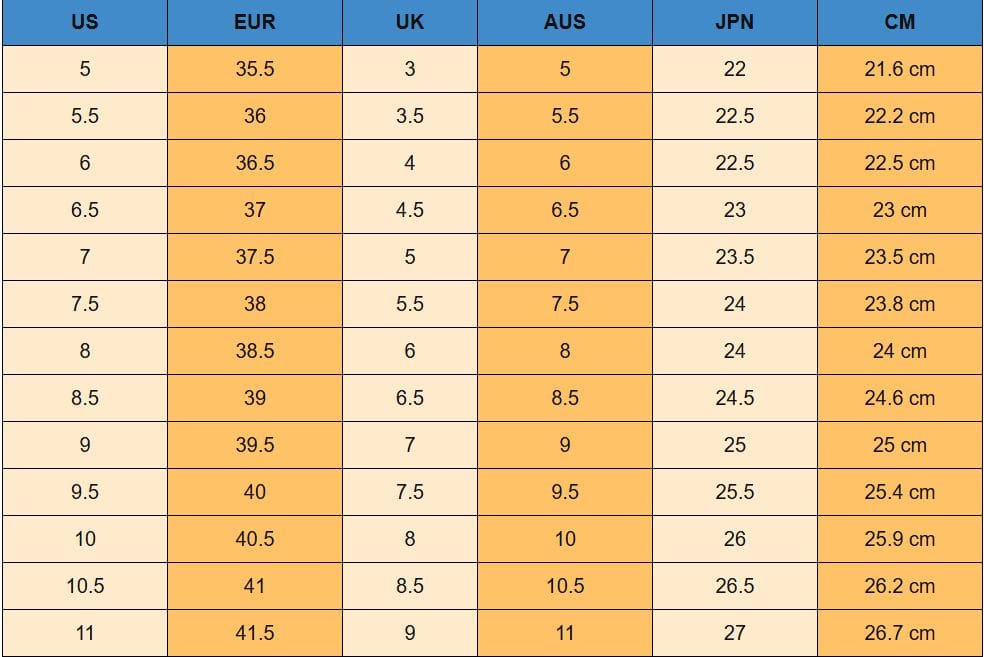
With Japanese footwear brands driving a massive surge in global sneaker culture and direct-to-consumer imports in 2026, ordering shoes straight from Tokyo or boutique UK stockists has never been more popular. Yet, nothing ruins the excitement of unboxing fresh kicks faster than finding your toes jammed against the front or your heel slipping out with every step.
The Japanese shoe sizing system relies directly on foot length in centimetres, whereas the traditional UK scale operates on historic last measurements that do not align cleanly with metric numbers. That structural mismatch causes thousands of online shoppers to order the wrong size every month, leading to frustrating delays and expensive international returns.
This guide breaks down exact men’s and women’s conversion charts, precise foot-measuring techniques, and essential fit tips so you can shop Japanese sneakers, boots, and dress shoes with complete confidence.
Why UK Shoe Sizes Do Not Convert Directly From Centimetres
UK shoe sizes stem from an old imperial measurement scale based on barleycorn increments (one-third of an inch) rather than exact foot length. Because the UK system measures the physical shoe last rather than the bare foot, a given UK size number never maps to a flat centimetre figure across every manufacturer.
Simple arithmetic formulas for converting Japanese shoe sizes to UK sizes almost always fail. Two pairs of shoes can share identical physical length on paper, yet feel entirely different on your foot due to toe box tapering, arch structure, and internal padding. UK sizing also uses separate sizing scales for men and women, which adds another layer of confusion when comparing metric footwear.
Japanese sizing (which aligns with the metric foundation of global Mondopoint standards) reflects actual foot length in centimetres. The most reliable way to convert your size is by pairing accurate centimetre foot measurements with tested retail conversion tables rather than relying on quick mental math.
Japanese Shoe Size to UK Conversion Charts You Can Trust
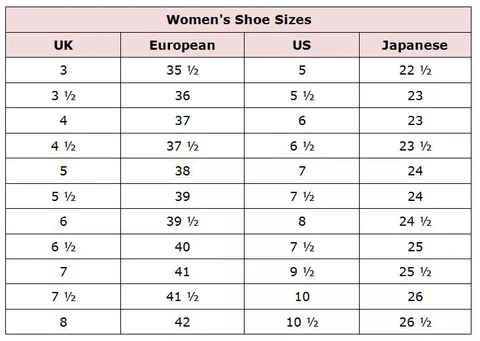
Conversion tables remain your most reliable defense against sizing errors when ordering imported footwear. These references draw from established retail distribution data and major manufacturer guidelines. While minor variations exist between brands, using the proper gender-specific table gives you an accurate baseline.
Men’s Japanese Shoe Size to UK Conversion
For men’s footwear, Japanese centimetre sizes map consistently into UK sizes across standard trainers, casual shoes, and daily footwear.
- Japan 24.5 cm → UK 6
- Japan 25.0 cm → UK 6.5
- Japan 25.5 cm → UK 7
- Japan 26.0 cm → UK 7.5
- Japan 26.5 cm → UK 8
- Japan 27.0 cm → UK 8.5
- Japan 27.5 cm → UK 9
- Japan 28.0 cm → UK 9.5
- Japan 28.5 cm → UK 10
- Japan 29.0 cm → UK 10.5
- Japan 30.0 cm → UK 11
These conversions work as dependable reference points. If your measured foot falls directly between two sizes, let your typical sock thickness and preferred shoe structure decide whether you go up or down.
Women’s Japanese Shoe Size to UK Conversion
Women’s UK sizing follows a separate scale from men’s, even though Japanese centimetre figures look identical on the box. Always consult a women-specific chart to avoid picking up a pair that feels half a size too small.
- Japan 22.5 cm → UK 4
- Japan 23.0 cm → UK 4.5
- Japan 23.5 cm → UK 5
- Japan 24.0 cm → UK 5.5
- Japan 24.5 cm → UK 6
- Japan 25.0 cm → UK 6.5
- Japan 25.5 cm → UK 7
- Japan 26.0 cm → UK 7.5
Women’s footwear styles feature wider variance in toe box tapering and heel width. If one of your feet measures slightly longer than the other, always choose the size that fits your longer foot.
How to Measure Your Feet Correctly in Centimetres
Getting a precise centimetre measurement is the absolute foundation of successful size conversion. Even the best conversion chart cannot correct a faulty initial measurement. Measuring your feet at home requires only a few minutes and basic supplies.
Place a sheet of paper on a flat, hard floor directly against a plain wall. Stand barefoot on the paper with your heel resting gently against the wall. Mark the paper at the furthest tip of your longest toe using a pencil held straight up, then measure the distance from the edge of the paper to your mark in centimetres.
Always measure both feet while standing, as most people have slight foot size asymmetry. Take your measurements in the late afternoon or evening when your feet have naturally expanded from daily movement. If you plan to wear thick athletic or winter socks, measure while wearing them to keep your numbers realistic.
Why Conversion Charts Sometimes Disagree
It is completely normal to spot minor differences when comparing size conversion guides across different shopping platforms. Sizing charts reflect distinct design philosophies, regional lasting standards, and manufacturing tolerances rather than rigid universal laws.
Performance running brands often incorporate extra clearance in the toe box to handle foot swelling during movement. Sleek dress shoes or leather boots often use tighter, more structured lasts that fit closer to the skin. These variations explain why one retailer might recommend a half-size adjustment over another for the exact same metric figure.
Treat sizing tables as practical ranges rather than fixed rules. Combining your raw centimetre measurement with knowledge of the specific shoe style helps you pick the right size inside that range.
Fit Considerations That Matter More Than Numbers
Length alone does not determine how comfortably a shoe sits on your foot. Width, instep height, and toe box profile play equally important roles in daily comfort. Standard Japanese footwear designs sometimes feature a slightly narrow profile through the midfoot, which can feel tight on wider feet.
If you have wider feet, look for models built on relaxed lasts or consider sizing up by a half step. Sizing up offers extra width, but it also adds front length, so check that your heel remains locked in place. Adjustable lacing layouts and flexible uppers also help absorb width differences.
Match your sizing strategy directly to the shoe category:
- Sneakers and Running Shoes: Aim for roughly a thumb’s width of space between your longest toe and the tip of the shoe to accommodate natural movement.
- Boots and Trail Footwear: Allow extra volume for heavy socks and insoles.
- Sandals and Tabi Styles: Keep your selection close to your actual foot length so the foot bed aligns correctly with your stride.
Using Japanese Shoe Size to UK Conversion When Shopping Online
When browsing online, start with your measured foot length in centimetres. Locate the corresponding Japanese centimetre size, then use the conversion table to identify your UK equivalent. Following this forward sequence yields far better results than guessing a UK size and trying to work backward.
Read product details and verified buyer reviews carefully before checking out. High-end Japanese labels often mention whether a specific model runs small, true to size, or large. If a retailer offers brand-specific fit notes, prioritize that advice over generic conversion charts.
Always review the store’s return and exchange policies before placing an order. Knowing you can swap sizes easily removes the risk when trying out a new Japanese brand for the first time.
Common Mistakes to Avoid When Converting Sizes
Relying on informal mathematical tricks instead of verified conversion tables is a frequent error. UK sizes increase on non-metric increments, so simple subtraction rules routinely produce incorrect results.
Taking measurements while sitting down is another common pitfall. Your feet expand under your full body weight when standing, so sitting measurements underestimate your true functional size.
Mixing up men’s and women’s conversion tables causes major fitting problems. Because Japanese sizing uses straightforward centimetre numbers across all categories, buyers often assume a 25 cm shoe converts to the same UK size for everyone. In reality, men’s and women’s UK scales differ significantly for that same metric length.
Finally, do not ignore intended usage. A snug fit that feels acceptable for a brief indoor try-on can cause painful rubbing after an hour of walking outdoors.
Conclusion
Converting Japanese shoe sizes to UK sizes does not need to involve guesswork. By measuring your feet accurately under full weight, applying category-specific conversion tables, and accounting for width and materials, you can order imported footwear with complete peace of mind.
Japanese metric sizing provides unmatched precision. Pairing that accuracy with a clear understanding of the UK scale ensures your next imported pair fits comfortably right out of the box.
Frequently Asked Questions
What is Japanese size 25 in UK?
Japanese size 25 corresponds to a 25 cm foot length. In standard conversion tables, 25 cm maps to a UK 6.5 for men and a UK 6.5 for women, though specific brand lasts may feel slightly different on foot.
Is Japanese shoe size always based on centimetres?
Yes, Japanese footwear sizing relies directly on foot length in centimetres. The tag number states actual foot length rather than an arbitrary numeric scale.
Why do some charts show different UK sizes for the same Japanese size?
Variations occur because individual brands construct shoes on different lasts and build varying amounts of internal clearance into their designs. Charts serve as reliable baselines rather than strict universal guarantees.
Should I size up when buying Japanese shoes?
Sizing up by a half size makes sense if you have wide feet, plan to wear thick socks, or are buying structured leather shoes. For flexible mesh trainers, staying true to your measured centimetre size usually works best.
How can I reduce the risk of ordering the wrong size?
Measure both feet while standing in the evening, use the correct gender-specific conversion chart, read individual product fit notes, and confirm the store’s exchange policy before buying.
You may also read:
Where to Buy Latin Dance Dresses UK
Who Exactly Is Shane Oakley?