Introduction
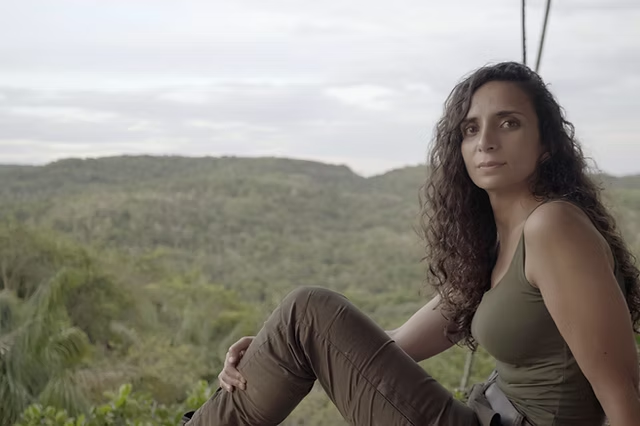
Ella Al-Shamahi is a British explorer, paleoanthropologist, evolutionary biologist, and science communicator widely recognized for her work on human evolution and Neanderthal research. She has built a unique career that combines academic science with public engagement, making complex scientific topics accessible to global audiences through documentaries, lectures, and writing. Her professional identity is strongly linked with exploration in politically unstable regions and scientific storytelling that connects ancient history with modern understanding of humanity.
Beyond her academic contributions, Ella Al-Shamahi has become a prominent media figure through her work with organizations such as National Geographic and the BBC. Her ability to present scientific ideas in a clear and engaging way has positioned her as one of the notable voices in modern science communication. She is especially known for connecting evolutionary science with human culture, behavior, and identity, helping audiences understand how deeply our past shapes who we are today.
Early Life and Education
Ella Al-Shamahi was born and raised in Birmingham, United Kingdom, in a multicultural environment that influenced her curiosity about human origins and global cultures. Growing up in a family with Yemeni and Syrian heritage, she developed an early awareness of diverse identities and histories. This background played a role in shaping her interest in anthropology and evolution, fields that examine both biological development and cultural transformation across time.
Her academic journey reflects a strong foundation in science and research. She studied at Imperial College London, where she completed degrees in evolutionary biology and taxonomy, gaining a solid understanding of biological systems and biodiversity. She later pursued advanced research at University College London, focusing on evolutionary and environmental anthropology. Her education provided her with interdisciplinary expertise, combining genetics, anthropology, and field research methodologies that later became essential in her exploration work.
Scientific Career and Expeditions
Ella Al-Shamahi is widely recognized for her fieldwork in paleoanthropology, particularly her studies of Neanderthals and early human evolution. As a National Geographic Explorer, she has participated in expeditions to remote and often politically unstable regions, including parts of the Middle East and other areas where archaeological research is both challenging and dangerous. Her work focuses on uncovering fossil evidence in environments that remain largely unexplored due to conflict or geographic isolation.
Her research highlights the importance of understanding early human species and their survival strategies. She investigates how Neanderthals lived, adapted, and eventually disappeared, contributing to broader discussions about human evolution. In addition to fieldwork, she engages in academic research that connects evolutionary biology with anthropology, helping to reconstruct ancient human behavior. Her approach emphasizes that scientific discovery often requires both intellectual expertise and physical resilience in extreme environments.
Television and Media Presence
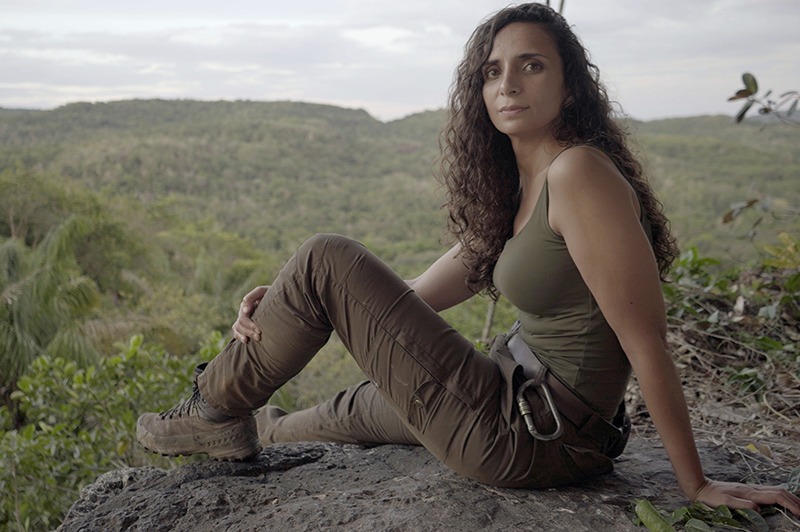
Ella Al-Shamahi has gained significant recognition as a television presenter and science communicator, working on documentaries that explore human evolution, archaeology, and natural history. She has presented several science programs for the BBC and other broadcasters, where she translates complex scientific findings into engaging visual narratives. Her work often involves collaboration with researchers, filmmakers, and institutions to present accurate scientific storytelling to global audiences.
Her notable media projects include documentaries focusing on Neanderthals, ancient civilizations, and environmental science. Through her presentations, she brings scientific discoveries to mainstream audiences, making topics such as evolution and anthropology more accessible. Her communication style combines scientific accuracy with storytelling techniques, which helps bridge the gap between academic research and public understanding. This has contributed to her growing influence in science media and educational broadcasting.
Books, Comedy and Communication Style
Ella Al-Shamahi is also an author and public speaker known for her ability to simplify complex ideas through storytelling. Her book The Handshake: A Gripping History explores the cultural and evolutionary significance of human behavior, showing how even simple gestures have deep historical roots. Her writing reflects a blend of scientific research and accessible narrative style, making it suitable for both academic and general readers interested in anthropology and human evolution.
In addition to writing, she has experience in stand-up comedy, which plays an important role in her communication approach. Comedy helps her present scientific topics in a relatable and engaging way, especially when discussing complex or abstract subjects. This combination of science and humor allows her to connect with diverse audiences, making her lectures and presentations more impactful. Her communication style demonstrates that science can be both informative and entertaining without losing accuracy or depth.
Public Influence and Legacy
Ella Al-Shamahi has established herself as an influential figure in modern science communication, particularly in the fields of anthropology and evolutionary biology. Her work encourages public interest in human origins and promotes scientific literacy across different audiences. By combining field research with media presence, she has helped make scientific exploration more visible and engaging to the general public, especially younger audiences interested in science careers.
Her legacy continues to grow through her contributions to education, broadcasting, and research. She represents a modern model of a scientist who operates across multiple platforms—academic, media, and public engagement. Her work highlights the importance of interdisciplinary thinking in understanding human history and evolution. Through her research and communication efforts, she continues to influence how science is shared and understood in contemporary society, inspiring future generations of scientists and explorers.
You may also read: How to Lose a Guy in 10 Days Full Movie Plot Summary