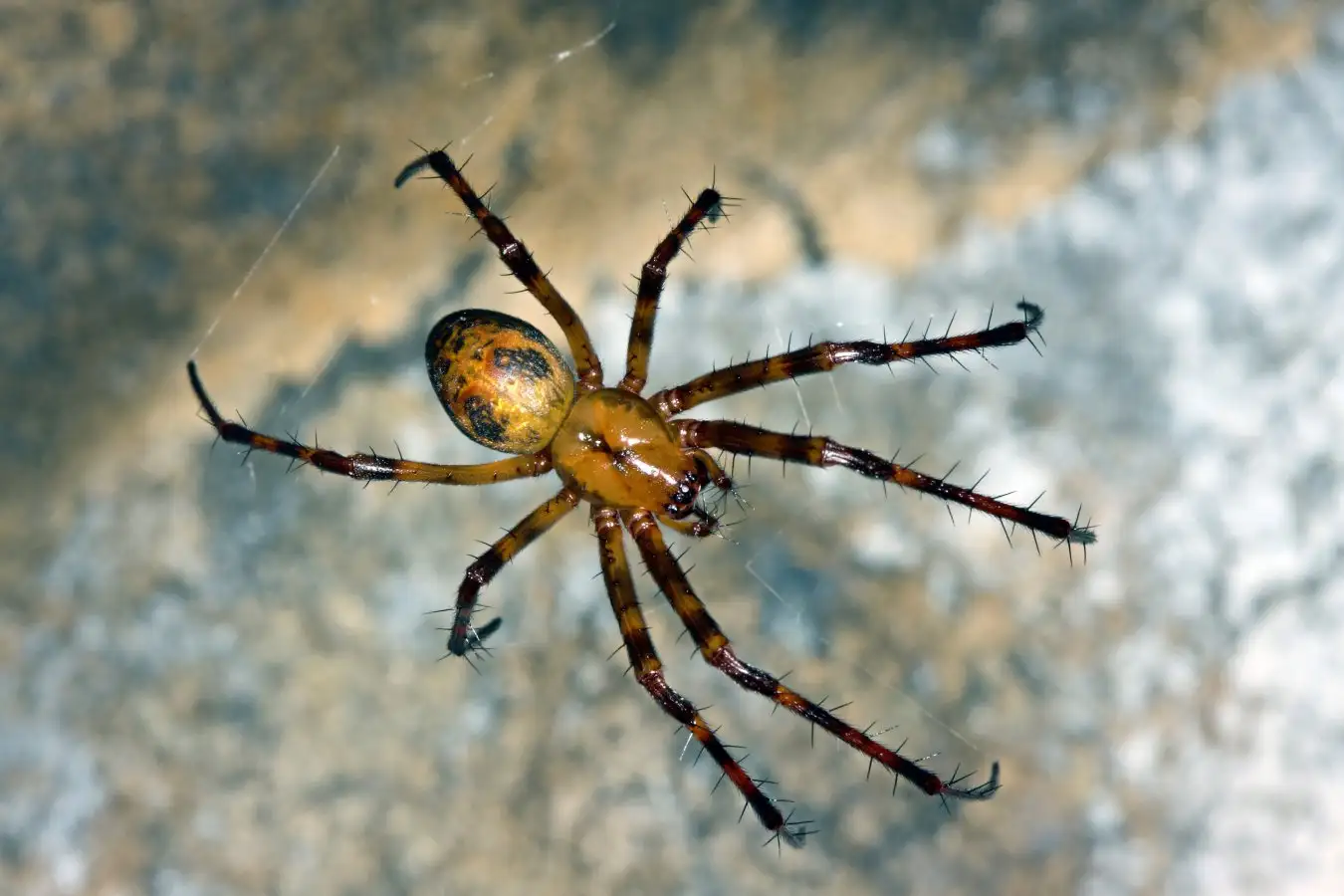
The cave spider UK, scientifically known as Meta menardi, is one of the most unusual native spiders found in Britain due to its preference for complete darkness. Unlike common garden or house spiders, this species does not live in visible domestic spaces but instead occupies hidden underground environments such as caves, tunnels, and disused mines. Its adaptation to low-light habitats makes it a highly specialized arachnid that rarely comes into contact with humans, which is why many people only learn about it through research or rare sightings.
Despite its secretive lifestyle, this spider has gained attention due to its size, appearance, and misunderstood reputation. Many assume it is dangerous, but in reality, it is a calm and reclusive species that plays an important role in underground ecosystems. Its existence highlights how diverse UK wildlife can be, even in environments that are completely out of sight. The cave spider UK is not just a curiosity but a key part of subterranean biodiversity.
Identification and Physical Features
The cave spider UK is among the largest native spiders in Britain, with a leg span that can reach around 5 cm. Its body is typically dark brown to reddish-brown with a smooth, slightly glossy surface that helps it blend into cave walls and shaded rock surfaces. The legs are long and slender, allowing it to move slowly and efficiently across uneven underground surfaces without attracting attention.
One of the most distinctive features is its orb-shaped web, which is smaller and more refined compared to garden spiders. The web is often placed in corners or recesses where airflow is stable and prey movement is more likely. Although it may look intimidating due to its size, it is not aggressive. Many individuals confuse it with other large UK spiders, but its preference for permanent darkness is a key identification factor.
Habitat and Distribution in the UK
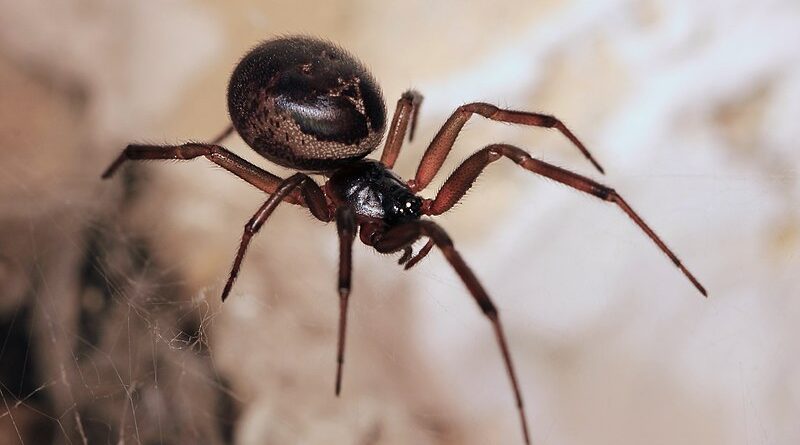
The cave spider UK is strongly associated with permanently dark and humid environments. It is most commonly found in caves, abandoned mines, railway tunnels, deep cellars, and occasionally in old underground structures. These environments provide stable temperature, high humidity, and minimal disturbance, which are essential conditions for its survival. Unlike surface-dwelling spiders, it avoids light entirely and rarely ventures into open areas.
Although it is present across many regions of the UK, it is considered under-recorded rather than rare. Sightings are more frequent in areas such as Wales, Derbyshire, Yorkshire, and parts of South West England where old mining systems and cave networks are common. Because of its hidden lifestyle, most populations remain undetected, and scientific surveys often rely on indirect evidence or specialist exploration to confirm its presence.
Behaviour, Diet and Hunting Strategy
The cave spider UK is a slow and patient hunter that relies on its web rather than active chasing. It remains motionless for long periods, waiting for vibrations caused by passing insects. When prey becomes trapped, the spider quickly responds by immobilising it using venom designed specifically for small invertebrates. Its behaviour is highly energy-efficient, which is important in environments where food availability is limited.
Its diet mainly includes small cave-dwelling organisms such as woodlice, millipedes, beetles, slugs, and other small invertebrates. Occasionally, it may capture insects that accidentally enter its habitat, especially near cave entrances where air movement brings in prey. This feeding strategy allows it to survive in ecosystems where resources are sparse but consistent enough to support long-term populations.
Life Cycle and Reproduction
The life cycle of the cave spider UK is closely tied to stable environmental conditions inside caves and tunnels. After mating, the female produces a distinctive tear-shaped egg sac that is suspended from the ceiling using a silk thread. Each sac can contain several hundred eggs, and it is usually placed in areas with gentle airflow to prevent excess moisture buildup and fungal damage.
Once the spiderlings hatch, they remain inside the cocoon for a period before emerging. Interestingly, younger spiders initially respond to light, which helps them disperse away from their birthplace through ballooning behaviour. As they mature, they gradually move toward darker environments where they establish their adult lifestyle. This transition between light-attraction and darkness adaptation is a key survival mechanism.
Is the Cave Spider Dangerous in the UK?
The cave spider UK is not dangerous to humans and poses no significant medical risk. Although it possesses venom, it is only effective against small prey and is not adapted to harm larger animals. Bites are extremely rare because the spider avoids confrontation and prefers retreating when disturbed. Most human encounters occur only in controlled environments such as caves explored by researchers or caving enthusiasts.
Even in the unlikely event of a bite, the effects are minimal and comparable to a mild insect sting. There is no evidence of serious harm caused by this species in the UK. Its reputation as dangerous is largely based on misunderstanding and fear of its size and appearance rather than scientific fact. In reality, it is a non-aggressive species that avoids human contact entirely.
Ecological Importance and Scientific Interest
The cave spider UK plays an important role in maintaining balance within underground ecosystems. By feeding on small invertebrates, it helps regulate populations that would otherwise grow unchecked in enclosed environments. This contributes to a stable ecological system within caves and tunnels, where natural food chains are limited and highly sensitive to change.
Scientifically, this species is also valuable as an indicator of environmental health. Stable populations often suggest that a cave system is relatively undisturbed and ecologically functional. It is also often compared with closely related species such as Meta bourneti, which shares similar habitats but differs in subtle physical and behavioural traits. These comparisons help researchers understand how microclimate conditions shape species adaptation.
Frequently Asked Questions (FAQs)
The cave spider UK is often misunderstood, leading to common questions about its behaviour, safety, and habitat. Many people are surprised to learn how different it is from typical house spiders, especially in terms of its strict preference for darkness. Its ecology, lifecycle, and underground lifestyle make it one of the more unique arachnids in Britain, which is why curiosity about it continues to grow among wildlife enthusiasts.
Another frequently asked question is about its interaction with humans and whether it can appear in homes. In reality, it almost never enters domestic environments and remains restricted to caves and underground structures. Its behaviour is highly specialised, and it is not adapted to life in bright or dry conditions. This makes it far less likely to be encountered compared to common urban spider species, reinforcing its reputation as a hidden and misunderstood creature.
You may also read:
Audi Aberdeen – Your Destination for New & Used Audi Cars from John Clark Dealer
Behaviour and Hunting Style of Wolf Spiders