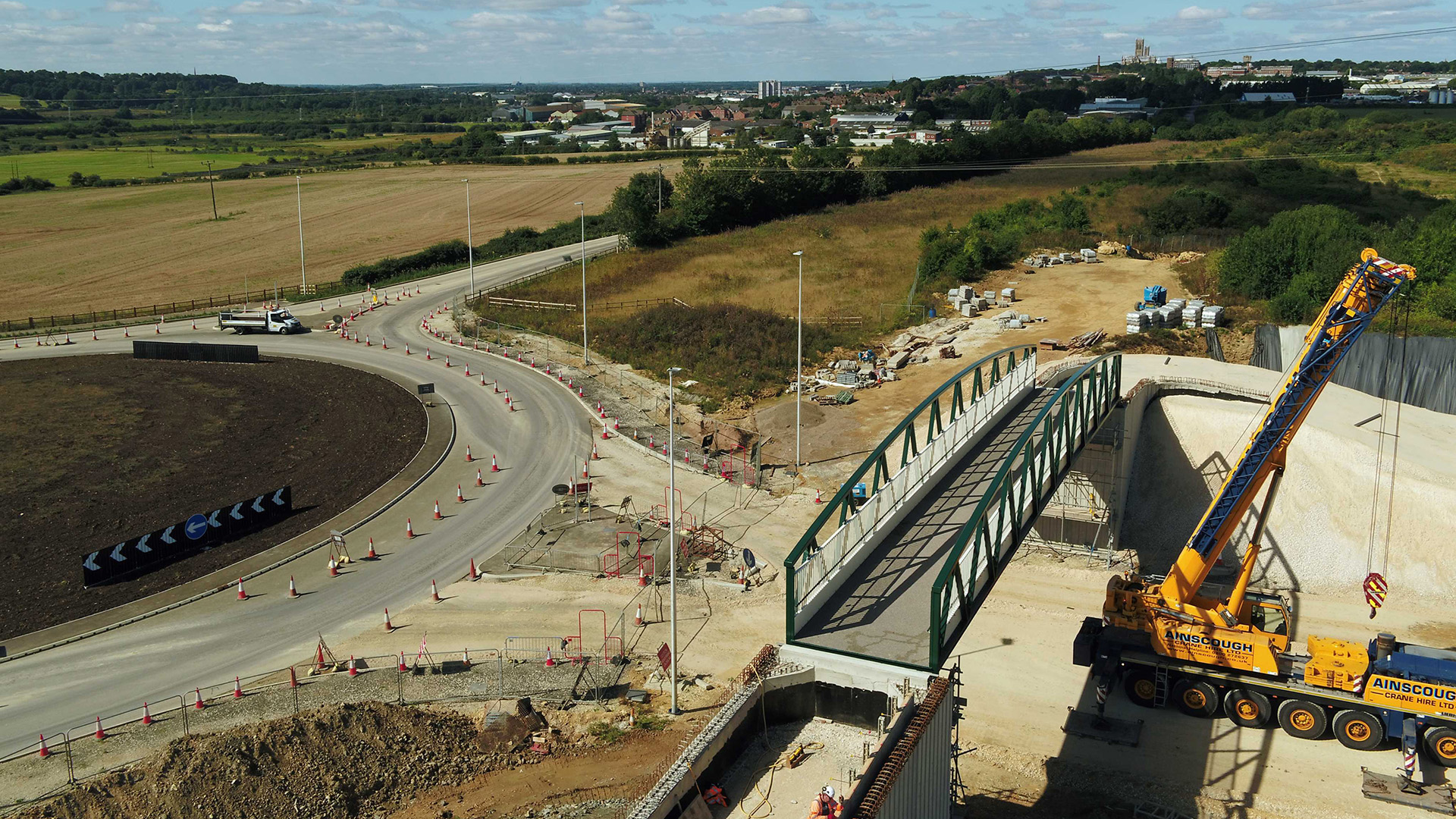
Lincoln’s ring road is finally closing. Nearly six years after the Eastern Bypass opened to traffic, diggers are now cutting into the fields south of the city to build the last stretch that will join it up into a complete loop around Lincoln.
The Lincoln Eastern Bypass itself is a major infrastructure development that transformed how traffic flows around the historic city. Stretching approximately 7.5 kilometres, it connects the A158 Wragby Road in the north to the A15 Sleaford Road in the south. Built to reduce congestion and support long-term growth, it plays a critical role in improving connectivity across Lincolnshire and strengthening regional transport efficiency.
More than just a road, the bypass represents a carefully planned solution to long-standing traffic problems. By diverting through-traffic away from the city centre, it cut travel times and eased pressure on Lincoln’s historic streets. It was also always meant to be one piece of a bigger picture: a complete ring road around the city. That bigger picture is now, finally, under construction.
Today’s Update: The Final Piece of Lincoln’s Ring Road Is Being Built
The missing link is called the North Hykeham Relief Road, and it’s the project that will connect the A46 Pennells Roundabout to the Lincoln Eastern Bypass, closing the ring road for good.
The government confirmed £110 million in funding for the scheme on 18 February 2026, clearing the final hurdle after nearly two decades of planning. Balfour Beatty was appointed as main contractor, and ground was officially broken in March 2026, with full construction ramping up through the spring. The total project cost is estimated at between £180 million and £218 million, with the remainder funded by Lincolnshire County Council and developer contributions.
Once finished, the new dual carriageway is expected to unlock land for around 4,500 new homes and 7 hectares of employment space, and to generate roughly £800 million in economic benefits for Lincolnshire over the next 60 years. Completion is targeted for May 2029.
What’s happening on site this month
Lincolnshire County Council’s latest progress update, published this August, shows crews working across several sections of the route at once:
- Site clearance, fencing, and topsoil strip continuing across the scheme
- Haul road construction progressing to keep heavy construction traffic off local roads
- The South Hykeham Road site access now complete, with works underway between the A46 and South Hykeham Road
- Compound cabins, car parking, drainage, and ducting going in at the A46 compound
- Bulk excavation and earthworks embankments taking shape at Grantham Road and Lincoln Cliff
- Attenuation pond preparation and drainage works to ponds and outfalls
- Construction of the temporary River Witham bridge, including bank seat work and on-site fabrication of the bridge structure
Drivers should expect temporary traffic signals and reduced speed limits at South Hykeham Road, Brant Road, Grantham Road, and Station Road while accesses and haul road crossings are built, with a signed diversion running via Hill Top, Station Road, and Brant Road.
Route Map and Key Design Features of the Bypass
The route of the Lincoln Eastern Bypass was strategically designed to connect key transport corridors while minimising disruption to local communities. Starting at the A15 Sleaford Road, the bypass curves around the eastern side of Lincoln and links directly to the A158 Wragby Road. This connection integrates with the existing northern relief road, forming a near-complete ring around the city and improving traffic distribution across major routes.
In terms of design, the bypass includes multiple roundabouts, bridges, and access points that ensure smooth transitions for local and long-distance traffic. A standout feature is the River Witham crossing, which required advanced engineering to balance environmental protection with structural durability. Dedicated footpaths and cycleways run alongside the road too, encouraging sustainable travel and making the bypass usable for pedestrians and cyclists as well as drivers.
History, Planning, and Construction Timeline
The concept of the Lincoln Eastern Bypass dates back to the early 2000s, when rising traffic congestion began to affect the city’s functionality and growth potential. After extensive feasibility studies, planning permission was submitted in 2012 and approved in 2013, marking the start of a long and complex journey involving environmental assessments, public consultations, and infrastructure planning at multiple levels.
Construction officially began in 2016, though the project faced real setbacks along the way. The most significant came in 2018, when the main contractor collapsed, forcing authorities to restructure contracts and reassign work. Despite the delay, construction progressed steadily, with major milestones including bridge completions, railway integrations, and new roundabouts. The bypass was completed and opened to traffic in December 2020, a major achievement for regional infrastructure.
Cost and Funding Breakdown of the Project
The Lincoln Eastern Bypass was a substantial financial investment aimed at delivering long-term economic and social benefits. The total cost came to approximately £122 million, reflecting the scale of engineering, planning, and environmental work involved. Funding was secured through a mix of central government support, local authority contributions, and private sector involvement.
Specifically, around £50 million came from central government, while Lincolnshire County Council contributed approximately £37 million. The remaining £34 million came from third-party developers, underlining the role private investment played in supporting public infrastructure. That collaborative funding model made the project feasible and demonstrated real confidence in the bypass’s ability to drive regional growth.
Purpose, Benefits, and Strategic Importance

The primary purpose of the Lincoln Eastern Bypass is to reduce congestion within the city and improve overall transport efficiency. By redirecting through-traffic away from central Lincoln, it cut travel times and improved journey reliability across the region, particularly for commuters, logistics operators, and emergency services.
Beyond traffic relief, the bypass plays a strategic role in enabling economic growth and urban development. It opened up land for housing, supported industrial expansion, and improved connectivity between key economic zones. It also marked a major step toward a complete ring road system for the city, a vision that’s now taking its final shape through the North Hykeham Relief Road works described above.
Traffic Impact and Improvements in Travel Efficiency
Since opening, the Lincoln Eastern Bypass has had a measurable effect on traffic patterns in and around the city. Previously congested routes through the city centre saw a real reduction in traffic volume, leading to smoother, more predictable journeys. Drivers travelling between the north-east and south of Lincoln can now bypass the city entirely, saving time and fuel.
Improved traffic flow has also boosted safety across the region. Less congestion means fewer accidents and less stress for drivers on busy urban roads. Public transport services have benefited from more reliable schedules, and freight and delivery operations have become more efficient. Overall, the bypass reshaped how people move within Lincolnshire.
Environmental Impact and Sustainability Measures
Large infrastructure projects often raise environmental concerns, but the Lincoln Eastern Bypass was designed with sustainability in mind. Extensive environmental assessments during planning helped minimise the project’s impact on local ecosystems, with measures such as wildlife corridors, tree planting, and habitat preservation put in place to protect biodiversity nearby.
The bypass also incorporates sustainable drainage systems to manage water runoff and reduce flood risk. By improving traffic flow and cutting stop-start driving, the road contributes to lower vehicle emissions over time. Interestingly, the North Hykeham Relief Road now under construction is following a similar playbook, with its own attenuation ponds and drainage works already taking shape on site.
Construction Challenges and Project Delays
Building the Lincoln Eastern Bypass came with real challenges that shaped the final outcome. The most notable was the collapse of the original contractor in 2018, which caused delays and forced the project to be restructured. It tested the resilience of the project team and every stakeholder involved.
Other challenges included public opposition, legal inquiries, and technical difficulties tied to bridge design and environmental compliance. Weather conditions and complex engineering requirements added further pressure to the timeline. Despite the obstacles, the project was completed successfully, reflecting strong project management and close collaboration between government bodies, contractors, and local communities.
Economic Impact and Local Development Opportunities
The Lincoln Eastern Bypass has already delivered real economic benefits to the region. By improving accessibility, it made it easier for businesses to operate and expand, attracting new investment and supporting job creation. Industrial areas, business parks, and residential developments have all benefited from the enhanced connectivity, making Lincoln a more attractive place to grow.
The bypass also supports new housing projects, helping meet demand and improve living standards locally. Better transport links make commuting easier and open up employment opportunities in neighbouring towns and cities. Over the long term, it’s expected to keep strengthening Lincolnshire’s economy and supporting sustainable regional development.
Future Plans and Long-Term Vision for the Bypass
For years, completing Lincoln’s ring road was a long-term ambition rather than a funded project. That’s changed. With the North Hykeham Relief Road now under construction and due to open in 2029, the vision of a full ring road around Lincoln has moved from proposal to building site.
There’s still discussion about further upgrades further down the line, including the possibility of widening sections of the network to dual carriageway as the region continues to grow, and interest in smart technology such as real-time traffic monitoring and adaptive signal systems. Nothing on those fronts has been confirmed yet, but with the ring road’s final piece now physically under construction, Lincoln’s transport strategy has entered its most active phase in years.
Frequently Asked Questions About Lincoln Eastern Bypass
How long is the Lincoln Eastern Bypass, and where does it run? The bypass stretches approximately 7.5 kilometres around the eastern side of Lincoln, connecting the A15 and A158.
How much did it cost, and who paid for it? The total investment was around £122 million, funded through central government, Lincolnshire County Council, and third-party developer contributions.
Is Lincoln’s ring road now complete? Almost. The Eastern Bypass has been open since December 2020, and the final piece, the North Hykeham Relief Road connecting the A46 to the bypass, is under construction now and due to open in 2029, which will close the ring road for the first time.
What’s the environmental impact of the project? Construction inevitably affects the landscape, but the scheme includes wildlife corridors, tree planting, sustainable drainage, and habitat preservation measures designed to limit long-term ecological effects.
You may also read:
Tennants Auctioneers – UK’s Largest Family-Run Fine Art & Antiques Auction House
Between the Bridges London