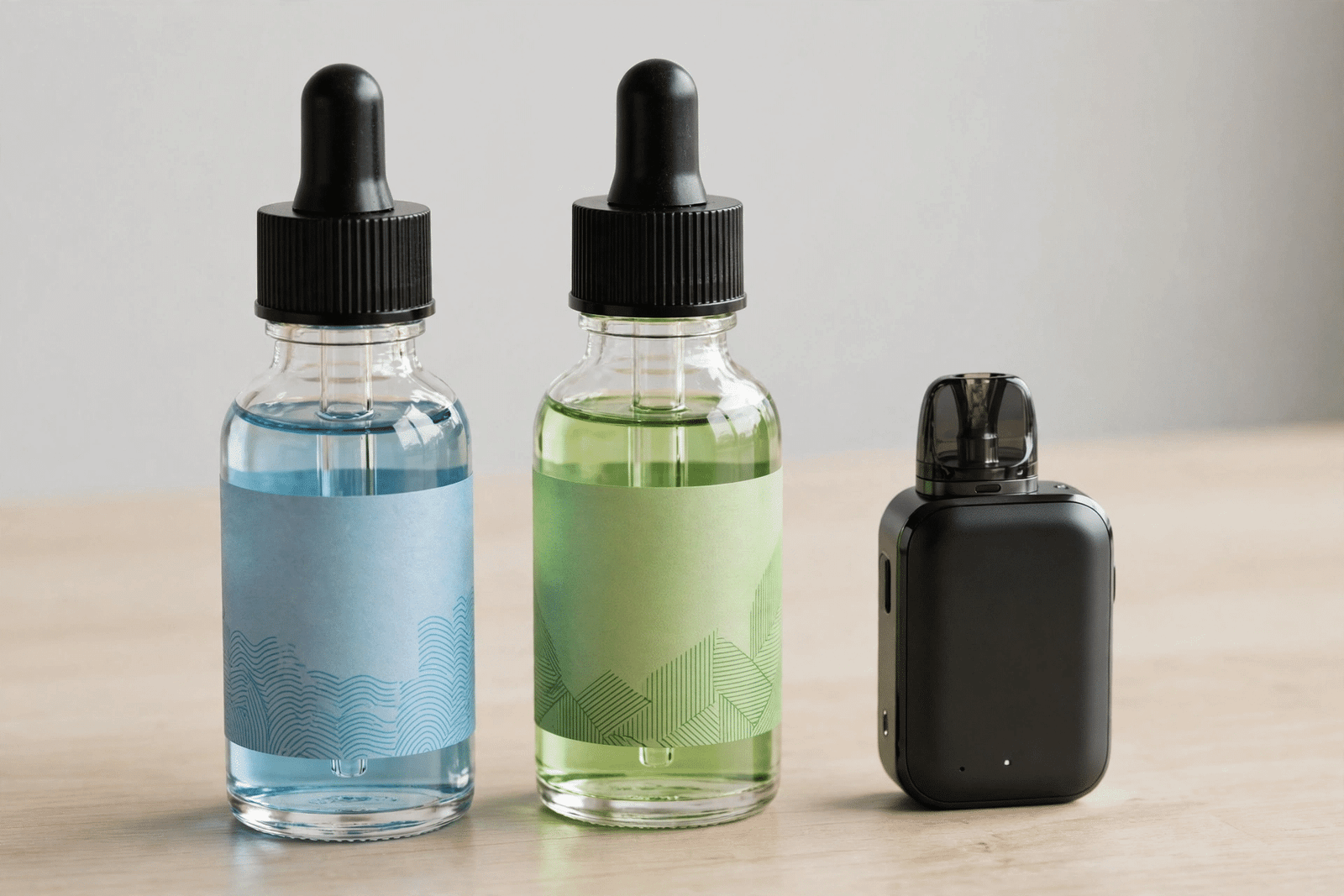
The question of nicotine salts vs freebase e liquids which is right for you is usually asked by an adult smoker who is trying to switch, or by an existing vaper whose current liquid feels too harsh, too weak or simply wrong for their device. Both liquids deliver nicotine in vapour, but they are chemically different, they behave differently in devices, and they suit different people. This guide compares them honestly — how each is made, how each feels, which devices each needs, and what UK law allows — so an adult reader can make an informed choice rather than a marketing-led one.
Two ground rules come before any comparison. First, this article is for adults only: in the UK it is illegal to sell vaping products to anyone under 18, and nicotine is an addictive substance whichever liquid carries it. Second, and just as important, if you do not smoke, do not start vaping. Nicotine salts vs freebase e liquids which is right for you is a question that only makes sense for someone reducing the harm of smoking or managing an existing nicotine habit — for a non-smoker, the right answer to both options is neither, and no honest guide should pretend otherwise.
Health Caveats Every Adult Reader Should Hear First
UK health authorities are unusually clear about where vaping sits: it is not risk-free, but it is substantially less harmful than smoking cigarettes, and it is recommended only as a route away from tobacco. The NHS guidance on using e-cigarettes to stop smoking explains that vaping can help smokers quit, while stressing that people who have never smoked should not vape, and that anyone who does switch should eventually aim to stop vaping too. That framing applies to every claim in this article about nicotine salts vs freebase e liquids which is right for you.
Nicotine itself deserves the same honesty. It is the addictive component in both liquids, it is not the main cause of smoking-related disease — that harm comes overwhelmingly from tar and the thousands of chemicals in cigarette smoke — but it is not harmless either, and it should be kept away from children, for whom liquid nicotine is poisonous. Pregnant people are advised to use licensed stop-smoking medicines rather than vaping where possible. The long-running GOV.UK evidence review of nicotine vaping in England is the most thorough official source for adults who want the full picture before choosing any product.
What Freebase E-Liquids Are
Freebase nicotine is the original form used in e-liquids, produced by treating nicotine so that it vaporises efficiently and reaches the bloodstream effectively when heated. In practice, freebase liquids are known for a distinct throat hit — a catch at the back of the throat that many former smokers find familiar and satisfying at low strengths, but which becomes harsh and peppery as the nicotine strength rises. That is why freebase liquids are normally sold at lower strengths such as 3mg, 6mg and 12mg, with 18mg generally the practical ceiling for comfortable use.
For the nicotine salts vs freebase e liquids which is right for you decision, freebase has three traditional strengths. It carries flavour boldly and cleanly, which is why flavour-focused vapers often prefer it; it works across the widest range of devices, especially larger refillable kits; and it allows gradual step-down in strength, because the low strengths are comfortable to use all day. Its weakness is the mirror image of its character: a heavy smoker who needs a strong, fast nicotine delivery at low vapour volume will often find freebase at tolerable strengths too slow, and at higher strengths too harsh to use.
What Nicotine Salts Are
Nicotine salts are made by combining nicotine with an organic acid, most commonly benzoic acid, which lowers the pH of the resulting liquid. That single chemical change has two practical effects that explain their popularity. First, the vapour is dramatically smoother on the throat at a given strength, so liquids at 10mg or the UK legal maximum of 20mg can be inhaled comfortably where the same strength of freebase would feel aggressive. Second, the nicotine is absorbed quickly, closer to the speed smokers are used to from a cigarette, so cravings are answered faster with fewer puffs.
Those effects define where salts sit in the nicotine salts vs freebase e liquids which is right for you comparison: they are primarily a switching tool. A person moving from twenty cigarettes a day to a small pod device usually needs exactly what salts provide — strong, quick, discreet nicotine without clouds and without harshness. The trade-offs are real, though. Flavour can taste slightly softer than in freebase, the smoothness makes it easy to consume more nicotine than intended if you chain-vape, and salts are unsuitable for powerful sub-ohm devices, where their strength would deliver far too much nicotine far too quickly.
Flavour, Throat Hit and Satisfaction Compared
Flavour is where personal preference splits most sharply in the nicotine salts vs freebase e liquids which is right for you debate. Freebase liquids tend to taste sharper and more defined, particularly complex dessert, tobacco and menthol blends, because the alkaline nicotine interacts with flavourings differently and because freebase is usually vaped at higher power with more airflow. Salts deliver a smoother, sometimes slightly muted version of the same flavour, but for the fruit and ice profiles that dominate the pod market that softness bothers very few people, and the overall experience is gentler from the first puff to the last.
Throat hit and satisfaction pull in opposite directions, and weighing them is the heart of the choice. Freebase gives the noticeable hit many ex-smokers miss, but delivers nicotine more slowly, so satisfaction builds over a session. Salts give barely any hit, yet satisfy a craving within a few puffs, which helps new switchers but can also make the device easier to put down — a genuine advantage for someone whose goal is to use nicotine less often rather than more. Neither profile is better in the abstract; each is better for a particular goal, which is why honest comparisons always start with what the reader is trying to achieve.
Device Compatibility Matters as Much as the Liquid
The most common practical mistake in the nicotine salts vs freebase e liquids which is right for you question is ignoring the device, because each liquid is built for a different class of hardware. Nicotine salts belong in low-power pod systems and starter pens with higher-resistance coils, typically above 0.8 ohms, where small amounts of vapour carry high-strength liquid efficiently. Freebase belongs in the wider world of refillable kits, including sub-ohm devices with low-resistance coils that produce large vapour volumes and therefore need low-strength liquid to keep total nicotine intake sensible and comfortable.
Putting the wrong liquid in the wrong device is unpleasant at best: salts in a powerful sub-ohm kit can deliver a dizzying nicotine rush, while low-strength freebase in a tiny pod may feel so weak that a new switcher concludes vaping does not work and returns to cigarettes. UK rules add one more device consideration — e-liquid bottles are capped at 10ml and tanks at 2ml under UK regulations, and the maximum legal nicotine strength is 20mg/ml, so the very high-strength salt products sold in some other countries are simply not legal products here and should not be bought from unofficial sellers.
So Which One Is Right for You
For an adult heavy smoker switching now, the practical answer to nicotine salts vs freebase e liquids which is right for you is usually salts in a simple pod kit: 20mg or 10mg, quick craving relief, minimal fuss, and a device that fits in a pocket. For a lighter or social smoker, a lower-strength freebase liquid in a basic refillable kit may be plenty, with a throat hit that feels closer to smoking and no risk of taking in more nicotine than the habit it replaces. The goal decides the tool, and choosing more nicotine than you need is never the smarter option.
For an existing vaper, the answer depends on what feels wrong today. If your liquid is harsh, step toward salts or lower your freebase strength; if your pod feels unsatisfying and you are puffing constantly, the issue may be strength or device rather than liquid type. Many people also use both: salts for discreet, quick top-ups and freebase for relaxed home use. Whatever you choose, buy from reputable UK retailers, check that products carry the required warnings and notifications, and treat the long-term destination as using less nicotine over time — ideally none.
Conclusion
Nicotine salts vs freebase e liquids which is right for you comes down to three honest questions: how much nicotine do you currently depend on, what device will you actually use, and is your goal to switch from smoking and then reduce? Salts answer the needs of heavier smokers with smooth, fast, high-strength delivery in small pods; freebase answers the needs of lighter users and flavour-focused vapers with a familiar throat hit, flexible strengths and easy step-down. Both contain addictive nicotine, neither is a lifestyle product, and neither is for non-smokers or anyone under 18.
Choose the option that keeps you away from cigarettes with the least nicotine you can manage, buy only legal UK products from reputable sellers, and keep the end goal in view. If you are reading this as a smoker, the most valuable next step is not a flavour choice but support: NHS stop-smoking services are free and proven. And if you are simply curious about vaping culture, you may enjoy our lighter explainers too, such as our guide to rugby positions.
Frequently Asked Questions
What is the main difference between nicotine salts and freebase e-liquids?
The difference is chemistry and feel. Freebase nicotine is alkaline, gives a stronger throat hit and is normally used at lower strengths in a wide range of devices. Nicotine salts combine nicotine with an acid, making the vapour smoother at higher strengths and allowing faster absorption, which is why they suit low-power pod kits. In the nicotine salts vs freebase e liquids which is right for you decision, that smoothness-versus-hit contrast, plus device compatibility, matters more than any marketing claim about either type.
Are nicotine salts stronger than freebase liquids?
They are usually sold at higher strengths — commonly 10mg and 20mg in the UK, where 20mg/ml is the legal maximum — and they are absorbed faster, so they feel more immediately satisfying. That does not make them better, only better matched to heavier smokers switching to small devices. Because salts are smooth, it is easy to take in more nicotine than intended, so users should puff deliberately, take breaks, and step down in strength over time rather than treating the highest strength as the default choice.
Can I put nicotine salts in any vape device?
No. Nicotine salts should only be used in low-power pod systems and starter devices with higher-resistance coils. Using high-strength salts in a powerful sub-ohm kit can deliver far too much nicotine at once and cause nausea, dizziness and headaches. Freebase liquids are the correct choice for sub-ohm and high-power devices, at low strengths such as 3mg or 6mg. Matching the liquid to the device is the single most important practical rule in the whole comparison, whatever brand or flavour you prefer.
Is vaping safer than smoking, and should non-smokers vape?
UK health authorities state that vaping is substantially less harmful than smoking because it removes tar and combustion, but it is not risk-free and nicotine is addictive. The NHS recommends e-cigarettes only as a stop-smoking aid for adult smokers. If you do not smoke, you should not vape at all — starting would create a nicotine habit with no benefit to set against it. Children must never use these products, sales to under-18s are illegal in the UK, and liquids should always be stored safely away from children and pets.
How do I step down my nicotine strength over time?
Gradually, and with the liquid type that keeps you off cigarettes while you do it. A common pattern is to stabilise first — many switchers stay on 20mg or 10mg salts until cigarettes are fully gone — then reduce one step at a time every few weeks, moving to lower-strength salts or to freebase liquids, which make low strengths comfortable in refillable kits. If cravings surge, return to the previous step rather than to smoking. Free support is available from local NHS stop-smoking services for anyone who wants structured help.
Whatever you came here looking for, we hope this balanced comparison helped — and for more clear, no-hype guides across sport, health and everyday life, keep reading Pogeo, starting with our rugby positions breakdown.