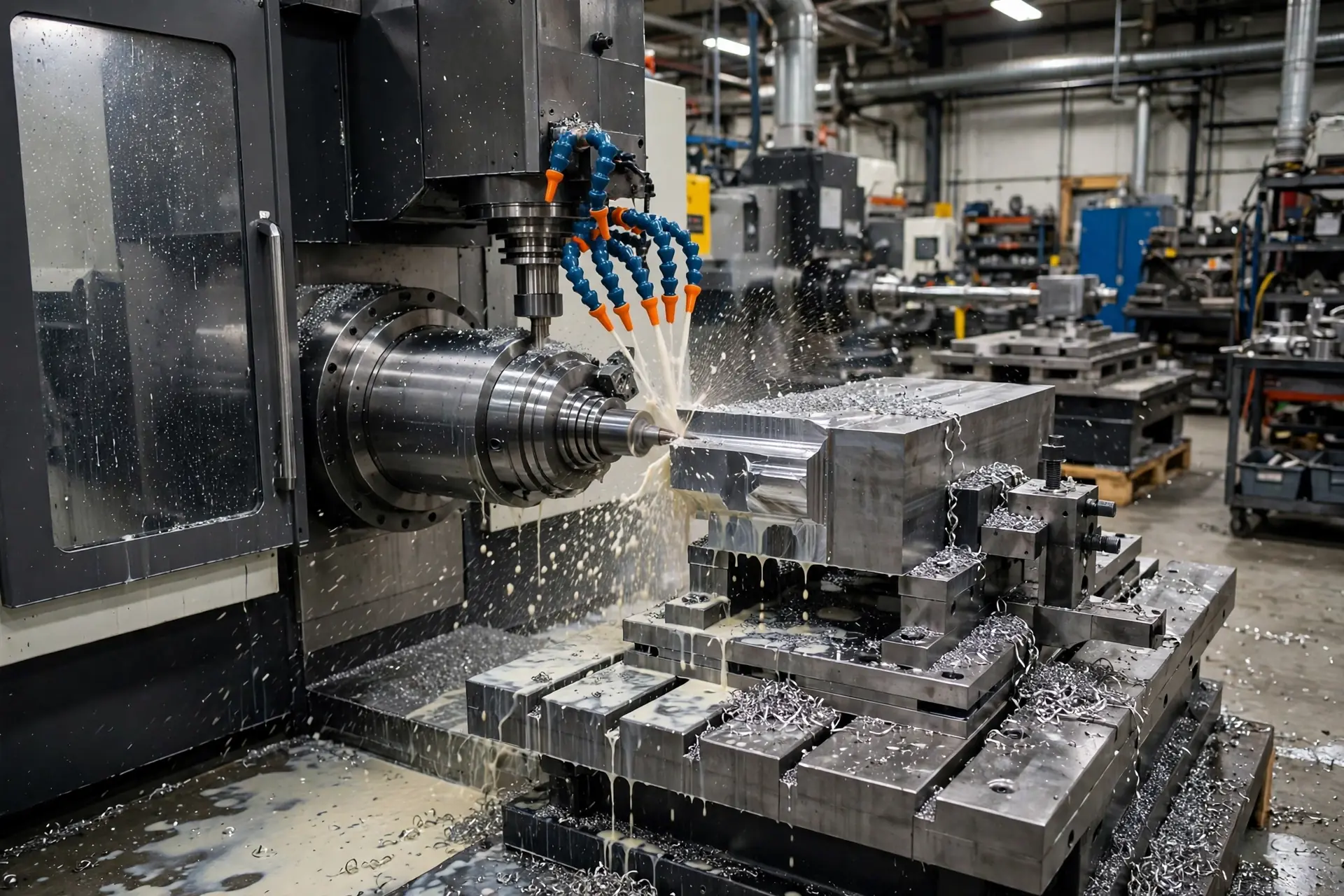
Choosing the right CNC horizontal machining center for your workshop is one of the largest single investments a machining business will ever make, and it is also one of the easiest to get wrong. In short, a CNC horizontal machining center, usually called an HMC, is a computer-controlled milling machine with a horizontally oriented spindle, a rotary table and usually a pallet system that lets it machine several faces of a part in one setup. Get the specification right and you gain multi-sided machining, excellent chip evacuation and long unattended runs; get it wrong and you own an expensive machine that is too small for your parts, too slow for your materials, or too complex for your team to run profitably.
This guide explains how to choose the right CNC horizontal machining center step by step, covering machine size, spindle power and speed, pallet systems, tool capacity, controls, automation, installation requirements, running costs and supplier support. It gives typical specification ranges drawn from real machines on the market, explains the trade-offs behind each choice, and sets out the checks to make before signing an order, so that the machine you buy matches the work you actually do rather than the brochure that impressed you most.
What a CNC Horizontal Machining Center Actually Is
A CNC horizontal machining center is a milling machine in which the spindle lies parallel to the floor, holding the cutting tool horizontally, while the workpiece sits on a rotary table, usually mounted on a pallet. The machine typically works in four axes: the three linear axes, X, Y and Z, which move the tool or table in three dimensions, plus a B-axis, the rotary table, which indexes or rotates the workpiece so that different faces can be presented to the tool without unclamping and re-setting the part. Because the spindle is horizontal, gravity works in the machinist’s favour: chips fall away from the cutting zone instead of piling onto the part and the fixture, which improves surface finish, extends tool life and allows deeper, more aggressive cuts than a comparable vertical machine.
The pallet system is the other defining feature of a CNC horizontal machining center. Most HMCs have two pallets: while one pallet is inside the machine being cut, the operator loads or unloads the other pallet outside the working envelope, so the spindle keeps cutting instead of waiting for setup. Larger installations extend this idea into pallet pools or flexible manufacturing cells with six, ten or more pallets feeding one or more machines, enabling long unattended runs and even lights-out production overnight. This combination of multi-face machining, gravity-assisted chip evacuation and pallet-based loading is why HMCs are the standard choice for prismatic parts, such as engine blocks, transmission housings, gearbox cases, pump bodies and valve blocks, where several faces must be machined accurately in relation to one another.
Why Workshops Choose Horizontal Over Vertical Machining
The first question in any buying decision is whether you need a horizontal machine at all, because a vertical machining center, or VMC, is usually cheaper, simpler and easier to fit into a small workshop. The honest answer is that a VMC is the right choice for flat work, plate work, mould tools and low-volume prototyping, where parts are machined mainly from one side and setup time is not the bottleneck. An HMC earns its higher price when your parts need machining on four or more faces, when you run batches rather than one-offs, and when spindle utilisation, the proportion of the working day the spindle is actually cutting, is what determines your profitability. In those conditions the pallet changer and the rotary table remove the two biggest sources of lost time: re-setting parts and waiting for the operator.
Accuracy is the second reason workshops move to horizontal machining. Machining several faces in a single setup means the relationships between those faces, such as the alignment of bores on opposite sides of a housing, are held by the machine’s geometry rather than by the operator’s skill in re-clamping. That repeatability is essential in automotive, aerospace and hydraulic work, where tolerances are tight and scrap is expensive. The third reason is chip management: on a vertical machine, chips can be re-cut, scratching surfaces and breaking tools, whereas on a horizontal machine they fall clear, which is particularly valuable in cast iron, steel and titanium work where chip volumes are large. If your work is mostly single-face aluminium parts in small batches, a good VMC may serve you better for less money; if your work is multi-face prismatic parts in batches, an HMC is usually the machine that pays.
Sizing the Machine to Your Parts and Floor Space
Size is the specification that causes the most expensive mistakes, because a machine that cannot fit your largest part is useless for that job, while a machine far larger than your work wastes floor space, power and money. Start by listing the parts you actually machine, not the parts you hope to win: record the largest part’s length, width and height, its weight, and the number of faces that need machining. Then compare those figures with the machine’s work envelope, the X, Y and Z travels, the pallet size and the maximum pallet load. Typical mid-range HMCs offer pallet sizes of 400 mm, 500 mm or 630 mm square, with pallet loads from around 400 kg on smaller machines to 1,200 kg or more on larger ones, while large HMCs run 800 mm pallets and loads of several tonnes. Choose a machine whose envelope comfortably clears your largest part including its fixture, because a part that only just fits leaves no room for tooling, probing or safe loading.
Floor space and installation requirements deserve equal attention, and they are often discovered too late. An HMC is a heavy machine, commonly 10 to 25 tonnes for a mid-range model, and it needs a proper foundation, not just a level floor, plus clearance around it for the pallet changer, chip conveyor, coolant tank and maintenance access. You will also need three-phase power sized for the machine’s total connected load, which is typically in the range of 30 to 60 kVA for a mid-range HMC, plus compressed air and a coolant supply. Measure the delivery route as well: door widths, corridor turns and floor loadings between the loading bay and the machine’s final position have all defeated otherwise perfect purchases. A supplier site survey before ordering, covering foundations, power, air and access, is not a courtesy; it is an essential part of choosing the right CNC horizontal machining center for your building.
Spindle Power, Speed and Torque: Matching Metal to Machine
The spindle is the heart of the machine, and its specification must match the materials you cut, because speed and torque pull in opposite directions. Spindle speed, measured in revolutions per minute, matters most for aluminium and light alloys, where high speeds and fast feed rates produce the best finishes and shortest cycle times; typical HMC spindles run from around 6,000 rpm on heavy-duty models to 10,000 or 12,000 rpm on standard models, with high-speed options reaching 18,000 rpm or more. Torque, measured in newton-metres, matters most for steel, cast iron, stainless and titanium, where the tool must be driven hard through tough material at lower speeds; heavy-duty spindles can deliver several hundred newton-metres, and some large machines exceed 1,000 Nm. Power, typically 15 to 40 kW on mid-range machines and far more on large ones, is the product of speed and torque, and a machine that is strong in one but weak in the other will disappoint on mixed work.
Taper size is the practical detail that ties spindle choice to your tooling investment. Most HMCs use BT40, CAT40, BT50 or CAT50 tapers, with HSK options on high-speed machines, and the taper decides which toolholders you can use. BT50 and CAT50 spindles are the standard for heavy cutting and large tools, while BT40 suits lighter, faster work. Changing taper later means changing your entire toolholder inventory, so match the taper to the tooling you already own or plan to buy. Through-spindle coolant, typically supplied at 20 to 70 bar, is another option worth specifying for deep drilling and tapping, because it clears chips from deep holes and extends tool life dramatically. When comparing spindles, ask for the power and torque curves across the speed range, not just the headline maximum figures, because a spindle that only reaches peak power at a speed you never use is of little practical value.
Pallets, Tool Changers and Automation That Keep the Spindle Cutting
A machine only earns money while its spindle is cutting, so the pallet system, tool changer and chip handling deserve as much scrutiny as the spindle itself. A two-pallet changer is the standard on most HMCs and is the single most valuable productivity feature for batch work, because it lets the operator set up the next part while the current part is being machined, with pallet change times typically between 10 and 20 seconds. Larger pallet pools extend this advantage across shifts, and they are the foundation of unattended and lights-out running, but they add cost, floor space and complexity, so they only make sense when you have the batch volumes and the programming discipline to keep them fed. For a sense of how a major manufacturer configures these systems, Mazak’s horizontal machining center range shows the pallet sizes, table options and automation layouts available on production-oriented machines, and it is a useful benchmark when comparing other suppliers’ offerings.

Tool capacity is the second productivity lever. Automatic tool changers on mid-range HMCs typically hold 40 to 60 tools, with options extending to 120, 180 or more on larger machines, and tool change times of a few seconds. Count the tools your most complex part actually needs, including drills, taps, reamers, boring tools and finishing cutters, and add a margin for sister tooling, because a machine that runs out of pockets mid-programme either needs manual intervention or a second setup, both of which destroy the unattended-running advantage. Chip handling is the third lever and is often under-specified: a good chip conveyor, a coolant filtration system matched to your materials, and a coolant tank large enough to stay cool during long runs are all essential, particularly with cast iron and aluminium, where chip volumes are high. Finally, consider probing and tool measurement, because an in-machine probe that checks part location and a tool setter that verifies tool length and breakage turn the machine into a self-checking system, catching errors before they become scrap.
Controls, Software and Programming Your Team Can Actually Run
The most capable machine in the world is worthless if your programmers and operators cannot use it confidently, so the control system should be judged on your team’s skills, not on the brochure. The major control families each have strengths: some are built around conversational programming, where the operator answers prompts and the control generates the toolpath, which suits small batches and skilled shop-floor programmers; others are built around full CAM integration, where programs arrive from the office already proven in simulation, which suits larger batches and complex parts. Ask who will program the machine, what CAM software you already own, and whether the control’s post-processor for your CAM system is proven, because a post-processor problem can delay production for weeks. Training is part of this cost: budget for the supplier’s training courses, and confirm that training covers your operators, your programmers and your maintenance staff, not just one person.
Connectivity and monitoring are now standard expectations rather than luxuries, but they still vary widely between suppliers. Look for controls that support network file transfer, remote monitoring of machine status, and alerts for tool life, coolant level and cycle completion, because these features are what make unattended running practical rather than merely possible. Predictive maintenance features, such as spindle load monitoring and vibration sensing, can warn of bearing wear or tool failure before they cause a crash, but only if someone actually reviews the data. Before committing, ask for a demonstration on a part similar to yours, using your material, your tolerances and your batch size, and watch how long programming, setup and prove-out actually take. A control that feels intuitive to your team on a demonstration day will still feel intuitive six months later, when the supplier’s engineer has gone home.
Budget, Running Costs and Return on Investment
The purchase price is only the first part of the cost of owning a CNC horizontal machining center, and judging a machine on price alone is the most common buying error. New mid-range HMCs represent a very substantial capital investment, with prices varying enormously by size, spindle, pallet system and automation, so always obtain like-for-like quotations that include delivery, installation, foundations, training and the first year’s maintenance. Running costs then include tooling, which is a continuous expense that rises with harder materials and tighter tolerances, coolant and filtration consumables, electricity, which is significant for a machine running long hours, and planned maintenance, including spindle and ballscrew servicing. Unplanned downtime is the hidden cost that dwarfs the others: a machine waiting for a spare part or a service engineer produces nothing, so the supplier’s parts stockholding and response time have a direct financial value that should be weighed against any price difference.
Return on investment should be calculated from your real numbers, not from the supplier’s example. Estimate the cycle-time saving against your current method, the labour saving from pallet-based loading and unattended running, the scrap reduction from single-setup accuracy, and the additional work you can quote for because you can now machine parts you previously turned away. Against those gains, set the full cost of ownership over five years, including finance charges, maintenance contracts, tooling and energy. Many workshops find that a more expensive machine with a faster pallet changer and a better control pays for itself sooner than a cheaper machine that spends more of each shift waiting, because spindle utilisation is the number that drives the whole calculation. If the numbers only work on the assumption of winning work you do not yet have, be cautious, and consider whether a smaller machine, a used machine or subcontracting the first batches would test the market more cheaply.
Buying New, Used or Refurbished, and Choosing a Supplier
Buying new gives you the latest control, a full warranty, supplier training and a known service history, but it costs the most and usually involves a lead time of months. Buying used can save a great deal, and HMCs from major builders such as Mazak, DMG Mori and Haas are widely supported, with parts and service available for machines many years old, but a used machine must be inspected with care. Check the machine under power, cutting metal if possible, and examine spindle condition, ballscrew backlash, pallet changer repeatability, coolant system condition and the control’s alarm history. Ask for maintenance records, confirm the machine’s hours, and verify that the control’s software and the CAM post-processor are still supported. A machine that looks cheap but needs a spindle rebuild or a control upgrade can quickly cost more than a newer alternative.
Choosing the supplier matters as much as choosing the machine, because you are buying a relationship that will last the machine’s working life. Judge suppliers on local service coverage, the number of engineers in your region, guaranteed response times, spare parts stockholding, and the quality of their training, and speak to two or three existing customers running the same model before you commit. Ask for references in your industry and your size of workshop, not just flagship customers, and ask those customers what went wrong, because every installation has problems and the supplier’s response is the real measure. Finally, negotiate the whole package, not just the price: installation, foundation advice, training places, a first service, tooling starter kits and warranty terms are all negotiable, and the supplier who is flexible before the order is usually the supplier who is helpful after it.
Conclusion
How to choose the right CNC horizontal machining center comes down to matching the machine to your parts, your materials, your batch sizes and your team, in that order. Size the work envelope and pallet load for your largest real part, choose a spindle whose speed and torque suit your material mix, specify a pallet system and tool capacity that keep the spindle cutting rather than waiting, and pick a control your people can actually program and run. Then cost the whole package honestly, including installation, tooling, training and maintenance, and choose the supplier whose service and support you trust for the next decade, because the machine will be with you far longer than the sales process.
Done well, a CNC horizontal machining center transforms a workshop: multi-face parts leave the machine complete, batches run unattended, accuracy improves and work that was previously impossible becomes quotable. Done badly, it becomes an expensive monument to a brochure. Take the time to measure your parts, test the control, check the supplier and run the investment numbers on your own figures, and the machine you buy will earn its floor space for years to come.
If you want to see shared workshop machinery in action before investing in your own, our guide to Blackhorse Road Workshop explores a London makerspace with professional wood and metal facilities, courses and bench hire.
Frequently Asked Questions
What is the difference between a horizontal and a vertical machining center?
The difference is the spindle orientation. A horizontal machining center holds the tool horizontally and machines the workpiece on a rotary table, which lets chips fall away from the cut and allows several faces to be machined in one setup. A vertical machining center holds the tool vertically above the table, which suits flat work and single-face parts but requires re-clamping to machine other faces.
How many axes does a typical HMC have?
Most horizontal machining centers have four axes as standard: the three linear axes X, Y and Z, plus a B-axis rotary table that indexes the workpiece. Some machines add a fifth axis, either a tilting table or an additional rotary axis, for complex contours and simultaneous five-axis work, but four axes cover the large majority of prismatic part production.
What size HMC does a small workshop need?
It depends entirely on your parts. A small workshop machining housings, brackets and valve bodies up to around 500 mm will usually suit a machine with a 400 mm or 500 mm pallet and travels of roughly 600 to 800 mm, while larger parts need a 630 mm pallet or bigger. Measure your largest part including its fixture, then choose the smallest machine that clears it comfortably, because oversized machines cost more to buy, power and maintain.
Is a used HMC a good idea for a first purchase?
It can be, provided the machine is inspected under power, its service history is available, and the control is still supported. Machines from major builders such as Mazak, DMG Mori and Haas hold their support well, but budget for a spindle and ballscrew check, and confirm that spare parts and a CAM post-processor are available before committing.
Do I need a pallet changer, or is a single table enough?
A pallet changer is worth specifying whenever you run batches, because it lets the operator load the next part while the machine cuts, which can dramatically raise spindle utilisation. For genuine one-offs and prototyping, where setup time is small compared with programming time, a single table may be sufficient and cheaper, but most production workshops find the two-pallet system pays for itself quickly.