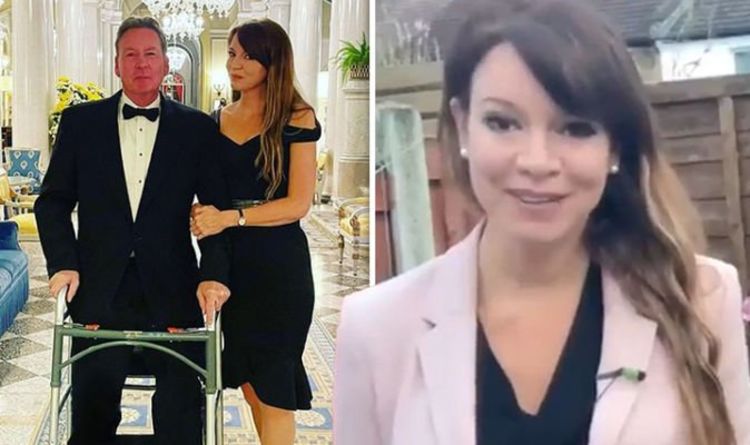
Search for elizabeth rizzini disability and you will find no shortage of pages happy to speculate — but very little in the way of facts. The BBC weather presenter has become the subject of persistent online rumours about her health, with clickbait-style articles implying she lives with a disability she has never mentioned, claimed, or shown any sign of having. This guide does the opposite of those pages: it lays out who Elizabeth Rizzini actually is, what the rumours claim, what the verifiable facts say, and where the confusion genuinely comes from — without diagnosing anyone or repeating gossip as truth.
A word on approach before we begin, because it shapes everything that follows. Discussing a real person’s health requires care, and this article follows a simple rule: only what is publicly documented gets stated as fact, and everything else is labelled as speculation. That standard protects the subject, and it protects you as a reader from being misled by pages that profit from your curiosity. If you arrived here worried about a presenter you enjoy watching, the short answer is reassuring — and the full story is worth the few minutes it takes to read properly.
Who Is Elizabeth Rizzini?
Elizabeth Rizzini is a British broadcast meteorologist and BBC weather presenter, trained by the Met Office and familiar to millions of viewers across the BBC’s television and radio output. Her credits span BBC Breakfast, the BBC News at One, Six and Ten, BBC World, BBC London, and forecasts for BBC Radio 4 and Radio 5 Live, alongside specialist work such as stargazing forecasts for The Sky at Night and live broadcasts from Wimbledon during the tennis fortnight. Alongside her meteorological training she holds a Master’s degree with a focus on environmental journalism and climate change, and she speaks Spanish and Italian conversationally after years spent living and working in Spain.
Away from the screen, she is a mother of two who keeps her family life largely private, and she has spoken in the past about a previous marriage to an Italian partner that ended in divorce. She is also known for charity work, including marathon running for children’s and humanitarian causes, and for an energetic, warm presenting style that has made her a trusted face for UK audiences over many years. None of her public appearances, interviews, or professional activities has ever indicated any disability — a point worth stating plainly, because the rumours persist in spite of the complete absence of supporting evidence.
What the Disability Rumours Claim
The rumours themselves are remarkably thin, which is the first thing to understand about them. They consist almost entirely of search-engine bait: headlines and snippets that pair her name with the word “disability” without citing any interview, medical record, public statement, or observable fact. Some pages go further, writing at length about “her disability journey” in vague, inspirational language that describes nothing specific — a telltale sign of content generated to capture searches rather than to inform readers. When a claim cannot point to a single verifiable detail, that absence is itself informative, and it should shape how much weight you give it.
It is worth pausing on why this kind of rumour is harmful even when it sounds sympathetic. Speculating about a stranger’s health — however warmly worded — treats a person’s body as public property and can quietly distort how audiences see a professional whose work has nothing to do with the subject. For the person involved, it means fielding questions about something untrue; for readers, it means absorbing misinformation dressed up as biography. The elizabeth rizzini disability keyword exists because speculation is profitable for content farms, not because there is anything substantive to report — and recognising that incentive is the first step to seeing through it.
The Facts: No Known Disability
Here is what can be stated with confidence: Elizabeth Rizzini has no publicly known disability, has never described herself as disabled, and no reputable publication has ever reported otherwise. Biographical profiles consistently describe an active professional life — live broadcasting, marathon running, charity fundraising, on-location reporting — with no mention of any health condition, because there is none on the public record. In the absence of any statement from Rizzini herself, any claim to the contrary is speculation by definition, and responsible reporting treats it as such rather than repeating it for clicks.
This is also where basic media literacy does most of the work. When you encounter a page claiming a public figure has a condition, ask three questions: who is the source, is there a direct quote, and does any established outlet corroborate it? In the case of the elizabeth rizzini disability rumours, the answers are nobody, no, and no. The story survives on repetition — content farms copying each other until volume resembles consensus — rather than on evidence, and each new page makes the next one look slightly more credible to a casual searcher. Breaking that cycle starts with checking before believing, which is exactly what this guide is for.
Where the Confusion Genuinely Comes From
The rumour does have an identifiable and understandable origin: Elizabeth Rizzini has been in a long-term relationship with Frank Gardner, the BBC’s Security Correspondent, who has used a wheelchair since being shot by al-Qaeda gunmen in Saudi Arabia in 2004. The couple’s relationship, publicly reported since around 2019, naturally brings disability into the orbit of stories about her — and search algorithms, which are relentlessly literal-minded, turn proximity into association. A meaningful share of “elizabeth rizzini disability” searches are almost certainly people misattributing her partner’s very public story to her, then finding content farms ready to confirm the confusion.
Gardner’s own story is one of remarkable resilience and deserves to be known on its own terms: after the 2004 attack left him partially paralysed, he continued a distinguished career as one of Britain’s best-known correspondents, reporting from a wheelchair and speaking openly about accessibility. It is a powerful story, and it should not be blurred into unfounded speculation about someone else. If you would like reliable background on Rizzini’s own professional life, her talent agency profile provides a verified summary of her broadcasting career.
Why Rumours Like This Spread
Health rumours about public figures follow a predictable playbook, and recognising it makes you immune to the next one. Step one is the suggestive headline, engineered to rank for searches pairing a name with “disability” or “illness”. Step two is the vague article itself, long on adjectives and short on facts, which gives search engines plenty of text to index without making a single checkable claim. Step three is replication: dozens of content farms rewrite the same empty article, and the sheer volume begins to look like consensus. At no point does anyone produce evidence, because evidence was never the point — advertising impressions were.
The pattern clusters especially around presenters whose personal lives intersect with disability in any visible way — a partner, a charity role, a documentary appearance — because algorithms cannot distinguish “associated with” from “has”. Rizzini’s visibility through her relationship and her charity work supplies exactly the raw material these pages need, and the elizabeth rizzini disability keyword keeps paying out for whoever ranks for it. The defence is simple and always available: prefer primary sources and established outlets, and treat any health claim without a named source as unverified until proven otherwise.
Frequently Asked Questions
Does Elizabeth Rizzini have a disability? No. Elizabeth Rizzini has no publicly known disability, has never described herself as disabled, and no reputable publication has ever reported that she has one. Her public life — live television broadcasting, marathon running, charity fundraising, and on-location reporting — shows no indication of any health condition. The online rumours consist of speculation without a single verifiable source, and they should be treated as what they are: baseless clickbait rather than information. Until and unless she says otherwise herself, the only honest answer is the one the evidence supports: there is nothing to report.
Why do people search for “elizabeth rizzini disability”? The confusion overwhelmingly traces back to her partner, Frank Gardner, the BBC’s Security Correspondent, who has used a wheelchair since being shot in Saudi Arabia in 2004. Because the couple’s relationship has been publicly reported since around 2019, disability appears in stories adjacent to her name, and search engines turn that proximity into association. Content farms then exploit the resulting searches with speculative articles. In short, people are usually looking at her partner’s very real and public story and misattributing it to her.
Who is Frank Gardner? Frank Gardner is the BBC’s Security Correspondent and one of Britain’s most respected foreign journalists. In 2004, while reporting in Saudi Arabia, he was shot by al-Qaeda gunmen in an attack that killed his cameraman Simon Cumbers and left Gardner partially paralysed; he has used a wheelchair ever since. He continued his distinguished broadcasting career and has spoken openly about disability and accessibility. He and Elizabeth Rizzini have been in a publicly reported relationship since around 2019. His reporting career and public advocacy have made him one of the most recognisable faces in British broadcast journalism.
Who is Elizabeth Rizzini? Elizabeth Rizzini is a British broadcast meteorologist and BBC weather presenter, trained by the Met Office. She presents across BBC Breakfast, the BBC News bulletins, BBC World, BBC London, and BBC radio, and holds a Master’s degree focused on environmental journalism and climate change. Known for her warm presenting style, specialist stargazing forecasts, and Wimbledon coverage, she is also a mother of two and a charity marathon runner who keeps her private life largely out of the spotlight. Her career combines rigorous meteorological training with a natural gift for explaining complex weather systems in plain, viewer-friendly language.
Has Elizabeth Rizzini ever addressed the rumours? There is no public record of her dignifying the speculation with a response — which is itself telling, since there is nothing factual to respond to. She has never claimed any disability, and no credible outlet has reported one. Public figures are not obliged to rebut every baseless rumour, and the respectful position is to take people at their own word about their own health: in her case, that word has consistently been silence on the subject, because there is no subject.
Conclusion
The verdict on the elizabeth rizzini disability rumours is as clear as these things get: there is no evidence, no credible source, and no statement from Rizzini herself — only a content-farm economy built on proximity to her partner’s story and the profitability of speculation. What the record actually shows is a respected broadcast meteorologist with a long BBC career, an active charitable life, and a private personal life that she has every right to keep private. The rumours say nothing about her and a great deal about how the modern web monetises curiosity.
If this guide has been useful, let it also be a template. The next time a headline invites you to speculate about a stranger’s health, ask for the source, look for the quote, and check whether anyone reputable agrees. Most of the time, as here, the answers will be nobody, no, and no — and you will have saved yourself from believing something that was never true. Curiosity is human; verification is what keeps it honest. That small discipline — pausing to verify before sharing or believing — is the difference between being informed and being merely exposed to claims.
If you found this fact-check useful, you may also enjoy our celebrity coverage such as David Walliams’ latest news. Keep exploring pogeo.co.uk for thoroughly researched profiles of the UK’s best-known broadcasters — starting with David Walliams’ latest news.