Career Opportunities in Winter Lifeguarding: NPLQ, Roles and How to Get Hired
Career opportunities in winter lifeguarding are far bigger than most people realise, because pools, leisure centres and water parks do not close when summer ends. While the public image of lifeguarding is a sunburnt teenager watching an outdoor pool in July, the reality in the United Kingdom is that indoor pools run all year, school swimming lessons continue through the coldest months, and hotels, holiday parks and leisure trusts need qualified lifeguards in January just as much as they do in August. Winter lifeguarding is therefore not a stopgap or a lesser version of the summer job: it is a genuine year-round career path with its own qualifications, working patterns and routes into leisure management, swim teaching and the emergency services.
This updated guide replaces a short, US-focused version of this article with a practical UK guide to career opportunities in winter lifeguarding, built around the qualification that British employers actually ask for. It covers what winter lifeguarding involves, where the jobs are, how to get qualified with the RLSS UK National Pool Lifeguard Qualification, which skills matter most in cold conditions, what the work pays in general terms, and how a poolside job can grow into a long-term career. It also clears up a common confusion: the winter roles described here are pool and leisure roles, not beach lifeguarding, and the qualifications for the two are different.
What Is Winter Lifeguarding?
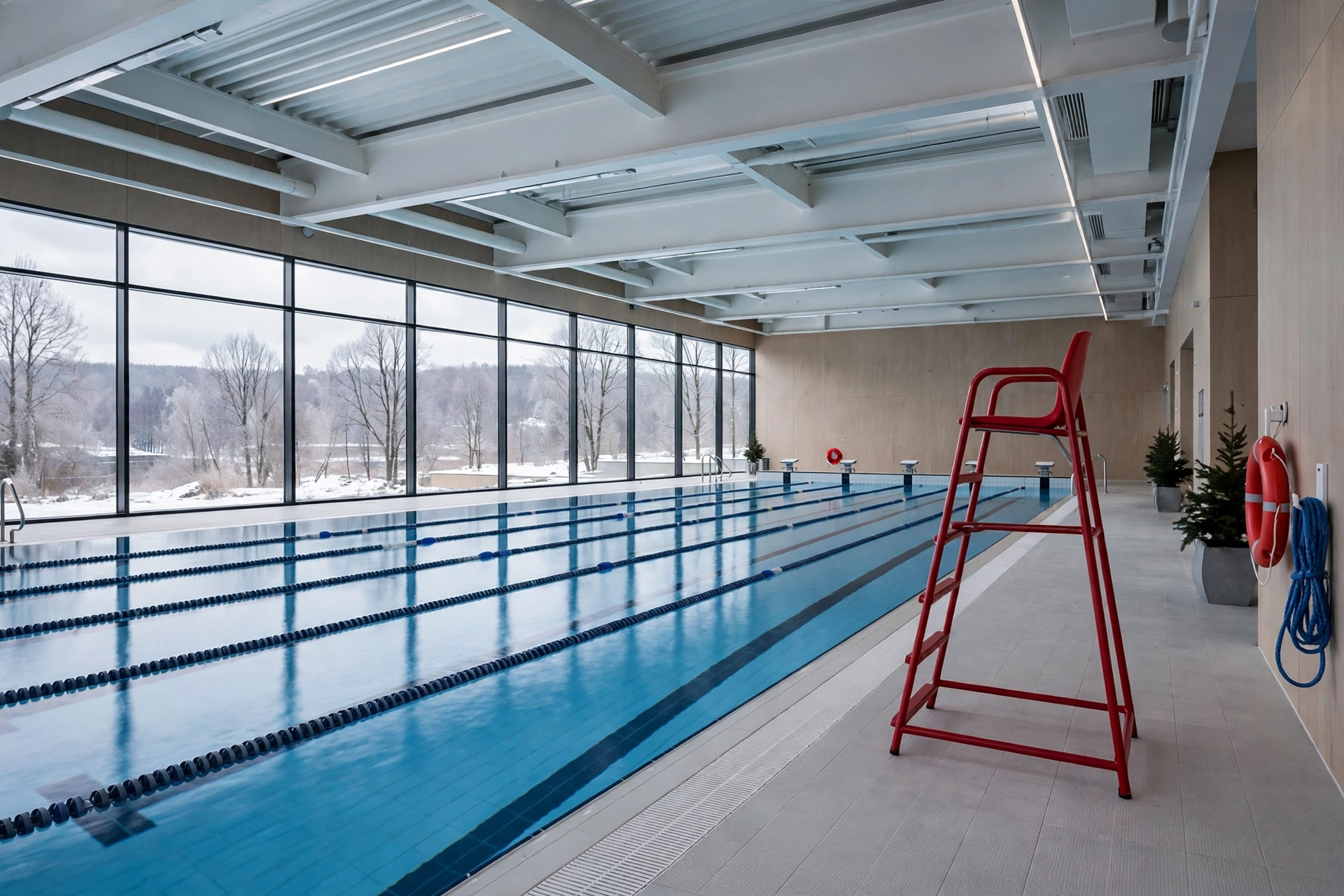
Winter lifeguarding means working as a qualified lifeguard during the colder months, when most of the work moves indoors and the hazards change with the season. Instead of open-air pools and beaches, winter lifeguards supervise heated indoor pools, leisure centre pools, school pools, hotel pools and indoor water parks, where the water is warm but the building, the timetable and the users are very different from a summer lido. Sessions in winter are often busier and more structured than people expect, because school swimming programmes, swimming clubs, aqua classes and public sessions all compete for pool time, and a lifeguard may supervise back-to-back groups ranging from nervous beginners to competitive squads within a single shift. The core duty never changes, which is to watch the water, prevent accidents before they happen and respond instantly when someone gets into difficulty, but the winter setting adds its own demands around air quality, cold-season illness, darker mornings and evenings, and the need to keep swimmers safe as they move between cold car parks and warm pool halls.
It is also important to understand what winter lifeguarding is not, because that distinction protects both jobseekers and the public. A pool lifeguard qualification does not qualify someone to patrol a beach or to carry out open-water rescue in the sea, and anyone who wants to work on the coast needs a separate beach lifeguard qualification instead. Similarly, safety staff at ice rinks and winter attractions do related but distinct work, and their training is specific to those venues rather than interchangeable with pool rescue. Winter lifeguarding in this guide therefore means qualified pool lifeguarding through the winter season, a role that is steadier and more structured than seasonal summer work, and one that suits people who want regular hours, a professional qualification and a job that genuinely saves lives.
Where Do Winter Lifeguards Work?
The largest employers of winter lifeguards are local authority leisure centres and leisure trusts, which run public pools in almost every town and city and need lifeguards for early-morning lane swimming, school sessions, evening public swims and weekend family sessions. These roles are attractive because they tend to offer regular rotas, training and the chance to pick up extra shifts during school holidays, when family sessions and intensive swimming courses create sudden demand. Hotels with pools and spas are another major employer, particularly larger hotels and resorts that keep their pools open all year for guests, while holiday parks with indoor water parks and heated pools also recruit heavily for the winter season, when indoor attractions become the centrepiece of a family break. Schools with their own pools, private swim schools, universities and sports clubs round out the picture, and together these employers mean that winter lifeguarding jobs exist in cities, suburbs and rural areas alike rather than only in seaside towns.
Beyond pools themselves, winter creates demand in a handful of adjacent roles that suit people with lifeguarding experience, although jobseekers should check the exact qualification each employer requires before applying. Indoor water parks need lifeguards for slides, wave pools and lazy rivers, which involve different supervision patterns and higher bather loads than a standard lane pool. Some winter attractions and ice rinks employ safety stewards and first aiders, and while those posts are not pool lifeguard posts, a lifeguarding background with first aid and crowd supervision experience is often valued. The practical point for anyone planning a winter job search is to look beyond the obvious: search leisure trust and council job pages, hotel and holiday park recruiters, and swim school vacancies, and treat school holiday periods as peak hiring windows, because that is when employers most need reliable, already-qualified staff.
What Qualification Do You Need to Become a Winter Lifeguard?
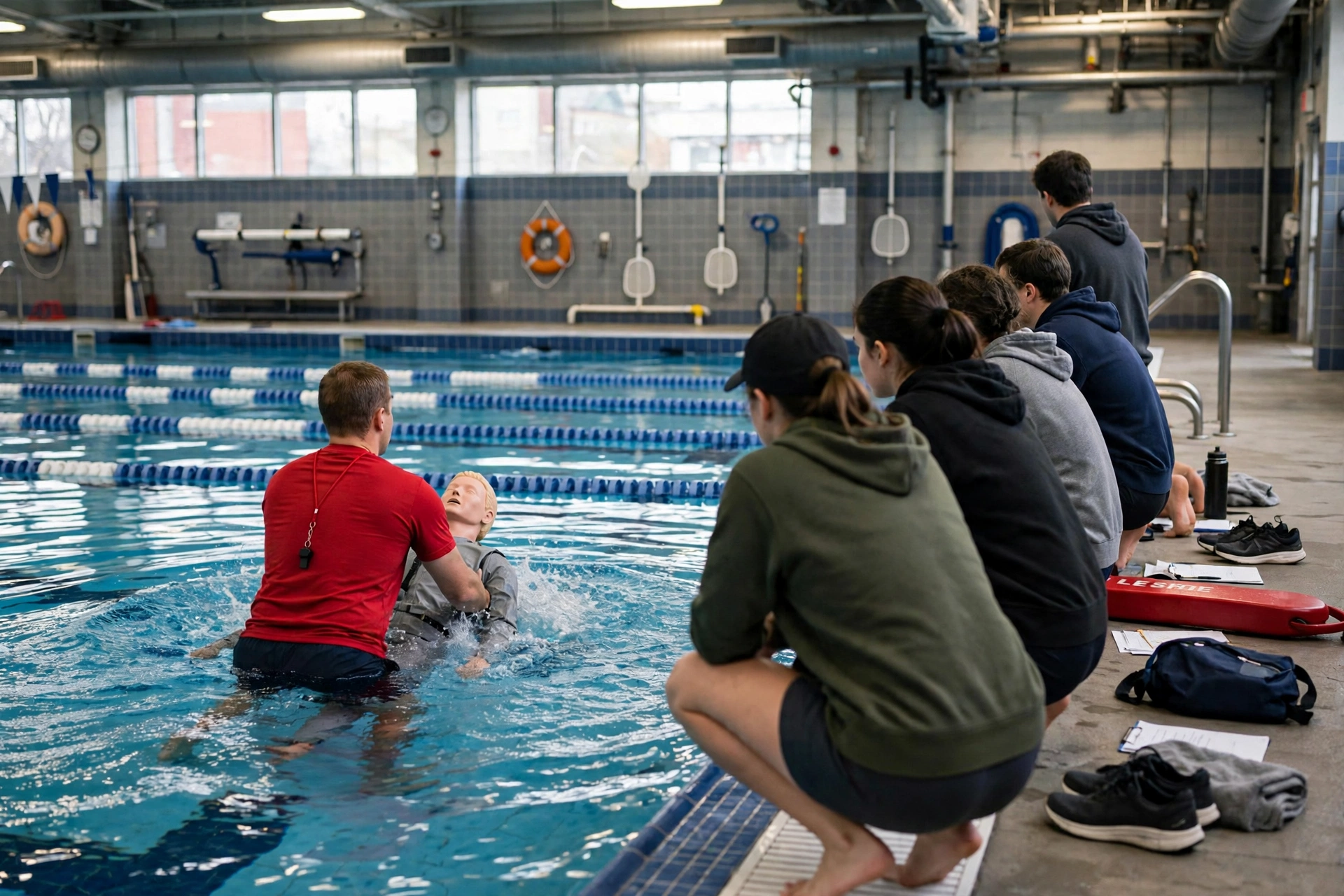
In the United Kingdom, the qualification that unlocks almost all pool lifeguard work is the RLSS UK National Pool Lifeguard Qualification, universally known as the NPLQ, and it is the single most important step for anyone serious about career opportunities in winter lifeguarding. The NPLQ is administered by the Royal Life Saving Society UK and is widely described as the most awarded lifeguard qualification in the United Kingdom and Ireland, which means that most employers will ask for it by name and many will not consider applicants who do not hold it. The course lasts at least 36 hours and covers pool rescue techniques, lifeguard theory, first aid, CPR and casualty management, with an optional automated external defibrillator bolt-on that many employers also value. Candidates must be at least 16 years old on the day of assessment, and before the course they must pass a swim test that includes jumping or diving into deep water, swimming 50 metres in under 60 seconds, swimming 100 metres continuously on front and back, treading water, surface-diving to the pool floor and climbing out unaided where the pool design allows.
A council-run course listing describes the NPLQ in exactly these terms, setting out the 36-hour duration, the swim test and the assessment in pool rescue, first aid, CPR and lifesaving skills, and it is a useful benchmark for comparing providers. Council course listing for the RLSS UK National Pool Lifeguard Qualification shows the standard structure that approved centres follow across the country. Two practical details matter for planning: the certificate is valid for two years from the date of issue, after which a renewal course is needed to keep it current, and the qualification is specific to pool environments, so it does not cover beach or open-water rescue. Course fees vary by provider and location, so it is worth comparing approved centres and asking whether the price includes the assessment, the manual and any first aid certification, rather than assuming the cheapest headline price is the best value.
What Skills Matter Most in Winter?
Strong swimming ability is the foundation, but the skills that separate a good winter lifeguard from a merely qualified one are observation, judgement and calm under pressure, all of which are tested more sharply in winter conditions. Winter pools are often crowded with mixed-ability groups, and a lifeguard must scan continuously, recognise the early signs of a swimmer in difficulty, and distinguish between playful splashing and genuine distress in seconds. Cold-season factors add further layers: swimmers arriving from freezing car parks may be more prone to cramps and slips on wet floors, heated pool halls with dry indoor air can aggravate breathing difficulties, and darker mornings mean that early shifts begin before full daylight, which affects both alertness and the journey to work. A winter lifeguard also needs solid first aid and CPR skills, because the most common poolside incidents in winter are slips, trips and medical episodes rather than dramatic rescues, and the ability to manage a casualty calmly while colleagues fetch equipment and call emergency services is what the training is really for.
Communication is the other skill that employers notice quickly, because winter lifeguarding involves constant interaction with the public, from reminding children about poolside rules to reassuring a nervous adult learner and coordinating with swim teachers during shared sessions. A lifeguard who can enforce rules firmly but politely, who can explain why a rule exists rather than simply shouting it, and who can work as part of a team during a rota change or an incident will be offered more shifts and better references than one who simply watches the water in silence. Physical fitness matters too, since the job involves long periods of standing, rapid movement, lifting casualties and working in warm, humid air, and employers expect lifeguards to maintain their fitness and to complete regular refresher training. Taken together, these skills explain why leisure employers often describe lifeguarding as a professional role rather than a casual job, and why the experience transfers so well into other safety and leisure careers.
What Career Paths Open Up From Winter Lifeguarding?
One of the strongest arguments for winter lifeguarding is that it is a genuine entry point into the leisure industry rather than a dead end, and the routes onwards are well established. The most direct progression is into senior lifeguard and duty manager roles, where experienced lifeguards take responsibility for rotas, staff supervision, pool plant checks and the day-to-day running of a leisure centre, and from there into general leisure management. Another common route is swim teaching, where lifeguards add a teaching qualification and move into instructing children and adults, a role that offers more daytime hours and a different kind of job satisfaction. Others use the experience as a stepping stone into pool plant operation, which involves managing water quality, filtration and heating systems, or into becoming an NPLQ trainer assessor, teaching and assessing the next generation of lifeguards. Because the qualification is nationally recognised, these moves are possible across the country rather than only with one employer.
Beyond leisure itself, winter lifeguarding experience is respected by the emergency services and by health and safety roles, because it demonstrates proven ability to stay calm in emergencies, to deliver first aid and CPR, and to follow safety procedures under pressure. Former lifeguards commonly move into ambulance and fire service roles, into outdoor activity instruction, or into health and safety positions in workplaces that value practical rescue and risk assessment experience. The key to making these moves is to treat the job as a career from the start: keep the qualification current, log continuing training, ask for varied shifts that build experience with different user groups, and collect references from managers who can speak to reliability and judgement. A winter lifeguard who does those things will find that a job taken for a single season can still be opening doors years later.
How Do You Find and Apply for Winter Lifeguarding Jobs?
The most effective winter job search starts with the employers who hire in volume, and that means checking leisure trust and local council job pages first, since they advertise lifeguard vacancies directly and often recruit in cohorts ahead of winter and school holiday periods. Hotel and holiday park recruiters are the next stop, particularly for indoor water park roles, and swim schools and private leisure operators also advertise regularly on general job boards. A strong application for these roles is short and specific: it states the NPLQ qualification and its expiry date, confirms availability for early mornings, evenings and weekends, and gives concrete examples of reliability, such as completing a full season or covering extra shifts. Employers in this sector value availability and attitude at least as much as experience, because a lifeguard who can be relied on to turn up for a 6am shift in February is worth more than a stronger swimmer who cannot.
Interview preparation should focus on scenarios rather than slogans, because interviewers typically ask how a candidate would handle a struggling swimmer, a poolside injury, an upset parent or a rule-breaking group. The best answers show the same sequence every time: observe and assess, act quickly and safely, call for help early, and record what happened afterwards, and candidates who can talk through that sequence calmly tend to impress. It is also worth asking employers about their own offer at interview, including whether they pay for renewal training, whether they offer a range of shift patterns, and whether there are progression routes into senior or teaching roles. Winter lifeguarding rewards people who plan ahead, and a candidate who arrives with a current qualification, flexible availability and a clear idea of where the job could lead will stand out in a market where many applicants apply on impulse.
Conclusion
Career opportunities in winter lifeguarding deserve far more attention than they usually get, because they offer what many seasonal jobs cannot: year-round work, a nationally recognised qualification, regular hours and a credible path into leisure management, teaching and emergency services. The work is demanding, and it should never be presented as an easy option, since it requires strong swimming, sharp observation, first aid competence and the discipline to stay alert through long shifts in warm, humid halls. But for people who enjoy being active, who want a job with real responsibility and who like the idea that their workday might genuinely save a life, winter lifeguarding is one of the most rewarding entry-level careers available in the UK leisure industry.
The practical next step is simple: check that you can meet the NPLQ swim test, find an approved course near you, and start applying to leisure trusts, hotels and swim schools before the winter hiring peaks. Keep the qualification current, build experience across different sessions and user groups, and treat every shift as evidence for the next role you want. Winter lifeguarding is not just a way to get through the cold months; for many people it becomes the foundation of a career in leisure, safety and public service that lasts far beyond a single season.
If you enjoy clear explainers on British sport and culture, our guide to rugby positions breaks down all 15 roles in rugby union. Read it next to see how the forwards and backs work together on the pitch.
Frequently Asked Questions About Career Opportunities in Winter Lifeguarding
What is winter lifeguarding?
Winter lifeguarding is qualified lifeguard work carried out during the colder months, mainly at indoor pools, leisure centres, hotel pools, school pools and indoor water parks. Unlike summer lifeguarding at outdoor pools and beaches, winter work takes place in heated indoor settings and follows structured timetables that include school swimming, club sessions, aqua classes and public swims. The core duties are the same in every season: supervising swimmers, preventing accidents, carrying out rescues and delivering first aid when needed. Winter lifeguarding is a year-round career path rather than a short seasonal job, and it suits people who want regular hours and a professional qualification.
What qualification do I need for winter lifeguarding jobs in the UK?
For almost all pool lifeguard jobs in the UK you need the RLSS UK National Pool Lifeguard Qualification, known as the NPLQ, which is the most awarded lifeguard qualification in the United Kingdom and Ireland. The course lasts at least 36 hours and covers pool rescue techniques, lifeguard theory, first aid and CPR, with an optional defibrillator bolt-on. Candidates must be 16 or older on the day of assessment and must pass a swim test that includes swimming 50 metres in under 60 seconds and 100 metres continuously on front and back, plus a surface dive and an unaided climb-out. The certificate is valid for two years, and it covers pool environments only, so beach work requires a separate qualification.
Where are winter lifeguarding jobs advertised?
Winter lifeguarding jobs are most commonly advertised on leisure trust and local council job pages, which recruit lifeguards for public pools in large numbers ahead of winter and school holiday periods. Hotels with pools, holiday parks with indoor water parks, swim schools, universities and private leisure operators also advertise regularly on general job boards. The best approach is to check these sources directly and to apply early, since employers often recruit in cohorts and value candidates who already hold a current NPLQ and can work early mornings, evenings and weekends. School holiday periods are peak hiring windows, because family sessions and intensive courses create sudden extra demand.
How much do winter lifeguards earn?
Pay for winter lifeguards varies by employer, region and shift pattern, so this guide does not quote a single figure that would quickly go out of date. In general, public leisure trusts and councils pay set hourly rates that are advertised with each vacancy, while hotels and private operators may pay different rates and may offer perks such as free leisure membership. Unsocial hours, weekend work and senior or duty manager responsibilities usually attract higher rates, and qualifications such as swim teaching or pool plant operation can raise earning potential further. The most reliable way to judge pay is to compare current vacancies in your area and to ask employers about renewal training and progression at interview.
Can winter lifeguarding lead to a long-term career?
Yes, winter lifeguarding is a recognised entry point into the leisure industry, with well-established routes into senior lifeguard and duty manager roles, leisure centre management, swim teaching, pool plant operation and NPLQ trainer assessor work. The experience is also respected by the emergency services and by health and safety employers, because it demonstrates calm decision-making, first aid competence and the ability to follow safety procedures under pressure. The key to progression is keeping the NPLQ current, gaining experience with different user groups, and building a record of reliability that managers can reference. Many leisure managers and swim teachers started their careers as winter lifeguards.