Introduction
David Walliams remains one of the most recognisable names in British entertainment because his career has moved across several popular worlds at once. He first became widely known through television comedy, later turned into a major children’s author, and then stayed in public conversation through talent-show judging, adaptations of his books, and fresh headlines about his reputation. That combination makes him a subject with lasting search demand in the UK, especially for readers who want background, context, and current developments in one place.
The interest around this public figure is not driven by a single audience. Comedy fans remember the breakthrough years of sketch television, family audiences know the bestselling books, and general news readers often arrive because of later controversies and career updates. As of April 22, 2026, the story is no longer only about success in comedy and publishing; it is also about how fame changes under public scrutiny, and how reputation can shift when old and new criticisms collide.
Who Is David Walliams?
David Walliams is an English comedian, actor, writer, and television personality whose public identity has been built over decades rather than a single short burst of fame. He became especially well known through sketch comedy with Matt Lucas, then expanded into presenting, acting, and judging mainstream television, before establishing himself as one of Britain’s most commercially successful children’s authors. That unusual mix of careers explains why he appears in entertainment coverage, book coverage, and celebrity news at the same time.
Part of his long-term relevance comes from how easily different audiences can find an entry point into his work. Some readers know him from Little Britain, others from Britain’s Got Talent, and many younger families know him through books such as The Boy in the Dress, Mr Stink, Gangsta Granny, and later titles that reached bestseller lists and attracted television or stage adaptations. His name has therefore come to represent not just one career lane, but a broad entertainment brand with appeal across generations.
Early Life and Background
Before the celebrity profile, Walliams was a young English performer developing interests that would later shape both his comedy and his storytelling. Encyclopaedia Britannica notes that he was born on August 20, 1971, and later studied at the University of Bristol, where early performance experience helped prepare him for television work. That educational and creative foundation matters because his later output, whether comic sketches or children’s fiction, shows a strong instinct for character, exaggeration, and theatrical rhythm.
His early public rise did not come from publishing or prime-time judging, but from writing and performing material that relied on memorable character work. That background helps explain why his children’s fiction feels so performance-driven on the page. Even when readers disagree over taste or tone, the books often move with the pace of sketches, scenes, and set-pieces rather than quiet literary realism. In that sense, the road from youthful performer to mainstream entertainer and children’s author is more connected than it first appears.
Breakthrough in Comedy and the Rise of Little Britain
The real turning point in his fame came through Little Britain, the sketch show written and performed with Matt Lucas. Britannica identifies that programme as the work that first brought him major recognition, and for many British viewers it still defines the original image of Walliams as a comic performer. The series succeeded because it offered exaggerated recurring characters, quotable catchphrases, and a style of satire that was loud, broad, and instantly recognisable in early 2000s television culture.
At the same time, that same period now looks more complicated than it did during the show’s original popularity. By 2020, Little Britain and Come Fly With Me were removed from major streaming platforms amid criticism over blackface and racial insensitivity, reflecting how older comedy can be reassessed under newer social expectations. This matters when evaluating Walliams’s career because his breakthrough work still brought fame, but it also became one of the main examples used in wider debates about changing standards in British entertainment.
Television Career Beyond Sketch Comedy
After sketch comedy made him famous, Walliams broadened his television profile instead of staying locked inside one format. Britannica credits him with later work in sitcoms, acting roles, presenting, and mainstream entertainment, showing how he shifted from cult comedy figure to household name. This expansion mattered because it introduced him to audiences who may never have watched the original sketch shows, allowing him to build a much wider and more commercially durable public image.
That mainstreaming effect is one reason his later controversies attracted so much attention. A performer known only to niche comedy viewers might have remained inside a smaller media space, but Walliams had already become familiar to family audiences and weekend television viewers. Once a public figure reaches that level, every new development carries more weight because the audience is more diverse and the expectations are higher. His television career therefore did more than grow his fame; it also expanded the scale of scrutiny around him.
Britain’s Got Talent and Mainstream Popularity
One of the biggest phases of that mainstream reach came through Britain’s Got Talent, where Walliams served as a judge from 2012 to 2022. During that run he became a highly visible figure in family entertainment, and his judge persona was often framed as warm, playful, and emotionally responsive. The role helped separate him from the harsher image associated with some talent-show formats, and it introduced him to viewers who mainly knew him as a comic, not as a literary or publishing figure.
The significance of those years goes beyond screen time. They helped reposition him as a familiar part of mainstream British television culture, and that repositioning strengthened every other branch of his brand. A judge on a huge ITV show is easier to market as a children’s author, easier to book for interviews, and easier to place at the centre of family-friendly publicity. In commercial terms, the television seat gave him repeated visibility; in reputational terms, it made later negative headlines feel much more surprising to part of the public.
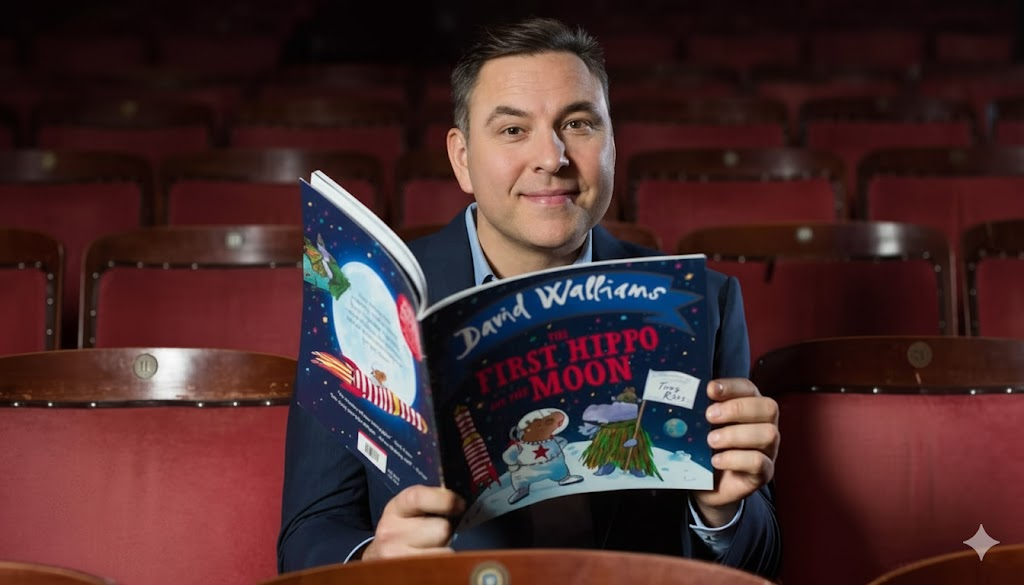
David Walliams as a Bestselling Children’s Author
The publishing chapter of his career is one of the main reasons he remained so prominent long after the peak of sketch comedy. HarperCollins says he has published more than forty books for children, while Associated Press reported in late 2025 that his books had sold more than 60 million copies globally. Those figures explain why he came to occupy such a powerful commercial place in British children’s publishing, with a readership that extended well beyond television fans.
His rise in publishing began with The Boy in the Dress in 2008, and Britannica notes that the book quickly became a number one bestseller in Britain, followed by further commercial success with later titles. That early momentum mattered because it proved he was not just a celebrity attaching his name to books for quick sales. Instead, he built a repeatable market presence in which each new release was treated as a major event for children’s books, school reading culture, gift buying, and family entertainment.
Most Popular Books and Why They Connected with Readers
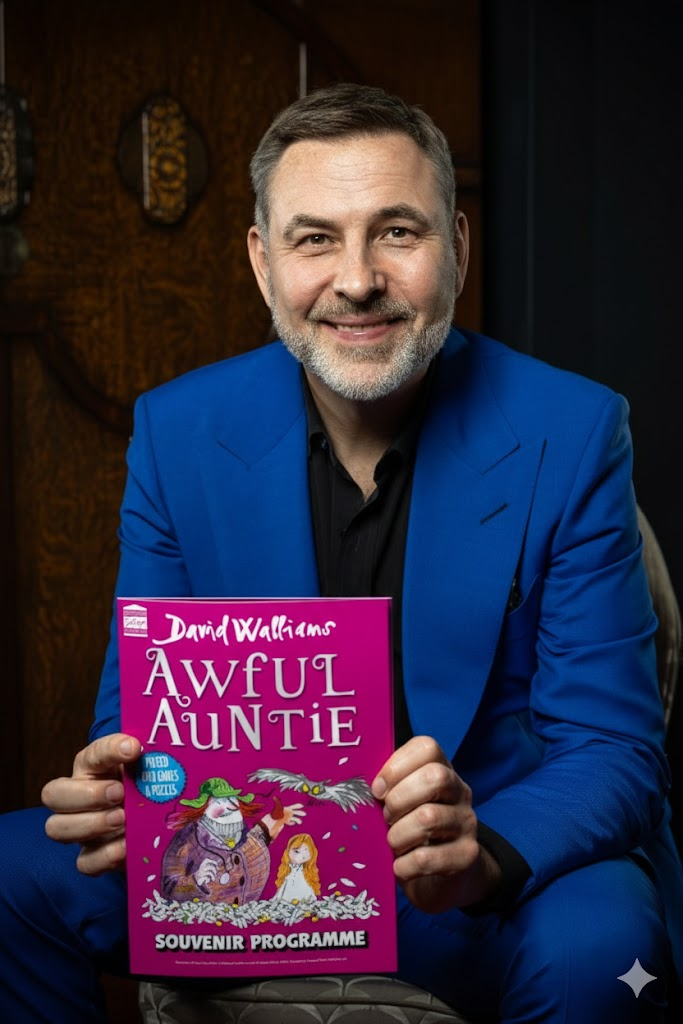
Several titles stand out when readers look at the author’s public footprint. The Boy in the Dress, Mr Stink, Billionaire Boy, Gangsta Granny, Demon Dentist, Awful Auntie, Grandpa’s Great Escape, and Bad Dad are among the works most often associated with his rise. Some became stage productions or screen adaptations, which widened recognition and kept the stories visible far beyond bookshop shelves. When a children’s title moves into television or theatre, it stops being just a book and becomes part of a broader family entertainment cycle.
Readers often responded to these books because they offered fast pacing, strong hooks, and large comic situations that felt easy to imagine visually. Britannica’s discussion of the early novels notes comparisons with Roald Dahl, and that comparison helps explain the commercial pattern even if critics debate the literary depth. The books usually place children in exaggerated adult worlds filled with unpleasant authority figures, emotional need, gross-out humour, and eventual resilience. That formula proved very effective in making the stories memorable, giftable, and easy for young readers to discuss with friends.
Style, Themes, and Appeal to Young Audiences
A large part of Walliams’s appeal has always come from performance energy transferred into prose. His stories tend to move in a way that feels almost spoken aloud, with quick scene changes, loud personalities, repeated comic beats, and highly visual set pieces. That style is especially effective for children who prefer momentum and humour to slow descriptive writing. It also helps explain why adults buying for younger readers often see the books as accessible, lively, and easy to recommend.
At the same time, the books have not escaped criticism. Public discussion around some titles has included concerns about stereotyping, body-based humour, and the treatment of certain characters, and those criticisms became more visible as wider debates about comedy and representation grew. This is important for any balanced assessment because the same exaggerated comic voice that drove commercial success also drew objections from people who felt parts of the work leaned on outdated or harmful patterns. That tension has become part of the larger conversation surrounding his career.
Public Image and Media Presence
For many years, Walliams occupied a curious position in British culture: mischievous enough to seem comic and unpredictable, but polished enough to appear regularly in mainstream, family-facing settings. That mixture allowed him to move between red carpets, children’s publishing campaigns, major television appearances, and charity-related coverage. Reuters reported on his marathon Thames swim for Sport Relief in 2011, a reminder that public perception of him was once strongly tied to highly visible charitable endurance efforts as well as entertainment.
Yet media presence is never fixed, especially when fame stretches across more than one decade. The same figure who could be promoted as a bestselling children’s author and former prime-time judge also became linked with arguments about taste, conduct, and reputation. When audiences begin reassessing old material while also reacting to new allegations or leaked remarks, the public image changes from celebratory to unstable. That shift is one reason his story remains so compelling for UK searchers: it combines nostalgia, success, discomfort, and ongoing uncertainty in a single celebrity profile.
Latest News and Recent Controversy Around David Walliams
The most important recent development, based on widely reported coverage, came in December 2025 when HarperCollins UK said it would not publish any new titles by him. Reuters and Associated Press both reported that the decision followed allegations of inappropriate behaviour toward junior female staff, while Walliams, through a spokesperson, denied wrongdoing, said he had not been informed of specific concerns, and was taking legal advice. This moved the story beyond older debates about comedy taste and into a more serious employment and workplace-conduct discussion.
Public discussion did not stop with the publisher decision. Reporting in late December 2025 also indicated that he had been removed from the lineup for a 2026 Waterstones Children’s Book Festival event in Dundee, showing that the publishing fallout was affecting public-facing appearances as well. When an author’s commercial and event presence begins to narrow, that signals a reputational issue with consequences extending beyond a single news cycle. It also helps explain why searches around him increasingly mix biography terms with words such as allegations, controversy, publisher, and latest news.
The Earlier Scandals That Shaped the Current Narrative
The current controversy did not emerge in a vacuum. In 2022, leaked remarks from a 2020 Britain’s Got Talent recording showed Walliams making derogatory and sexually explicit comments about contestants. ITV News reported at the time that his future on the show was uncertain, while other reporting made clear that he later apologised for what he himself called disrespectful comments. That episode badly damaged the family-friendly image built during his years on the judging panel.
There was also a legal aftershock. Public reporting in 2023 showed that his privacy claim against Fremantle, the production company behind Britain’s Got Talent, was settled on confidential terms. In practical terms, that meant the leak controversy did not simply vanish after an apology; it continued as a formal dispute with legal and reputational dimensions. For readers trying to understand why later allegations attracted such strong attention, this background matters because it shows that the trust around his mainstream television role had already been weakened before the 2025 publishing developments arrived.
What the Recent Controversy Means for His Career
When a public figure’s most valuable assets are trust, familiarity, and broad family appeal, controversy can hit multiple parts of the career at once. The publisher decision affects future books, but the wider effect reaches into festival invitations, promotional opportunities, and the tone of media coverage. Reuters and AP coverage showed that even without every internal detail being public, the outcome was already serious enough to disrupt the normal pattern of publishing business. That is a major reputational event for any children’s author, especially one whose career depends on parent, teacher, and bookseller confidence.
There is also a difference between legal denial and public recovery. Walliams has denied wrongdoing, and that denial should be stated clearly. But in public life, the question is often not only what is formally proved; it is also whether institutions still want to be associated with the figure in the same way as before. The reports of dropped titles, cancelled appearances, and continuing discussion suggest that his career is now being judged not simply by sales or fame, but by risk, optics, and the willingness of cultural organisations to stand beside him. That is a much harder landscape to control.
Legacy in British Entertainment and Publishing
Even with the recent damage to his reputation, it would be inaccurate to pretend his earlier impact disappeared. In comedy, he helped create one of the most talked-about British sketch shows of its era. In television, he became a recognisable part of prime-time mainstream entertainment. In publishing, he reached a scale of sales that very few children’s authors achieve, with official publisher materials and major news outlets both describing a catalogue measured in dozens of books and tens of millions of copies sold. The reach of that body of work is real, whatever judgment one makes about its quality or later complications.
A more balanced conclusion is that his legacy is now split rather than simple. One strand is commercial and cultural success: popular television, bestselling fiction, recognisable characters, and wide name recognition. Another strand is reassessment: criticism of older comedy, questions around tone in the books, the Britain’s Got Talent incident, and the later publishing controversy. The result is a legacy that remains significant, but no longer uncomplicated. In the UK, that very tension is part of what keeps public interest alive, because people are not just looking for facts; they are trying to decide how to interpret a career that now carries both achievement and unease.
Why He Continues to Trend in UK Search Results
Search behaviour around Walliams stays strong because it brings together several different kinds of user intent at once. Some people want a straightforward biography, some are looking for a children’s book guide, some want to understand what happened with Britain’s Got Talent, and others are searching for the latest publishing fallout. When one name satisfies entertainment, family, news, and controversy-related curiosity all at the same time, that keyword naturally remains active and competitive in Google.
This mixed intent is also why the best-performing content on the topic tends to combine overview and update rather than choosing only one lane. A page focused only on books can miss the news angle, while a page focused only on scandal can ignore the deeper reasons people know the name in the first place. For UK readers, the most useful approach is a complete profile that explains the comedy breakthrough, television fame, publishing success, and current controversy in one readable place. That structure matches both search behaviour and reader expectation.
Conclusion
The story of Walliams is a striking example of how modern celebrity can be built through reinvention and then tested through scrutiny. He moved from sketch comedy to mainstream television, from there to a dominant place in children’s publishing, and then into a period where public conversation became increasingly shaped by controversy. For that reason, any serious article on the topic has to do more than celebrate success or repeat headlines. It has to show how those different phases connect, and why each stage changed the meaning of the next.
For UK readers, the enduring interest lies in that full arc. The appeal of the books, the memory of the television work, the popularity of Britain’s Got Talent, and the later fallout all belong to the same larger narrative. Understanding that bigger picture helps explain why he remains so heavily searched, and why articles about him work best when they are detailed, balanced, and current rather than narrowly promotional or purely sensational.
FAQs
Who is David Walliams?
He is an English comedian, actor, writer, and television personality who first became widely known through Little Britain and later built a major second career as a children’s author. He also became familiar to mainstream television audiences through Britain’s Got Talent, which greatly expanded his reach beyond comedy fans.
What is he best known for?
He is best known for three things: sketch comedy with Matt Lucas, judging on Britain’s Got Talent from 2012 to 2022, and bestselling children’s books such as The Boy in the Dress, Mr Stink, and Gangsta Granny. Different age groups often know him for different parts of that career.
Why is David Walliams in the news?
The biggest recent reason is the 2025 decision by HarperCollins UK not to publish new titles by him after allegations of inappropriate behaviour toward junior female staff were publicly reported. He has denied wrongdoing and said he was not informed of specific concerns, but the issue triggered widespread UK media coverage and further reputational fallout.
What happened with Britain’s Got Talent?
In 2022, reports emerged that he had made derogatory and sexually explicit comments about contestants during breaks in filming in 2020. He later apologised for what he described as disrespectful comments, and his time on the programme ended after ten years on the judging panel. The matter also led to a later privacy dispute that was settled on confidential terms.
Are his books still popular?
Yes, the commercial success of the books has been very large, with major news coverage and publisher materials describing a catalogue of more than forty children’s books and sales in the tens of millions worldwide. Even so, popularity and reputation are not the same thing, and recent controversy has changed how the books are publicly discussed.
What are some of his most famous books?
Among the best-known titles are The Boy in the Dress, Mr Stink, Billionaire Boy, Gangsta Granny, Demon Dentist, Awful Auntie, and Grandpa’s Great Escape. These books became especially visible because some were adapted for stage or screen, which helped keep them in public conversation beyond the original publication dates.
Why do UK readers still search for him so often?
The keyword remains active because it combines biography, books, television, and current affairs in one name. Some users want a reading guide, some want entertainment history, and others want updates about the latest controversy. That mix of evergreen interest and fresh news keeps search demand unusually strong.
Has recent controversy changed his legacy?
It has not erased earlier success, but it has clearly complicated how that success is remembered. He still has a substantial place in British entertainment and children’s publishing history, yet more recent criticism means the conversation now includes questions about conduct, taste, and public accountability alongside commercial achievement.
You may also read: Anthony Joshua’s Performance and Professionalism