Introduction
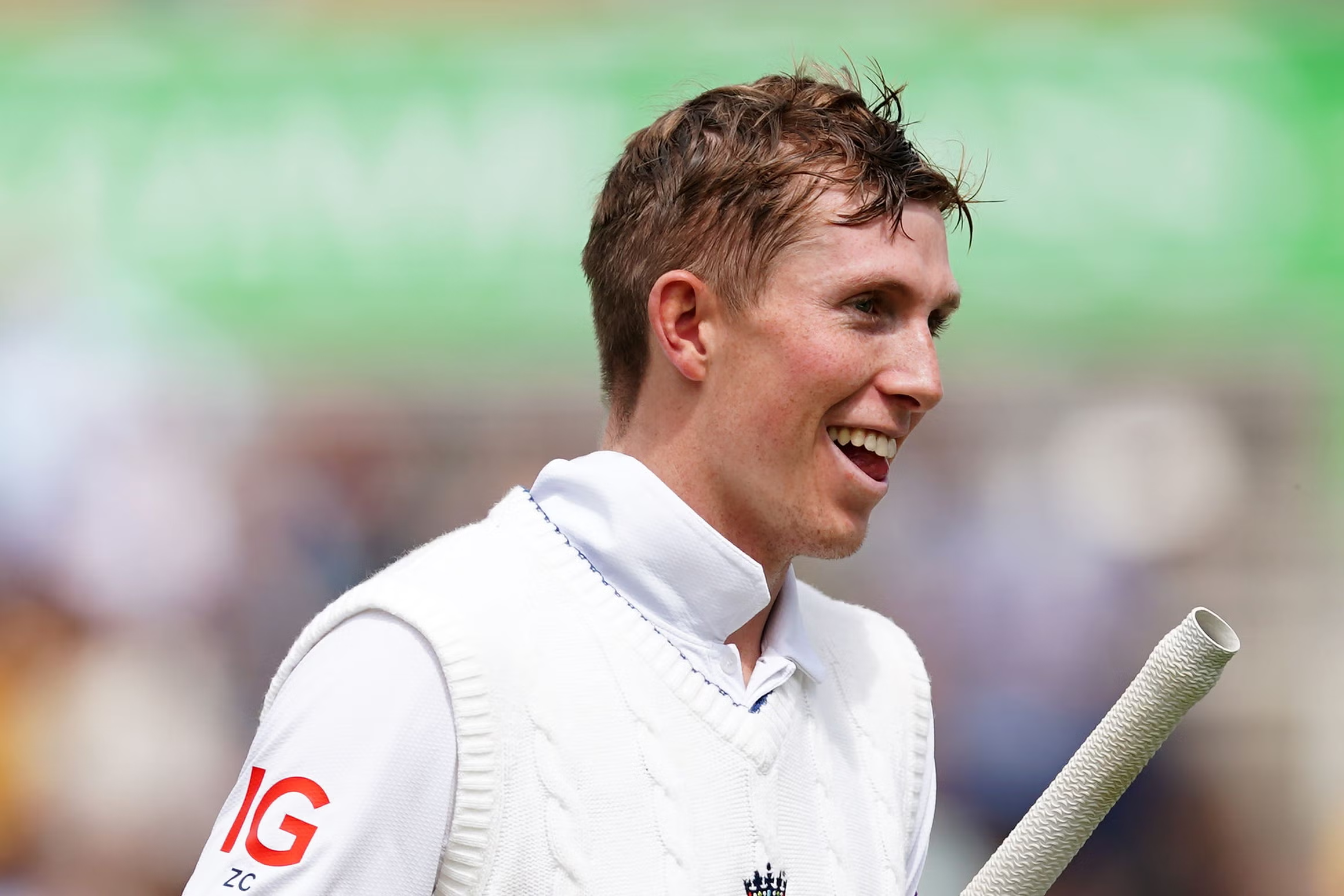
Zak Crawley has become one of the most discussed names in modern England Test cricket, largely due to the growing debate around his consistency at the top of the order. The phrase Zak Crawley form crisis has started to dominate cricket discussions, as fans and analysts question whether his performances justify continued selection in a highly competitive England setup built on aggressive batting.
England’s Test team has evolved into a bold, fast-scoring unit, but that philosophy also demands reliability from openers who can set the tone. Zak Crawley, known for his attacking intent, now finds himself under scrutiny as runs have become less consistent. This article explores his journey, current form, statistics, and whether England should persist with him or consider alternatives.
Zak Crawley Career Overview
Zak Crawley’s rise in English cricket began through the traditional county system, where his talent was quickly noticed due to his elegant stroke play and natural timing. Representing Kent, he developed a reputation for playing long innings with a stylish approach that stood out even in difficult English conditions. His early performances suggested a batter capable of succeeding at the highest level.
When Zak Crawley broke into the England Test team, expectations were immediately high due to his height, reach, and attacking technique. He was seen as a long-term solution at the top of the order, capable of countering fast bowlers and dominating spin when set. Over time, he delivered impressive innings, but consistency remained an ongoing challenge that would later contribute to the Zak Crawley form crisis narrative.
As his international career progressed, Crawley showed flashes of brilliance, including high scores against top opposition. However, those performances were often followed by periods of low returns. This inconsistency created debate among selectors and fans about whether he should be considered a developing talent or a permanent fixture in England’s Test strategy.
Despite criticism, Crawley has remained part of England’s plans due to his unique skill set. His height allows him to handle bounce effectively, and his attacking mindset fits England’s modern philosophy. Still, his career trajectory remains a balance between potential and pressure, making his position one of the most debated in the squad.
Current Form Analysis: What Went Wrong?
The Zak Crawley form crisis has largely been fueled by recent Test performances where early dismissals have become more frequent. While he has shown the ability to score quickly once settled, his inability to consistently convert starts into big scores has raised concerns about his long-term reliability at the top level.
A deeper analysis of his innings shows a pattern of vulnerability early in his stay at the crease. Opposing bowlers have increasingly targeted his outside edge, especially in swinging conditions. This has resulted in repeated failures during crucial phases of matches, putting pressure on England’s middle order to recover from early setbacks.
Conditions away from home have further highlighted these struggles. In challenging environments, Crawley has found it difficult to adapt to lateral movement and disciplined bowling attacks. This contrast between home and away performances has become a central point in discussions about whether England should continue investing in his development or seek a more stable opener.
Despite these challenges, there are still signs of improvement in certain aspects of his game. His intent remains positive, and he often tries to dominate bowlers early. However, this aggressive approach sometimes leads to unnecessary risks, which has contributed significantly to the ongoing Zak Crawley form crisis debate in cricket media circles.
Statistical Breakdown of Zak Crawley
When examining Zak Crawley’s career statistics, a mixed picture emerges that reflects both potential and inconsistency. In Test cricket, he has accumulated valuable runs, including centuries that highlight his ability to perform at the highest level. However, his average remains modest compared to elite international openers.
His first-class record provides a more balanced view of his abilities, showing that he is capable of producing long innings in domestic cricket. This contrast between domestic success and international inconsistency is a key reason why analysts continue to debate his place in the England Test setup. The Zak Crawley form crisis becomes more complex when viewed through this statistical lens.
One of the most important metrics in assessing Crawley’s performance is his conversion rate. While he frequently gets starts, the number of times he converts those starts into centuries is relatively low. This suggests a mental or technical barrier that prevents him from capitalizing on early momentum in Test matches.

Comparing his numbers with other modern Test openers shows that while he is not the worst performer statistically, he also does not rank among the most consistent. This middle-ground performance is what keeps him in contention but also under constant scrutiny, making his career one of the most debated in England cricket.
Why England Still Trust Zak Crawley
Despite criticism and the growing Zak Crawley form crisis narrative, England’s management continues to back him due to his alignment with their aggressive batting philosophy. The team’s modern approach values fast scoring and pressure on bowlers, and Crawley’s natural game fits this strategy even when results are inconsistent.
Selectors also recognize that Crawley has produced match-defining innings in the past, particularly when conditions suit his style. His ability to dominate attacks when in form makes him a valuable asset, even if those performances are not consistent enough. This potential upside often outweighs short-term failures in the eyes of team management.
Another factor contributing to continued trust is the lack of a clearly superior replacement. While domestic cricket offers several candidates, few possess the combination of technique, reach, and attacking intent that Crawley brings. As a result, England prefers stability in selection rather than constant changes that could disrupt team balance.
The coaching staff also believes that Crawley is still developing as a Test batter. Given his age and experience level, there is a belief that consistency may come with time. This long-term investment approach is central to why he continues to feature despite ongoing criticism and the persistent Zak Crawley form crisis discussion.
Critics’ Perspective: Should He Be Dropped?
Critics argue that repeated failures at the top level cannot be ignored indefinitely, especially in a results-driven environment like international cricket. The Zak Crawley form crisis has become a focal point for former players and analysts who believe that England may be delaying an inevitable change in their opening combination.
One of the main criticisms is his lack of consistency under pressure. While Crawley can look elegant and dominant when set, his dismissals often come early in innings, placing immediate strain on the rest of the batting lineup. Critics argue that this pattern is too risky for a top-order Test batter.
Another argument focuses on opportunity cost. By persisting with an inconsistent performer, England may be overlooking players in domestic cricket who are in better form and potentially more reliable. This creates ongoing debate about whether potential should continue to outweigh performance at the international level.
However, even critics acknowledge his talent and match-winning ability. The debate is not about skill but about reliability, making the Zak Crawley form crisis one of the most nuanced selection issues in England cricket today.
England’s Opening Batting Options
England’s options at the top of the order play a significant role in the Zak Crawley debate. While there are several promising domestic players, none have yet fully cemented themselves as a clear upgrade in Test conditions. This uncertainty makes selection decisions more complex.
Some alternatives offer better consistency in domestic cricket but lack experience at the international level. Others provide solid technique but may not align with England’s aggressive batting philosophy. This creates a difficult balancing act for selectors who must consider both performance and style compatibility.
Changing opening combinations frequently can also disrupt team rhythm. England has often preferred continuity, even during periods of poor form, to maintain stability in the batting order. This strategic preference contributes to Crawley’s continued selection despite ongoing debate.
Ultimately, the decision is not just about replacing a player but about maintaining a system. The Zak Crawley form crisis therefore becomes part of a larger question about England’s long-term batting identity and direction.
Key Technical Issues in Zak Crawley’s Batting
Technical analysis of Zak Crawley’s batting highlights several recurring issues that have contributed to inconsistent performances. One of the main concerns is his vulnerability to movement early in his innings, particularly against high-quality seam bowling in challenging conditions.
His footwork at the start of his innings is often scrutinized, with bowlers exploiting small gaps between bat and pad. This has led to repeated early dismissals, especially in away matches where conditions are more demanding. These technical flaws are central to the Zak Crawley form crisis discussion.
Another issue is shot selection during the early overs. Crawley’s natural attacking instinct sometimes leads him to play expansive shots before fully settling in. While this approach can yield quick runs, it also increases the risk of early wickets.
Coaches have worked on improving his defensive technique and patience, but consistency remains a challenge. Addressing these technical issues is key if he is to overcome the ongoing scrutiny and solidify his place in the England Test team.
Impact on England’s Test Strategy
The performance of Zak Crawley has a direct impact on England’s overall Test strategy. As an opener, his role is to provide stability and momentum, but inconsistency often forces the middle order to rebuild innings rather than capitalize on strong starts.
When he succeeds, England benefits from rapid scoring that puts pressure on opposition bowlers. However, when he fails early, it exposes the middle order to fresh conditions and quality bowling attacks, increasing the risk of collapses. This dual impact is central to the Zak Crawley form crisis debate.
England’s aggressive style relies heavily on momentum, and opening partnerships are crucial to setting that tone. Any instability at the top affects the entire batting structure, making Crawley’s form a strategic concern rather than just an individual issue.
The team’s future success may depend on finding the right balance between aggression and reliability. Crawley’s role in that equation remains one of the most important tactical questions for England cricket moving forward.
Conclusion
Zak Crawley remains one of the most intriguing and debated players in England’s Test setup. His talent is undeniable, but consistency continues to be the key issue that defines his career. The Zak Crawley form crisis reflects a broader tension between potential and performance in modern cricket.
England’s decision to persist with him highlights their belief in long-term development and aggressive batting philosophy. However, pressure will continue to grow if results do not improve. Ultimately, his future will depend on whether he can convert promise into consistent match-winning contributions at the highest level.
FAQs
Why is Zak Crawley’s form being questioned?
Zak Crawley’s form is being questioned due to inconsistent Test performances and frequent early dismissals, which have affected England’s stability at the top of the order.
What is Zak Crawley’s role in the England team?
He plays as an opening batter in Test cricket, tasked with providing quick starts while also building solid foundations for the middle order.
Does Zak Crawley fit England’s aggressive batting style?
Yes, his attacking approach aligns with England’s modern Test strategy, although consistency remains a concern.
Why do England continue to select Zak Crawley?
England continue selecting him due to his potential, past match-winning innings, and lack of a clearly superior replacement.
What are Zak Crawley’s main technical weaknesses?
His main issues include vulnerability to swing early in innings, inconsistent footwork, and risky shot selection under pressure.
Could Zak Crawley be dropped from the England team?
It is possible if poor form continues, but selectors currently appear committed to giving him more time.
You may also read: 6ix9ine Personal Life and Relationships