Glasgow Water Main Break Shettleston Road: What Happened and What It Means
The Glasgow water main break on Shettleston Road was one of the most disruptive utility incidents in the city’s East End in recent years, and it is still searched for today because it combined the two things that make a burst water main so difficult to live through: no water in the taps and no way through the roads. On the morning of Thursday 29 May 2025, a major underground water pipe ruptured beneath Shettleston Road near its junction with St Mark Street, flooding the carriageway, closing key junctions and cutting off or reducing the water supply to homes and businesses in the G32 postcode area. Scottish Water engineers were on site within hours, Glasgow City Council closed the affected stretches of road, and bottled water was distributed to residents who had lost their supply. This article explains what happened on Shettleston Road, how the emergency was handled, what residents were told to do, and what the incident says about the state of Glasgow’s ageing water infrastructure. It is an updated account of an event that took place in May 2025, not a report of a new incident, and the details below are drawn from the reporting and official statements published at the time.
What Happened on Shettleston Road on 29 May 2025
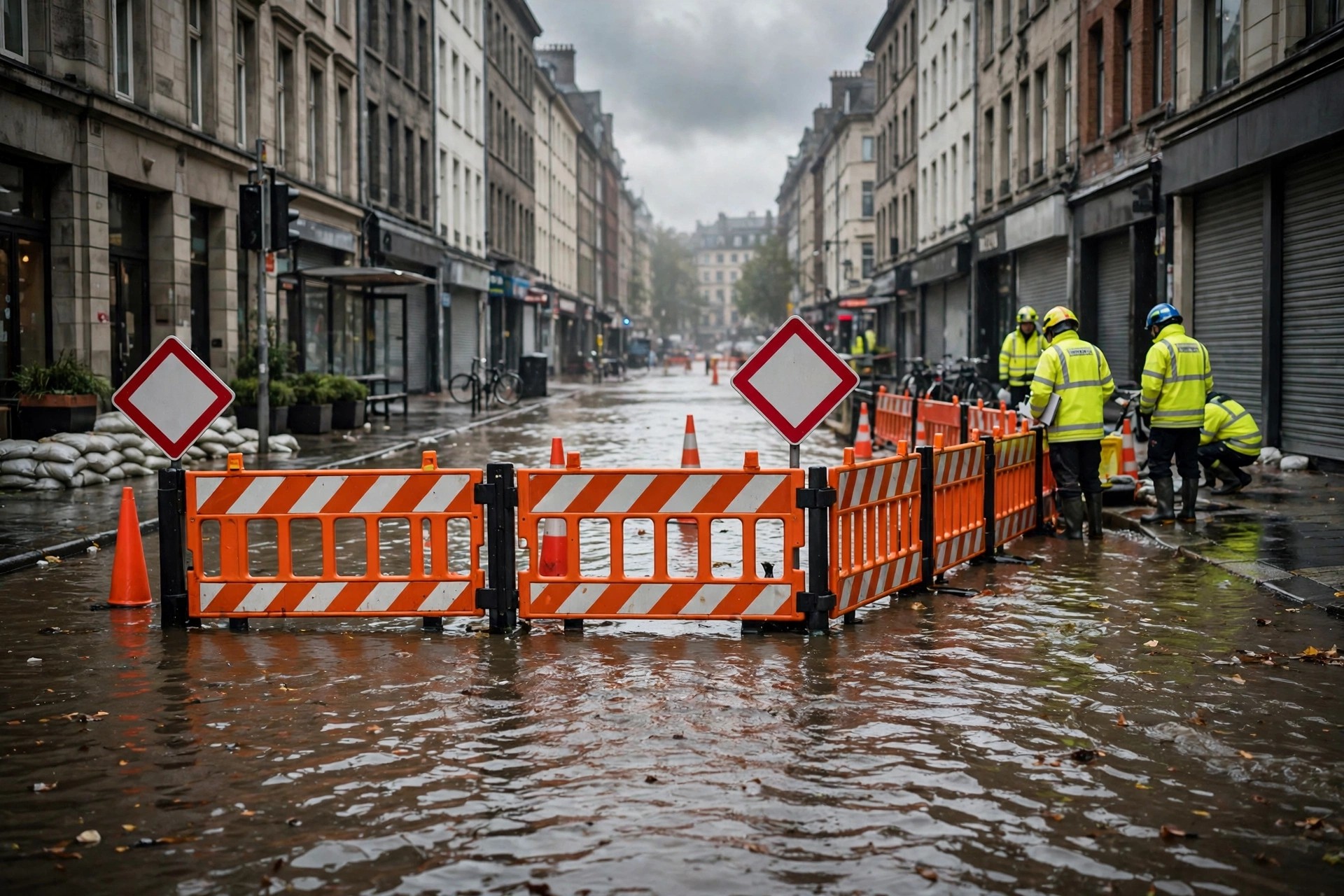
The burst happened in the early hours of Thursday 29 May 2025, when a major water main beneath Shettleston Road ruptured near the junction with St Mark Street, in the heart of Glasgow’s East End. Water forced its way up through the road surface and flooded the carriageway, and the scale of the flooding was immediately obvious to anyone who saw it, with water spreading across the road and onto the pavements. Glasgow City Council closed Shettleston Road between Old Shettleston Road and Fernan Street, and closed the westbound carriageway between Westmuir Street and Hart Street, with the junction of Shettleston Road at Hart Street shut to all traffic. A council spokesperson confirmed at the time that the junction was closed due to flooding caused by a burst water main and that road users should avoid the area and consider alternative routes. Scottish Water confirmed that the burst pipe was located on Shettleston Road near its junction with St Mark Street, and that its teams were on site trying to isolate the burst to minimise the impact of the flooding. The incident quickly became a major local search topic, because it affected the ordinary daily needs of hundreds of households at once, from water for drinking and washing to the journey to work and school.
How the Burst Affected Water Supplies in G32
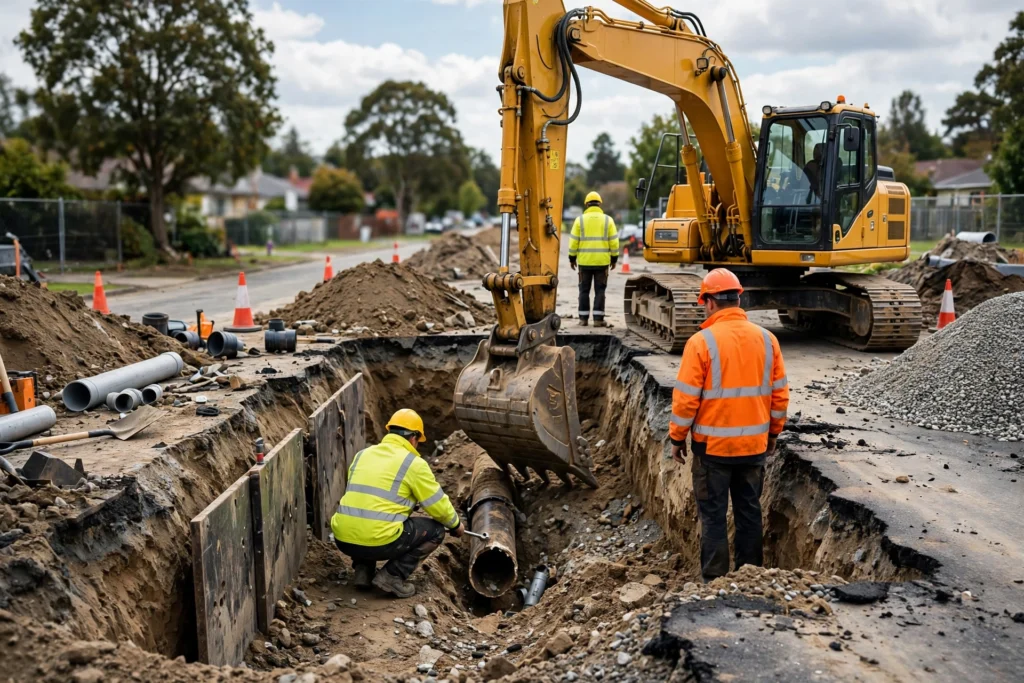
The burst directly interrupted the local water network, and customers living in the G32 postcode area reported either a complete loss of water or significantly reduced and intermittent pressure throughout the morning. Scottish Water said that customers in G32 might experience interruptions to their water supplies, and that its teams were investigating options for valve operations on the network to restore and maintain supplies for as many affected customers as possible. The water company also warned that customers might experience discoloured water during the repair work, which is a common consequence of a major burst, because the disturbance to the pipes stirs up sediment and air in the network. Engineers began excavation work at around 10:30 in the morning near the St Mark Street junction to assess the damage and determine the necessary repairs, and they worked to isolate the burst section and carry out complex valve operations to restore supplies to unaffected areas. Bottled water was made available to residents who had lost their supply, with distribution beginning at around 1:15 in the afternoon and continuing at Shettleston Community Centre between 4:00pm and 7:00pm. Engineers estimated that full pressure restoration could take 24 to 48 hours after the initial repairs were completed, as the system gradually returned to normal across the affected areas, and properties further away or at higher elevation were expected to take longer to regain full pressure.
How the Burst Affected Traffic and Buses
The road closures caused significant disruption to traffic across Glasgow’s East End, because Shettleston Road is a major route through the area and the closures cut off a key link for commuters and local businesses. The junction of Shettleston Road at Hart Street was closed to all traffic, and the closures between Old Shettleston Road and Fernan Street and between Westmuir Street and Hart Street forced drivers onto alternative routes, including Edinburgh Road, the A8, and Tollcross Road. Bus services felt the immediate impact, with routes 2, 46, 60, 60A and 43 all requiring diversions, which added time to journeys and caused confusion for passengers who were used to the normal routes. Local businesses along the affected stretch were forced to pause operations, because staff and customers could not reach them easily and because some premises had lost their water supply, and the combination of no water and no access made the incident feel much bigger than a normal utility fault. The council and Scottish Water both advised road users to avoid the area, and the closures remained in place while the repair work continued, because the road surface needed to be excavated to reach the damaged pipe and then reinstated before traffic could return. Even after the water supply was restored, traffic management could stay in place while the area was cleaned up and the road surface was repaired, which is a common pattern with major bursts and is worth remembering when judging whether an incident is truly over.
Scottish Water’s Response
Scottish Water’s response followed the standard pattern for a major burst, but the speed and scale of it mattered, because the incident affected hundreds of households and a major road at the same time. A Scottish Water spokesperson said at the time that its teams were on site to assess the required repair and carry out works to isolate the burst as quickly as possible to minimise the impact of flooding in the area, and that the company was investigating valve operations to restore and maintain supplies for as many customers as possible. Engineers began excavation work at around 10:30 in the morning near the St Mark Street junction, removing the damaged section of pipe and installing a replacement, while other teams worked on the valve operations that would allow water to be rerouted around the damaged section. The company maintained regular communication with affected residents throughout the day, with updates on its website, its live incident map and its social media channels, and it directed customers to its 24-hour helpline on 0800 0778 778 for updates specific to their property and to report any ongoing issues. Bottled water was distributed to residents who had lost their supply, and the company advised customers that discoloured water was likely during the repair process and that it would clear with time. The response was not without frustration for residents, because no official completion timeline was provided initially, but that is normal for a complex burst, where the full extent of the damage is only clear once the road has been excavated.
What Residents Should Do After a Burst Water Main
The advice that Scottish Water gives after a burst water main is practical and worth knowing, because the same steps apply to any burst, not just the one on Shettleston Road. The most reliable way to find out whether your home is affected is to use Scottish Water’s postcode-based service tools, including the “Latest In Your Area” map, and to sign up for SMS alerts, because a street-by-street or postcode-by-postcode picture is often more useful than a general headline. If your tap water looks cloudy or brown after repairs, Scottish Water says that repair or maintenance work can cause cloudy or discoloured water, and that in most cases this is not harmful and can be cleared by running the first incoming cold-water tap, usually the kitchen tap, at a trickle until the water runs clear. If unusual taste, odour or ongoing problems remain, customers should contact the company for investigation, and the 24-hour helpline on 0800 0778 778 is the number to use. Customers who need additional support can use the Priority Services options, which are designed for people who are elderly, disabled or otherwise vulnerable, and who may need extra help during a supply interruption. It is also worth keeping a small supply of bottled water at home if you live in an area that has had bursts before, because a few litres in the cupboard can make the first hours of an interruption much easier.
Why Water Mains Burst in Glasgow
The Shettleston Road burst was not an isolated event, and it is part of a wider pattern of ageing water infrastructure that affects Glasgow and other UK cities. The pipeline that burst was part of a system laid during the post-war expansion of Glasgow’s East End, and pipes of that age are susceptible to failure because of outdated construction standards and materials that are no longer fit for modern demand levels. A water main can burst for several reasons, including corrosion of the pipe, ground movement, heavy traffic loading on the road above, and sudden changes in water pressure, and in this case the failure appears to have been tied primarily to infrastructure ageing that reached a critical failure point. Environmental factors can also play a role, because saturated soil after heavy rain, freezing temperatures in winter, and drought conditions in summer can all put stress on underground pipes, and the combination of an old pipe and a period of extreme weather is a common trigger. Scottish Water and other UK water companies have large programmes to replace ageing mains, but the scale of the network means that replacement takes decades, and bursts will continue to happen in the meantime. The incident is a reminder that the pipes beneath our streets are as much a part of the city’s infrastructure as the roads above them, and that investment in them matters even though it is invisible most of the time.
Flooding Around Shettleston Road and the Camlachie Burn
The Shettleston Road burst should not be confused with the separate flooding issues that affect the same area, although the two are connected in the minds of local residents for good reason. Official Glasgow City Council documents say that flooding around Shettleston Road and Rigby Street has been an ongoing challenge, and they reference continuing work to improve drainage capacity through the Camlachie Burn Phase 3 scheme, which is a flood management project for the area. That wider flood-management context helps explain why infrastructure resilience is such an important part of the local conversation, but it should not be confused with the direct cause of the burst, which was a failure of the water main itself rather than a flooding event. The Camlachie Burn is a watercourse that runs through the area, and the council’s flood management work is designed to reduce the risk of surface water flooding, while the water main is part of Scottish Water’s supply network, and the two systems are managed separately. The distinction matters, because the solutions are different, and a resident who is worried about flooding needs different advice from a resident who has lost their water supply. Both issues point in the same direction, however, which is that the East End’s infrastructure, both above and below ground, needs sustained investment, and that the council and Scottish Water have to work together to deliver it.
How to Check for Water Supply Updates in Glasgow
The best way to check for water supply updates in Glasgow is to use Scottish Water’s own channels, because they are the most accurate and the most up to date, and they are specific to your postcode rather than general. The “Latest In Your Area” map on the Scottish Water website allows you to enter your postcode and see whether there is a known issue affecting your supply, and the live incident map shows the location and status of current incidents. Customers can also sign up for SMS alerts, which will send a text message when there is an issue in their area and when it has been resolved, and the company’s social media channels, including its X account, are updated during major incidents. The 24-hour customer helpline on 0800 0778 778 is the number to call for updates specific to your property, to report a problem, or to ask for help if you are vulnerable and need additional support. For road closures and traffic information, the Glasgow City Council emergency roadworks feed and the council’s social media channels are the best sources, because they are updated by the team that manages the roads. Unofficial summaries and reposted commentary on social media can be out of date or inaccurate, so the official channels should always be the first port of call.
What Has Changed Since the Shettleston Road Burst
The Shettleston Road burst took place in May 2025, and the immediate disruption was resolved within days, with the water supply restored, the road reinstated and traffic returning to normal. The longer-term picture is less clear, because the incident was one of a series of bursts that have affected Glasgow’s East End, and the underlying issue of ageing water mains has not gone away. Scottish Water continues to invest in replacing old pipes, and Glasgow City Council continues its flood management work through schemes such as the Camlachie Burn Phase 3 project, but these are long-term programmes that will take years to complete. For residents, the most useful change is practical rather than structural, because the incident showed the value of knowing how to check for updates, how to clear discoloured water, and how to get help through the Priority Services scheme. If you live in the G32 area, it is worth bookmarking the Scottish Water “Latest In Your Area” page and saving the helpline number, 0800 0778 778, because the next burst may not be on Shettleston Road, but the steps you take will be the same. The incident is a reminder that infrastructure is only noticed when it fails, and that the best time to prepare for a burst is before it happens.
The Glasgow Times report of the incident is a useful contemporary source, because it quotes both Scottish Water and Glasgow City Council and gives the road closure details as they stood on the day. You can read it here: Major Glasgow Road Closed Due to Flooding as Pipe Bursts on Glasgow Times.
What Caused the Glasgow Water Main Break on Shettleston Road?
The burst was caused by the failure of a major underground water main beneath Shettleston Road, near its junction with St Mark Street, and the failure appears to have been tied primarily to the age of the pipeline, which was part of a system laid during the post-war expansion of Glasgow’s East End. Pipes of that age are susceptible to failure because of outdated construction standards and materials that are no longer fit for modern demand levels, and the failure was likely aggravated by environmental and structural factors, although no single trigger has been publicly identified. The pipe ruptured in the early hours of 29 May 2025, forcing water up through the road surface and flooding the carriageway, and Scottish Water’s engineers had to excavate the road to reach and replace the damaged section. The exact cause of an individual burst is often difficult to determine with certainty, and the most that can be said is that ageing infrastructure, ground conditions and pressure changes are the usual factors, and that the Shettleston Road pipe was old enough for age to be the most likely explanation.
When Did the Glasgow Water Main Break Happen?
The Glasgow water main break on Shettleston Road happened on the morning of Thursday 29 May 2025, when residents noticed low water pressure and discoloured water from their taps, followed by water gushing onto the surface of Shettleston Road. The incident was reported in the early hours, and Scottish Water and Glasgow City Council responded the same morning, with road closures put in place and engineers on site by mid-morning. Excavation work began at around 10:30 in the morning near the St Mark Street junction, and bottled water distribution began at around 1:15 in the afternoon, continuing at Shettleston Community Centre between 4:00pm and 7:00pm. The water supply was restored over the following 24 to 48 hours, and the road was reinstated once the repair was complete. This article is an updated account of that May 2025 event, not a report of a new incident, and readers looking for current information should check Scottish Water’s live updates rather than relying on this article.
How Long Did the Shettleston Road Repairs Take?
The initial repair work began on the morning of 29 May 2025 and continued through the day, with engineers estimating that full pressure restoration could take 24 to 48 hours after the initial repairs were completed, as the system gradually returned to normal across the affected areas. The repair itself involved excavating the road, removing the damaged section of pipe and installing a replacement, and then carrying out valve operations to restore supplies to unaffected areas, which is a complex process that cannot be rushed. Properties further away from the burst or at higher elevation were expected to take longer to regain full pressure, even after the main repair was complete, because the network needs time to recharge. Traffic management could remain in place after the water supply was restored, while the area was cleaned up and the road surface was reinstated, so the visible flooding could disappear before the wider disruption was truly over. No official completion timeline was provided initially, which is normal for a complex burst, because the full extent of the damage is only clear once the road has been excavated.
Is the Water Safe to Drink After a Burst Water Main?
After a burst water main, the water may look cloudy or brown, and Scottish Water says that in most cases this discoloured water is not harmful and can be cleared by running the first incoming cold-water tap, usually the kitchen tap, at a trickle until the water runs clear. The discolouration is usually caused by sediment and air that have been stirred up in the pipes by the disturbance, and it clears once the network has settled. If unusual taste, odour or ongoing problems remain after running the tap, customers should contact Scottish Water for investigation, and the 24-hour helpline on 0800 0778 778 is the number to use. Scottish Water does not normally issue a boil water notice for a burst water main unless there is a specific risk of contamination, and if a notice were issued, it would be communicated directly to affected customers. As a general rule, if the water looks, smells and tastes normal after running the tap, it is safe to drink, but if you are unsure, contact Scottish Water rather than guessing.
How Do I Report a Burst Water Main in Glasgow?
A burst water main in Glasgow should be reported to Scottish Water, which is responsible for the water supply network, and the company can be contacted on its 24-hour helpline on 0800 0778 778, through its website, or through its social media channels. When you report a burst, it helps to give the exact location, a description of what you can see, and whether your water supply has been affected, because that information helps the company prioritise its response. You can also check the “Latest In Your Area” map on the Scottish Water website to see whether the burst has already been reported and whether there is an estimated restoration time. If the burst is causing a road closure or a safety hazard, Glasgow City Council should also be informed, because the council is responsible for the roads and for traffic management, and the council’s emergency roadworks feed is the best source for road closure information. Reporting a burst promptly helps Scottish Water respond faster, and it helps other residents who may not yet have noticed that their supply is affected.
What Is the Scottish Water Helpline Number?
The Scottish Water customer helpline number is 0800 0778 778, and it is available 24 hours a day, seven days a week. The helpline can be used to report a burst water main, to check whether your water supply is affected, to report discoloured water or other supply problems, and to ask for help if you are vulnerable and need additional support through the Priority Services scheme. Customers can also use the Scottish Water website, the “Latest In Your Area” map, and the company’s social media channels for updates, and they can sign up for SMS alerts to receive a text message when there is an issue in their area. The helpline is the most direct route to information specific to your property, because the website and the map give a general picture, while the helpline can tell you what is happening at your address.
Conclusion
The Glasgow water main break on Shettleston Road on 29 May 2025 was a reminder of how much daily life depends on the pipes beneath our streets, because a single burst cut off water to homes in G32, closed a major road, diverted buses and forced local businesses to close, all in the space of a morning. Scottish Water and Glasgow City Council responded quickly, with engineers on site, road closures in place, bottled water distributed and regular updates provided, and the supply was restored over the following 24 to 48 hours. The incident also highlighted the wider issue of ageing water infrastructure in Glasgow’s East End, where pipes laid during the post-war expansion are reaching the end of their working lives, and the ongoing flood management work around the Camlachie Burn shows that the council is aware of the challenge. For residents, the practical lessons are to know how to check for updates, how to clear discoloured water, and how to get help through the helpline and the Priority Services scheme, because the next burst may be on a different street, but the steps will be the same.
For a different kind of sporting story, read our guide to rugby positions and what each role does on the field.