The LEGO Radio 10334 is one of the most distinctive and creative adult LEGO sets released in recent years. Unlike traditional LEGO models that focus purely on display or play, this set blends vintage aesthetics, clever engineering, and light interactivity into a single build. As part of the LEGO Icons collection, the Retro Radio is designed specifically for adult builders who appreciate nostalgia, craftsmanship, and innovative design. Rather than recreating vehicles, buildings, or characters, LEGO has taken inspiration from classic 1970s transistor radios and transformed them into a brick-built masterpiece that feels both familiar and fresh.
What makes the LEGO Retro Radio especially interesting is its combination of classic visual appeal and modern LEGO technology. At first glance, it appears to be a simple decorative model, but once built, it reveals multiple functional elements such as working dials, a movable antenna, a foldable carrying handle, and most notably, the innovative LEGO Sound Brick. These features give the model a sense of realism and personality that many other LEGO sets lack. Instead of being a static display piece, the LEGO Radio feels like an interactive object that reacts to your touch.
For LEGO fans, collectors, and retro enthusiasts, this set represents more than just a model—it is an experience. It captures the spirit of old-school radio design while incorporating clever internal mechanics that make the build engaging and rewarding. Whether displayed in a living room, office, or study, the LEGO Radio serves as both a nostalgic conversation piece and a testament to LEGO’s ability to innovate beyond traditional building sets.
What Is the LEGO Retro Radio 10334?
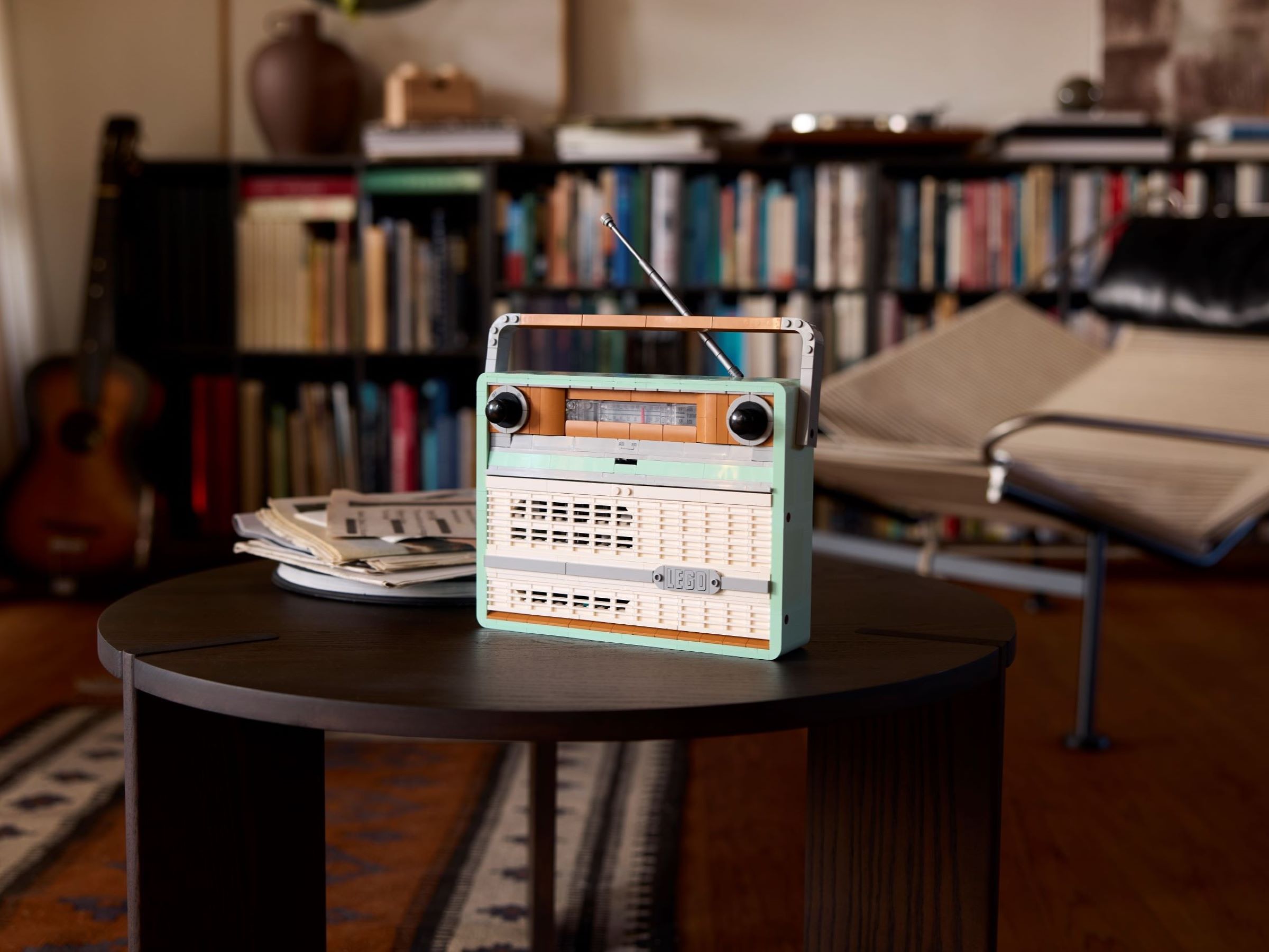
The LEGO Retro Radio 10334 is a 906-piece building set designed for adults aged 18 and above. It is part of the LEGO Icons range, which focuses on detailed, display-worthy models aimed at mature builders rather than children. The set recreates the look of a 1970s transistor radio, featuring light aqua coloring, textured speaker grilles, analog-style dials, and a vintage silhouette that closely resembles classic portable radios from that era.
Unlike many other LEGO sets that prioritize either playability or decoration, the LEGO Radio sits somewhere in between. It is visually striking enough to serve as home décor while also offering subtle interactive features that make it fun to handle. The model includes a movable tuning dial, a power switch, an AM/FM toggle, and an adjustable antenna. These elements do not just sit in place; they are designed to move in a way that feels mechanically satisfying.
A key highlight of the set is the LEGO Sound Brick, a new electronic component that plays short crackling radio effects when activated. This is not a speaker system, but rather a sound effect module that responds when you turn the tuning dial. The Sound Brick adds an extra layer of realism, making the LEGO Radio feel more like a functioning object rather than just a decorative model. This clever inclusion is one of the reasons the set stands out among other adult LEGO builds.
How the LEGO Sound Brick Works
One of the most exciting aspects of the LEGO Retro Radio is the Sound Brick, which plays simulated radio crackle noises when the tuning dial is turned. This feature is what gives the model its “alive” feeling. Instead of relying on Bluetooth or external speakers, LEGO integrated a self-contained electronic module powered by three LR44 batteries, which are included in the box.
The Sound Brick is activated through a mechanical connection inside the model. When you turn the dial, internal gears engage with a switch that triggers the sound effect. This means the audio is directly linked to your physical interaction with the radio, making the experience feel more immersive. Rather than pressing a button to hear a sound, you “tune” the radio just like a real vintage device.
This approach is much more creative than simply adding a speaker or Bluetooth feature. LEGO chose to simulate the experience of scanning radio frequencies, complete with crackling static noises. This design decision aligns perfectly with the retro theme and enhances the overall storytelling of the set. Builders are not just constructing a model; they are recreating a slice of history in brick form.
Inside the Mechanics: Worm Gear and Switching System
What truly elevates the LEGO Radio beyond a typical display model is its internal engineering. The set makes clever use of LEGO Technic elements, including a newly designed worm gear mechanism. A worm gear converts rotational movement into linear motion, which in this case is used to move the radio’s frequency needle back and forth across the display.
When you turn the tuning dial, the worm gear slowly shifts a small internal component that moves the indicator across the frequency scale. This is a highly realistic feature that mimics how old radios displayed station tuning. Rather than simply rotating a decorative dial, your action produces visible movement inside the model, making the interaction feel meaningful.
Additionally, the set includes a rotational switch mechanism that connects or disconnects the Sound Brick. When the radio is turned “off,” the tuning dial still moves the needle but does not trigger sound. When switched “on,” the internal gears engage with the Sound Brick, allowing the crackling audio to play. This level of mechanical sophistication is rarely seen in non-Technic LEGO sets and makes the build particularly rewarding for experienced builders.
Building Experience: What Makes It Special
Constructing the LEGO Retro Radio is a detailed and engaging process that differs from many traditional LEGO builds. Instead of stacking bricks to form a simple shape, builders gradually assemble complex internal mechanisms before enclosing them within the outer shell of the radio. This means much of the most interesting work happens inside the model, where it is not immediately visible once completed.
The build is structured in logical stages, beginning with the base and internal framework before moving on to the exterior details. Along the way, you assemble the gear systems, install the Sound Brick, and connect the various moving components. This approach keeps the process interesting from start to finish, as each stage introduces something new.
For adult builders, the set strikes a great balance between challenge and accessibility. It is not overly difficult, but it is far more intricate than standard LEGO sets aimed at younger audiences. The inclusion of Technic elements also adds variety to the build, preventing it from feeling repetitive or monotonous.
Design and Aesthetic: A True Retro Tribute
Visually, the LEGO Retro Radio is one of the most stylish sets in the LEGO Icons lineup. The light aqua color scheme, textured speaker grille, and analog-style dials all contribute to an authentic vintage look. The design successfully captures the charm of mid-century electronics without feeling outdated or gimmicky.
The model also includes a foldable carrying handle and an extendable antenna, both of which add to its realism. These features are not just decorative; they are functional elements that enhance the tactile experience of interacting with the radio. The handle allows you to pick up and move the model easily, while the antenna can be adjusted just like on a real radio.
From a décor standpoint, the LEGO Radio fits beautifully in modern and retro-themed spaces alike. Whether placed on a desk, bookshelf, or side table, it serves as both a nostalgic tribute and a contemporary art piece made from LEGO bricks.
Smartphone Compartment: How It Actually Works
One of the most misunderstood aspects of the LEGO Retro Radio is the smartphone compartment. Many people mistakenly believe the set includes Bluetooth speakers, but this is not the case. Instead, the radio features a hidden compartment at the back where you can place your smartphone.
When opened, the back panel reveals a cradle designed to hold your phone securely in place. You can then play music on your phone while it sits inside the LEGO Radio, creating the illusion that the model itself is playing audio. However, the sound still comes directly from your smartphone, not from the LEGO set.
This design choice actually aligns well with the retro theme. Instead of turning the LEGO Radio into a modern Bluetooth speaker, LEGO preserved its vintage identity while still allowing it to interact with today’s technology in a creative way.
Is the LEGO Radio Worth $99.99?
At a retail price of $99.99, the LEGO Retro Radio sits in the mid-range for adult LEGO sets. While some may initially feel this is expensive, the set offers strong value considering its piece count, design quality, and unique features.
The inclusion of the Sound Brick alone adds significant cost to the set, as electronic LEGO components are typically more expensive than standard bricks. Additionally, the model’s intricate internal mechanisms and premium printed elements contribute to its overall value.
For collectors, retro enthusiasts, and adult LEGO fans, the set is generally considered worth the price. It offers a satisfying build experience, a beautiful display piece, and interactive elements that set it apart from more traditional models.
Who Should Buy the LEGO Retro Radio?
The LEGO Retro Radio is ideal for adult builders who enjoy detailed, display-worthy models with a creative twist. It is particularly appealing to fans of vintage design, retro décor, and mechanical LEGO builds.
It is also a great gift for music lovers, nostalgia enthusiasts, and LEGO collectors looking for something different from the usual cars, buildings, or movie-themed sets. The set’s blend of aesthetics and functionality makes it suitable for a wide audience.
However, it may not be the best choice for younger builders or those looking for highly interactive play features. The model is primarily designed for display rather than active play.
Where to Buy the LEGO Retro Radio 10334
The LEGO Retro Radio is available through the official LEGO Store online and in physical locations. It is also sold by major retailers such as Amazon and other authorized LEGO sellers.
Availability may vary depending on region, and the set has been listed as backordered at times due to high demand. LEGO Insiders members can also earn reward points when purchasing directly from LEGO.
Final Verdict: A Unique LEGO Experience
The LEGO Retro Radio 10334 is a standout set that successfully blends nostalgia, engineering, and creativity. It is not just another LEGO model—it is a thoughtfully designed tribute to classic technology with a modern LEGO twist.
From its clever Sound Brick to its realistic tuning mechanism, every element of the set feels intentional and well-executed. It offers a rewarding build, a stylish display piece, and subtle interactivity that makes it feel truly special.
For anyone searching for “LEGO Radio,” this set represents the best example of how LEGO can reimagine everyday objects in brick form. It is a celebration of both vintage design and modern LEGO innovation.
FAQs
Is the LEGO Retro Radio a real working radio?
No. It does not receive radio signals. It simulates radio tuning using a Sound Brick that plays crackling effects.
Does it have Bluetooth speakers?
No. Your smartphone plays music inside the compartment, but the sound comes from your phone, not the LEGO model.
What batteries does it need?
It requires three LR44 batteries, which are included in the box.
How many pieces are in the set?
The set contains 906 pieces.
Is it difficult to build?
It is moderately challenging and best suited for adult builders aged 18+.
Is it good for display?
Yes. It makes an excellent home or office décor piece.
You may also read: The Benefits of Using Identibase: Why It’s Worth Registering Your Pet