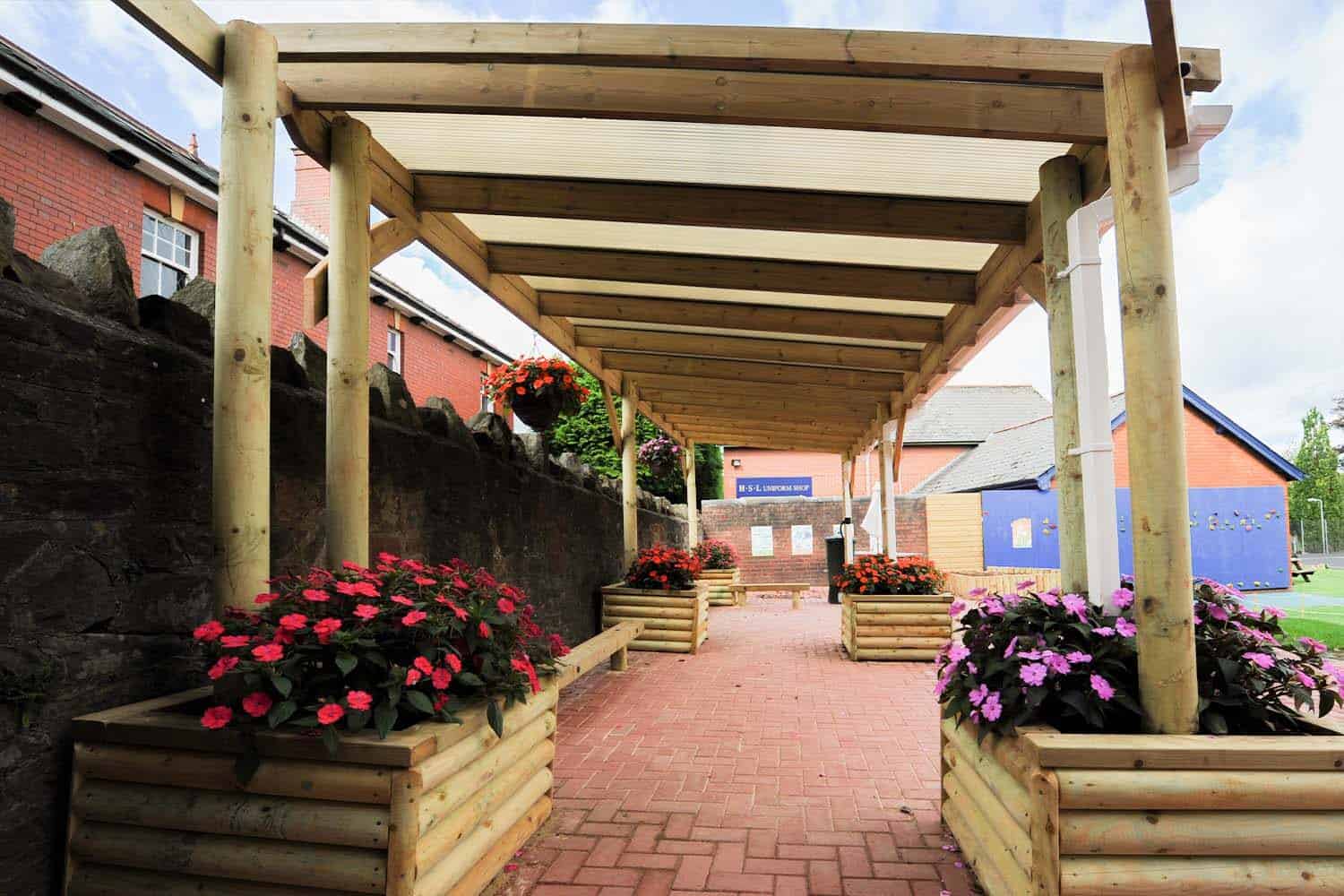
A pergola with a polycarbonate roof is becoming one of the most popular garden upgrades across the UK, and for good reason. British weather is famously unpredictable, with sudden rain showers, variable sunlight, and long damp seasons that can make outdoor spaces difficult to enjoy consistently. A pergola fitted with polycarbonate roofing offers a reliable solution, providing shelter while still allowing natural light to pass through.
Unlike fabric canopies or open-slatted pergolas, polycarbonate roofing creates a more dependable structure that can be used for much more than occasional summer use. Homeowners increasingly choose this option to create year-round outdoor seating areas, covered dining spaces, or protected zones for garden furniture. When designed properly, a pergola with a polycarbonate roof blends practicality with visual appeal, making it a long-term investment rather than a seasonal feature.
What Is a Pergola with a Polycarbonate Roof?
A pergola with polycarbonate roof UK is an outdoor structure supported by posts or fixed to a building, with roofing panels made from durable polycarbonate material. Polycarbonate is a high-performance plastic known for its strength, light weight, and resistance to impact, making it particularly suitable for outdoor use in the UK climate. Unlike glass, it does not shatter, and unlike fabric, it does not degrade quickly under constant exposure to moisture and UV light.
These pergolas can be free-standing in the garden or attached to the rear or side of a property as a lean-to structure. The roofing panels may be clear, opal (frosted), or tinted, allowing homeowners to control the balance between light transmission and shade. This flexibility is one of the key reasons why polycarbonate has become a preferred roofing choice for pergolas in the UK.
Why Polycarbonate Roofing Works So Well in the UK Climate
The UK climate places unique demands on outdoor structures. Frequent rainfall, occasional snowfall, strong winds, and limited winter sunlight all need to be considered when choosing a pergola roof. Polycarbonate performs well across all these conditions due to its structural resilience and weather resistance.
Modern polycarbonate panels are UV-protected, preventing yellowing and material breakdown over time. They are also designed to manage temperature effectively, reducing excessive heat build-up in summer while still allowing daylight through during darker months. This makes a pergola with a polycarbonate roof suitable for use across all seasons rather than just fair-weather days.
Types of Pergolas with Polycarbonate Roofs

There are several common pergola styles that can be paired with polycarbonate roofing, each suited to different garden layouts and usage needs. Choosing the right type depends on space, intended use, and how the pergola integrates with the home.
A lean-to pergola with a polycarbonate roof is attached directly to an existing wall, typically at the rear of a house. This design provides excellent rain runoff and creates a seamless transition between indoor and outdoor living spaces. It is especially popular for covering patios or extending kitchen and dining areas into the garden.
Free-standing pergolas with polycarbonate roofs are installed independently, allowing more flexibility in placement. These are ideal for larger gardens or for creating a distinct seating or entertaining zone away from the main property. Both options can be constructed using timber or aluminium frames, each offering different visual and maintenance characteristics.
Polycarbonate Roof Thickness and Performance Explained
One of the most overlooked aspects when choosing a pergola with a polycarbonate roof is panel thickness. Polycarbonate sheets are available in different thicknesses, commonly ranging from around 3mm to multi-wall panels of 10mm or more. Thicker panels generally provide better insulation, improved noise reduction during rainfall, and greater resistance to impact.
Multi-wall polycarbonate panels are particularly effective in the UK, as their internal structure traps air, helping to regulate temperature beneath the pergola. This makes them a sensible choice for homeowners who want to use their outdoor space throughout spring, autumn, and even milder winter days. Selecting the correct thickness is essential for long-term comfort and durability.
Aluminium vs Wooden Frames for Polycarbonate Pergolas
The frame material plays a significant role in the overall performance and maintenance requirements of a pergola. Aluminium frames are increasingly popular in the UK due to their resistance to rust, minimal maintenance needs, and clean, modern appearance. They pair exceptionally well with polycarbonate roofing, creating a durable structure that requires little ongoing care.
Wooden pergolas with polycarbonate roofs offer a more traditional, natural aesthetic that suits classic gardens. However, timber frames require regular treatment to protect against moisture, rot, and insect damage. While both materials can work effectively, aluminium is generally favoured for long-term durability and lower maintenance, especially in wetter regions of the UK.
Light Control, UV Protection, and Comfort
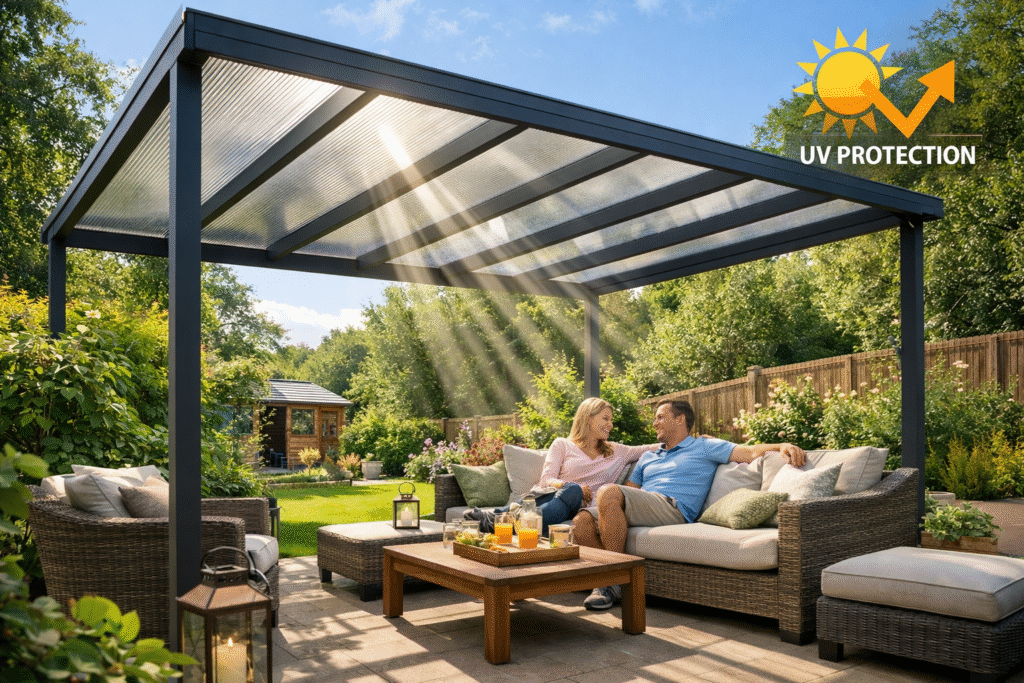
A major advantage of using polycarbonate roofing is the ability to control light levels without fully blocking daylight. Clear panels allow maximum brightness, making them ideal for shaded gardens or north-facing properties. Opal or tinted panels diffuse light more evenly, reducing glare and helping to maintain a comfortable temperature beneath the pergola.
UV protection is another key benefit. Quality polycarbonate panels block harmful UV rays while still allowing visible light to pass through. This protects both people and outdoor furniture, reducing fading and sun damage over time. For families and homeowners who spend extended periods outdoors, this added protection significantly improves usability and comfort.
Planning Permission and UK Regulations
In many cases, a pergola with a polycarbonate roof can be installed under permitted development rights in the UK. However, factors such as height, proximity to boundaries, and whether the structure is attached to the property can affect whether planning permission is required.
Homeowners should also consider local council guidelines and conservation area restrictions if applicable. While polycarbonate roofing is lightweight and non-permanent in appearance, a well-built pergola is still a structural addition. Checking regulations before installation helps avoid future complications and ensures the project proceeds smoothly.
Cost of a Pergola with Polycarbonate Roof in the UK
The cost of a pergola with a polycarbonate roof in the UK varies depending on size, materials, and design complexity. Smaller DIY kits may start from several hundred pounds, while larger aluminium structures with thicker roofing panels and professional installation can reach several thousand pounds.
It is important to consider long-term value rather than upfront cost alone. Polycarbonate roofing offers longevity and low maintenance, reducing replacement and repair expenses over time. When compared with fabric or cheaper plastic alternatives, the overall cost of ownership is often lower despite the higher initial investment.
Common Mistakes to Avoid When Choosing Polycarbonate Pergolas
One common mistake is selecting roofing panels that are too thin for the intended use. While thinner sheets may be cheaper, they often provide less insulation and may not perform as well in heavy rain or strong winds. Investing in suitable thickness ensures better comfort and durability.
Another frequent issue is poor drainage design. A pergola roof must have sufficient slope to allow rainwater to run off efficiently. Proper installation and correct panel alignment are essential to prevent pooling, leaks, or unnecessary stress on the structure.
Installation Considerations and Long-Term Maintenance
Installing a pergola with a polycarbonate roof can be a DIY project for experienced homeowners, particularly when using pre-engineered kits. However, larger structures or attached pergolas often benefit from professional installation to ensure correct load distribution and weatherproofing.
Maintenance requirements are minimal compared to other roofing options. Occasional cleaning with mild soapy water is usually sufficient to keep polycarbonate panels clear and attractive. Aluminium frames require little more than routine inspection, while timber frames should be checked periodically for signs of wear or moisture damage.
Why a Polycarbonate Pergola Is a Smart UK Investment
A pergola with a polycarbonate roof offers a rare combination of durability, comfort, and flexibility. It transforms outdoor space into a usable extension of the home rather than a fair-weather feature. With proper design and material selection, it can significantly enhance property usability and visual appeal.
For UK homeowners seeking a reliable, long-lasting outdoor structure, polycarbonate roofing provides a practical balance between protection and openness. It allows gardens to be enjoyed more often, regardless of changing weather conditions, making it one of the most effective pergola roofing options available today.
Frequently Asked Questions
How long does a pergola with a polycarbonate roof last in the UK?
High-quality polycarbonate panels can last 15–20 years or more when properly installed and maintained. Aluminium frames often last even longer with minimal upkeep.
Does polycarbonate roofing make a pergola too hot in summer?
Modern UV-protected and tinted polycarbonate panels are designed to reduce heat build-up while still allowing light through, making them suitable for summer use.
Can I install a polycarbonate roof on an existing pergola?
Yes, many existing pergolas can be upgraded with polycarbonate panels, provided the frame is structurally sound and designed to support roofing weight.
Is polycarbonate better than glass for pergola roofs?
Polycarbonate is lighter, more impact-resistant, and generally safer than glass, making it more suitable for most domestic pergola applications in the UK.
Do polycarbonate pergolas work in winter?
Yes, polycarbonate roofing provides shelter from rain and snow while allowing daylight in, making pergolas usable throughout much of the year.
You may also read: Used Car Sales, Servicing, and MOTs All in One Place