The recent riverbank collapse at Iford Playing Fields has caused widespread concern across Christchurch and surrounding Dorset communities, transforming a once calm riverside area into a zone of heightened risk and uncertainty. What appeared to many residents as a stable, grassy embankment along the River Stour has dramatically given way, leaving behind a steep and unstable drop where land once supported walkers, cyclists, and families enjoying the open space.
This incident has drawn attention not only because of its suddenness, but also because of its location in one of the area’s most frequently used recreational spaces. The collapse has prompted swift action from local authorities, alongside growing questions from residents about safety, long-term repairs, and whether extreme weather patterns are making similar events more likely across the region.
What Happened at Iford Playing Fields?
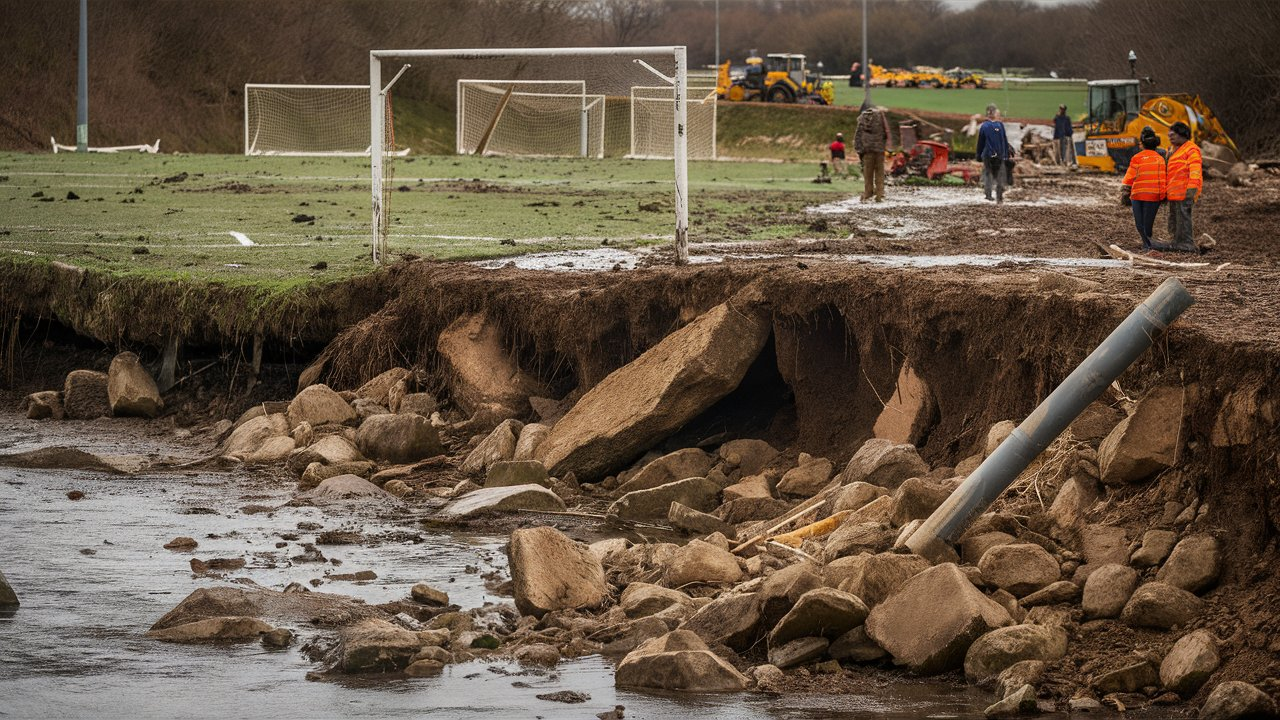
The riverbank collapse at Iford Playing Fields occurred over a short period, with a large section of the embankment giving way close to the river’s edge. Residents walking nearby noticed mature trees slumping into the water and soil breaking away almost overnight, indicating a rapid failure rather than gradual erosion visible over months.
Local witnesses reported that the collapse followed a period of unsettled weather, including strong winds and persistently high river levels. While erosion along the River Stour is not unusual, the scale of this particular failure has been described as significant, raising alarms due to the proximity of footpaths, playing fields, and popular access points to the water.
Immediate Response from Local Authorities
Following reports of the riverbank collapse at Iford Playing Fields, Bournemouth, Christchurch and Poole (BCP) Council was made aware of the situation and began monitoring the affected area. Temporary safety fencing was installed to prevent members of the public from approaching unstable ground, and warning notices were placed to highlight the danger.
Council representatives have acknowledged that riverbank erosion is a natural process, particularly along the Stour, but also confirmed that the size of this collapse is larger than typically observed in this location. Discussions with partner organisations, including environmental and river management bodies, are ongoing to determine appropriate next steps.
Why Riverbank Collapses Happen in This Area
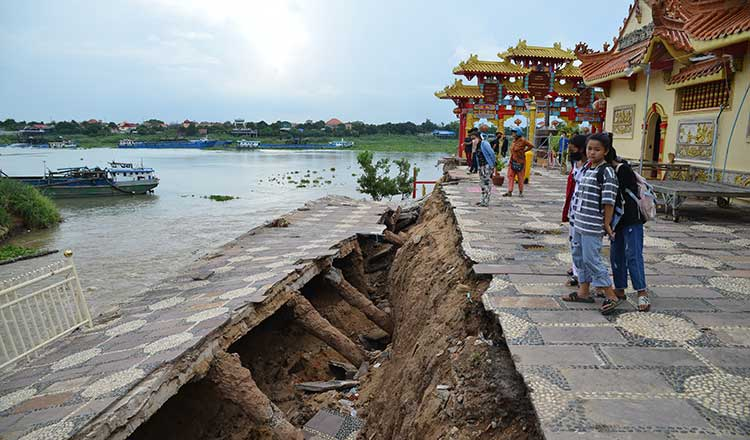
The riverbank collapse at Iford Playing Fields cannot be attributed to a single cause. Instead, it reflects a combination of natural processes that are increasingly common across UK river systems. Prolonged rainfall leads to waterlogged soils, reducing their ability to hold together, while high river flows scour away material at the base of the bank.
When the river level later drops, the saturated soil above remains heavy and unstable. This creates internal pressure within the embankment, causing it to slump or shear away under its own weight. In areas like the Stour Valley, where soils are rich in clay and silt, these effects are particularly pronounced.
The Role of Extreme Weather and Climate Patterns
Recent weather patterns have played a major role in setting the conditions for the riverbank collapse at Iford Playing Fields. Storm systems bringing heavy rainfall across southern England have repeatedly raised river levels, placing sustained stress on riverbanks that were never designed to cope with such frequency or intensity.
Climate scientists have warned that wetter winters and more intense rainfall events are becoming the norm rather than the exception. As a result, riverbanks that may have remained stable for decades are now being tested beyond their natural limits, increasing the likelihood of sudden failures like the one seen at Iford.
Public Safety Risks Following the Collapse
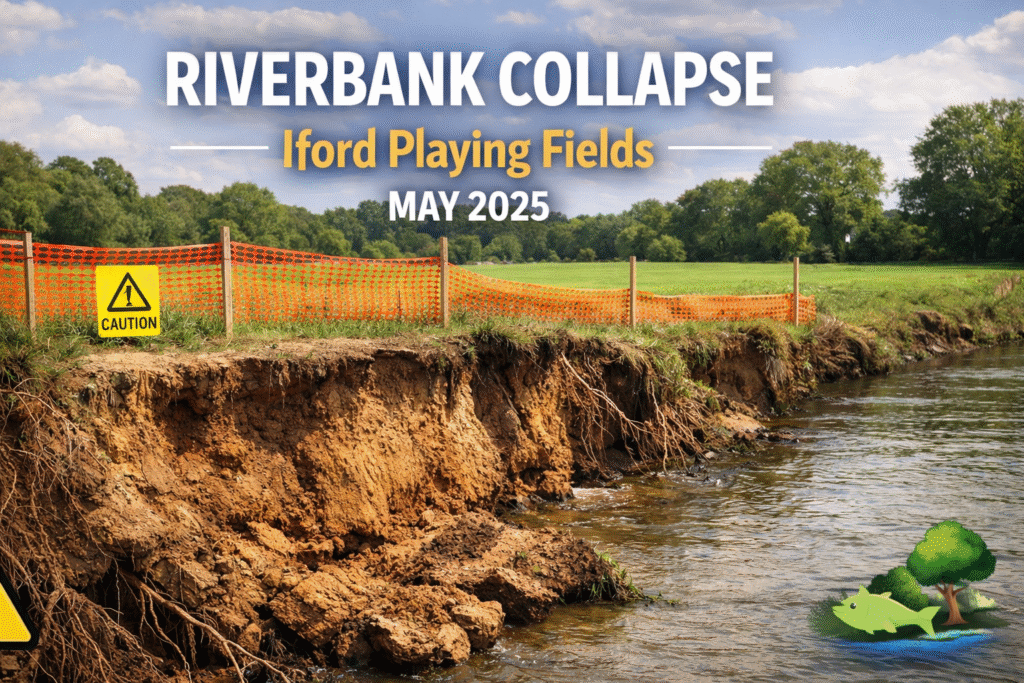
The most immediate concern surrounding the riverbank collapse at Iford Playing Fields is public safety. What may appear to be firm ground near the edge can be dangerously deceptive, as erosion often leaves hollowed-out sections beneath the surface. A single step in the wrong place could cause further collapse, potentially pulling a person or animal into the river.
BCP Council has urged visitors to keep well clear of fenced-off areas and to supervise children and dogs closely when using nearby parts of the park. Even experienced walkers and cyclists are advised to remain cautious, as ground conditions may continue to change without visible warning.
Hazards for River Users on the Stour
The riverbank collapse at Iford Playing Fields has also created risks for people using the River Stour itself. Trees and debris that have fallen into the water can form dangerous obstacles known as strainers, which allow water to pass through while trapping boats, paddlers, or swimmers against them.
These submerged hazards are especially dangerous during periods of higher flow, when visibility is reduced and currents are stronger. Until debris is assessed and potentially removed, river users are being advised to avoid this stretch of the Stour altogether to reduce the risk of serious accidents.
Environmental Impact on Local Wildlife
Beyond the visible damage, the riverbank collapse at Iford Playing Fields has significant ecological consequences. Large amounts of soil entering the river can increase sediment levels downstream, affecting fish spawning grounds and reducing oxygen availability in the water.
The loss of mature trees also removes important habitats for birds such as kingfishers and sand martins, which rely on stable riverbanks for nesting. Without tree cover, water temperatures may rise slightly in summer months, adding further stress to fish and invertebrate populations already under pressure from changing river conditions.
Engineering Challenges in Stabilising the Bank
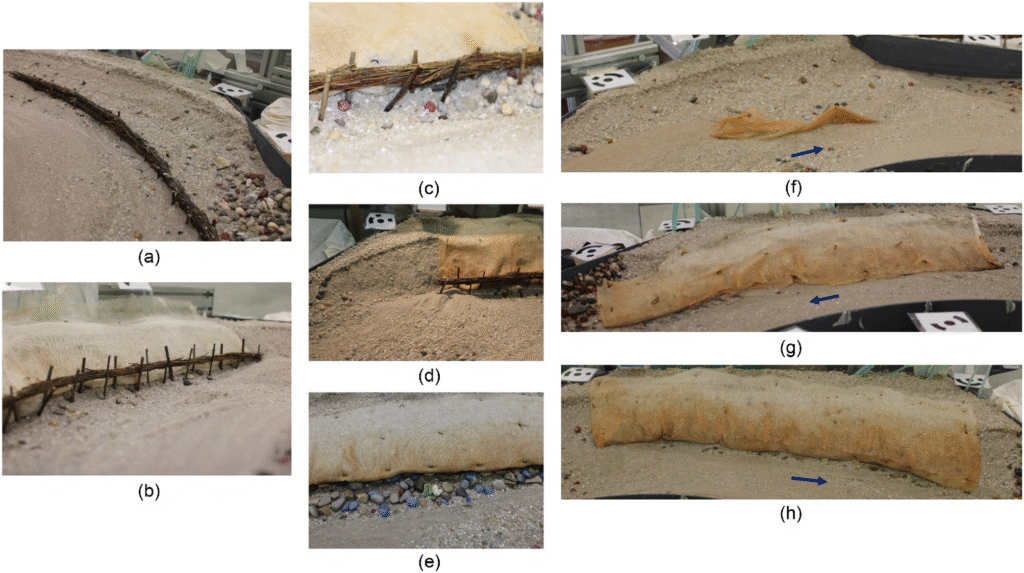
Repairing damage caused by the riverbank collapse at Iford Playing Fields presents complex engineering challenges. Hard engineering solutions, such as steel piling or reinforced retaining walls, can provide rapid stabilisation but may alter natural river flow and increase erosion elsewhere.
Alternatively, softer approaches using natural materials, rock reinforcement, and vegetation can work with the river rather than against it. These methods often take longer to establish but can offer more sustainable protection while preserving the natural appearance of the riverside.
Long-Term Plans and Monitoring
Any long-term response to the riverbank collapse at Iford Playing Fields will need to balance safety, environmental protection, and community use of the space. Ongoing monitoring is essential to ensure that further movement is detected early and that nearby infrastructure remains secure.
Local authorities are expected to continue working with environmental experts to assess whether intervention is required immediately or whether natural stabilisation can be allowed to occur safely under supervision. Funding, permissions, and ecological assessments will all influence the timeline for permanent solutions.
Impact on Community Life and Recreation
The playing fields are a valued community asset, hosting sports, events, and informal recreation throughout the year. The riverbank collapse at Iford Playing Fields has already reduced usable space and may disrupt activities if safety zones need to be expanded.
However, some see the incident as an opportunity to rethink how riverside spaces are managed. Creating buffer zones, wetlands, or gently sloped banks could make the area more resilient to future erosion while enhancing biodiversity and reducing long-term maintenance costs.
Lessons for Other Riverbank Locations
The riverbank collapse at Iford Playing Fields serves as a reminder that similar risks exist along many UK rivers, particularly where public access is encouraged close to the water’s edge. Regular inspections, clear signage, and public awareness are crucial in preventing injuries when natural changes occur.
Communities situated near rivers may increasingly need to adapt to changing conditions rather than attempting to prevent every instance of erosion. Understanding how rivers behave is key to living safely alongside them.
Conclusion
The riverbank collapse at Iford Playing Fields highlights the powerful interaction between natural forces, weather patterns, and human use of riverside spaces. While unsettling, the incident has prompted important conversations about safety, sustainability, and how communities can adapt to an evolving environment.
With careful monitoring, informed decision-making, and respect for natural processes, there is hope that the area can be stabilised in a way that protects both people and wildlife. For now, staying informed and respecting safety measures remains the most important step for everyone who enjoys this much-loved part of Christchurch.
Frequently Asked Questions
Is the entire park closed following the riverbank collapse at Iford Playing Fields?
No, only specific areas near the affected riverbank have restricted access. Visitors should follow signage and remain behind safety fencing at all times.
Is riverbank erosion common along the River Stour?
Yes, erosion is a natural process along the Stour, but the size and speed of this collapse make it unusual and worthy of close monitoring.
Could more of the bank collapse in the future?
Further movement is possible, particularly if heavy rainfall continues. This is why authorities are closely monitoring the area.
Who decides how repairs will be carried out?
BCP Council works alongside environmental agencies and technical experts to determine the safest and most sustainable repair approach.
How long will repairs or stabilisation take?
Timelines vary depending on assessments, funding, and environmental considerations. Some solutions may take months or longer to fully implement.
You may also read:Finding the Right Food for Your Needs