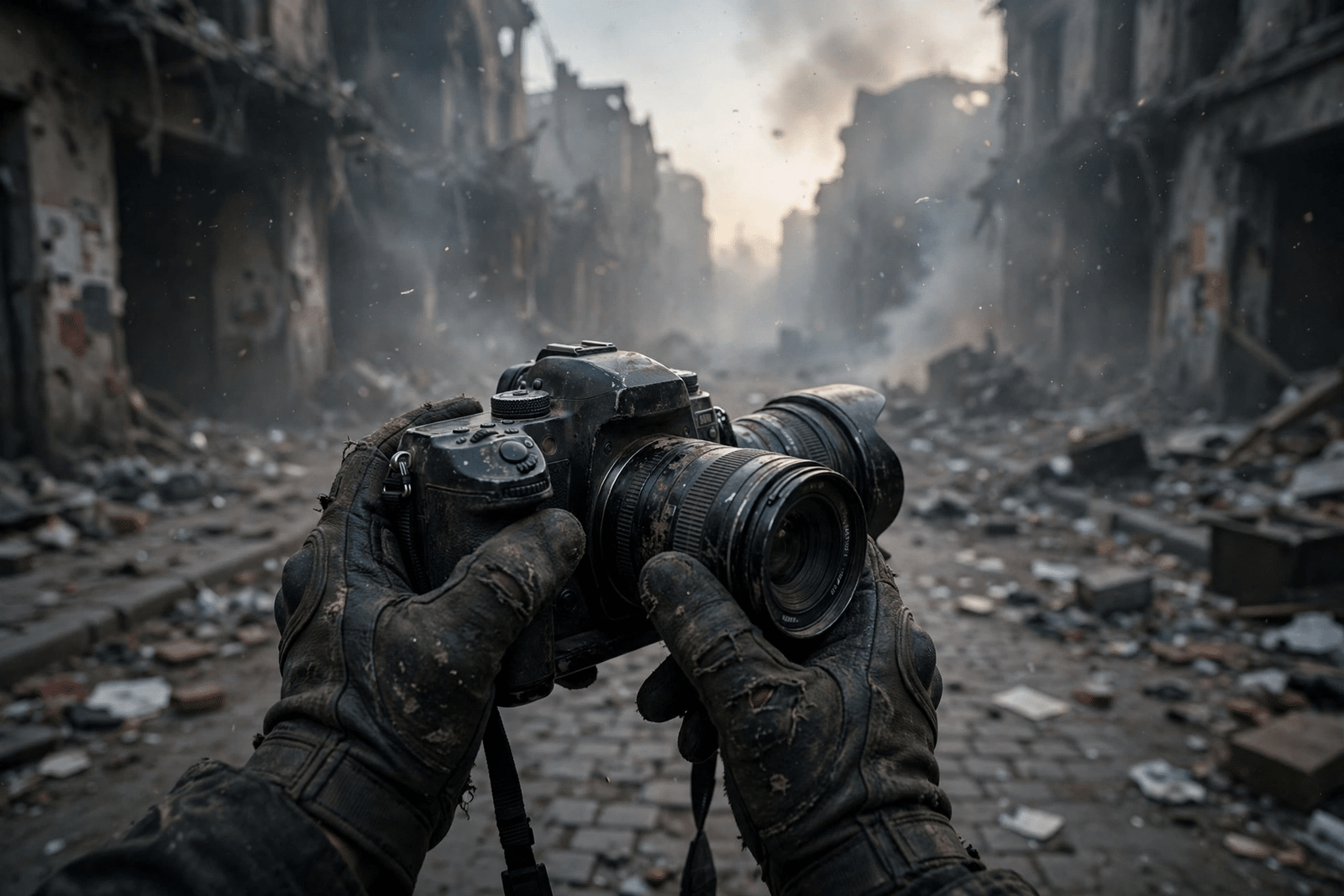
Why Civil War 2024 Film Reviews Still Get Searched in 2026
Search interest in civil war 2024 film reviews has refused to die down even two years after Alex Garland’s dystopian war thriller left cinemas, and the reason is straightforward: the film’s reputation keeps evolving as new viewers discover it on streaming. When the movie arrived in April 2024, it was one of the most argued-about releases of the year, praised by critics for its craft yet greeted with genuine division by audiences who had expected something more politically explicit. That unresolved tension is exactly what keeps people searching for the film’s reception, because the reviews tell a story that goes well beyond a simple thumbs up or thumbs down. Every fresh wave of streaming viewers reopens the same debates about what the film is really saying, and whether its deliberate vagueness is brilliance or evasion.
The original version of this article, published in April 2026, captured the core numbers accurately, and the good news is that the essential picture has not changed: Rotten Tomatoes still shows a fresh critic score in the low eighties, Metacritic still calls the reception “Generally Favorable,” and IMDb’s user rating remains steady. What has changed since the original piece is context: the film has become a genuine streaming success, its box-office story has closed out as one of the most important A24 releases ever, and its place in Garland’s filmography is now clearer with more distance. This update keeps everything that was accurate in the original and adds the newer chapters — the streaming afterlife, the final financial tally, and a sharper look at how the film compares with Garland’s earlier work.
Rotten Tomatoes: The Scoreboard That Defined the Conversation
For anyone checking the numbers, Rotten Tomatoes remains the clearest snapshot of how Civil War landed: the film holds an 81 percent Certified Fresh Tomatometer score, drawn from more than four hundred published critic reviews, while the Popcornmeter audience score sits at 69 percent from well over a thousand verified ratings. The critics consensus calls the film “tough and unsettling by design” and describes it as a gripping close-up of uncertainty in a nation in crisis. That combination — strong professional approval, noticeably cooler audience enthusiasm — is the single most important fact about the film’s reception, and it has barely moved since release. An 81 percent critic score is a genuine achievement for a politically charged original film with no franchise safety net, yet the audience figure reveals that a large minority of viewers left the cinema feeling unsatisfied.
The gap between those two numbers deserves unpacking because it is not random noise. Critics watch films professionally, so they tend to reward formal ambition — the immersive sound design, the claustrophobic combat sequences, the deliberate moral fog — even when a film frustrates them emotionally. General audiences, by contrast, often arrive with expectations the marketing set: the trailers sold visceral battle spectacle, and many viewers expected a more conventional war epic or a sharper political statement. When the film turned out to be a grim road movie about journalists who observe rather than explain, a segment of the audience felt shortchanged. The numbers are therefore not a contradiction but a record of two different bargains being made with the same film.
What Critics Praised: Craft, Tension and Kirsten Dunst
Professional critics who championed the film almost never praised it for ideological clarity, because that was never what the movie was trying to deliver. Instead, they praised atmosphere, immersion, formal control, and the disturbing way the film relocates the visual grammar of foreign war reporting into the American landscape. RogerEbert.com awarded the film four stars and called it a furiously convincing and disturbing thing, focusing on how powerfully it examines journalistic obsession. The Guardian’s Wendy Ide singled out the savage combat sequences, deft editing, and especially the immersive use of sound. These are not small compliments: they describe a film operating at the very highest level of technical craft, one that critics experienced in their bodies before they interpreted it in their heads.
A recurring thread in civil war 2024 film reviews is that the cast deserved much of the credit for keeping the journey credible. Kirsten Dunst gives a career-level performance as Lee, the veteran war photographer whose numbness is both a professional survival tool and a slow moral erosion, and both Guardian reviews and numerous critics singled her out. Cailee Spaeny, Wagner Moura, and Stephen McKinley Henderson form the rest of the travelling press pack, each embodying a different relationship to danger, ambition, and witness, while Nick Offerman’s President and a single-scene Jesse Plemons appearance left lasting impressions far beyond their screen time. Even reviewers who found the film emotionally cold conceded that weak acting would have broken the illusion instantly, and the acting here never wavers.
Where Critics Pushed Back: The Politics Question
The most persistent reservation in the critical response was never about whether Garland could stage tension — everyone agreed he could. It was about whether the film withholds too much political and emotional context for its own argument to land. The Guardian’s SXSW review called it an impressive technical feat but an emotionally cold drama, arguing that Garland introduces the political connection and then moves away from recognisable politics so thoroughly that the result can feel stimulating on the level of adrenaline more than emotion. Slate’s Sam Adams went further, calling Garland’s evasiveness a failure of nerve and arguing that a more successfully political movie would not be so wary of aiming at real targets. These were serious objections from serious critics, and they shaped the entire reception conversation.
It is worth being precise about what this criticism does and does not claim. Nobody accused the film of being incoherent; the charge was that its refusal to specify causes, factions, and ideology left a vacuum where political bite should be. The film tells us the President is serving an unconstitutional third term, that he disbanded the FBI and ordered airstrikes against American civilians, and that California and Texas have formed an improbable alliance called the Western Forces — and then it declines to explain any of it further. For admirers, that restraint made the horror universal and uncomfortably transferable. For detractors, it meant the film could not complete its own argument. Both positions are defensible, which is precisely why the debate has outlasted the release cycle.
The Critic-Audience Split Explained
The defining tension of civil war 2024 film reviews is the gap between professional admiration and public hesitation, and it repeats across every platform. Metacritic’s critic score of 75 (“Generally Favorable,” from 64 critics) sits comfortably above its user score of 6.3; IMDb’s 7.0 from more than 270,000 voters is solid but not ecstatic; Fandango’s verified audience figure lands at 69 out of 100; Letterboxd users give it 3.6 out of 5 from well over a million ratings. CinemaScore, which polls opening-night audiences, gave it a B-minus — a grade that historically signals mixed word of mouth. The consistency of this pattern is remarkable: respected more than loved, admired more than embraced, on nearly every measurement available.
What makes the split interesting rather than merely disappointing is that it was arguably baked into the film’s design. Garland made a movie about war correspondents — people who watch and record instead of intervening — and then presented it to audiences in a way that forces them into the same position. Viewers hoping for a conventional action arc or a clear ideological thesis were instead asked to endure proximity, ambiguity, and moral discomfort without relief. Some found that electrifying; others found it alienating. The marketing deserves part of the blame for the disappointment, since trailers emphasised large-scale combat that the film deliberately underplays. But the deeper truth is that Civil War was always going to divide people, because it refuses to tell its audience what to feel.

A24’s Gamble: Box Office Numbers and What They Mean
The commercial story is unambiguous and impressive. Made for an estimated 50 million dollars — the most expensive production in A24’s history at the time — Civil War earned roughly 127.3 million dollars worldwide, about 68.8 million domestic and 58.5 million international, making it A24’s second-highest-grossing release ever. It opened to 25.7 million dollars, nearly doubling the studio’s previous opening-weekend record, with IMAX screens accounting for nearly half of that debut gross. A24 also recouped part of its investment before release by selling international distribution rights, which is why trade coverage treated the film as a financial success well before its run ended. For an original, R-rated, politically charged drama with no franchise attached, those numbers are genuinely rare air.
That context matters for discussions of civil war 2024 film reviews because a film’s commercial performance shapes how its reputation hardens over time. A movie that loses money often gets re-evaluated as a noble failure; a movie that makes money gets treated as proof that its approach worked. Civil War’s success mattered doubly because it arrived when the industry was loudly doubting whether adult, mid-budget original films could still draw crowds. The film’s performance answered that question in the affirmative, and it remains one of the strongest pieces of evidence that difficult, formally ambitious thrillers can still command attention when they are marketed with conviction and executed with real craft.
Streaming Afterlife and a Growing Legacy
If the theatrical run proved the film could draw a crowd, the streaming afterlife proved it could keep one. Civil War became a genuine hit on Max, at one point ranking as the second most-watched movie on the platform in the United States, and it has held a steady presence across digital storefronts and services since. Streaming has a way of flattening the expectation problem that hurt the film in cinemas: viewers who press play at home, having already heard that the film is divisive and ambiguous, arrive with calibrated expectations and are more likely to meet the movie on its own terms. Many of the warmest reappraisals online come from exactly this second wave of viewers.
Awards bodies gave the film a modest but respectable reception: three nominations across crafts and screenplay categories, including a Best Original Screenplay nod for Garland and recognition at the Artios Awards and genre awards. It was never going to be an Oscars juggernaut — the film’s chill and ambiguity work against awards-season warmth — but the nominations confirmed that the industry took it seriously as craft. Combined with the Letterboxd ratings, the streaming numbers, and the persistent search interest, the picture two years out is of a film that has settled into a durable reputation: not a consensus masterpiece, but a distinctive and serious work that rewards rewatching and argument.
Civil War in Alex Garland’s Career: How It Ranks
When civil war 2024 film reviews stack the film against Garland’s earlier directorial work, a clear pattern emerges. Ex Machina sits at 92 percent on Rotten Tomatoes, Annihilation at 88 percent, and Civil War at 81 percent — comfortably ahead of Men, which stalled at 69 percent. That ranking makes sense as a map of Garland’s ambitions: Ex Machina is a chamber piece of ruthless clarity, Annihilation is a beautiful puzzle, Men is an abrasive provocation, and Civil War is his first attempt at large-scale, immediate, sensory cinema. Critics who loved the earlier films for their ideas sometimes missed the philosophical density; critics who had found Garland cold or cerebral praised the new film’s physical urgency.
What civil war 2024 film reviews often note, with the benefit of distance, is that this was the film where Garland stopped being merely a smart screenwriter-turned-director and became a genuine large-canvas filmmaker. The combat sequences, the sound design, the nerve-shredding final act in Washington — these are not the work of a director hiding behind ideas. They are the work of someone who can stage chaos with total control. Even the film’s harshest critics rarely disputed that the craftsmanship had leapt forward. In career terms, Civil War reads less as a detour and more as a graduation: the moment Garland proved he could make a big, dangerous, expensive film entirely on his own terms and have it succeed.
Frequently Asked Questions
What is the Rotten Tomatoes score for Civil War (2024)? Civil War holds an 81 percent Certified Fresh Tomatometer score from more than 400 published critic reviews, alongside a 69 percent Popcornmeter audience score from over a thousand verified ratings — the top answer in most civil war 2024 film reviews summaries. The critics consensus calls it “tough and unsettling by design” and describes it as a gripping close-up of uncertainty in a nation in crisis. That pairing of scores is the essential fact about the film’s reception: strong professional approval sitting next to noticeably cooler public enthusiasm, a pattern that has held steady from release day through the film’s streaming afterlife.
Why do critics like it more than audiences? Critics rewarded the film’s craft — the immersive sound design, the claustrophobic combat sequences, the deft editing, and a career-level Kirsten Dunst performance — while many audience members arrived with different expectations entirely. The trailers sold visceral battle spectacle, so plenty of viewers wanted clearer politics, more explanation of the conflict’s causes, or the conventional war epic the marketing seemed to promise. The film is deliberately ambiguous instead, which professionals tend to admire as artistic conviction and general viewers often experience as frustration. The result is a genuine split rather than a failure: two different bargains made with the same movie.
How much money did Civil War make? The film grossed about 127.3 million dollars worldwide against a 50 million dollar budget — roughly 68.8 million domestic and 58.5 million international. It was A24’s most expensive film at the time and became the studio’s second-highest-grossing release ever, opening to 25.7 million dollars and nearly doubling the studio’s previous opening-weekend record. For an original, R-rated, politically charged drama with no franchise attached, that is a genuinely rare commercial achievement, and it helped prove that difficult, formally ambitious adult thrillers could still command a wide audience.
Is Civil War based on a true story? No. The film is a work of speculative fiction set in a near-future America fractured by internal armed conflict, with an unconstitutional third-term President, a dissolved FBI, and an improbable alliance between California and Texas called the Western Forces. While it borrows the imagery, ethics, and visual grammar of real war journalism — the film is fundamentally about correspondents who document suffering rather than intervene — its factions, leaders, and timeline are entirely invented by writer-director Alex Garland. Garland deliberately kept the politics abstract so the horror would feel universal rather than partisan.
Where can I watch Civil War now? The film became a genuine streaming hit on Max in the United States, where it ranked as the second most-watched movie on the platform at its peak, and it remains available across digital storefronts including Prime Video and Apple TV for rental or purchase. The streaming afterlife has arguably treated the film better than cinemas did: viewers who press play at home, having already heard that the movie is divisive and ambiguous, arrive with calibrated expectations and are more likely to meet it on its own terms. Many of the warmest reappraisals online come from exactly this second wave of home viewers.
Is Civil War worth watching? Yes, with the right expectations. It is a tense, superbly crafted thriller with career-best work from Kirsten Dunst, nerve-shredding combat sequences, and sound design that critics consistently singled out for praise. But it is not a conventional action film, and it will not explain its politics to you — the movie is interested in what war feels like to the people documenting it, not in lecturing you about how the state fell apart. Viewers who appreciate atmosphere, moral ambiguity, and formal daring will find a great deal to admire.
Conclusion
Taken together, civil war 2024 film reviews describe a film that succeeded more convincingly with critics than with general audiences, but in a way that reads as strength rather than failure. The 81 percent Tomatometer, the 75 Metascore, the four-star reviews from major critics, and the film’s commercial and streaming success all point the same direction: this is a serious, technically formidable work that divided people honestly. It did not fail to be something it tried to be; it refused to be something many viewers wanted it to be, and that refusal is inseparable from its power.
That is why the film still rewards attention two years on, and why this update preserves the original article’s accurate core while adding the newer chapters of its story. Watch it for the craft, the performances, and the nerve-shredding immersion — and arrive prepared to sit with ambiguity rather than having it resolved. Few recent films have earned their divisiveness so completely, and fewer still have kept the conversation this alive. If you enjoy debating what a film means as much as watching it, few recent releases will repay your time better.
If you enjoy unpacking divisive modern cinema, you will also find plenty to argue about in our coverage of the Netflix action film over at https://pogeo.co.uk/exterritorial-reviews/. Read it next and tell us which film’s controversies you found more gripping.
You may also read: Breakthrough Role in Stick