Introduction
The conversation around Civil War 2024 Film Reviews has stayed unusually strong because Alex Garland’s film is not just another action release. It arrived as a dystopian war thriller from A24, written and directed by Garland, starring Kirsten Dunst, Cailee Spaeny, Wagner Moura, Stephen McKinley Henderson, and Nick Offerman. The official premise frames the story around journalists racing toward Washington, D.C., in a fractured near-future America, which instantly gave the movie a charged identity in review culture.
That identity matters because the film sits in an unusual space between spectacle and warning, journalism drama and war thriller, realism and allegory. Rotten Tomatoes currently lists an 81% Tomatometer from 409 reviews and a 69% Popcornmeter from more than 1,000 verified ratings, while Metacritic labels the critic response “Generally Favorable” with a 75 score based on 64 critic reviews. Those signals tell a clear story before any deeper analysis begins: critics broadly respected the craft, but audience enthusiasm was more divided and emotionally complicated.
What Civil War Is About
Civil War is set in a near-future United States torn apart by internal armed conflict, yet the film deliberately avoids long speeches or detailed world-building lectures. Instead, it follows a group of journalists moving through a dangerous landscape, trying to document the collapse and reach the White House before the conflict reaches its decisive end. Rotten Tomatoes and Metacritic both summarize the film around that urgent journalist journey, which is one reason the movie feels immediate from the first scene onward.
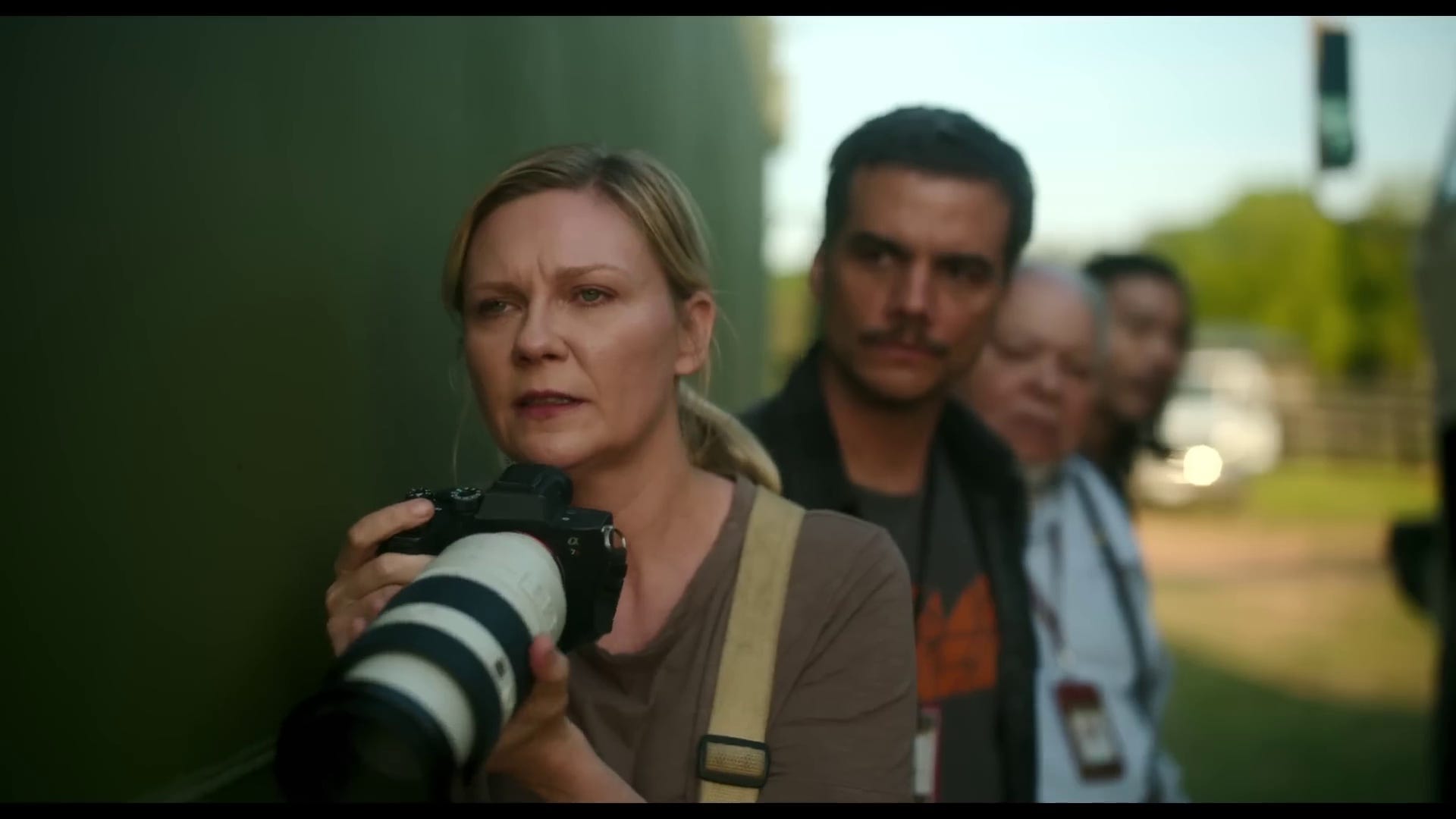
That choice shapes the entire experience. Rather than inviting the audience into a fully mapped political universe, Garland pulls viewers into the point of view of observers who are constantly moving, reacting, photographing, and surviving. RogerEbert.com described the film as a thought experiment about journalistic ethics and the mentality of pure reporters, while The Guardian emphasized how the film strips away direct politics to focus on the reality of conflict as seen by correspondents. That framing explains why the movie feels so tense, yet also why some viewers found it frustratingly elusive.
Why This Film Drew So Much Review Attention
A major reason the movie generated so much heat is that its title alone invited argument. A film called Civil War, released in a politically tense era and set in a militarized American future, was always going to trigger strong expectations. Even before viewers pressed play, many expected a direct ideological statement, a map of national collapse, or an overtly partisan warning. The Guardian noted that Garland introduces the political connection and then moves away from recognisable politics into the dispassionate work of combat journalism.
That gap between expectation and execution became the engine of the review cycle. Some critics admired the restraint because it made the horror feel universal and uncomfortably close. Others believed the avoidance of concrete political explanation weakened the film’s intellectual force. RogerEbert.com treated that ambiguity as part of the movie’s originality, while The Guardian’s first-look review called it an impressive technical feat but an emotionally cold drama. The result was exactly the kind of split that keeps a film visible in search results long after release.
Rotten Tomatoes Reaction
For anyone searching Civil War 2024 Film Reviews, Rotten Tomatoes is the first major checkpoint because it condenses professional and audience reaction into a fast visual summary. The current Rotten Tomatoes page lists the film at 81% on the Tomatometer from 409 critic reviews, alongside a 69% Popcornmeter from more than 1,000 verified ratings. Its critics consensus calls the film “tough and unsettling by design” and describes it as a gripping close-up look at uncertainty in a nation in crisis.
Those figures reveal something important. An 81% critic score signals clear professional approval, but the 69% audience figure suggests a more hesitant public embrace. Rotten Tomatoes also captures this divide in plain language: critics responded strongly to the design and tension, while the audience summary says the movie puts viewers on the ground effectively but may frustrate those wanting clear answers about how the conflict began. That is one of the most useful one-paragraph explanations of the movie’s reception anywhere online.

IMDb and User-Led Perception
IMDb matters because it often reflects the temperature of the broader moviegoing public rather than the narrower judgment of festival critics or review publications. The search result for the film lists Civil War at 7/10 on IMDb, with a very large vote count, showing that the movie reached a wide audience and sustained enough interest to generate a meaningful aggregate score. For a tense, politically loaded film that avoids easy reassurance, that is a solid public rating rather than a runaway crowd-pleaser score.
The difference between IMDb and Rotten Tomatoes is also revealing. IMDb’s user rating suggests many viewers respected the film even if they did not love every creative decision, while Rotten Tomatoes’ verified audience score shows a clearer split between admiration and disappointment. Metacritic’s user score of 6.3, also labelled “Generally Favorable,” reinforces that pattern. In other words, public viewers often saw quality here, but many still walked away feeling the experience was more admirable than emotionally satisfying.
What Major Critics Actually Praised
Professional critics who responded positively did not usually praise the film for ideological clarity. They praised it for atmosphere, immersion, formal control, and the disturbing way it relocates the visual grammar of foreign war reporting into the American landscape. RogerEbert.com called it a “furiously convincing and disturbing thing” and focused on how powerfully it examines journalistic obsession, while Rotten Tomatoes’ consensus highlights its unsettling close-up perspective on national crisis.
The Guardian’s stronger review from Wendy Ide adds another layer by praising the film’s savage combat sequences, deft editing, and especially the immersive use of sound. That detail matters because many positive reviews saw the movie as something to feel before it was something to decode. Even critics who wanted more context often admitted the film was executed with remarkable technical force. This is why the critic conversation never settled into simple applause or dismissal; it stayed anchored in respect for craft even when interpretations differed.
Where Critics Hesitated
The most common hesitation in the critical response was not about whether Garland can stage tension. It was about whether he withholds too much political and emotional context for the film to land as deeply as it could have. The Guardian’s SXSW review called the film an impressive technical feat yet an emotionally cold drama, and argued that it avoids direct political correlation so thoroughly that the result can feel stimulating on the level of adrenaline more than emotion.
That line of criticism appears across the broader response as well. The second Guardian review argues that stripping out political context weakens the film compared with more idea-driven works, even while acknowledging its chilling portrait of war’s self-perpetuating momentum. On Rotten Tomatoes, audience-facing commentary says viewers hoping for clues about the origins of the conflict may be frustrated. Together, these reactions explain the film’s unusual profile: highly respected, clearly effective, but not universally embraced as complete or fully nourishing drama.
Audience Reactions Beyond the Aggregates
Audience reaction has been more emotionally varied than the critic response, and that is one reason the film remains so searchable. On Rotten Tomatoes, recent audience blurbs highlight suspense, sound design, combat journalism, realism, and the feeling that the story could happen, yet other comments raise the issue of messaging ambiguity. Metacritic user reviews show a similarly mixed but favorable response, with many viewers praising execution while acknowledging that the political background is intentionally sparse.
This pattern suggests that ordinary viewers were not rejecting the film because it lacked quality. Many were wrestling with what kind of movie they expected versus what they actually received. People wanting a conventional action thriller often found something grimmer, quieter, and more observational. People hoping for a policy-heavy speculative drama sometimes found a war-reporter movie with moral fog instead of ideological explanation. That mismatch in expectation is often more decisive than the actual filmmaking when audience scores drift below critic scores.
Performances and Character Presence
The cast is one of the strongest points in the reception story. A24 lists Kirsten Dunst, Cailee Spaeny, Wagner Moura, Stephen McKinley Henderson, and Nick Offerman as the principal names, and both critics and audience comments repeatedly return to the human tension created by those performances. The film depends on small expressions, fatigue, moral numbness, fear, and bursts of recklessness, so weak acting would have broken the illusion very quickly.
Among the cast, Kirsten Dunst stands out most consistently in published reaction. Rotten Tomatoes quotes praise for Dunst’s control amid escalating violence, and both Guardian reviews single out her work as frontline photographer Lee. RogerEbert.com also gives real weight to the four-journalist ensemble and the way each character embodies a different relationship to danger, ambition, and witness. Even viewers who found the narrative cool or opaque often agreed that the performers made the journey credible and psychologically tense.
Direction, Pacing, and Cinematic Style
Garland’s direction is the clearest reason the film earned durable critical respect. The movie runs 1 hour and 49 minutes, and that compact runtime helps it move with the rhythm of pursuit rather than the bulk of a traditional epic. Critics repeatedly describe the film as immersive, forceful, and technically accomplished. The Guardian highlights the sound design and editing, while Rotten Tomatoes captures the same effect in simpler terms by emphasising how gripping and unsettling the finished result feels.
The style is also central to why the film does not feel like mainstream patriotic conflict cinema. There is little triumphalism and even less explanatory comfort. The camera often behaves like a witness rather than a judge, and the pacing privileges mounting dread over tidy exposition. RogerEbert.com reads the movie as a portrait of reporters driven by the scoop itself, which helps explain why scenes feel driven by proximity, timing, and danger more than ideology. The film’s style does not tell you what to think first; it forces you to endure what the characters are seeing.
Themes and Ideas Under the Surface
Although some critics argued the movie is underexplained, it is not empty of ideas. One of its strongest themes is the moral gray area of witnessing. The journalists do not exist as pure heroes, and the film often asks what it means to keep photographing suffering instead of intervening. The Guardian explicitly describes the profession as one with a built-in moral gray area, while RogerEbert.com goes further and frames the film as an examination of the “mentality of pure reporters.”
Another theme is the banality of atrocity. The movie is frightening not because it invents monsters, but because it shows recognizable people adapting to violence with alarming speed. Rotten Tomatoes includes a critic line saying the terror on screen is terrifyingly mundane, and the critics consensus emphasises the violent uncertainty of a nation in crisis. This is one reason the film lingered in public discussion: it feels like a warning without narrowing itself into a single partisan argument.
Strengths That Lifted the Film
The biggest strengths in the review record are easy to identify. First, the film creates tension with unusual consistency. Second, it uses sound, editing, and framing with real intelligence. Third, it grounds the near-future premise in lived physical detail rather than excessive speculative exposition. Fourth, it gives its actors enough space to create bruised, memorable human behavior inside chaos. These strengths appear across Rotten Tomatoes, RogerEbert.com, Metacritic’s critic score, and both Guardian reviews.
The film also benefits from scale without becoming bloated. Box Office Mojo lists it as a 109-minute release that went on to earn about $127.3 million worldwide, including roughly $68.8 million domestic and $58.5 million international. That commercial performance matters in context because the film was not tiny, disposable arthouse fare; it reached a wide audience and proved that difficult, formally ambitious adult thrillers can still command attention when they are marketed well and executed with conviction.
Weaknesses That Kept It From Universal Praise
The most persistent weakness is the film’s refusal to satisfy the explanatory hunger it deliberately creates. When viewers hear the title Civil War and see a collapsing United States, many expect a sharper map of causes, factions, and ideology. Garland intentionally withholds much of that. For admirers, that choice makes the film more disturbing and universal. For detractors, it creates a vacuum that drains the story of political bite, emotional specificity, and narrative fullness.
Another weakness is the emotional distance some viewers felt from the characters. Even when the cast is strong, the film often presents them through professional behavior rather than confessional intimacy. That can be dramatically appropriate for traumatized reporters, but it also means the movie is not designed to offer comforting psychological access. The Guardian’s cold-drama critique and the audience commentary on Rotten Tomatoes line up here: many people respected what the film was doing without feeling fully drawn into it on a personal level.
Is It Worth Watching?
For readers searching Civil War 2024 Film Reviews because they want a simple yes-or-no answer, the most honest response is yes, but with the right expectations. If you want a muscular, serious, unsettling thriller with top-level tension and a strong ensemble, the film delivers. If you appreciate movies that trust atmosphere, implication, and image over speeches and tidy messaging, there is a lot to admire here. Rotten Tomatoes, Metacritic, and major critics all support that view.
It becomes a less certain recommendation only if you want detailed political architecture, warm emotional access, or a conventional action arc with a clearly argued thesis. The film is more interested in what war feels like to observers than in giving a classroom lecture on how the state fell apart. That makes it sharper for some viewers and thinner for others. In practical terms, it is worth watching for film fans, Garland followers, and viewers interested in journalism under pressure, even if it may not satisfy every audience equally.
How It Compares With Other Dystopian War Films
Civil War stands apart from many dystopian thrillers because it does not behave like a lore-driven franchise setup or an ideology-heavy speculative essay. It is closer to a road movie about correspondents moving through a collapsing state than to a conventional rebellion blockbuster. RogerEbert.com compares it, in spirit, to films about journalists covering foreign national collapse, and The Guardian repeatedly frames it as a film about conflict and witness rather than narrow commentary on current American party politics.
That distinction is important for ranking the film critically. It may not offer the world-building density some viewers associate with the best dystopian cinema, but it offers something rarer: immediacy. The movie turns familiar images of distant war coverage inward and makes them domestic, intimate, and morally claustrophobic. That is why many critics judged it less as a prediction machine and more as a sensory and ethical drama. Even its limitations are bound up with the very artistic gamble that makes it memorable.
Final Critics Verdict
Taken together, Civil War 2024 Film Reviews point toward a film that succeeded more convincingly with critics than with general audiences, but not in a way that signals failure. Rotten Tomatoes shows broad critical approval at 81%, Metacritic gives it a 75 and a “Generally Favorable” label, and RogerEbert.com offers one of the strongest endorsements by calling it a great movie with its own life force. Even critics who had serious reservations tended to concede the movie’s formal strength and disturbing effectiveness.
The fairest verdict is that Civil War is a high-quality, divisive, technically forceful film whose reputation depends on what a viewer values most. If you value texture, tension, sound, image, and moral unease, it is one of the more striking American war-adjacent films of its year. If you value explicit political diagnosis and fuller emotional explanation, it may feel like a near-great film that refuses to complete its own argument. That split is not a weakness of the discourse around the movie; it is the discourse.
Conclusion
In the end, Civil War 2024 Film Reviews reveal a film that is much stronger than ordinary online debate makes it sound. This is not empty provocation and it is not a crowd-pleasing spectacle built for easy consensus. It is a tense, sharply made, morally uneasy journey through violence as seen by people whose job is to document it. The current review signals, from Rotten Tomatoes to Metacritic to major published criticism, all support that broad conclusion.
That is also why the film remains so interesting for search readers and first-time viewers. It rewards serious attention, invites disagreement, and continues to feel relevant because it transforms the familiar imagery of conflict reporting into something uncomfortably close to home. Whether you end up admiring it, questioning it, or both at once, Civil War is the kind of film that leaves an imprint. Its critical story is not built on hype alone; it is built on genuine impact.
FAQs
What is the Rotten Tomatoes score for Civil War (2024)?
Rotten Tomatoes currently lists Civil War at 81% on the Tomatometer from 409 critic reviews, with a 69% Popcornmeter from more than 1,000 verified audience ratings. That combination suggests strong critic support with a noticeably more mixed public response.
What is the IMDb rating for Civil War (2024)?
IMDb search results list the film at 7/10, indicating that general users rate it as a solid, worthwhile watch rather than a universally loved masterpiece. That score fits the broader pattern seen across other audience-driven platforms.
Are critics positive about Civil War?
Yes, the critical response is broadly positive. Rotten Tomatoes gives it a fresh critic score, Metacritic labels the film “Generally Favorable” with a 75 score, and RogerEbert.com offered especially strong praise. Even more reserved reviews often still acknowledged its technical strength and unsettling effectiveness.
Why do some viewers find the film frustrating?
The biggest reason is that the movie withholds a lot of political explanation and emotional hand-holding. Some viewers wanted more detail about the causes of the conflict and clearer ideological context, while the film chooses to focus on the immediate experience of war reporting instead.
Is Civil War worth watching?
Yes, especially for viewers who enjoy serious thrillers, Alex Garland’s filmmaking style, and films about journalism, conflict, and moral ambiguity. It may not satisfy every viewer equally, but the critical record and audience discussion both show that it is a film with real craft, impact, and staying power.
You may also read: Breakthrough Role in Stick