Introduction
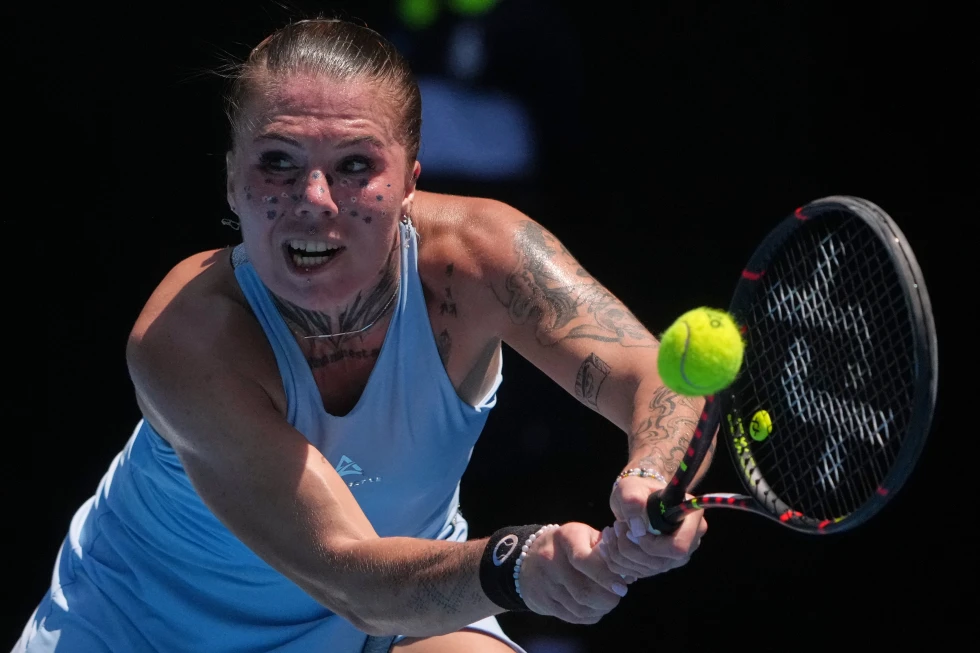
Oleksandra Oliynykova has become one of the more compelling names in women’s tennis because her rise combines rankings progress, unusual shot selection, emotional resilience, and a story that reaches beyond ordinary player profiles. As of late April 2026, official sources list her as a 25-year-old Ukrainian professional with a current singles ranking of No. 70 and a career high of No. 66, which places her firmly inside the conversation about emerging tour-level contenders.
The growing interest around her is easy to understand. Official WTA and Australian Open pages highlight a player who broke into the Top 100 in late 2025, reached the main draw of the Australian Open in 2026, and kept building momentum with strong performances at higher levels of the sport. That combination of visibility, ranking movement, and memorable match play has made her more than a name on a draw sheet.
This article explores her age, background, recent results, ranking story, playing style, and wider significance in the women’s game. Rather than treating her only as a statistics entry, it looks at why tennis fans, casual readers, and search users are increasingly interested in where she has come from, what she has already achieved, and what may come next.
Who She Is
She is a Ukrainian right-handed player born in Kyiv on 3 January 2001. Official profiles from the WTA, Wimbledon, and ITF consistently identify Kyiv as her birthplace, note that she plays right-handed, and describe her as a professional on the women’s circuit who has steadily climbed from lower-level competition toward the WTA spotlight. Those details may seem simple, but they frame the core of her profile for new readers.
What makes her more interesting than a standard bio line is the speed and personality of her rise. The WTA’s career review notes that she spent years on the ITF circuit, collected titles there, then used a breakthrough 2025 season to win three WTA 125 singles titles and make her Top 100 debut. That path gave her credibility, but it also showed patience, volume, and a capacity to turn lower-tier momentum into bigger-stage opportunity.
She also arrives with an identity that feels distinct in the modern game. Official and news coverage around the Australian Open introduced a player whose style is unconventional, whose personality is unapologetically individual, and whose presence can be remembered even after a defeat. In a sport where many profiles sound interchangeable, she already carries a recognizable competitive voice.
Early Life and Personal Background
The official WTA biography states that she was born in Kyiv and now trains there with her main coach, her father Denis. The same profile also notes that her younger brother Nazar plays tennis, which gives her background a family-centered sporting structure rather than the image of a player built only by academies and traveling teams. It suggests a development story rooted in household commitment as much as professional ambition.
Her tennis foundations began early. The ITF profile says she started the sport at age five and lists clay as her preferred surface, details that help explain the patience and defensive instincts often associated with her game. Starting so young matters because it frames her not as a late surprise, but as an athlete who has been accumulating tennis language for most of her life.
Personal background matters even more in her case because recent reporting has shown how closely her life and career intersect with the realities of war in Ukraine. Reuters and AP both reported during the 2026 Australian Open that her father is serving as a soldier, and that this relationship remains a powerful emotional driver in her career. That dimension makes her story feel urgent, human, and unusually grounded in lived circumstances.
Tennis Journey and Breakthrough
For years, her progress was built far from the biggest stadiums. The WTA career review says she played on the ITF circuit from 2017 to 2025 and won ten singles titles and two doubles titles there. That kind of record matters because it shows repetition, durability, and learning through volume, which is often the hidden architecture behind a later breakout on larger stages.
The real turning point came in 2025. According to the WTA, she won her first WTA 125 title in Tolentino, followed it with another title in Tucumán, then captured Colina as well, a sequence that pushed her into the Top 100 for the first time at No. 95 on 24 November 2025. That was not a lucky fortnight. It was a sustained surge built on repeated winning.
Those achievements changed the scale of the conversation around her. Once she was no longer only an ITF grinder, every ranking update and draw placement began to carry more weight. A player who had spent years earning her way through smaller events suddenly became part of the weekly WTA narrative, and that shift is often what turns a rising competitor into a searchable name.
Latest Ranking of Oleksandra Oliynykova
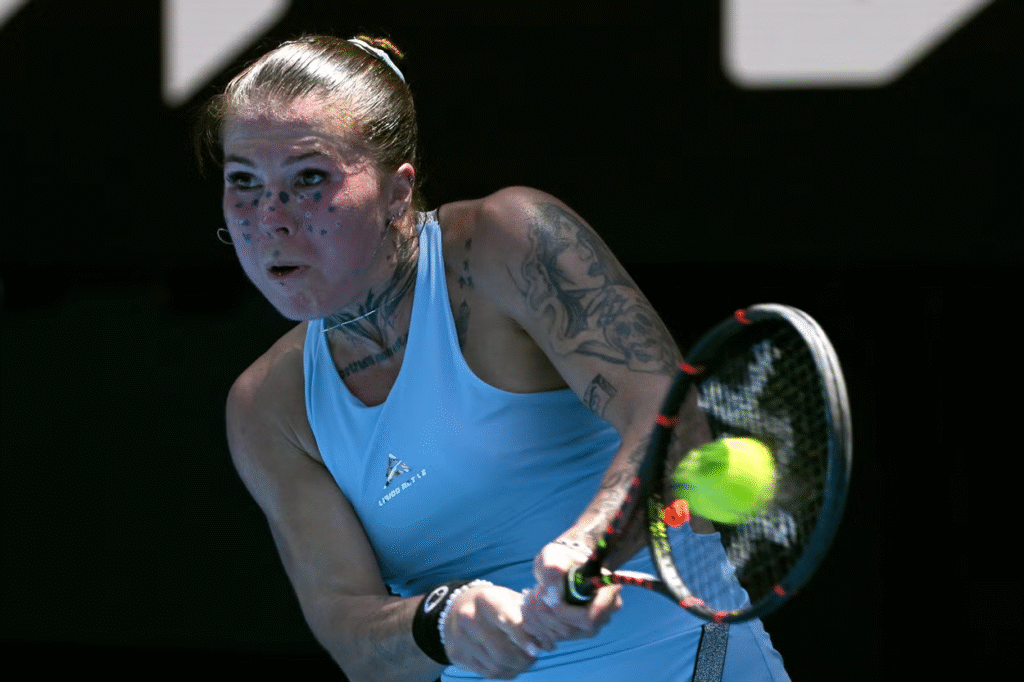
The clearest current ranking snapshot comes from official sources. The WTA profile lists her current singles rank as No. 70, while the ITF overview also shows her at No. 70 and records her career-high singles ranking as No. 66, achieved on 16 March 2026. For readers searching the latest ranking, that is the most reliable headline figure at the time of writing.
Ranking, however, means more than a number beside a surname. A placement around No. 70 suggests a player who has already moved beyond fringe status and now occupies the part of the sport where direct entries, seeded qualifying paths, and realistic tour-level ambitions begin to matter more regularly. It does not guarantee stardom, but it places her inside a serious competitive tier.
That is why Oleksandra Oliynykova stands out in current ranking discussions. Her position is not built on one isolated run, but on a chain of results stretching from WTA 125 success in 2025 to notable tour-level performances in 2026. A ranking becomes more interesting when it reflects upward movement with substance behind it, and her recent trajectory fits that description very well.
Recent Results and Match Story of Oleksandra Oliynykova
Her recent results show both opportunity and challenge. The WTA score page for the 2026 Madrid Open records a first-round loss to Simona Waltert, 7-5, 6-0, a result that may look harsh on paper but also reflects the constant difficulty of sustaining form as ranking pressure and tournament level rise together. On the tour, even short losses can exist inside bigger patterns of growth.
The more encouraging side of her recent form appears in her broader 2026 activity. The WTA profile lists a 9-6 win-loss record for the year and prize money of $137,959, while official match coverage shows a memorable semifinal run in Cluj-Napoca and a Billie Jean King Cup win for Ukraine against Linda Klimovičová. Those results show that her season has contained more than one bright moment.
For readers following current form, the most useful conclusion is that she is no longer simply collecting experience. She is competing in matches that shift perception, challenge seeds, and keep her close to meaningful ranking movement. Recent losses exist, but so do evidence points that she can threaten stronger opponents and build weeks that matter on the main professional circuit.
Career Highlights and Milestones
Her highlights now form a coherent early-career portfolio. Official WTA sources credit her with three WTA 125 singles titles in 2025, specifically Tolentino, Tucumán, and Colina. Those wins were especially important because they were not spread over a long career lull. They arrived in one breakthrough season, turning her from a solid circuit player into a serious mover in the rankings.
Another major milestone came with her Grand Slam main-draw debut at the 2026 Australian Open. The Australian Open profile lists 2026 as her first appearance in the singles main draw there, with a best result of first round, and Reuters noted that it was her main-draw debut above ITF level. Even in defeat, debuts like that reshape a player’s profile and expand audience recognition.
Then came Cluj-Napoca, where she collected the first tour-level wins of her career and reached her first WTA semifinal. WTA match notes show victories over Mayar Sherif, Anna Bondár, and Wang Xinyu before a semifinal loss to Emma Raducanu. That sequence matters because it proved that her rise was not limited to lower-tour clay events. She could also produce against ranked opposition on a WTA stage.
Playing Style and On-Court Identity
The official WTA biography says she likes to play with a defensive style, while ITF lists clay as her preferred surface. Those two details already explain much of her tennis identity. Clay often rewards patience, height, spin, shape, and point construction, and her own match pattern frequently reflects a player comfortable with disrupting rhythm rather than simply trading predictable power.
Recent reporting from Reuters and AP made that style visible to a much wider audience. During her Australian Open loss to Madison Keys, she drew attention for moonballs, lobs, and a deliberately unconventional rhythm that unsettled a reigning champion early in the match. Coverage described her approach as unusual and even “weird” in her own terms, but importantly, it was also effective enough to create real scoreboard pressure.
That gives her a valuable competitive identity. In modern tennis, where so many players are trained toward similar patterns of baseline aggression, disruption can be a weapon in itself. Her game may never look textbook to every viewer, but it can force opponents into discomfort, hesitation, and overhitting. A player does not always need to mirror the dominant style of an era to become dangerous within it.
Grand Slam Experience and Big-Match Exposure
Grand Slam exposure changes how a player is seen, even when the first result is a loss. At the 2026 Australian Open, the official tournament profile recorded her first appearance in the main draw, and Reuters reported that she faced defending champion Madison Keys in that debut. That alone gave her immediate access to a larger audience than years of smaller events could usually provide.
What made the moment memorable was the way she handled it. Reuters’ day-three highlights noted that Keys went 4-0 down before recovering to win 7-6(6), 6-1, while AP emphasized the attention drawn by her individuality, composure, and post-match message about Ukraine. A close first set against a defending major champion can sometimes say more about potential than a routine win against weaker opposition.
Big-match exposure also teaches something practical. It reveals whether a player can bring personality, nerve, and tactical conviction onto a larger stage. In Melbourne, she did exactly that. She did not disappear into the occasion. Instead, she turned the match into a story, and in professional sport that ability to remain visible under brighter lights often becomes part of long-term success.
Stats That Matter
The most useful current statistical snapshot comes from the WTA and Australian Open profiles. They show a current singles ranking of No. 70, a 2026 year-to-date win-loss record of 9-6 on the WTA profile, and prize money of $137,959. These numbers are not just decorative. They help readers see that her season is active, competitive, and already productive at a meaningful professional level.
Career-high context matters just as much. The ITF overview lists a career-high singles ranking of No. 66, achieved on 16 March 2026, and the WTA biography adds her three WTA 125 titles plus ten ITF singles crowns and two ITF doubles titles. Together, those numbers show a player who has already built a winning base rather than relying on hype unsupported by actual silverware.
Another stat worth reading between the lines is experience distribution. Her transition from years on the ITF circuit to deeper runs in WTA events means that the quality of her matches has been increasing, not just the quantity. When ranking, title count, and tour-level breakthroughs all improve in the same period, the statistics stop being isolated facts and start telling a development story.
Media Attention and Public Image
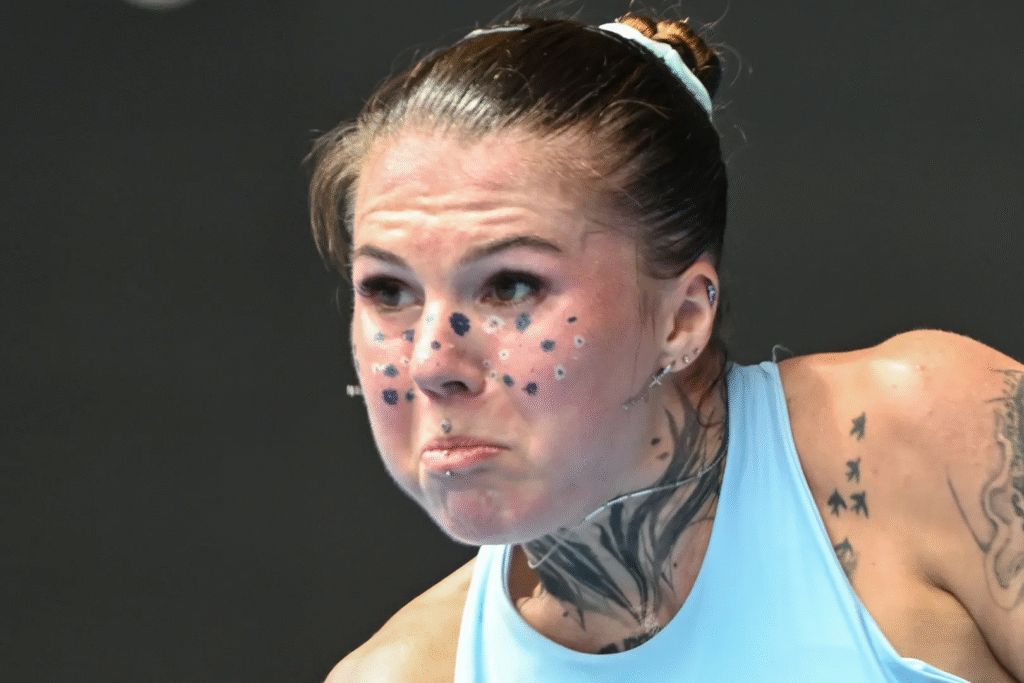
The attention around her has grown because she is not merely another rising ranking. Reuters and AP coverage from the Australian Open focused on a player who combined performance with personality, unusual aesthetics, and emotional candor. Temporary facial tattoos, a memorable on-court style, and heartfelt references to her father and country gave the media a narrative richer than a conventional first-round match report.
Public attention also increased because her story felt authentic rather than manufactured. Reuters reported that she had experienced a drone explosion near her home before traveling to Australia, while AP described how she used her post-match appearance to draw attention to the suffering of Ukrainian women and children within the rules of the event. Those details gave her visibility rooted in reality, not branding theater.
That public image may ultimately work in her favor because it creates emotional memory. Tennis fans can forget a score quickly, but they tend to remember players who bring a clear human dimension to the court. She already has that quality. The challenge now is to pair the visibility with enough consistent results that the media story and the sporting story keep reinforcing each other.
Why Her Story Resonates
Some players attract attention because they win big titles early. Others connect because their journey feels larger than the draw itself. Her story resonates because it combines competitive ambition with personal strain, national identity, family sacrifice, and a refusal to flatten herself into a safe version of a modern tennis professional. That gives her profile emotional texture even before the biggest career achievements arrive.
There is also something refreshing about the way she plays and speaks. By embracing an unconventional style instead of apologizing for it, she offers a reminder that individuality still has room in elite sport. Her Melbourne performance suggested that she is willing to risk looking different if it means playing honestly to her strengths, and that kind of conviction often draws support from neutral audiences.
Beyond tennis mechanics, she represents persistence. The WTA’s career review and official match notes show a player who climbed through years of lower-tier work, then translated that base into WTA 125 titles, a Top 100 debut, and tour-level breakthroughs. Resonance often comes from timing, and right now her story sits at that compelling point where hardship, talent, and momentum are all visible together.
What Could Be Next for Oleksandra Oliynykova?
The next phase of her career will likely depend on how well she converts breakthrough moments into routine main-draw competitiveness. With a current ranking around No. 70 and a recent career high of No. 66, she is already near the threshold where steady WTA results could push her toward even better seeding situations, stronger scheduling leverage, and more direct access to major events.
The strongest evidence for future growth is the variety in her recent achievements. She has won at WTA 125 level, reached a WTA semifinal in Cluj-Napoca, debuted in a Grand Slam main draw, and contributed a win in Billie Jean King Cup competition. Players who can show progress in different formats and settings often have a more stable platform for further improvement than players whose rise depends on one hot tournament.
Oleksandra Oliynykova now enters the stage of a career where consistency becomes the central question. The talent to disrupt opponents is visible, the ranking base is real, and the story has already reached a wider audience. If she continues to build physically, defend ranking points wisely, and turn her distinct style into repeatable results, she has every chance to move from intriguing name to established tour presence.
Conclusion
She is already more than an interesting outsider. Official records show a player with a Top 100 breakthrough, three WTA 125 titles, a career-high ranking of No. 66, and a current standing around No. 70. Recent events have also shown her ability to produce memorable performances on bigger stages, whether through tactical originality, emotional strength, or pure competitive nerve.
For readers searching age, ranking, results, and biography, the most complete answer is that she is a rising Ukrainian professional whose career is now moving from promise toward proof. The rankings matter, the results matter, and the story matters too. That combination is why interest around her continues to grow, and why her next months on tour will be worth watching closely.
FAQs
Who is Oleksandra Oliynykova?
She is a Ukrainian professional tennis player born in Kyiv on 3 January 2001. Official profiles describe her as a right-handed player who trains in Kyiv with her father Denis as coach, prefers clay, and began playing tennis at age five. Her rise accelerated through ITF success, three WTA 125 titles in 2025, and deeper tour-level visibility in 2026.
How old is she?
Official tennis profiles list her as 25 years old, with a birth date of 3 January 2001. That age matters in a tennis context because she is no longer a junior prospect being judged on raw potential alone. She is now in the stage of a professional career where ranking growth, tour-level wins, and consistency can quickly reshape long-term expectations.
What is Oleksandra Oliynykova’s latest ranking?
The most reliable current official snapshot available in the sources used here places her at No. 70 in singles, with the ITF also recording a career-high ranking of No. 66 achieved on 16 March 2026. Rankings can change week by week, so readers should treat this article as a late-April 2026 profile rather than a permanent ranking record.
What are her latest notable results?
Among her recent headline results are a first-round loss to Simona Waltert at the 2026 Madrid Open, a semifinal run in Cluj-Napoca after wins over Mayar Sherif, Anna Bondár, and Wang Xinyu, and a Billie Jean King Cup victory over Linda Klimovičová. Together, those matches show that her season includes both setbacks and important proof of competitive growth.
What is her playing style?
Official and news sources describe a player with defensive instincts, clay-court comfort, and a willingness to use moonballs, lobs, height, and disruption instead of settling into straight power exchanges. That style can look unusual against modern baseline hitters, but it also gives her a strategic identity that can break opponents’ rhythm and force uncomfortable adjustments.
Has she played in a Grand Slam main draw?
Yes. The Australian Open profile confirms that 2026 was her first main-draw singles appearance there, with a best result of first round. Reuters reported that she made that debut against defending champion Madison Keys and pushed the opening set to a tiebreak after building an early lead, which made the loss more encouraging than routine.
Why has she attracted so much attention recently?
Interest around her grew because performance and personality arrived together. Her Australian Open debut introduced a wider audience to her unconventional game, emotional connection to her father’s military service, and public expression of concern for Ukraine. Combined with a recent Top 100 breakthrough and WTA-level progress, that exposure made her story more compelling than a typical early-round profile.
What could be next in her career?
The most realistic next step is not a dramatic label but greater consistency at WTA level. With a ranking around No. 70, a recent career high of No. 66, and evidence of strong performances in WTA 125, WTA tour, Grand Slam, and team competition, she has positioned herself for another meaningful rise if she can keep turning breakthrough weeks into regular results.
You may also read: Who Can Enter the Aldi Mamia New Parent Fund