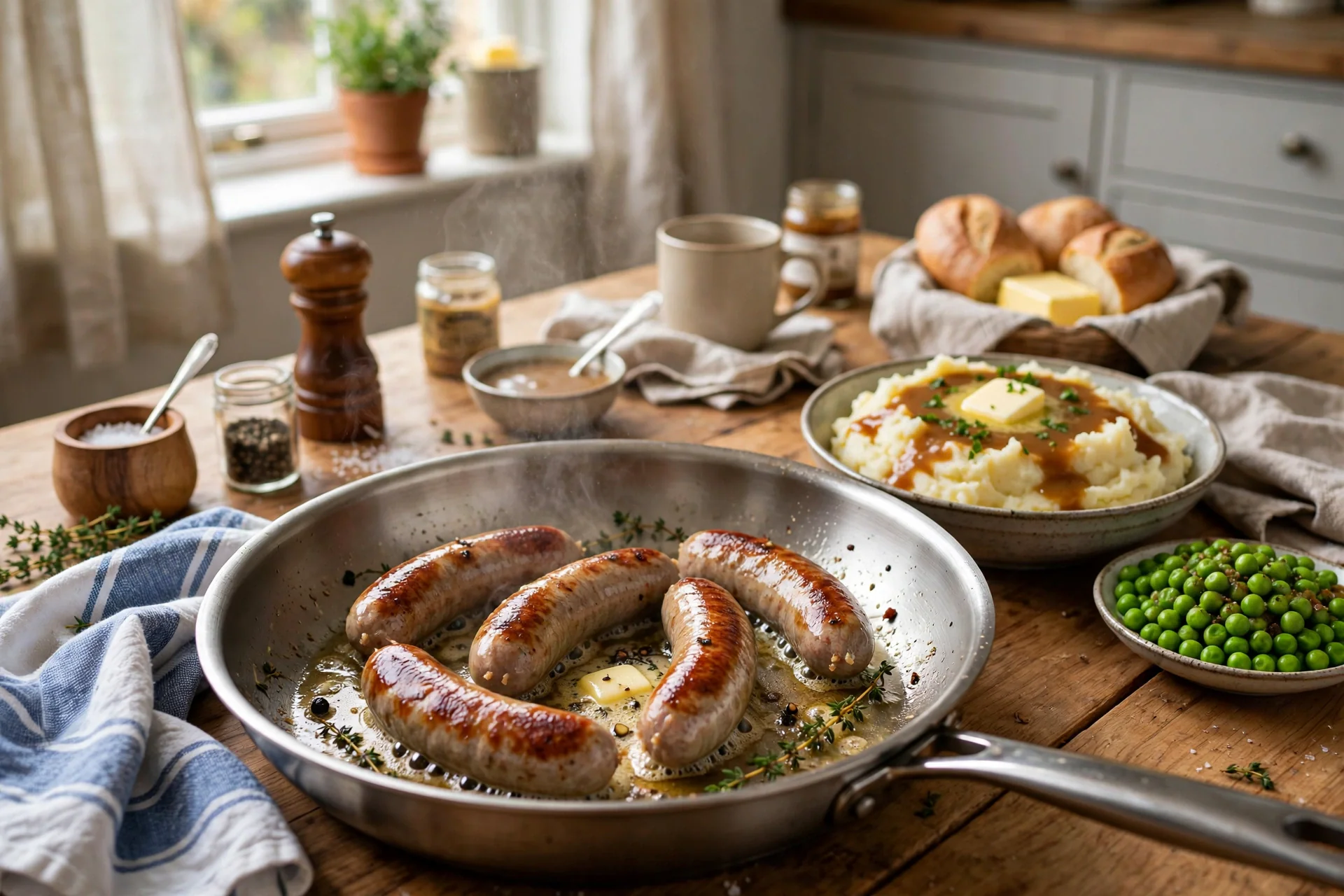
Few food brands feel as woven into everyday British life as this one, and richmond sausages have been part of family breakfasts, Sunday roasts and midweek teas for well over a century. The brand began in 1889 near Liverpool, built around an Irish-style recipe with a distinctive blend of herbs and spices, and it grew from a small family butcher’s business into what it regularly calls the nation’s favourite sausage brand. That long history matters because it explains the familiar, mild and comforting flavour that generations of shoppers recognise instantly from the packet.
Today the range is far wider than the classic pork sausage that made the name famous, covering chilled and frozen pork, chicken sausages and a growing meat-free line designed for flexitarian households. This updated guide explains what the different types actually are, how they compare with premium rivals and supermarket own brands, the best ways to cook them in a pan, oven and air fryer, what the nutrition labels really tell you, and where to buy them across the UK for the best value without wasting money.
What Richmond Sausages Are and Where the Brand Came From
At their core, richmond sausages are an Irish-recipe pork sausage known for a smooth texture, a relatively mild seasoning and skins that cook to a gentle golden colour rather than a coarse, rustic bite. The original recipe dates to 1889, and the brand’s owners say its products are now enjoyed in around a third of UK households, which gives you a sense of the sheer scale involved. They are deliberately an everyday, family-friendly sausage rather than a premium butcher’s product, and judging them fairly means judging them on that promise of consistency and value.
Ownership has changed over the decades, most recently sitting within Pilgrim’s Europe, one of Europe’s largest food companies, but the positioning has stayed remarkably consistent throughout every change at the top. The sausages are sold chilled for fresher cooking and frozen for convenience and stocking up, in thick, thin and skinless formats, and the familiar red packaging is designed to be spotted instantly in a crowded supermarket chiller. For many families the appeal is simple reliability: they cook the same way, taste the same way and please children and adults alike, week after week.
Types and Ranges Explained
The flagship line is the thick pork sausage, sold chilled and frozen, alongside thin pork sausages that cook faster and suit children’s portions, and skinless versions that many people prefer for sausage sandwiches and casseroles. Alongside the classics sits a chicken range, positioned as a lighter alternative with a milder flavour, and a meat-free range made for vegetarian and flexitarian shoppers who still want the familiar Richmond seasoning profile. Understanding which pack you are holding matters, because cooking times, texture and nutrition differ more between these lines than most shoppers realise at the shelf edge.
Newer premium tiers have also appeared, and the brand owner Pilgrim’s Europe launched an Extra Tasty range including Signature Pork and Pork & Caramelised Red Onion, aimed at shoppers who want a step up without leaving a brand they trust. Compared with rivals such as Heck, which leans into higher meat content and bold flavours, Richmond competes on mild family taste, price and availability, while supermarket own brands often undercut it slightly but vary more in quality. None of these choices is automatically best; it depends whether your priority is meat content, flavour intensity, budget or simply a sausage everyone at the table will happily eat.
How to Cook Them Perfectly in a Pan and Oven
For pan frying, cook richmond sausages over a medium heat rather than a fierce one, turning them regularly for around fifteen to eighteen minutes for thick chilled sausages, a little longer from frozen, until they are evenly browned, piping hot throughout and the juices run clear. A small splash of oil helps the skins colour, but avoid pricking them, because that lets moisture escape and dries the centre. Resting them for two minutes before serving keeps them juicy and lets the texture settle, a small step that makes a noticeable difference on the plate.
In the oven, preheat to around 190°C for fan ovens or 200°C conventional, place the sausages on a tray with a little space between each one, and cook for roughly twenty-five to thirty minutes, turning halfway so every side colours evenly in the heat. Oven cooking is the most hands-off method and the easiest way to cook a full pack for a family breakfast or a tray of bangers and mash. Whichever method you choose, always check the exact times on your own packet, because pack sizes, thicknesses and chilled or frozen starting points genuinely change the safe cooking time.
How to Cook in an Air Fryer
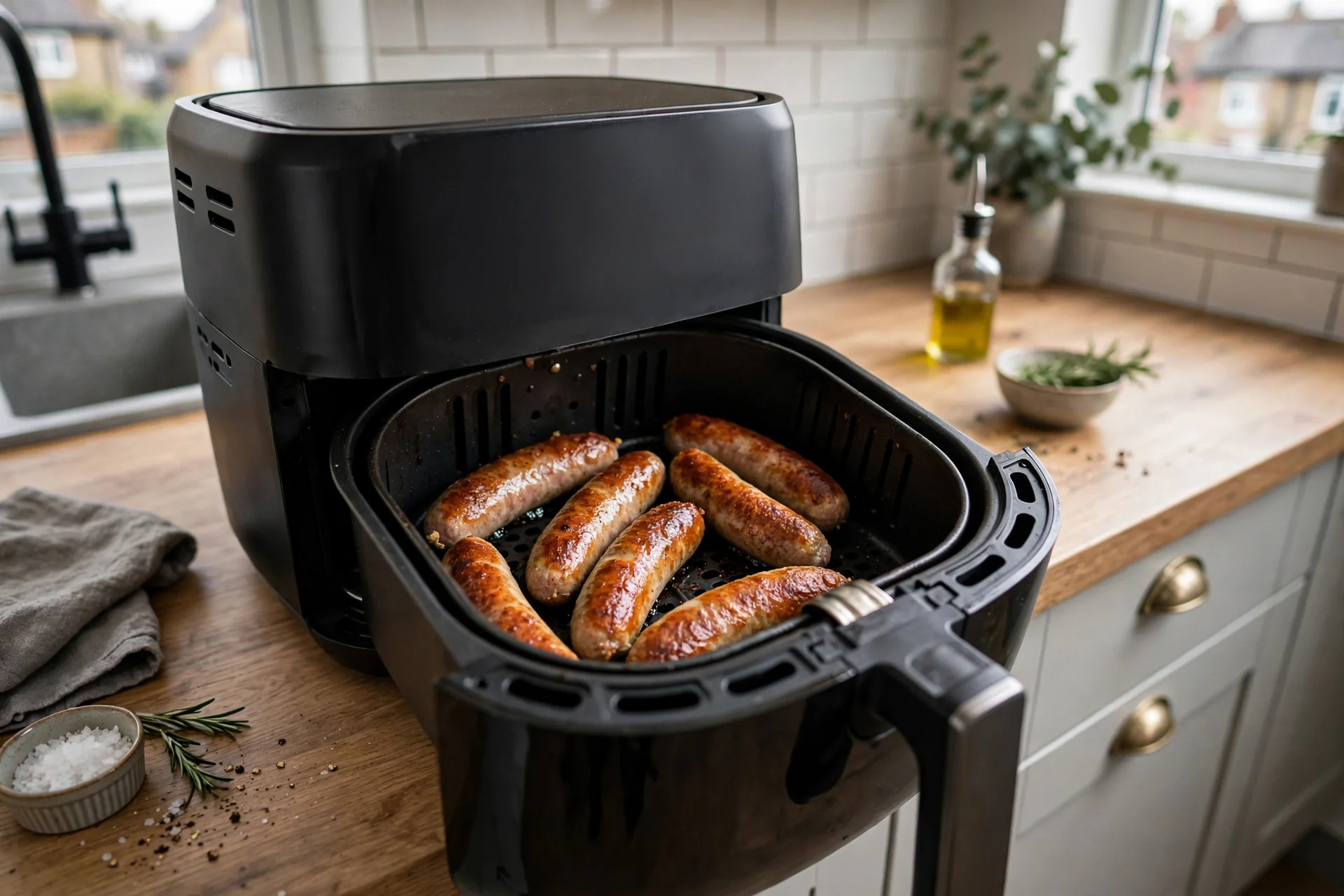
The air fryer has become the method many households reach for first, and richmond sausages suit it well because the circulating hot air browns the skins evenly without needing the hob or a tray of oil. As a practical starting point, cook thick sausages at around 180°C for twelve to fifteen minutes, shaking the basket or turning them halfway, and add a few extra minutes from frozen. Always leave a little space between each sausage, because overcrowding traps steam, softens the skins and stops that appealing colour developing properly across the whole batch.
Times vary between air fryer models more than packet instructions sometimes admit, so treat the first attempt with any new machine as a test run and check that the centre is steaming hot before serving anyone at the table. Thin and skinless sausages need less time than thick ones, while meat-free versions can dry out if left too long, so check them a couple of minutes early. Once you know your own machine’s sweet spot, air frying delivers the crispiest skins with the least washing up, which is exactly why it has overtaken the grill in so many British kitchens.
Popular Meals and Serving Ideas
Bangers and mash remains the definitive serving suggestion, with richmond sausages resting on buttery mashed potato under a rich onion gravy, but the range earns its place in far more meals than that one classic plate. A full English breakfast is the obvious second home, alongside eggs, beans, bacon and toast, while sausage sandwiches, toad in the hole, sausage casseroles and pasta bakes all make economical family dinners from a single pack. Cutting cooked sausages into a hearty bean stew or a tomato sauce is an easy way to stretch them further on busy weeknights.
Seasonal cooking gives the brand another life beyond weeknight staples, from bonfire night hot dogs and sausage rolls for parties to chopped sausage stirred through winter soups and traybakes with root vegetables and apples. The meat-free versions slot into the same meals, which is genuinely useful for mixed households cooking one dinner for meat eaters and vegetarians together rather than preparing two separate dishes. Keeping a frozen pack in reserve is the habit most loyal buyers describe: it turns an almost empty fridge into a proper, comforting meal with very little planning or expense.
Nutrition, Ingredients and Honest Considerations
Honesty matters here, because richmond sausages are a processed meat product and should be enjoyed as part of a balanced diet rather than presented as a health food in this guide or anywhere else. The classic thick pork recipe has historically listed pork at around forty-two percent, with rusk, water, pork fat and seasoning making up much of the rest, which is lower than premium butcher’s sausages and explains both the smooth texture and the lower price. Salt and saturated fat are the other figures to check on your own pack, because recipes and pack sizes are updated over time.
That lower meat content is exactly the trade-off shoppers should understand before choosing between this brand, a premium rival and a supermarket finest range for their family. If meat percentage is your top priority, pay more for a higher-content sausage; if value, mild flavour and a texture children accept are the priority, the classic range makes sense. The meat-free and chicken options offer different nutrition profiles again, often lower in saturated fat, but they still deserve the same label check. Always read the allergen information too, as rusk means wheat and gluten appear in the standard recipes.
Where to Buy in the UK and Getting Best Value
You will find the full range in Tesco, ASDA, Sainsbury’s and Aldi, as the old guide correctly noted, alongside Morrisons, Iceland, Co-op and most large convenience stores, with chilled packs near the fresh meat aisle and frozen packs in the freezer cabinets nearby. Multibuy offers and loyalty pricing rotate constantly between supermarkets, so the cheapest pack this week is rarely the cheapest next week, and comparing the price per kilogram rather than the headline pack price is the habit that saves real money over a year of family shopping and regular weekend breakfasts.
Buying frozen in larger packs usually gives the lowest unit price and the longest storage life, while chilled packs suit shoppers who plan to cook within a few days and prefer that texture for a special breakfast. Check use-by dates carefully on reduced packs, freeze chilled sausages on the day of purchase if your plans change, and defrost them thoroughly in the fridge before cooking. However you buy them, storing them correctly, cooking them thoroughly and serving them as part of a varied, balanced family diet is what turns a century-old favourite into a sensible modern staple.
Conclusion
This brand has survived for well over a century not by being the most premium sausage on the shelf, but by being the one families know, can afford and can cook without thinking twice on a busy evening. Its mild Irish-recipe flavour, smooth texture and huge availability in chilled, frozen, chicken and meat-free forms explain that loyalty far better than any advertising slogan. Judged on its own terms of value, consistency and family appeal, it remains a sensible supermarket choice, provided you understand the lower meat content and check the current label for nutrition and allergens each time you buy.
Cook them gently in a pan, hands-off in the oven or crisply in an air fryer, serve them in everything from bangers and mash to casseroles and breakfasts, and buy them on offer in the supermarket where the unit price is lowest that week. Do that, and you will get exactly what generations of British shoppers have valued from this brand: a reliable, comforting and affordable meal. Treat them as an occasional, enjoyable part of a balanced diet rather than an everyday health choice, and there is very little to argue with in a pack that has earned its place in British freezers for generations.
Frequently Asked Questions
Are richmond sausages British?
Yes, the brand began in 1889 near Liverpool with an Irish-style recipe, grew into one of the UK’s best-known sausage brands, and is now owned by Pilgrim’s Europe. Its products are sold across British and Irish supermarkets in chilled and frozen ranges covering pork, chicken and meat-free recipes. When people call it a British favourite, they mean its long place in UK shopping baskets and family meals, a position built over more than one hundred and thirty years rather than a short-lived marketing campaign or a recent supermarket trend.
What meat content do they have?
The classic thick pork recipe has historically been listed at around forty-two percent pork, with rusk, water, fat and seasoning making up the remainder, which is lower than premium butcher’s sausages. That recipe explains the smooth texture, mild flavour and accessible price that define the brand for families. Recipes can change, however, and different lines in the range have different compositions, so always check the ingredients and nutrition panel on the exact pack in your hand rather than relying on figures quoted in any online guide, including this one.
Can you cook them from frozen?
Yes, the frozen range is designed to be cooked from frozen using the pan, oven or air fryer timings printed on the packet, adding several minutes compared with chilled sausages. The important rules are to spread them out, turn them during cooking and make sure they are piping hot throughout before serving. If you have frozen chilled sausages at home yourself, defrost them thoroughly in the fridge first unless the packet specifically gives from-frozen instructions, because home-frozen and factory-frozen products are not always labelled the same way for safe cooking.
Are the meat-free sausages suitable for vegans?
The brand sells a meat-free range aimed at vegetarian and flexitarian shoppers, but suitability for vegans depends on the exact recipe, which can include ingredients or production details that vary between products and over time. The safest approach is to check the packaging for a clear vegan label and the full allergen list before buying, rather than assuming every meat-free product is automatically vegan. Many mixed households value the range because it lets everyone share the same meal, from bangers and mash to a full cooked breakfast together.
How long do they take in an air fryer?
As a practical guide, thick sausages usually take around twelve to fifteen minutes at about 180°C in an air fryer, turned or shaken halfway, with a few extra minutes needed from frozen and less time for thin sausages. Models vary considerably in power and basket size, so check early on your first attempt and confirm the sausages are steaming hot in the centre. Once you have your own machine’s timing settled, air frying gives evenly browned skins, very little mess and a reliably quick route to breakfast or dinner.
Where is the cheapest place to buy them?
There is no permanently cheapest supermarket, because offers, loyalty prices and multibuys rotate between Tesco, ASDA, Sainsbury’s, Aldi and the other major stores throughout the year. Frozen multipacks usually offer the lowest price per kilogram, while chilled packs are frequently promoted around weekends and seasonal events. Compare the unit price on the shelf edge rather than the headline pack price, buy frozen when a genuine offer appears, and avoid paying full price for a large chilled pack that your household will not use before its date.
Readers who think carefully about food labels may also enjoy our complete guide to McDonald’s allergens in the UK, which explains the fourteen major allergens clearly.
For more practical UK food guides written for real families, browse our full McDonald’s allergens UK breakdown and shop with better information.