Introduction
A tidy lawn can completely change the look of a garden, and for many UK households a petrol mower remains the trusted tool for the job. Petrol models are valued for their strong cutting power, longer running time, and ability to tackle thicker grass without relying on cables or charging. They are especially useful for medium and larger gardens where freedom of movement matters.
For first-time users, the controls can seem confusing. Primer bulbs, choke levers, pull cords, and safety bars may look complicated until you know what each part does. The good news is that learning how to start a petrol lawnmower is straightforward when you follow the right order. With a few simple checks and the correct technique, you can get mowing confidently and safely.
Understanding How a Petrol Lawnmower Works
A petrol lawnmower runs using a compact engine that burns fuel to create power. Petrol mixes with air inside the engine and is ignited by the spark plug. That controlled explosion creates energy, which turns the blade and, on some models, drives the wheels forward. This is why petrol mowers often feel more powerful than smaller electric alternatives.
Most machines share the same essential parts even if the design looks different. You may see a fuel tank, oil cap, air filter, spark plug, primer bulb, throttle lever, choke setting, safety handle, and starter cord. Once you understand these basic components, the process of how to start a petrol lawnmower becomes much less intimidating and far easier to remember each time.
Safety Checks Before You Start
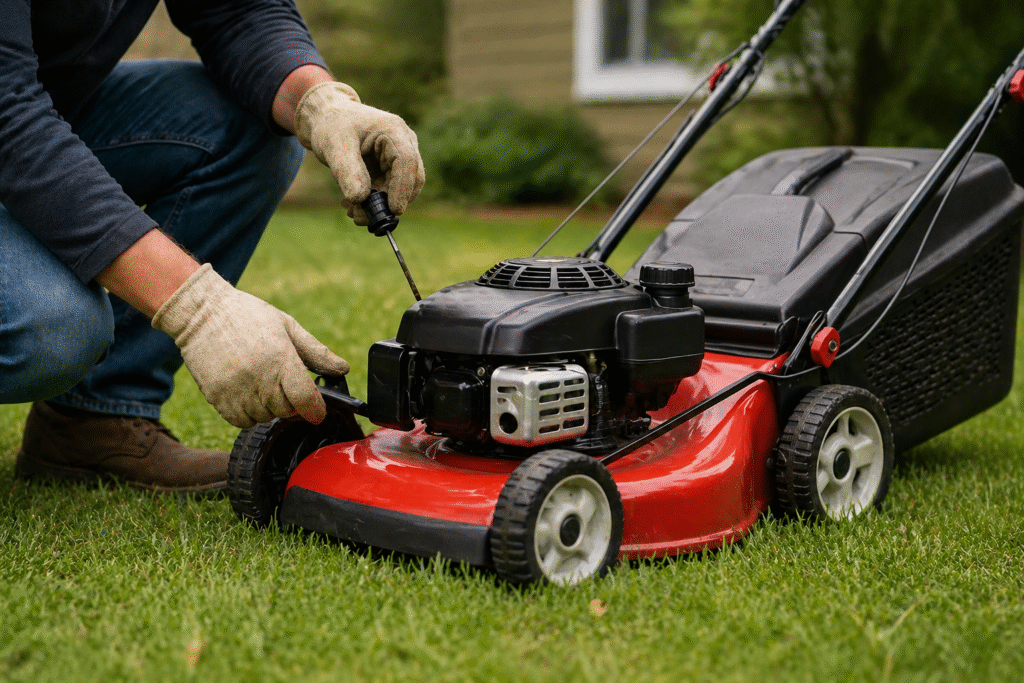
Before starting the engine, always inspect the lawn and remove anything that could become dangerous debris. Stones, branches, toys, or hidden tools can be thrown at speed if struck by the blade. Taking one minute to clear the area protects windows, vehicles, pets, and anyone nearby. Good preparation often prevents accidents before they happen.
Next, place the mower on flat ground and check the fuel and oil levels. Fresh petrol gives better starting performance, while low oil can damage the engine quickly. Make sure the spark plug lead is attached properly and wear sturdy shoes with grip. Avoid sandals or loose clothing. Safe habits are an important part of learning how to start a petrol lawnmower properly.
How to Start a Petrol Lawnmower
Begin by pressing the primer bulb if your mower has one. This small rubber button sends fuel into the carburettor to help the engine fire more easily. Most machines need three to five presses, though the exact number can vary. Then move the choke or throttle to the start position if your mower uses manual controls.
Stand behind the handle and pull the safety bar firmly against the main handle. While holding it in place, grip the starter cord and pull until you feel resistance, then give a strong and smooth pull. Do not yank wildly. If the engine does not start immediately, repeat the process. Once running, return the choke to normal mode as the engine warms.
How to Start Different Types of Petrol Mowers
Traditional pull-start mowers are still common across the UK and are often the simplest to maintain. They rely on the user pulling a recoil cord to turn the engine over. With the correct technique, many start in one or two pulls. A firm, steady pull is usually better than a rushed or weak movement.
Some newer petrol mowers use electric start systems with a key or push button. These models reduce physical effort and can be helpful for older users or anyone with limited mobility. There are also auto-choke designs that adjust settings automatically. Although controls vary, the same basic principles apply when learning how to start a petrol lawnmower of any type.
Common Reasons a Petrol Lawnmower Will Not Start
If your mower refuses to start, begin with the simplest possibilities. Check the fuel tank first, as empty tanks are surprisingly common. Old petrol is another frequent problem because fuel can go stale after storage and lose its effectiveness. Replacing old fuel with fresh petrol often solves the issue faster than people expect.
Other causes include a dirty spark plug, clogged air filter, flooded engine, or grass packed tightly around the blade. If you smell strong petrol after repeated attempts, stop and wait a short while before trying again. If the mower still will not run, a professional service may be needed to diagnose deeper engine or carburettor faults.
Tips to Make Starting Easier Every Time
Regular maintenance is the easiest way to improve reliability. After each mow, brush away grass build-up from the deck and wheels. Keep vents clear so the engine can breathe properly. Change the oil when recommended and replace the spark plug when it becomes worn. A cared-for mower usually starts faster and runs more smoothly.
Storage also makes a big difference. Keep the mower in a dry shed or garage where moisture cannot cause rust or damage. If storing it for winter, consider draining old fuel or using a fuel stabiliser. These small habits reduce springtime frustration and make how to start a petrol lawnmower far easier when the growing season returns.
Safe Use While the Engine Is Running
Once the mower is running, keep both hands on the handle and guide it at a steady pace. Avoid rushing, especially on uneven ground or near borders. Stay alert for hidden objects in the grass and never place hands or feet near the deck while the blade is spinning. Respecting the machine helps prevent injuries.
Never add petrol while the engine is hot, as fuel vapours can ignite. If you need to clear a blockage or inspect the blade area, switch the engine off fully and wait for all moving parts to stop. Keep children and pets at a safe distance while mowing so the area stays controlled and predictable.
Why Petrol Mowers Remain Popular in the UK
Despite the rise of battery tools, petrol lawnmowers still have a loyal following. They offer dependable power for longer sessions and cope well with thick or damp grass, which is useful during the British growing season. Many gardeners also appreciate that refuelling takes seconds rather than waiting for a battery to recharge.
Petrol mowers are also available in a wide range of sizes and prices, making them suitable for many homes. From compact push models to self-propelled machines for larger lawns, there is plenty of choice. For many households, learning how to start a petrol lawnmower is still a practical skill worth having.
Conclusion
Learning how to start a petrol lawnmower is not difficult once you know the correct routine. Begin with safety checks, confirm fuel and oil levels, set the controls properly, and use a confident pull on the starter cord. Those simple steps solve most beginner worries and help the mower start reliably.
The real key is consistency and care. Maintain the machine, store it properly, and deal with small faults early before they grow into bigger problems. With a little practice, starting your mower will feel natural, and keeping your lawn neat will become a much easier and more satisfying task.
FAQs
How many times should I press the primer bulb?
Most petrol mowers need three to five presses, but always check the manual for your specific model. Too much priming can flood the engine.
Can old petrol stop a mower from starting?
Yes, stale petrol is a common cause of starting trouble. Fresh fuel is always the better option for reliable performance.
Why is my starter cord hard to pull?
Grass wrapped around the blade or internal resistance may be the cause. Turn the mower off and inspect it safely.
Do all petrol mowers have a choke?
No, many modern models use automatic choke systems, so there may be no manual lever to adjust.
How often should I service my mower?
For most home users, an annual service is a sensible choice to keep the machine reliable and efficient.
You may also read: Custom Sizes or Ready-Made Covers