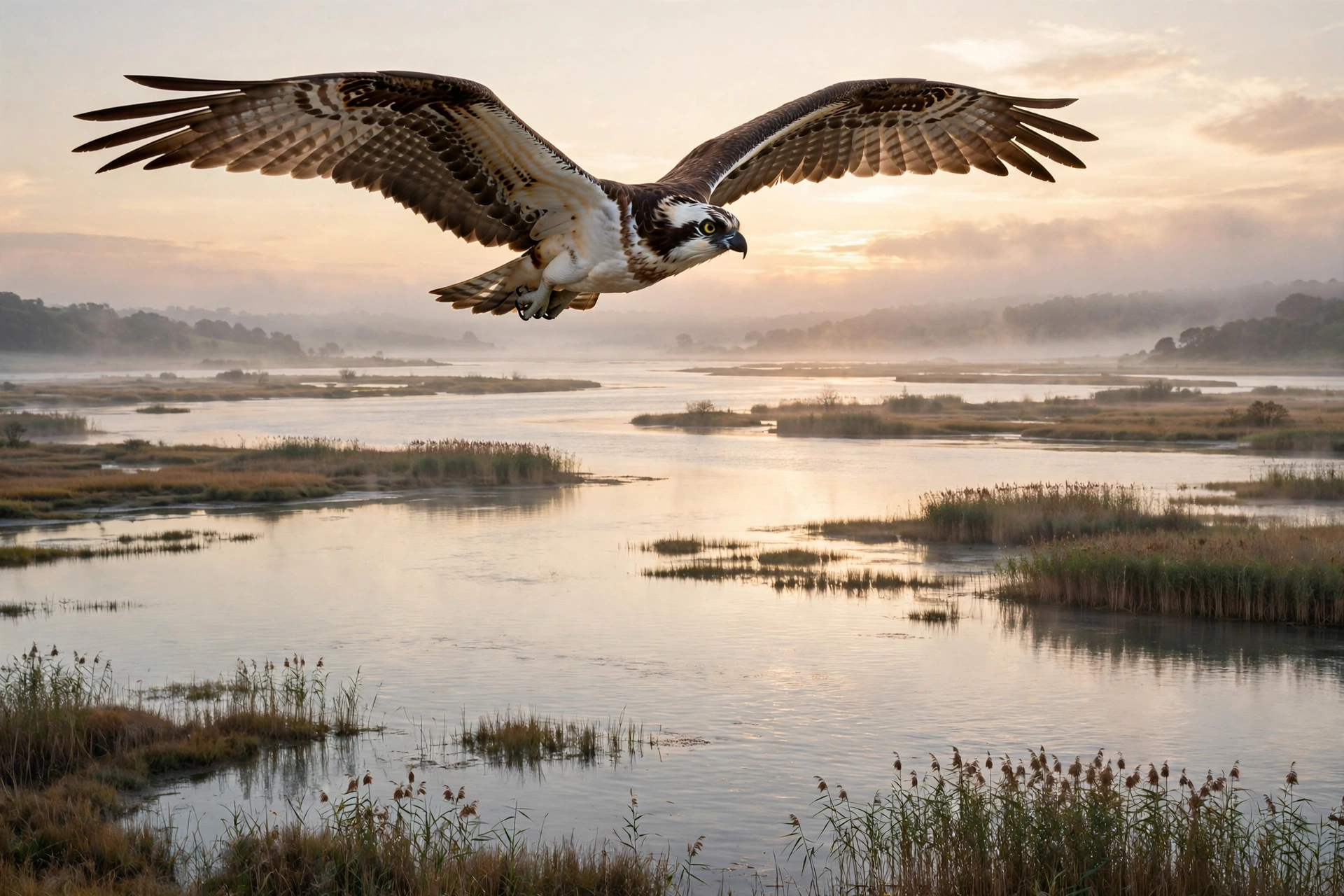
Poole Osprey Webcam: How to Watch the Poole Harbour Ospreys Live
The Poole osprey webcam is one of the best wildlife webcams in the UK, because it offers a live view of a pair of ospreys that have made history, raising chicks on the south coast of England for the first time in more than 180 years. The webcam is run by Birds of Poole Harbour, the charity behind the Poole Harbour Osprey Translocation Project, and it shows the nest of the breeding pair known as CJ7 and 022, at a secluded site in the Piddle Valley near Wareham in Dorset. The cameras went live each spring when the birds returned from West Africa, and thousands of people watched the 2026 season unfold online, from the pair’s reunion in late March to the fledging of four healthy chicks in July. This guide explains what the Poole osprey webcam is, how to watch it, what to expect in each part of the season, and how the reintroduction project that made it possible works.
What the Poole Osprey Webcam Is
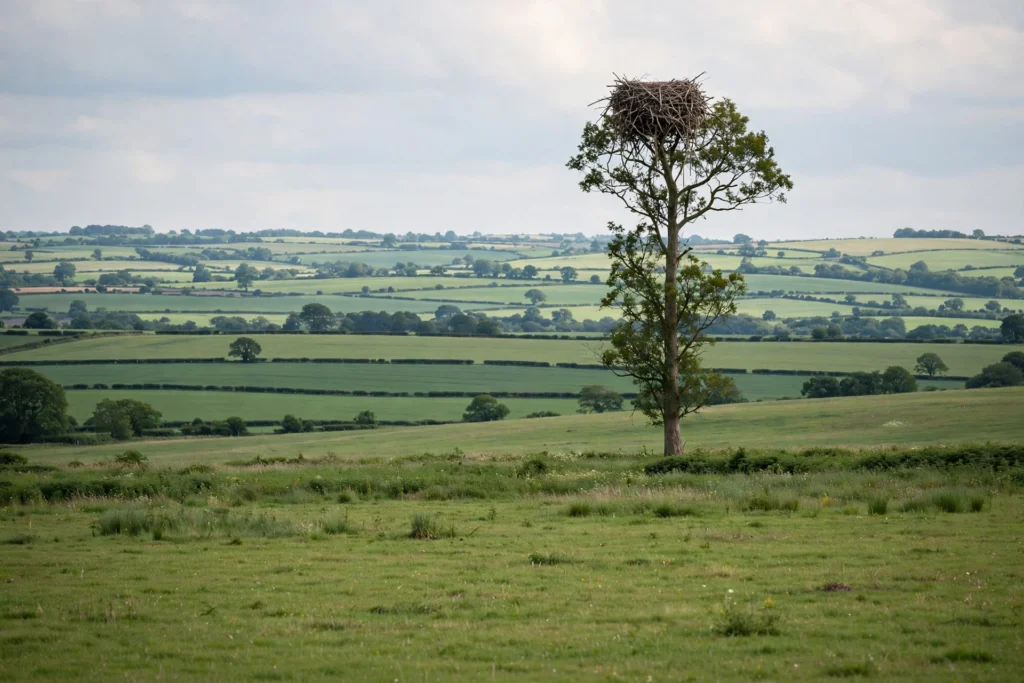
The Poole osprey webcam is a livestream of the osprey nest at Careys Secret Garden in the Piddle Valley, near Wareham in Dorset, and it is operated by Birds of Poole Harbour as part of the Poole Harbour Osprey Translocation Project. The webcam setup includes two cameras, a landscape view camera that shows the nest and its surroundings, and an aerial view camera that gives a closer look at the nest itself, and both cameras stream live during the breeding season. The nest belongs to the breeding pair CJ7, the female, and 022, the male, who have bred at the site since 2022, and the webcam allows the public to watch their season unfold, from their return in spring, through egg-laying and incubation, to hatching and fledging. The location of the nest is publicly known, but it remains a highly sensitive and protected private site, and the public are asked not to visit it without booking a guided tour, because disturbance can harm the birds. The webcam is therefore the best way to see the ospreys, and it is free to watch on the Birds of Poole Harbour website. The project also runs a second nest site, known as Nest Site 2, at an undisclosed location for the safety of the birds and at the request of the landowner, which does not have a live webcam, although footage from its remote cameras is shared on the project’s website and social media.
CJ7 and 022: The Breeding Pair
CJ7 and 022 are the two ospreys at the heart of the Poole Harbour story, and they are the first pair to breed on the south coast of England for more than 180 years. CJ7 is the female, and 022 is the male, and their names come from the rings on their legs, which are used to identify individual birds, with CJ7 being a female who was translocated to Poole Harbour as part of the reintroduction project, and 022 being a male who was also part of the project. The pair first bred in 2022, raising young for the first time, and they have bred again in 2023, 2024, 2025 and 2026, producing four healthy chicks in each of the last three years, which is a remarkable record for a reintroduced population. In 2026, the pair first met at the nest on 26 March, after returning from their wintering grounds in West Africa, and they went on to raise four chicks, with the first chick fledging at 16:01 BST on 14 July, completing several circuits before landing safely on the camera perch. The juvenile, ringed 6T6, remained on the perch for several hours following its first flight, and the fledging was the latest success for a project that began in 2017. CJ7 and 022 are now well known to the thousands of people who watch the webcam, and their annual return is one of the most anticipated events in the UK birdwatching calendar.
The Poole Harbour Osprey Project: How It Started
The Poole Harbour Osprey Translocation Project was set up in 2017 to restore a breeding population of ospreys to the south coast of England, and it is led by Birds of Poole Harbour and the Roy Dennis Wildlife Foundation. Ospreys had not bred on the south coast for more than 180 years, having been driven to extinction by persecution and habitat loss, and the project aimed to bring them back by translocating young birds from Scotland and releasing them at Poole Harbour, where they would imprint on the area and return to breed. The project involved building artificial nest platforms, installing motion-sensitive cameras and livestream webcams, and running engagement events to enthuse the public about the birds, and it has been funded by donations, including support from the Benefact Group for the webcam equipment. The first success came in 2022, when CJ7 and 022 bred and raised young for the first time, and the project now has two pairs breeding in the south of England, with a second pair at Nest Site 2 also raising chicks. In 2026, the project had a record season, with seven osprey chicks fledged from Poole Harbour-linked nests, and sixteen chicks in total linked to the project, which is a remarkable achievement for a reintroduction that began less than a decade ago. The project is ongoing, with new nest platforms being built and maintained, and the team is hoping that more pairs will set up in the near future, as young birds return to breed.
How to Watch the Poole Osprey Webcam
Watching the Poole osprey webcam is straightforward, and it is free, although the cameras are seasonal, which means they are only live during the breeding season, roughly from March to September. The webcam can be watched on the Birds of Poole Harbour website, on the osprey webcams page, which carries both the landscape view camera and the aerial view camera, and the streams are also available on YouTube, where the landscape view is embedded. To watch, go to the Birds of Poole Harbour website and navigate to the osprey webcams page, or search for the Birds of Poole Harbour osprey webcam on YouTube, and the live stream should start automatically. The best time to watch is during the day, when the birds are active, and the most exciting times are the return in late March, the egg-laying in April, the hatching in May and June, and the fledging in July, although the exact dates vary from year to year. Outside the breeding season, the cameras are offline, because the ospreys are away in West Africa for the winter, and the website will carry updates about the project and about the next season. The webcam is a live stream, not a recording, so what you see is what is happening at the nest at that moment, and the birds may not always be visible, because they spend time away from the nest fishing or perching elsewhere.
What You Can See on the Poole Osprey Webcam
What you can see on the Poole osprey webcam depends on the time of year, because the ospreys’ behaviour changes through the season, and the nest is a different place in March, when the birds are returning, from July, when the chicks are fledging. In late March, you can see the pair reuniting at the nest, with the male bringing fish and the female arranging the nest, and the first meeting of the season is a moment that thousands of people watch for. In April, you can see the female laying eggs, usually three or four, and then incubating them, with the male bringing fish and taking turns on the nest, and the incubation period lasts for around five to six weeks. In May and June, you can see the chicks hatching, and then growing rapidly, with the parents bringing fish several times a day and the chicks begging loudly for food, and the nest becomes a busy and noisy place. In July, you can see the chicks exercising their wings, branching, which is when they hop onto nearby branches, and then fledging, which is their first flight, and the moment of fledging is the most exciting event of the season. After fledging, the young birds continue to return to the nest for food, and they can be seen perching on the camera perch, before they migrate to West Africa in August and September, and the nest falls silent until the following spring.
The 2026 Osprey Season: A Record Year
The 2026 osprey season at Poole Harbour was a record year, and it is worth describing in detail, because it shows how far the project has come since it began in 2017. The season began on 26 March 2026, when CJ7 and 022 first met at the Carey nest, after returning from West Africa, and the pair went on to raise four healthy chicks, for the third year running. The first chick, ringed 6T6, fledged at 16:01 BST on 14 July, completing several circuits before landing safely on the camera perch, where it remained for several hours, and the fledging was reported by BBC News and by the Birds of Poole Harbour sightings record. The second nest site, Nest Site 2, was also successful, raising three healthy chicks, all of which are thought to be male, and the total for the season was seven osprey chicks fledged in the south of England, and sixteen chicks in total linked to the Poole Harbour project. Thousands of people watched the Carey nest live webcam during the season, and more than 1,500 people visited Careys Secret Garden to see the nesting birds in person on the project’s Osprey Tours. The season was described by Birds of Poole Harbour as phenomenally successful, and it was a testament to the work of the project team, the volunteers, and the donors who fund the webcams, the nest platforms and the monitoring.
Visiting the Poole Osprey Nest in Person
Yes, you can visit the Poole osprey nest in person, but only through the project’s guided Osprey Tours at Careys Secret Garden, and you must pre-book, because the nest is at a highly sensitive and protected private site. The tours run during the breeding season, and they give visitors access to a viewing platform that is positioned 350 metres from the nest, which allows them to see the birds without approaching the sensitive nest site or disturbing them. In 2026, more than 1,500 people attended the Osprey Tours, and the tours are popular, so early booking is recommended. The public are asked not to turn up at Careys Secret Garden without booking, in order to view the birds, because unbooked visits risk disturbing the nest, and access to the viewing platform is via the tour only and is not available to standard garden visitors. Ospreys are a Schedule 1 species, which means they are protected by law in the UK, and it is an offence to disturb them at the nest, so the restrictions are there for the birds’ protection, not for convenience. If you cannot attend a tour, the webcam is the best alternative, because it gives a closer view than the viewing platform, and it can be watched from anywhere in the world.
Other UK Osprey Webcams to Watch
The Poole osprey webcam is one of several osprey webcams in the UK, and watching more than one gives a fuller picture of how ospreys live and breed in different parts of the country. Rutland Water in England, run by the Leicestershire and Rutland Wildlife Trust, has one of the longest-running osprey webcams in the UK, and it follows a population that was reintroduced in the 1990s and has since become well established. Loch of the Lowes in Scotland, run by the Scottish Wildlife Trust, is another famous osprey webcam, and it has followed the same female, known as NC0, for several years, with a large and loyal online following. Loch Arkaig in Scotland, run by the Woodland Trust, and Foulshaw Moss in Cumbria, run by the Cumbria Wildlife Trust, also have osprey webcams, and Cors Dyfi in Wales, run by the Montgomeryshire Wildlife Trust, follows a pair that has bred successfully for many years. Each webcam shows a different pair, a different landscape, and a different set of challenges, and watching several of them is a good way to learn about ospreys, because the birds’ behaviour is similar but the details are different. The BBC Wildlife and Countryfile websites list the best wildlife webcams in the UK and Ireland, including the Poole Harbour webcam, and they are a useful starting point for anyone who wants to explore further.
Why Ospreys Are Important
Ospreys are important for several reasons, and their return to the south coast of England is significant beyond the excitement of seeing a spectacular bird of prey. Ospreys are a top predator, and their presence is an indicator of a healthy environment, because they need clean water, abundant fish and undisturbed nesting sites, and their return suggests that Poole Harbour and its surroundings are in good ecological health. Ospreys are also a flagship species for conservation, because their story, from persecution and extinction to reintroduction and recovery, shows that conservation can work, and that a species can be brought back when the will and the resources are there. The Poole Harbour project has also had a wider impact, because it has enthused thousands of people about wildlife, through the webcam, the tours, the cruises and the engagement events, and it has shown that a local charity can achieve something of national significance. The ospreys are also important for the local economy, because they attract visitors to Dorset, who spend money on accommodation, food and transport, and the project’s Osprey Cruises and tours are popular with tourists. Finally, ospreys are simply magnificent birds, with a wingspan of up to 180cm, a dramatic hunting technique that involves plunging feet-first into the water, and a migration that takes them from Dorset to West Africa and back, and their presence enriches the natural heritage of the south coast.
When Poole Ospreys Return Each Year
Poole ospreys return each year in late March, after spending the winter in West Africa, and the exact date varies from year to year, depending on the weather and the individual bird. In 2026, CJ7 and 022 first met at the nest on 26 March, and in previous years they have returned at a similar time, usually in the last week of March or the first week of April. The male usually returns first, and the female follows a few days later, and the reunion at the nest is a moment that the project’s followers watch for, because it marks the start of the season. The young birds that fledged in the previous year do not return in their first year, because they spend their first winter in Africa and return in their second or third year, when they are ready to breed. The ospreys leave Poole Harbour in August and September, after the chicks have fledged and are independent, and they migrate to West Africa, where they spend the winter fishing in the rivers and coastal waters. The migration is a remarkable journey of several thousand miles, and the fact that the same birds return to the same nest each year is a testament to their navigational ability and their attachment to the site.
How to Support the Poole Harbour Osprey Project
The Poole Harbour Osprey Project is funded by donations, and it relies on public support to maintain the nest platforms, the remote cameras and the livestream webcams, and to run the engagement events and the monitoring work. The project has a JustGiving page, where donations can be made, and the funds are used for the practical costs of the project, including the maintenance of around ten nest platforms, the motion-sensitive cameras, the livestream webcams, and the Osprey Tours and cruises. The webcam equipment itself is expensive to maintain, and in 2025 the aerial camera had to be replaced after squirrel damage, with funding from the Benefact Group, which shows how vulnerable the equipment is. Donations of any size are welcome, and the project also benefits from volunteers, who help with monitoring, with events, and with the practical work of maintaining the nest platforms, which involves tree climbing and working at height. If you enjoy watching the webcam, a donation is the most direct way to support it, and the Birds of Poole Harbour website has details of how to donate and how to get involved. The project is run by a charity, Birds of Poole Harbour, and it is dedicated to the birdlife of Poole Harbour, not just to ospreys, so a donation supports the wider work of the charity as well.
You can watch the live cameras and follow the season on the Birds of Poole Harbour osprey webcams page, which carries both the landscape and aerial views. You can find it here: Poole Osprey Webcams on Birds of Poole Harbour.
Is the Poole Osprey Webcam Live All Year?
No, the Poole osprey webcam is not live all year, because the cameras are seasonal and they are only active during the breeding season, roughly from March to September. The ospreys are away in West Africa for the winter, and there is nothing to show at the nest, so the cameras are switched off, and the website carries updates about the project and about the next season instead. The cameras are switched on in spring, ahead of the birds’ return, and the project announces the date on its website and social media, so followers know when to start watching. Outside the breeding season, the project’s website and social media channels are the best place for news, including updates on the young birds that have migrated, on the maintenance of the nest platforms, and on the plans for the next season. If you visit the webcam page outside the season and find it offline, it does not mean the project has ended, it simply means the birds are away, and they will be back in the spring.
What Time of Day Is Best to Watch the Osprey Webcam?
The best time of day to watch the Poole osprey webcam is during daylight hours, when the birds are active, and the most interesting times are the early morning, when the male brings the first fish of the day, and the late afternoon, when the chicks are fed again before the evening. Ospreys are diurnal, which means they are active during the day and roost at night, so the webcam is quiet after dark, and the birds can be seen sleeping on the nest or on a nearby perch. The exact timing of the most interesting events varies, because the birds do not follow a timetable, and the best approach is to check the webcam regularly and to follow the project’s social media channels, which post updates when something exciting happens, such as an egg hatching or a chick fledging. The fledging of the first chick in 2026 happened at 16:01 BST on 14 July, which is a typical time for a fledging, because the chicks often make their first flight in the afternoon, when the air is warm and there are thermals to help them stay aloft. If you cannot watch live, the project shares highlights and recordings on its website and social media, so you can catch up on the key moments.
Can I See the Poole Ospreys Without the Webcam?
Yes, you can see the Poole ospreys without the webcam, through the project’s guided Osprey Tours at Careys Secret Garden, which give access to a viewing platform 350 metres from the nest, and through the project’s Osprey Cruises, which run on Poole Harbour during the peak osprey migration time, from August to early September. The cruises offer a chance to see ospreys fishing on the harbour, as well as other birds, and they are run by Birds of Poole Harbour, with knowledgeable guides who can explain what you are seeing. There are also free pop-up events at viewpoints such as Ham Common Look Out and Rock Lea Viewpoint, where volunteers help visitors to spot ospreys and other birds. If you are in Dorset during the breeding season, the best chance of seeing an osprey in the wild is to join a tour or a cruise, because the nest itself is at a sensitive private site and should not be approached. The webcam remains the closest view, because the cameras are at the nest, but the tours and cruises offer the experience of seeing the birds in their landscape, which is a different and equally rewarding way to enjoy them.
How Many Osprey Chicks Fledged at Poole Harbour in 2026?
Seven osprey chicks fledged from Poole Harbour-linked nests in 2026, which was a record for the project, and sixteen chicks in total were linked to the Poole Harbour project. The Carey nest, home to CJ7 and 022, produced four healthy chicks, for the third year running, and Nest Site 2 produced three healthy chicks, all of which are thought to be male. The first chick to fledge, ringed 6T6, made its first flight at 16:01 BST on 14 July, and the other chicks followed in the days afterwards. The record season was described by Birds of Poole Harbour as phenomenally successful, and it was a testament to the work of the project team, the volunteers, and the donors who fund the webcams, the nest platforms and the monitoring. The seven chicks are now part of a growing population, and some of them are expected to return to Poole Harbour in two or three years’ time, when they are ready to breed, which is how a reintroduction project builds a self-sustaining population.
Where Do Poole Ospreys Spend the Winter?
Poole ospreys spend the winter in West Africa, where they fish in the rivers, estuaries and coastal waters, and they return to Dorset in late March to breed. The migration is a journey of several thousand miles, and the birds navigate using a combination of the sun, the stars, the Earth’s magnetic field and visual landmarks, although the exact mechanism is still not fully understood. Young birds that fledge in the summer spend their first winter in Africa and do not return in their first year, because they need time to mature before they are ready to breed, and they usually return in their second or third year. The adult birds return to the same nest each year, which is known as site fidelity, and it is one of the reasons why the Poole Harbour project has been so successful, because the birds that were translocated as youngsters imprinted on Poole Harbour and came back to breed there. The wintering grounds in West Africa are as important as the breeding grounds in Dorset, and the project works with partners to monitor the birds on migration and in Africa, although the details of individual birds’ winter movements are not always known.
Are Ospreys Protected in the UK?
Yes, ospreys are protected in the UK, and they are a Schedule 1 species under the Wildlife and Countryside Act 1981, which means it is an offence to disturb them at the nest, to take their eggs or young, or to kill or injure them. The protection is strict, and it is why the Poole osprey nest is at a sensitive private site, why public access is restricted to guided tours, and why the webcam is the best way for most people to see the birds. The Schedule 1 protection applies to the birds, their nests and their eggs, and it is enforced by the police and by Natural England, with significant penalties for anyone who breaks the law. The protection is a key part of the reason why ospreys have recovered in the UK, after being driven to extinction by persecution in the 19th century, and it is why the reintroduction projects, including the one at Poole Harbour, have been able to succeed. Anyone who sees an osprey should enjoy it from a distance, and should not approach the nest or disturb the birds, because the law is there to protect them.
Conclusion
The Poole osprey webcam is a window into one of the great conservation success stories in the UK, because it shows a pair of ospreys, CJ7 and 022, raising chicks on the south coast of England for the first time in more than 180 years, and it does so live, for free, and for anyone in the world to watch. The 2026 season was a record year, with seven chicks fledged from Poole Harbour-linked nests, and the webcam allowed thousands of people to share in that success, from the pair’s reunion on 26 March to the fledging of the first chick on 14 July. The project behind the webcam, the Poole Harbour Osprey Translocation Project, began in 2017 and is led by Birds of Poole Harbour and the Roy Dennis Wildlife Foundation, and it relies on donations to maintain the nest platforms, the cameras and the monitoring work. Whether you watch the webcam, join a guided tour, take an Osprey Cruise, or simply follow the project’s updates online, the Poole ospreys are a reminder that conservation can work, and that a species can be brought back when the will and the resources are there.
For a different kind of sporting story, read our guide to rugby positions and what each role does on the field.