
Introduction
The return of spring in Dorset brings more than warmer light and longer days. It also brings renewed attention to one of the most fascinating wildlife stories in southern England. For many nature lovers, the Poole Osprey Webcam offers a front-row seat to a living drama shaped by instinct, patience, survival, and seasonal change. Instead of relying on brief sightings or occasional news reports, viewers can watch a nest unfold in real time from the comfort of home.
Wildlife webcams have changed how people connect with birds, especially species that inspire admiration and curiosity. The Poole Osprey Webcam draws families, birdwatchers, photographers, and casual viewers because it combines beauty with genuine anticipation. A nest is never static. Every hour can bring movement, a delivery of fish, a careful turn of eggs, or the alert posture of an adult scanning the sky. That unpredictability is exactly what keeps people coming back.
This article explores why the webcam matters far beyond entertainment. It is a window into breeding behaviour, local conservation, habitat recovery, and public engagement with nature. It also captures the emotional appeal of ospreys themselves, birds that seem both elegant and resilient. By following the nest through the season, viewers do more than watch birds. They participate in a shared story of place, patience, and hope in Poole Harbour.
What the Poole Osprey Webcam Is
At its heart, the Poole Osprey Webcam is a live camera experience focused on a nest connected to the osprey story in the Poole Harbour area. It allows people to observe key moments that might otherwise remain hidden from public view. That is what makes it so compelling. A breeding pair of birds behaves according to natural rhythms, not a script, and the camera captures those rhythms as they happen, whether the nest is calm, busy, or suddenly dramatic.
Unlike polished wildlife documentaries, a live nest camera does not edit the slow moments out of the day. That is part of its charm. It invites viewers to settle into the pace of the birds rather than demand constant action. A few quiet minutes can still reveal posture, attentiveness, weather response, or communication between adults. Over time, these details become familiar and meaningful, especially for viewers who return often and learn to notice changes from one day to the next.
The webcam also functions as an educational bridge. It helps people understand that conservation is not an abstract idea discussed only in reports or classrooms. It is something visible, fragile, and local. When viewers observe an osprey shielding eggs from wind, calling to a mate, or bringing food to the nest, they understand the stakes of habitat protection more clearly. The camera turns distant ecological concerns into direct and memorable experience.
Why Poole Harbour Is Such an Important Setting
Poole Harbour is not simply a scenic backdrop for a live nest camera. It is one of the most distinctive coastal landscapes in Britain, shaped by mudflats, saltmarsh, islands, sheltered waters, and rich feeding grounds. These features help create the kind of environment that attracts wildlife throughout the year. For birds, especially migratory species and fish hunters, a harbour like this offers food, shelter, and strategic value within a larger ecological network.
For ospreys, habitat matters at every level. They need suitable nesting conditions, access to fish, security from disturbance, and a landscape that supports the broader cycle of breeding and migration. Poole Harbour carries special appeal because it combines natural richness with strong public interest in wildlife. That combination matters. Places with engaged local communities are more likely to inspire long-term support for protection, monitoring, education, and responsible viewing.
The setting also gives the webcam a powerful sense of identity. This is not an anonymous nest in an unspecified woodland or wetland. It is part of a recognisable place with a strong conservation story and a growing reputation among bird enthusiasts. When viewers tune in, they are not just watching birds. They are connecting with Dorset, with coastal ecology, and with a wider effort to understand how species can recover when the right conditions are created and protected.
Why Ospreys Capture So Much Public Attention
There is something almost cinematic about an osprey. Its long wings, pale underparts, dark eye stripe, and sudden diving precision make it visually memorable even for people with little bird knowledge. Ospreys look purposeful, powerful, and graceful all at once. When they appear on screen carrying a fish or landing carefully on the nest, they have an instant presence that translates beautifully through a live camera. Even a still moment feels charged with potential.
Part of their appeal also comes from the story they represent. Ospreys are migratory birds, and migration always stirs the imagination. The idea that a bird can leave, cross great distances, and return to a familiar place gives the nesting season a deeper emotional pull. A nest is never just a nest. It becomes the endpoint of a journey and the starting point of another. That sense of movement and return is one reason people follow ospreys so loyally.
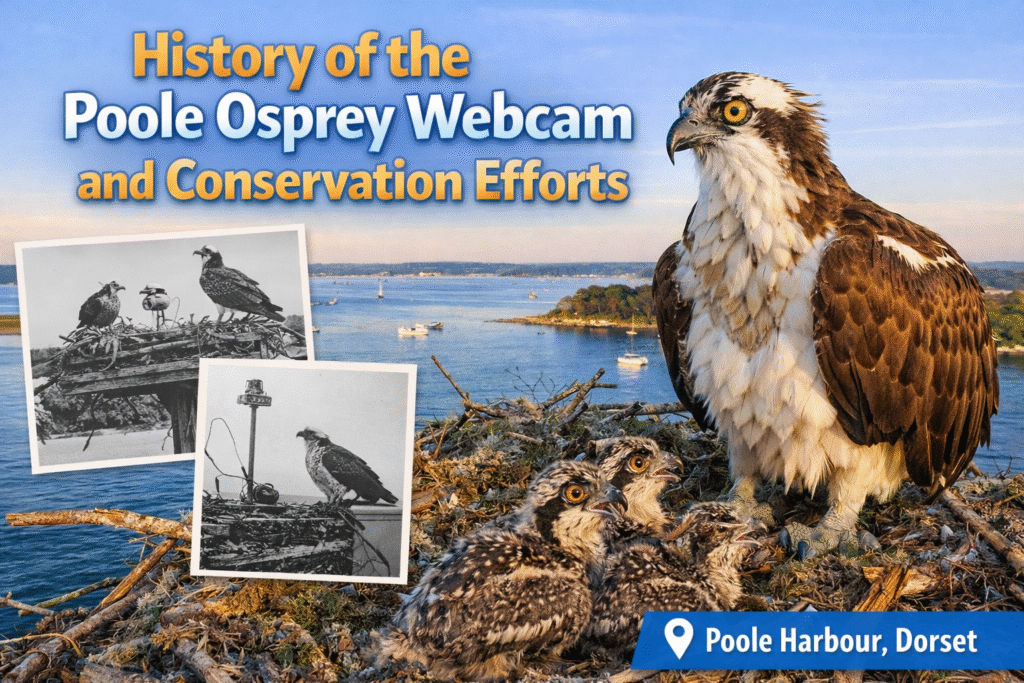
What Viewers Can See During the Nesting Season
One of the pleasures of watching a live nest camera is learning that no two days feel exactly the same. Early in the season, viewers may witness nest preparation, courtship behaviour, and subtle shifts in routine as the pair settles into breeding mode. Twigs are arranged, positions are adjusted, and the birds begin to move with the purposeful rhythm of animals preparing for demanding weeks ahead. The smallest gestures gain meaning when seen repeatedly over time.
As the season progresses, the nest becomes a place of intense attention. Egg laying, incubation, and food delivery turn the camera into a record of dedication and timing. Incubation can look quiet to a new viewer, but it is full of detail. Adults rise carefully, turn eggs, settle back down, and remain alert to weather and disturbance. Feeding exchanges can happen quickly, and they reveal coordination, trust, and urgency in a way few wildlife experiences make so visible.
Later, if chicks appear, the pace often changes again. Growth becomes one of the most gripping elements of the story. Tiny movements become stronger, feeding becomes more active, and posture shifts from fragility to confidence. Wing stretching, sibling interaction, and early practice movements all signal development. These moments keep viewers emotionally invested because they reveal change in real time. A webcam does not just show life at the nest. It shows how life advances stage by stage.
The Best Times and Seasons to Watch
Timing matters when watching any wildlife camera, but it matters especially with a nest. Different parts of the day can bring different kinds of activity. Morning may offer freshness and movement as the adults begin their routine. Midday can reveal feeding, guarding, or quieter rest depending on weather and the stage of the season. Later hours sometimes bring renewed energy, especially when an adult returns with food or when changing light alters how clearly viewers can see the birds’ behaviour.
The breeding season is even more important than the time of day. Early arrivals, pair bonding, and nest preparation have one kind of interest. Incubation has another, more subtle appeal built around patience and expectation. Chick rearing often becomes the most publicly engaging period because it brings obvious growth and repeated feeding action. Fledging stages can be especially emotional, as viewers realise they are watching a transition from dependence toward independence and movement beyond the nest.
Patience remains one of the best tools for enjoying the experience. A live wildlife stream is not designed around instant reward, and that is precisely why it feels authentic. Some viewers expect constant action and leave too quickly. Those who return regularly tend to understand the deeper pleasure of the webcam. They begin to read the nest more accurately, recognise patterns, and appreciate quiet periods as part of a much larger seasonal rhythm rather than moments when nothing is happening.
How the Webcam Deepens Public Understanding of Conservation
Conservation often struggles when people experience it only through abstract language. Reports, policy documents, and fundraising messages can explain what is at risk, but they do not always build emotional connection. A live webcam changes that. It lets people see why a nest matters, why disturbance matters, and why the success of even one breeding attempt can feel important. The emotional power of observation turns information into memory, and memory often leads to stronger public care.
The educational value is equally significant. Teachers, parents, and community groups can use the stream to explore migration, food webs, adaptation, weather response, and parental care. Children who might not respond strongly to textbook descriptions often become fascinated when they can watch real birds making real decisions. The nest becomes a classroom without walls. It encourages questions, observation, discussion, and research while also showing that local conservation is tied to living creatures, not only protected spaces.
There is also a deeper cultural value in making wildlife visible in everyday life. When people begin checking a live camera alongside morning routines or evening downtime, nature stops feeling remote. It becomes part of familiar time. That matters in a world where many people feel cut off from wild places. The Poole Osprey Webcam helps bridge that gap by creating a repeated, personal connection to one species, one place, and one seasonal cycle that viewers can genuinely follow and care about.
- YouTube channel: Search for “Poole Osprey Webcam”
The Story of Recovery and Return
Wildlife recovery stories carry special weight because they combine science, management, and hope. People are naturally drawn to examples where a species regains presence in a landscape through careful protection and long-term commitment. Ospreys fit this pattern beautifully. Their presence in a place like Poole Harbour feels meaningful because it suggests that with the right conditions, patience, and stewardship, ecological renewal is possible. The webcam becomes a visible symbol of that wider restoration story.
Recovery is never automatic. It depends on habitat quality, food availability, nest security, responsible land use, and sustained local effort. It also depends on public support. A bird that becomes loved by the community stands a better chance of inspiring long-term care. That is one reason live webcams matter so much. They are not separate from conservation. They help create the constituency for conservation by building affection, familiarity, and shared attention around the species being protected.
Return also has symbolic power. Each season invites viewers to think about continuity. A familiar nest site, a known harbour landscape, and a species linked with migration all combine to create a sense of meaningful return. For many viewers, the season begins emotionally with the hope that the birds will be seen again. When they are, the webcam becomes more than a camera. It becomes a reassurance that a fragile pattern has held, and that life is renewing itself once more.
Why Wildlife Webcams Have Become So Popular
The popularity of wildlife webcams reflects a wider shift in how people seek connection, calm, and authenticity online. Many digital experiences are fast, loud, and designed for instant reaction. A nest camera offers the opposite. It invites stillness, attention, and gentle curiosity. That difference is powerful. People increasingly value online experiences that feel grounding rather than overwhelming, and live wildlife streams provide exactly that kind of quiet but meaningful engagement.
There is also a shared social aspect to these webcams. Viewers often return to check important moments, discuss observations, and celebrate milestones together. Even when watching alone, people feel part of a wider audience following the same story. That communal quality gives the experience momentum. A fish delivery, a chick hatching, or a dramatic weather moment becomes something witnessed collectively, and that can make the nest feel like a small but vivid public event rooted in nature rather than spectacle.
Another reason for their popularity is accessibility. Not everyone can travel easily to bird reserves, observation points, or rural habitats. A webcam removes distance without pretending to replace the real world. It offers access without intrusion. Families, elderly viewers, students, and urban residents can all watch remarkable behaviour in a way that feels intimate but respectful. The appeal is especially strong when the nest belongs to a species as charismatic and visually striking as the osprey.
How the Webcam Helps Families, Schools, and Birdwatchers
For families, a live nest stream offers a rare combination of entertainment and learning. Children are naturally drawn to repeated animal behaviour, especially when they can recognise individuals and predict patterns. Parents often find that a webcam creates easy conversation about patience, care, hunger, weather, travel, and growth. Because the events are real, they feel more memorable than scripted content. Watching together can become a gentle shared ritual that changes with the season.
Schools can also gain tremendous value from a nest camera because it crosses subject boundaries so easily. Teachers can connect the birds to science, geography, art, writing, and environmental awareness. Students can record observations, describe behaviour, compare weather conditions, or discuss migration routes. A live stream encourages close looking, and close looking is a foundational skill in education. The nest provides a natural focus that helps transform passive viewing into active curiosity and structured inquiry.
Birdwatchers, meanwhile, appreciate the depth of detail that repeated observation provides. A nest camera allows them to study posture, feeding patterns, defensive reactions, prey handling, and chick development in ways that are difficult during brief field sightings. It also creates a record of seasonality and behaviour that can sharpen broader birding knowledge. Whether someone is an experienced birder or a beginner, the webcam rewards attention by turning everyday nest activity into an ongoing lesson in avian life.
Tips for Getting the Most from the Viewing Experience
The best way to enjoy a live nest camera is to treat it as a process rather than a highlight reel. Regular viewers tend to learn more because they notice continuity. A bird that looked still yesterday may reveal a different posture today. A quiet nest may suddenly show a feeding event after a patient wait. Returning often helps viewers recognise not only dramatic moments but also the subtle rhythms that make the nest meaningful across the full breeding season.
It also helps to watch with context in mind. Understanding basic osprey behaviour can make the stream far more rewarding. A viewer who knows why an adult shifts position, scans the sky, or settles low over the nest will notice more than someone waiting only for obvious action. Reading updates from conservation groups or following seasonal developments can add that extra layer of meaning. Context turns simple watching into informed watching, and informed watching feels richer.
Finally, it is worth embracing the emotional texture of a live wildlife experience. Some moments are thrilling, others tender, and some are simply quiet. The power of the webcam lies in its honesty. It does not promise only beautiful outcomes or perfectly timed scenes. It presents life as it unfolds. That authenticity is what makes it so compelling. The longer viewers stay with it, the more they tend to appreciate the mixture of unpredictability, fragility, and resilience at the nest.
The Cultural Appeal of Watching a Nest Live
Modern audiences are increasingly drawn to experiences that feel real, local, and emotionally resonant. A live nest stream answers all three desires. It shows genuine behaviour, connects viewers to a specific place, and invites ongoing emotional investment without artificial drama. In an age of endless content competition, that simple truth feels refreshing. Viewers are not being sold a manufactured story. They are being welcomed into a real one, and that difference explains much of the webcam’s lasting appeal.
There is also something deeply seasonal about the attraction. Many people long for signs that the year is turning in ways that feel tangible rather than purely symbolic. The cycle of nest return, egg laying, hatching, feeding, and fledging provides that sense of time beautifully. It gives spring and summer a visible narrative arc. Watching the season unfold through birds makes time feel more grounded, more biological, and more connected to place than a calendar alone ever can.
For local identity, this matters too. A successful wildlife story can become part of how people imagine a region. Poole Harbour is already known for natural beauty, but a nest camera adds intimacy to reputation. It gives viewers something immediate and repeatable that represents the harbour’s ecological richness. Over time, a webcam can help shape how residents and visitors talk about a place. It becomes part of a local narrative built not only on scenery, but on living seasonal wonder.
Why the Poole Osprey Webcam Keeps Viewers Returning
The strongest live wildlife experiences invite repeat attention because they create both familiarity and suspense. That balance is rare. Viewers become familiar with the nest, the general behaviour of the birds, and the stages of the season, yet they never fully know what the next viewing session will bring. The Poole Osprey Webcam benefits from that perfect tension. It feels recognisable enough to be comforting and open enough to remain exciting throughout the breeding period.
Repeated viewing also builds emotional investment through small accumulations rather than dramatic shocks. A first-time viewer may notice a beautiful bird. A returning viewer notices habit, progress, and change. They recognise a chick growing stronger, an adult arriving more confidently, or a nest that looks fuller and more alive than it did a week ago. Those gradual changes are satisfying because they reward patience. The experience feels earned, and that makes it more memorable than a quick casual glance.
This is why the webcam has value far beyond novelty. It offers continuity in a fragmented media environment. Instead of unrelated clips and constant scrolling, viewers receive a long, coherent seasonal story rooted in one species and one place. The Poole Osprey Webcam becomes part of people’s routines because it provides exactly what many digital experiences do not: real time, real stakes, and a calm but compelling sense of narrative unfolding in the natural world.
Conclusion
A great wildlife webcam does more than show animals on a screen. It changes how people feel about a place, a species, and the rhythms of the natural year. That is exactly why the Poole Osprey Webcam has such enduring appeal. It combines beauty, education, anticipation, and conservation in a format that feels immediate and authentic. Every visit offers a chance to witness something meaningful, whether it is a major milestone or simply a quiet moment of attentive care.
Its power lies in its ability to connect very different audiences. Families find wonder in it, schools find teaching value in it, birdwatchers find behavioural detail in it, and local communities find pride in it. The camera makes conservation visible and personal. It reminds viewers that wildlife recovery depends on place, patience, and public care. By returning to the stream across the season, people do not just watch ospreys. They build a relationship with an ongoing story of life in Poole Harbour.
In a noisy online world, the enduring success of a live nest camera says something hopeful. People still want to pay attention to the living world when they are given a chance to do so in a meaningful way. The Poole Osprey Webcam offers that chance. It invites viewers to slow down, observe carefully, and share in the fragile, powerful journey of a species that continues to inspire admiration every time it returns to the nest.
FAQs
What is the Poole Osprey Webcam?
The Poole Osprey Webcam is a live online camera focused on an osprey nest connected with the Poole Harbour area. It allows viewers to watch seasonal nesting behaviour as it happens, including nest preparation, incubation, feeding activity, and the development of chicks when breeding is successful. Its appeal comes from the fact that it shows real wildlife in real time rather than edited highlights.
It is popular with a wide audience because it combines education and emotion. Families enjoy the excitement of following the birds through the season, while birdwatchers value the chance to observe natural behaviour closely. The camera also helps make local conservation feel tangible, giving viewers a direct connection to the osprey story in Dorset.
Why is Poole Harbour such a good place for ospreys?
Poole Harbour offers a rich natural setting with sheltered water, strong ecological diversity, and feeding opportunities that can support fish-eating birds. Landscapes like this matter because ospreys need a habitat that works not only for nesting but also for hunting, resting, and raising young successfully. The surrounding environment plays a major role in whether a nest season can thrive.
The harbour also benefits from strong public interest in nature, and that matters more than people sometimes realise. A species is more likely to gain support when local communities value its presence. In that sense, Poole Harbour is important not only because of physical habitat, but because it provides a setting where conservation, education, and public enthusiasm can work together.
What can you usually see on the webcam?
The exact experience varies with the stage of the season, but viewers often watch nest building, incubation behaviour, adult exchanges, fish deliveries, feeding, and chick development. Even during quieter moments, the camera can reveal meaningful details such as weather response, body posture, alert behaviour, or the careful way adults manage space on the nest. These small moments become easier to understand with repeated viewing.
Many people return because the nest changes continuously over time. Early in the season, there may be more attention to arrival and preparation. Later, the focus may shift to eggs or chicks. As the weeks pass, viewers can see growth, stronger movement, and the increasing confidence of young birds. That gradual change is one of the most rewarding aspects of watching a live nest stream.
When is the best time to watch?
There is no single perfect time because wildlife does not follow a broadcasting schedule, but regular viewing often produces the best results. Different hours of the day can bring different kinds of activity, and those patterns can also change depending on weather and the breeding stage. Morning and later daylight periods are often popular because they may coincide with movement, feeding, or adult exchanges.
The most important factor is season rather than clock time. Nest preparation, incubation, chick rearing, and fledging each offer a different kind of viewing experience. People who watch only once may miss the deeper story, while those who return over weeks are more likely to appreciate the rhythm of the nest. Patience is one of the most valuable skills for enjoying the stream fully.
Why do people become so emotionally invested in a live nest?
A live nest camera creates emotional connection because it invites viewers into an ongoing story rather than a one-off event. People recognise care, vulnerability, routine, and growth, and those themes are universally powerful. Watching adults protect eggs or feed chicks feels meaningful because the effort is visible. There is also suspense in not knowing exactly what each day will bring, which keeps attention strong.
The emotional pull increases over time. Viewers begin by noticing the birds, but they often stay because they start recognising change. They see development, resilience, and seasonal progress. The nest becomes familiar, and that familiarity turns simple observation into attachment. This is one reason wildlife webcams are so effective at supporting conservation. People protect what they have come to know and value personally.
Is the webcam useful for children and schools?
Yes, it can be exceptionally useful because it turns abstract lessons into visible real-world observation. Children can see parental care, adaptation, feeding, and growth in a way that feels immediate and engaging. Teachers can use the webcam to support lessons in science, habitats, migration, seasonal change, descriptive writing, and environmental responsibility. It encourages attention, questioning, and curiosity without feeling like formal instruction.
The educational power comes from the fact that the content is alive and unscripted. Students are not just reading about birds. They are observing them. That difference can spark stronger interest and better recall. The webcam is especially valuable because it links learning to a local or recognisable British setting, helping students see that important wildlife stories are not remote or exotic. They are part of the world around them.
Why are wildlife webcams so popular in the UK?
Wildlife webcams fit beautifully with a growing desire for slower, more meaningful digital experiences. Many people are tired of rushed content and constant distraction. A nest camera offers the opposite. It invites calm attention and real observation. British audiences also tend to have strong affection for seasonal wildlife stories, and a live stream gives those stories a direct and personal form that feels both comforting and exciting.
They are also popular because they are accessible. Not everyone can visit reserves, wetlands, or coastal viewpoints regularly, but almost anyone can open a stream and watch for a few minutes. That access broadens participation in wildlife appreciation. It allows nature lovers, families, older viewers, and students to feel involved in a shared seasonal event without disturbing the birds themselves.
What makes the Poole Osprey Webcam different from an ordinary bird camera?
The difference lies in the species, the setting, and the story. Ospreys are visually striking, behaviourally fascinating, and closely tied to migration and nesting success, so they naturally create a more dramatic seasonal narrative than many ordinary garden bird cameras. The Poole Harbour context also gives the stream a strong sense of place, making it feel like part of a regional wildlife story rather than an isolated feed.
It is also different because it rewards long-term following. Casual bird cameras can be enjoyable in short bursts, but a nest camera built around ospreys encourages viewers to return repeatedly across a full breeding season. That creates continuity and emotional investment. People are not merely watching random visitors to a feeder. They are following a family cycle shaped by timing, effort, risk, and change.
You may also read:Timeline and How Conditions May Develop Before Christmas