Amsterdam Weather: A Month-by-Month Guide to Seasons, Rain and Packing
Amsterdam weather is famously changeable, and the best way to enjoy the city is to expect a little of everything, whatever month you visit. The Dutch capital has a temperate oceanic climate, which means mild summers, cool winters, and rain that can arrive in any season, yet it also enjoys long bright days in late spring and summer, crisp sunny mornings in autumn, and the special charm of canalside streets in the snow. Average temperatures range from around 3.7°C in January to around 18°C in July and August, according to 1991–2020 averages from the Royal Netherlands Meteorological Institute (KNMI), and annual rainfall is roughly 850mm spread across the year. This guide explains Amsterdam weather season by season, month by month, so you can choose when to visit and know exactly what to pack.
Amsterdam Weather at a Glance
The first thing to understand about the city’s climate is that it is shaped by the North Sea and the Atlantic Ocean, which keep temperatures moderate all year round but also bring wind, cloud and frequent rain. Summers are comfortable rather than hot, with average highs of around 21–22°C in July and August, while winters are cold but rarely freezing, with average highs of around 6°C in January and average lows just above zero. The city sits on low, flat land close to the water, and the influence of the IJ, the great waterway beside the city, helps to explain why Amsterdam’s temperatures sit close to the national average for the Netherlands. The climate is classified as temperate oceanic, known to geographers as Cfb, which is the same broad climate type found across much of north-western Europe.
Rain is the defining feature of Amsterdam weather, and it falls in every month of the year, with around 133 rainy days annually according to the same KNMI 1991–2020 averages. There is no true dry season, although April is usually the driest month, with around 40mm of rain, while late summer and autumn are the wettest, with August averaging around 99mm. The rain often arrives as short showers rather than all-day downpours, and a grey morning can turn into a bright afternoon, which is why locals joke that you can experience four seasons in a single day. A waterproof jacket and an umbrella are sensible companions in every month, and the changeable skies are part of what gives the city its character, with dramatic clouds over the canals and sudden sunshine that makes the gabled houses glow.
Spring in Amsterdam: March, April and May
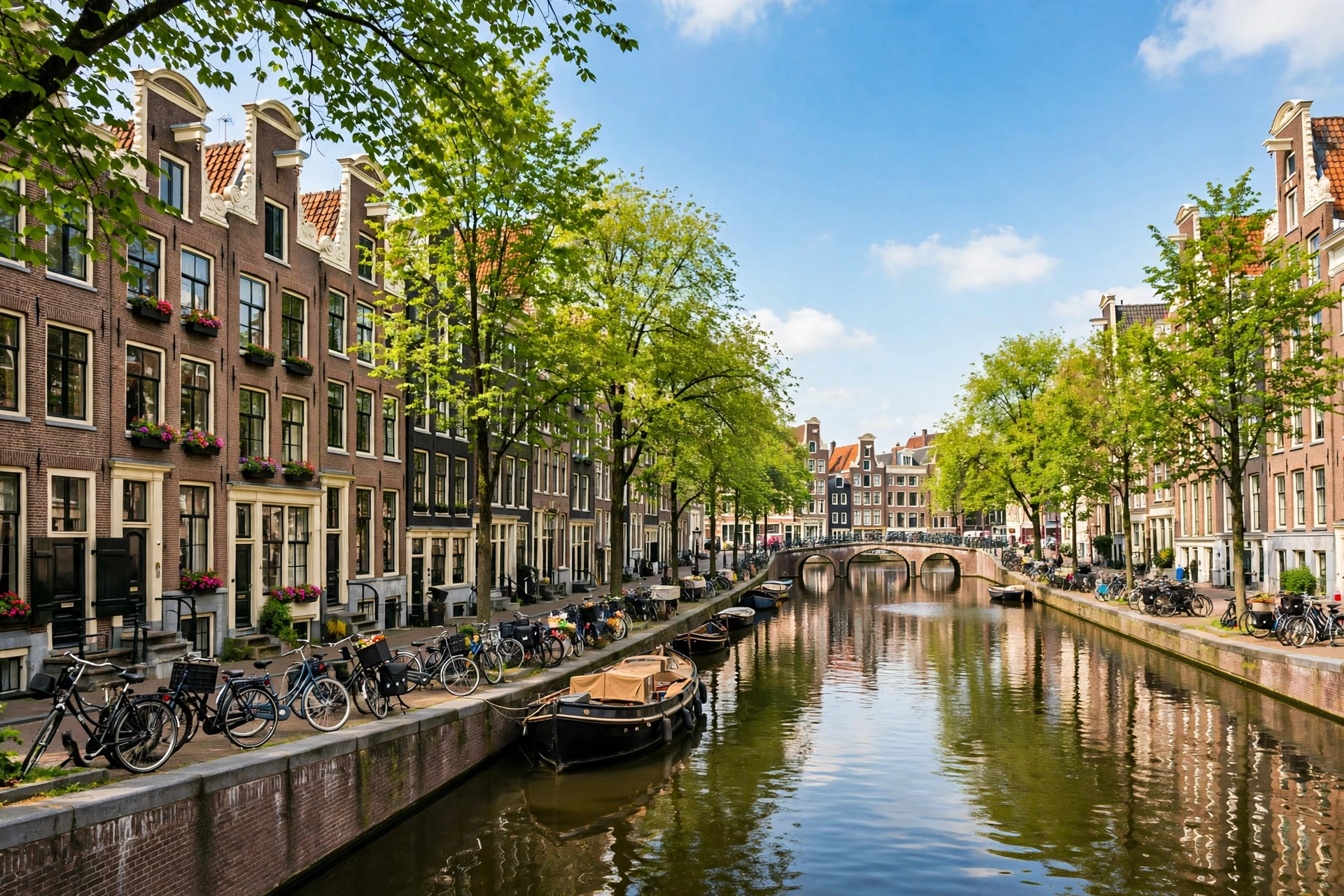
Spring is one of the most rewarding times to experience the city, because the days grow longer, the temperatures climb steadily, and the city comes back to life after winter. March is still cool, with average highs of around 9–10°C and lows of around 2–3°C, and rain is common, so a warm coat is still essential, but the first signs of spring appear in the parks and along the canals. April is the turning point, with average highs of around 14°C and lows of around 5°C, and it is usually the driest month of the year, which makes it an excellent time for walking and cycling, although the weather can still be unpredictable and a shower is never far away. May brings the first real warmth, with average highs of around 18°C and lows of around 9°C, and the city fills with flowers, including the tulips that draw visitors from all over the world.
Spring is also the season when Amsterdam’s outdoor life returns, with cafe terraces opening, boats appearing on the canals, and the parks filling with people enjoying the longer evenings. The tulip season, which peaks in April, is the most famous spring attraction, and many visitors combine a city break with a trip to the flower fields and gardens outside Amsterdam, although the exact timing of the bloom varies from year to year and depends on the weather. Packing for spring means layers, because a sunny afternoon can feel warm while the morning and evening remain chilly, and a light waterproof jacket is more useful than a heavy winter coat by May. Comfortable walking shoes are essential in every season, but they matter most in spring, when the best way to see the city is on foot or by bicycle.
Summer in Amsterdam: June, July and August
Summer is the warmest and brightest season of the year in Amsterdam, and it is the most popular time to visit the city, with long days, warm evenings and a lively atmosphere along the canals. June has average highs of around 20°C and lows of around 11°C, while July and August are the warmest months, with average highs of around 21–22°C, average lows of around 13°C, and mean temperatures of around 18°C. The days are long, with daylight lasting until late in the evening in June and July, which gives visitors plenty of time to explore, and the city hosts festivals, open-air concerts and markets throughout the summer months. Sunshine is at its best in June and July, with around six to seven hours of sunshine a day on average, although cloud is never far away and rain remains a regular feature.
It is worth remembering that summer in Amsterdam is warm rather than hot, and temperatures above 30°C are unusual, although recent summers have occasionally brought heatwaves, so the averages should be treated as a guide rather than a promise. Rainfall in summer is often heavier than in spring, with July averaging around 82mm and August around 99mm, frequently arriving as short, sharp showers or thunderstorms that clear quickly and leave the air fresh. Pack light layers, a waterproof jacket, and comfortable shoes, and bring sun protection for the brighter days, because the sun can be strong when it appears, especially on the water. Summer is also the busiest season, so booking accommodation and popular attractions in advance is strongly recommended, and prices are at their highest.
Autumn in Amsterdam: September, October and November
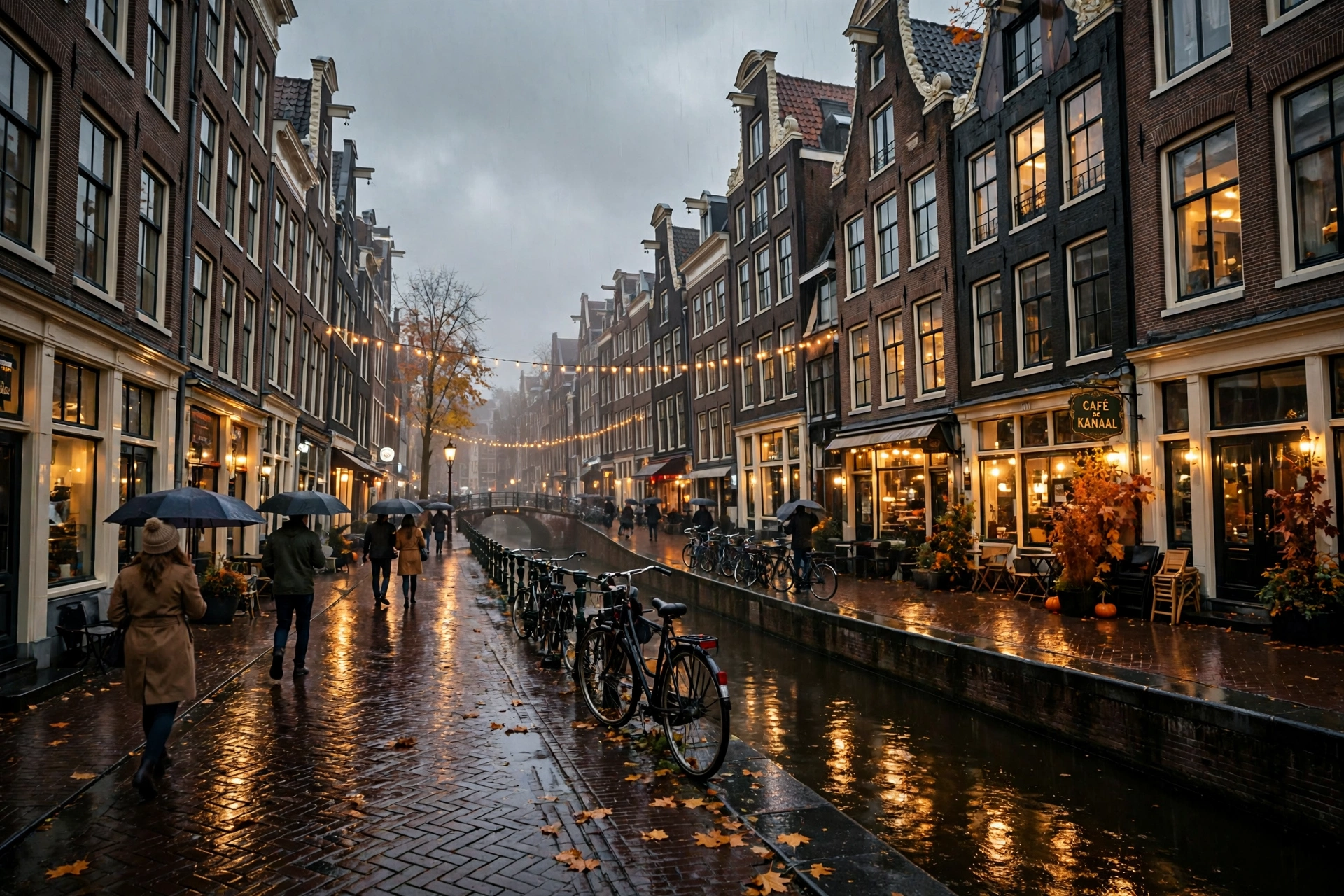
Autumn brings a gentle change to the city’s weather, with the warmth of summer fading slowly and the city taking on golden colours as the leaves turn in the parks and along the canals. September is often one of the most pleasant months to visit, with average highs of around 19°C and lows of around 11°C, and the crowds thinning after the summer peak, which makes it an excellent time for sightseeing. October cools noticeably, with average highs of around 14–15°C and lows of around 8°C, and the rain becomes more frequent, with around 87mm on average, so a waterproof coat and an umbrella become essential companions. November is properly autumnal, with average highs of around 9–10°C, lows of around 4°C, and shorter, greyer days, although the city compensates with cosy cafes, museums and the first Christmas lights.
Autumn is a good season for visitors who prefer a quieter city, because hotel prices fall, the main attractions are less crowded, and the atmosphere in the historic centre becomes more relaxed. The parks, including Vondelpark, are at their most beautiful in October, when the trees turn red and gold, and the canals reflect the autumn colours in a way that photographers love. Packing for autumn means warm layers, a waterproof outer layer, and shoes that can handle wet cobblestones, and it is worth bringing a scarf and gloves for November, when the wind off the North Sea can make the air feel colder than the thermometer suggests. A flexible attitude helps too, because an autumn day can begin with rain and end with brilliant sunshine.
Winter in Amsterdam: December, January and February
Winter is the coldest season for Amsterdam weather, but it is rarely severe, and the city has a quiet magic in the colder months, with frosty mornings, festive lights, and the chance of snow dusting the rooftops. December has average highs of around 6–7°C and lows of around 2°C, January is the coldest month, with average highs of around 6°C, lows of around 1°C and a mean temperature of around 3.7°C, and February is similar, with average highs of around 7°C and lows of around 1°C. Rain is frequent in winter, with December averaging around 82mm, and snow is possible but not guaranteed, usually falling on only a few days each winter, and rarely settling for long in the city centre. The days are short, with only around one to two hours of sunshine a day on average in December, and the city feels at its most intimate after dark, when the lights come on along the canals.
Winter visitors should pack a warm waterproof coat, a scarf, gloves and a hat, along with waterproof shoes with a good grip, because the wind can make the cold feel sharper than the temperature suggests, especially near the water. The reward for braving the cold is a quieter city, lower prices, and seasonal attractions such as Christmas markets, ice rinks and the Amsterdam Light Festival, which illuminates the canals with artworks during the darkest weeks of the year. Museums, cafes and restaurants are warm and welcoming, and a winter visit is an excellent choice for travellers who enjoy culture and atmosphere more than sunshine. If the canals freeze, which happens only in the coldest winters, the city takes on a scene that feels like a painting, although this is rare and should never be counted on.
What to Pack for Amsterdam Weather
Packing for the city is mostly about layers and rain protection, because the temperature can change several degrees between morning and afternoon, and a shower can arrive with little warning in any month. The single most useful item is a waterproof jacket with a hood, which will serve you from January to December, and an umbrella is worth carrying too, although the wind can make umbrellas awkward on the canalside streets, so a hooded jacket is often the better choice. Underneath, pack layers that you can add or remove, such as T-shirts, a jumper or fleece, and a light scarf, because a cool morning can turn into a warm afternoon in spring and summer, and the reverse can happen just as quickly in autumn.
Footwear matters more than most visitors expect, because Amsterdam is best explored on foot or by bicycle, and the cobbled streets can be slippery when wet. Comfortable, waterproof walking shoes with a good grip are the best choice in every season, and they are essential in autumn and winter, when rain is frequent and the pavements can be slick. In summer, add sun protection, including sunscreen and sunglasses, because the sun can be strong when it appears, and the light reflecting off the canals can be surprisingly bright. In winter, add thermal layers, gloves, a hat and a scarf, and in spring, remember that the tulip fields and parks can be muddy after rain, so shoes you do not mind getting dirty are a sensible choice.
The Best Time to Visit Amsterdam for Weather
The best time to visit Amsterdam for weather is generally from late April to early October, when temperatures are mildest, daylight is longest, and the city is at its most enjoyable outdoors, although each part of this period has its own character. Late April and May offer the tulips, the first warm days and the driest weather of the year, while June, July and August bring the warmest temperatures and the longest days, along with the largest crowds and the highest prices. September is often the sweet spot, with warm days, fewer visitors and golden autumn light, while early October still offers pleasant weather before the rain and cold of late autumn set in. Travellers who prefer quiet streets and lower prices may prefer November or February, accepting cooler and wetter weather in exchange for a more relaxed city.
The honest truth about Amsterdam weather is that no month guarantees perfect conditions, and the city’s charm does not depend on sunshine alone. A rainy day in Amsterdam can be spent in world-class museums, cosy brown cafes, and covered markets, while a sunny day is best spent on the canals, in the parks, or cycling through the city’s neighbourhoods. The key is to check the forecast a few days before you travel, pack for rain as well as shine, and keep your plans flexible enough to swap an outdoor morning for a museum afternoon if the weather turns. Visitors who do that will enjoy Amsterdam in any season, whatever the sky decides to do. For detailed monthly figures, the Amsterdam climate page at Climates to Travel, which presents KNMI 1991–2020 averages, is a useful reference when planning your trip.
Does It Rain a Lot in Amsterdam
Yes, it rains often in Amsterdam, with rain falling on around 133 days a year on average, according to KNMI 1991–2020 averages, and no month is reliably dry. However, the rain usually arrives as showers rather than continuous downpours, and the total amount, around 850mm a year, is similar to many cities in north-western Europe, including London. The practical effect is that you should expect some rain on most trips, particularly in autumn and winter, but it rarely ruins a whole day, and a waterproof jacket is enough to keep exploring. Checking the forecast each morning and planning indoor activities for the wettest hours is the simplest way to deal with it.
What Is the Coldest Month in Amsterdam
January is the coldest month in Amsterdam, with a mean temperature of around 3.7°C, average highs of around 6°C and average lows of around 1°C, according to KNMI 1991–2020 averages. February is almost as cold, with a mean of around 4°C, and December is only slightly milder. Temperatures rarely fall far below freezing in the city, and heavy snow is uncommon, although frosty mornings and icy patches on the pavements are normal in midwinter. Visitors in January and February should dress warmly, with a coat, scarf, gloves and hat, and allow extra time for walking, since the short days and cold wind can make sightseeing feel more tiring than in the warmer months.
What Is the Hottest Month in Amsterdam
July and August are the warmest months in Amsterdam, with mean temperatures of around 18°C, average highs of around 21–22°C and average lows of around 13°C, according to KNMI 1991–2020 averages. Temperatures above 30°C are unusual but not unknown, and recent summers have occasionally brought short heatwaves, so the averages should be treated as a guide rather than a guarantee. The warmest days are usually sunny and pleasant rather than oppressive, because the breeze from the North Sea and the water in the canals help to keep the city comfortable, and the long evenings make summer the best season for sitting outside in the city’s squares and along the waterfront.
When Is the Best Time to See Tulips in Amsterdam
The tulip season in Amsterdam and the surrounding flower fields generally peaks in April, although the exact timing depends on the weather in any given year and the bloom can begin in late March or continue into early May. April also happens to be the driest month in Amsterdam, with around 40mm of rain on average, which makes it a good month for visiting the gardens and fields outside the city. The most famous tulip garden, Keukenhof, opens for a limited season each spring, and its dates vary from year to year, so visitors should check the current opening dates before planning a trip around the tulips. Within the city itself, tulips appear in parks, squares and markets throughout April, and the flower markets are worth a visit even outside the peak season.
Is Amsterdam Windy
Yes, Amsterdam can be windy, because the city sits on flat, low-lying land close to the North Sea, and there is little to shelter it from the wind that blows in from the coast. The wind is strongest in autumn and winter, when Atlantic weather systems pass over the Netherlands, and it can make the temperature feel several degrees colder than the thermometer shows, particularly along the canals and in the open squares. A windproof outer layer is therefore just as useful as a waterproof one, and cyclists should be prepared for a headwind on the way home, which is a familiar experience for everyone who rides a bike in the city. The wind also clears the skies after rain, and some of the brightest days in Amsterdam follow a windy night.
Should I Visit Amsterdam in Winter
Winter is a good time to visit Amsterdam if you enjoy museums, festive atmosphere and quieter streets, and you are prepared for cold, wet and windy weather. December brings Christmas markets and the Light Festival, January and February bring the lowest prices and the fewest crowds, and the city’s cafes, restaurants and museums are warm and welcoming throughout the season. The main drawbacks are the short days, with darkness falling in the late afternoon, and the frequent rain, which makes a waterproof coat and warm layers essential. Visitors who dress properly and plan a mix of indoor and outdoor activities will find that winter has a charm of its own, although travellers who want long sunny days should choose late spring or summer instead.
Conclusion
Amsterdam weather is mild, changeable and wet in every season, but it is also one of the things that gives the city its character, from the bright spring mornings when the tulips bloom to the golden autumn light on the canals and the frosty winter evenings when the lights come on. Average temperatures run from around 3.7°C in January to around 18°C in July and August, rain falls on roughly 133 days a year, and April is usually the driest month while August and the autumn months are the wettest. None of that should put you off visiting, because the city’s museums, cafes, canals and neighbourhoods are enjoyable in any weather, and the rain is usually a passing shower rather than a day-long downpour.
The best approach is to choose your season based on what you want from the trip, check the forecast before you travel, and pack for rain as well as sunshine. Late spring and early autumn offer the best balance of mild weather and manageable crowds, summer brings the longest days and the warmest temperatures, and winter rewards visitors who dress warmly with a quieter city and lower prices. Whatever month you choose, a waterproof jacket, comfortable shoes and a flexible attitude are the three things that matter most, and with those in place, Amsterdam will reward you in any weather.
For a different kind of trip planning, take a look at our guide to rugby positions to learn how the fifteen players on a rugby team each have their own role on the pitch.