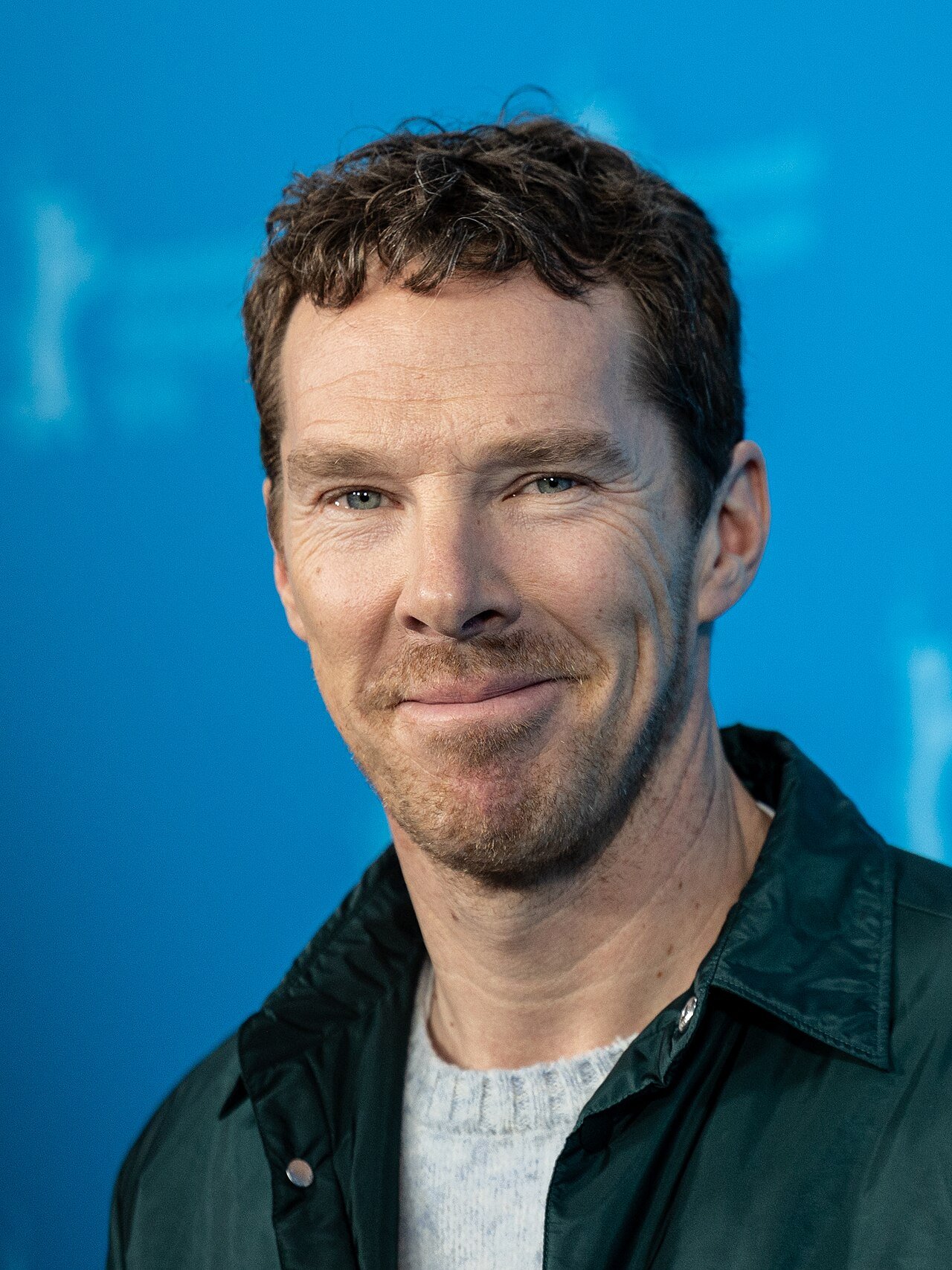
When Benedict Cumberbatch and Martin Freeman were photographed together at Wimbledon on 10 July 2026, watching the men’s semi-finals from the Royal Box, the picture travelled fast. It was not simply two famous actors enjoying a day of tennis. For millions of viewers, it was Holmes and Watson together again, nine years after the BBC’s Sherlock came to an end. The two men looked relaxed and entirely at ease in each other’s company. For fans who had waited years for any sign of a reunion, that single afternoon was enough to start the conversation all over again: could Sherlock Holmes and Dr John Watson ever return?
The photograph also captured something that has always been true about this pairing. Cumberbatch and Freeman do not look like an obvious double act. One is tall, angular and theatrical. The other is compact, dry and quietly funny, with a gift for playing ordinary men in extraordinary situations. Put them together, however, and the contrast becomes the chemistry. That was the gamble the BBC took in 2010, and it is the reason Sherlock became one of the most talked-about television dramas of its decade.
How Sherlock Brought Them Together
Sherlock, which ran on BBC One from 2010 to 2017, was created by Steven Moffat and Mark Gatiss as a modern-day take on Arthur Conan Doyle’s stories. Holmes and Watson were taken out of Victorian London and placed in the present day, with mobile phones and the internet. Holmes would still be a consulting detective, brilliant and impossible, and Watson would still be the loyal friend who makes him human. The setting changed. The relationship did not.
Casting was everything. Benedict Cumberbatch, born in London on 19 July 1976 and educated at Harrow and the University of Manchester, was already a respected stage and screen actor when he took the role. He had the height and the speed of thought the part demanded, and he gave Holmes a restless energy that made the detective feel dangerous as well as clever. Martin Freeman, born in Aldershot on 8 September 1971, brought something very different. He had made his name as Tim Canterbury in the British version of The Office, and he understood how to play a decent, patient man who is smarter than people assume. As Watson, he was not a sidekick. He was the audience’s way into Holmes’s world, and the only person who could tell Holmes the truth without flinching.
The series ran for four series plus a special, thirteen episodes in total. Sherlock was never a show that filled the schedules week after week. Each episode was closer to a feature film, long and carefully made. The gaps between series became part of the experience, as fans debated clues and waited for the next instalment.
Holmes and Watson On Screen
What made the partnership work was the balance between the two performances. Cumberbatch’s Holmes thinks faster than everyone else in the room, and he says so. He notices the scuff on a shoe, the ink on a cuff, the lie hidden in a perfectly polite sentence. He is thrilling to watch and exhausting to live with, and the show never pretends otherwise. Freeman’s Watson absorbs that energy and answers it with warmth, exasperation and loyalty. He laughs at Holmes, argues with him, protects him and, when it matters, follows him into danger without hesitation.
Their best scenes are often the quietest ones. A conversation in the flat at 221B Baker Street. A shared look across a crime scene. Freeman plays those moments with a stillness that lets Cumberbatch’s fireworks land. Cumberbatch, in turn, gives Holmes a vulnerability that only appears when Watson is in the room. The detective who claims not to care about people cares deeply about one person, and the audience knows it long before he admits it.
The acclaim followed. Cumberbatch won an Emmy in 2014 for his performance in a third-series episode, a recognition that confirmed what viewers already knew: this was not just a clever update, but a serious piece of acting. The show won awards, drew huge audiences in Britain and around the world, and turned both actors into international stars. For many viewers, Cumberbatch and Freeman simply became Holmes and Watson.
The Hobbit Overlap
Remarkably, Sherlock was not the only time their paths crossed on screen. While the BBC series was at its height, Freeman was cast as Bilbo Baggins in The Hobbit trilogy, released between 2012 and 2014. Bilbo is a small, cautious hobbit who leaves home reluctantly and discovers courage he did not know he had. Freeman played him with humour and decency, and the performance anchored three enormous films.
Cumberbatch was in those films too, although audiences would not have recognised him at first. He voiced Smaug, the great dragon who guards the treasure beneath the Lonely Mountain, in a performance built entirely from voice and motion capture. Smaug is vast, ancient, vain and terrifying, and Cumberbatch gave him a smooth, menacing charm. Bilbo and Smaug share one of the great confrontations in fantasy literature, a battle of wits between a small hobbit and a creature who has lived for centuries. That Freeman and Cumberbatch were on opposite sides of that scene, while also playing Holmes and Watson on television, gave the coincidence a particular pleasure for fans.
The overlap says something about how both actors were seen by casting directors at the time. Freeman could carry a huge franchise as an unlikely hero. Cumberbatch could dominate a film without ever appearing on screen in his own form.
Two Careers After Sherlock
Since Sherlock ended in 2017, both men have followed distinct paths, and both have become familiar faces in the Marvel universe. Cumberbatch took on the role of Doctor Strange, the brilliant surgeon turned sorcerer, appearing in the Marvel films from 2016 to 2022. The character suited him: Strange is clever, arrogant and haunted, a man who must learn humility before he can use his power well. Cumberbatch also played Alan Turing in The Imitation Game in 2014, a performance that brought him an Oscar nomination. On stage, he played the Creature and Victor Frankenstein in alternating roles in Frankenstein at the National Theatre in 2011, winning an Olivier Award, and he played Hamlet at the Barbican in 2015. He was appointed CBE in 2015.
Freeman’s career after Sherlock has been equally varied. He played Everett Ross, a CIA agent, in Marvel’s Captain America: Civil War in 2016 and in Black Panther in 2018. On television, he won praise for his role in Fargo, where he played a very different kind of ordinary man, one whose small decisions lead him into dark territory. He has continued to work in film, television and theatre, choosing roles that let him explore the gap between how a character sees himself and how the world sees him.
The Marvel connection is worth noting, because it links this pairing to other famous screen partnerships. Chris Hemsworth and Glenn Close are connected in a similar way, through the shared world of Marvel films and the surprising meetings that world creates between actors from very different backgrounds. Cumberbatch and Freeman belong to that same story: two British actors, both cast in the biggest franchise in cinema, and both still best loved for the work they did together on television.
Will Sherlock Return?
That question has followed both actors since the final episode aired. Sherlock ended without a formal farewell, and the appetite for more has never gone away. The show’s co-creator, Steven Moffat, has said he would like to return to the series, and that statement alone is enough to keep hope alive among fans. But hope is not confirmation. No fifth series has been confirmed, and both actors have busy schedules that would make a reunion difficult to arrange.
The practical obstacles are real. A new series would need a script worthy of the original, a gap in four very busy diaries, and a broadcaster willing to wait for it. None of those things is impossible, but none of them is guaranteed either. For now, the honest answer is that a return is wanted, discussed and unconfirmed.
The Wimbledon photograph in July 2026 did not change that position, but it did change the mood. Seeing the two men together, laughing and relaxed, reminded viewers of what made the show special in the first place. It was never just about clever plots or famous stories. It was about two people, very different and completely convincing, who made a friendship feel real.
Benedict Cumberbatch and Martin Freeman created something rare in television: a partnership that outlived the show that made it famous. Sherlock gave them the roles of a lifetime, The Hobbit gave them a second, stranger meeting, and the years since have proved that neither actor needed the other to succeed. Yet audiences still think of them together, and still hope to see them together again. That is the measure of what they achieved.