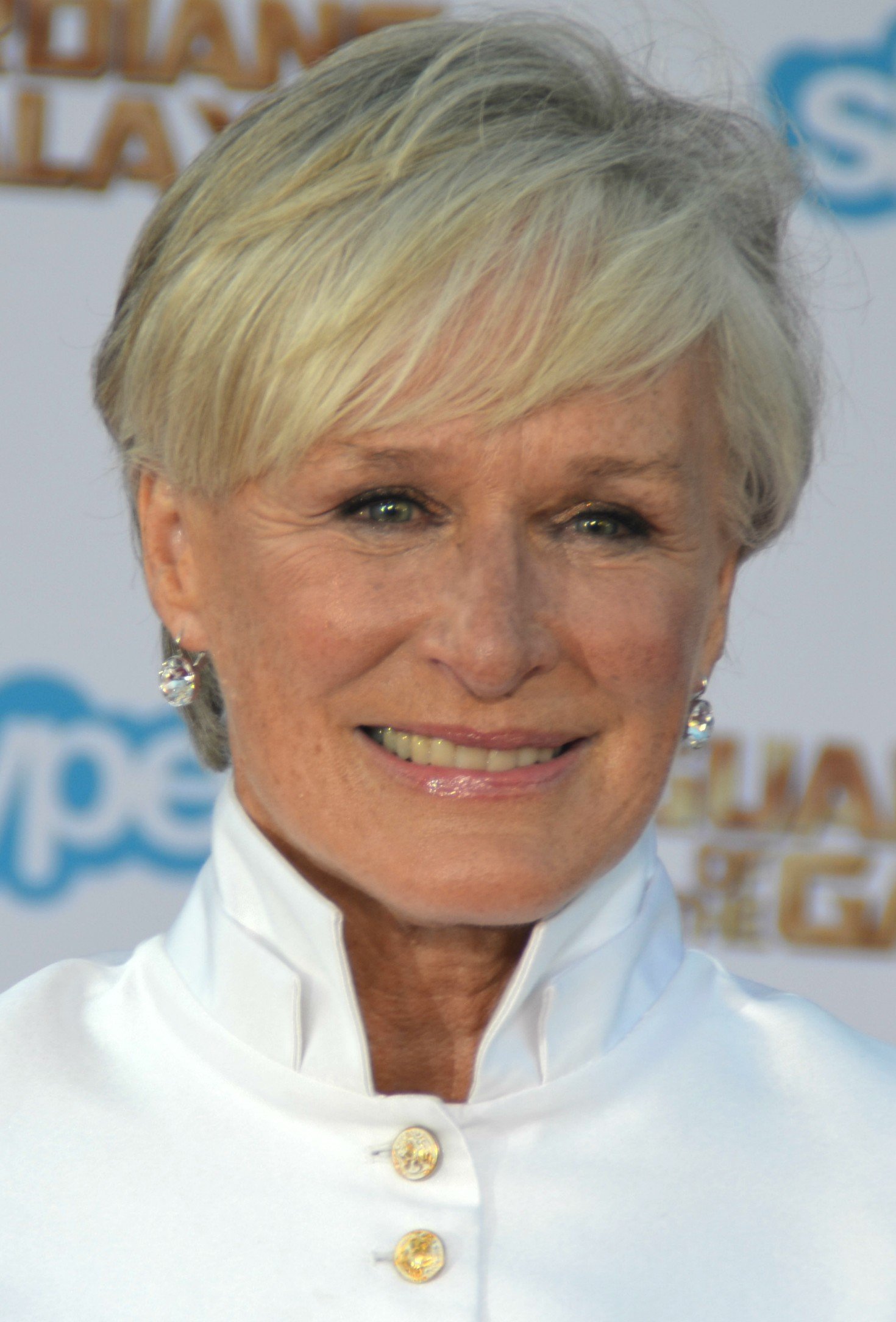
Chris Hemsworth and Glenn Close are both part of the Marvel Cinematic Universe, and that is exactly where the connection ends. They have never appeared in a film together, they have never shared a scene, and there is no joint project, interview tour or collaboration to point to. What they do share is more interesting than a made-up meeting: two actors from different generations, with very different routes into acting, who both ended up playing a leading figure in the same fictional universe — one as a god with a hammer, the other as the commander of an intergalactic peacekeeping force.
The Marvel link, explained honestly
Hemsworth first played Thor in Thor (2011), directed by Kenneth Branagh, and went on to play the character in The Avengers (2012), Thor: The Dark World (2013), Avengers: Age of Ultron (2015), Thor: Ragnarok (2017), Avengers: Infinity War (2018), Avengers: Endgame (2019) and Thor: Love and Thunder (2022), with a brief appearance in the mid-credits scene of Doctor Strange (2016). That is nine film appearances as Thor, spread over more than a decade.
Close played Irani Rael, known as Nova Prime, in Guardians of the Galaxy (2014). Rael leads the Nova Corps, the military and peacekeeping force of the planet Xandar. She weighs up Peter Quill and his unruly crew, listens to their case, and finally clears their criminal records after they help save Xandar from Ronan the Accuser. It is a supporting role, but a pivotal one: without Nova Prime, the Guardians remain outlaws. Close filmed a return as the character for Guardians of the Galaxy Vol. 2 (2017), but the scene was cut, and she did not appear in the later Guardians films. She later reprised the role for the Guardians of the Galaxy: Cosmic Rewind attraction at EPCOT.
So the honest summary is simple. Hemsworth and Close both worked for Marvel Studios and both played leaders, but they did not act opposite each other. Thor’s story stayed largely on Earth and in Asgard, while Nova Prime’s story stayed on Xandar, and the two strands never crossed on screen.
Chris Hemsworth: from Australian soap to Thor
Christopher Hemsworth was born on 11 August 1983 in Melbourne, Australia, and raised partly in Melbourne and partly in the Northern Territory. His breakthrough came at home, playing Kim Hyde in the Australian soap Home and Away from 2004 to 2007 — years of fast, daily television, learning lines quickly and working in front of a camera every day.
His Hollywood debut was small but memorable. In Star Trek (2009), he played George Kirk, the father of Captain James T. Kirk, in the film’s opening sequence. It lasted only a few minutes, yet it showed that Hemsworth could carry authority and warmth in a very short space of time. Two years later, he was Thor.
The first Thor worked because he played the arrogance and the humour at the same time. Over the following films, the character changed with him: the Thor of Thor: Ragnarok (2017) was looser and funnier, while the Thor of Avengers: Endgame (2019) was heavier and grieving. That willingness to let the character look foolish, tired or broken is a large part of why audiences stayed with him.
Outside Marvel, Hemsworth has mixed blockbusters with very different work: Formula 1 driver James Hunt in Rush (2013), the Huntsman in Snow White and the Huntsman (2012), the lead in the action thriller Extraction (2020), and the villain Dementus in Furiosa: A Mad Max Saga (2024). He married Spanish actress Elsa Pataky in 2010, and the couple have three children.
Glenn Close: five decades before Marvel came calling
Glenn Close was born on 19 March 1947 in Greenwich, Connecticut — 36 years before Hemsworth. By the time he was born, she was already building a stage career. She made her Broadway debut in Love for Love in 1974, and went on to win three Tony Awards: for The Real Thing, for Death and the Maiden, and for the musical Sunset Boulevard, in which she played the faded silent-film star Norma Desmond. That range — straight drama, political thriller and full-scale musical — is rare, and it explains why directors have trusted her with such different roles for so long.
Her film career began with three Academy Award nominations in quick succession, for The World According to Garp (1982), The Big Chill (1983) and The Natural (1984). Then came the two roles that defined her for a generation: Alex Forrest in Fatal Attraction (1987), opposite Michael Douglas, and the Marquise de Merteuil in Dangerous Liaisons (1988), opposite John Malkovich and Michelle Pfeiffer. Both brought further Oscar nominations, and both showed the same quality — a performer who could make a character frightening, sympathetic and intelligent at the same time.
Close has been nominated for eight Academy Awards in total, a record she shares with Peter O’Toole for the most acting nominations without a win. The other nominations came for Albert Nobbs (2011), The Wife (2017) and Hillbilly Elegy (2020). Alongside them, she has won three Primetime Emmy Awards and three Golden Globe Awards. Her first Emmy came for the television film Serving in Silence: The Margarethe Cammermeyer Story (1995), and two more followed for her performance as the ruthless lawyer Patty Hewes in the legal drama Damages, which ran from 2007 to 2012.
Younger audiences may know her best as Cruella de Vil in the live-action 101 Dalmatians (1996). Either way, when Marvel cast her as Nova Prime in 2014, she was a stage and screen veteran of forty years, not a newcomer borrowing credibility from a franchise. Nova Prime has only a handful of scenes, but Close plays her as a leader genuinely weighing a difficult decision, not as a plot device.
Two very different routes to the same universe
Put side by side, Hemsworth and Close show how much the film industry changed between their two starting points. Close came up through theatre, earned her reputation on Broadway, and moved into film as an adult performer with a classical training. Her stardom was built slowly, role by role, and her most famous parts are characters defined by intelligence, control and moral ambiguity.
Hemsworth came up through television, broke through in his twenties, and became a global star almost overnight through a single franchise role. His most famous part is defined by physical presence, humour and, increasingly, vulnerability. He has spent the years since Thor trying to prove he can do more than one thing; Close spent the years before Marvel proving she could do almost anything.
There is one small parallel, if you look for it rather than inventing one: both have hosted Saturday Night Live — Close in February 1989, Hemsworth in March 2015 — on separate occasions, more than 25 years apart. For Hemsworth, Thor was the beginning; for Close, Nova Prime was a late-career detour in a career that had already covered almost everything else.
Where to start watching
Watch the two Marvel films back to back. Start with Thor: Ragnarok (2017), the most entertaining single showcase of what Hemsworth brought to the character, then watch Guardians of the Galaxy (2014) and pay attention to Close’s scenes on Xandar — brief, but they set the tone for the film’s ending. The contrast is the point: one performance is big, physical and funny; the other is quiet, measured and authoritative.
From there, try Rush (2013) for Hemsworth’s range and Extraction (2020) for his action credentials. For Close, Dangerous Liaisons (1988) remains the essential performance, and The Wife (2017) is the late-career film that brought her closest to an Oscar win.
If you are catching up on a phone or tablet, it is worth getting your storage sorted first so you do not lose photos, clips or downloads along the way — our guide to backing up your phone to Google Drive walks through the process step by step. For a fuller account of Hemsworth’s life and career beyond Marvel, Britannica’s biography of Chris Hemsworth is a reliable place to start.
The verdict
Chris Hemsworth and Glenn Close do not have a shared story, and pretending otherwise would do both of them a disservice. What they have is a shared universe and a useful contrast: a young Australian actor who became Thor and built a career around that role, and an American stage veteran who arrived at Marvel with five decades of work behind her and gave a small role real gravity. One represents how modern blockbuster stardom is made; the other represents what it looks like when a great actor lends that stardom some depth. That is the real link — and it is enough.
Also read: Enjoying Online Casinos Responsibly: How to Play Without Losing Money in 2026