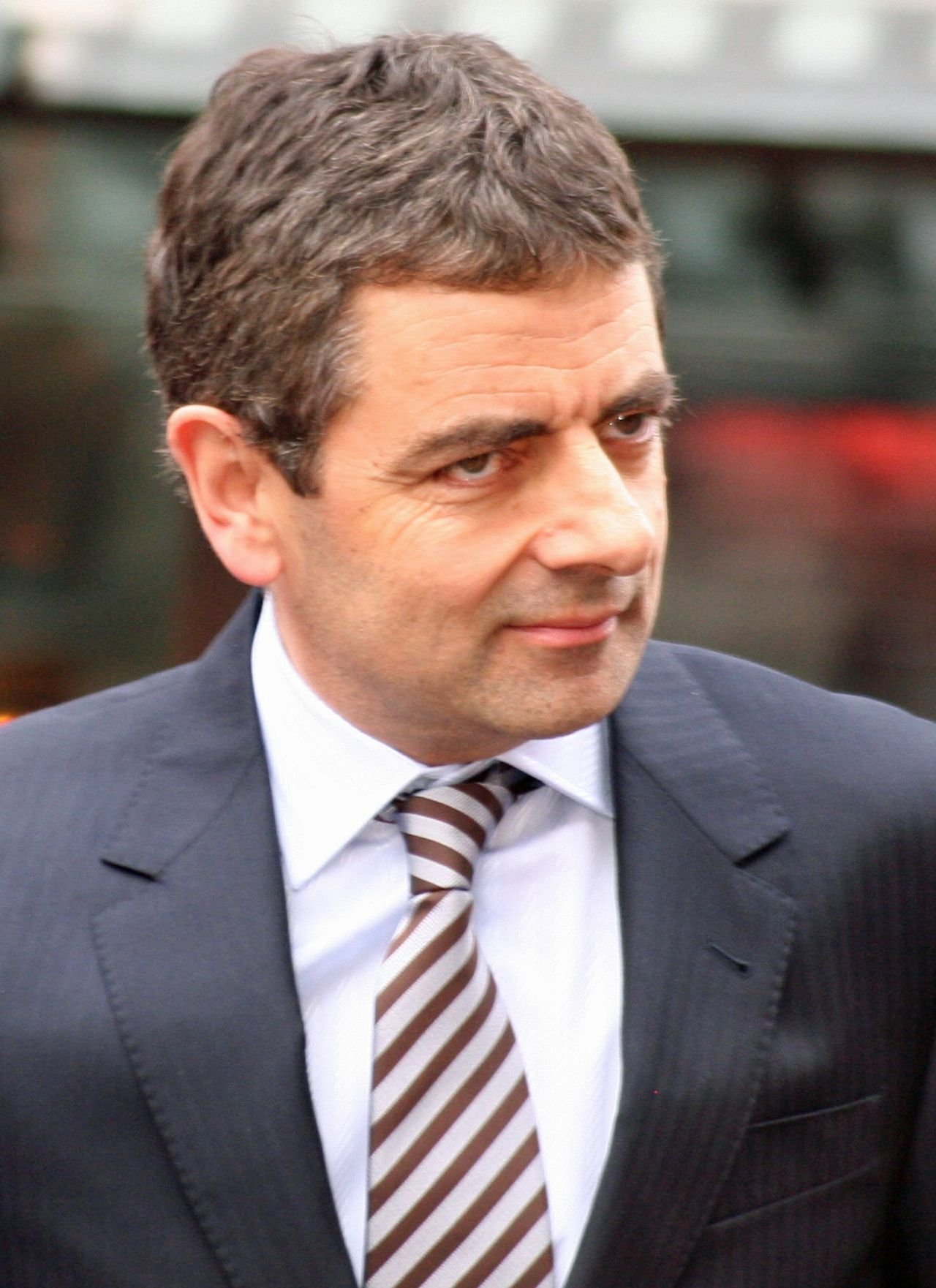
In September 1981, two men stood on the same stage at the Theatre Royal, Drury Lane, and British comedy quietly changed hands. One was John Cleese, six feet five inches of deadpan authority, already a legend of Monty Python and Fawlty Towers. The other was Rowan Atkinson, twenty-six years old, a former engineering student whose rubber face and gift for silence would soon make him world famous. They were there for Amnesty International, at The Secret Policeman’s Other Ball, a benefit show that put the old guard and the new guard on one bill. Fifteen years separated them. What joined them was a belief that comedy could be clever, physical, absurd and precise, all at once.
The tall man from Weston-super-Mare
John Marwood Cleese was born on 27 October 1939 in Weston-super-Mare, Somerset, the only child of an insurance salesman. His family name was originally Cheese, which his father thought embarrassing. His father had begun using Cleese when he enlisted during the First World War, and changed it officially by deed poll in 1923.
Cleese was educated at Clifton College in Bristol, then went to Downing College, Cambridge, to read law. Law was never the point. At Cambridge he joined the Footlights, the university revue club, and discovered that he could write and perform at the same time. The 1963 Footlights revue toured as Cambridge Circus and landed him a writing job at BBC radio. From there he moved into the satire boom of the nineteen sixties, writing and performing on David Frost’s programmes, including The Frost Report, which ran from 1966 to 1967, and At Last the 1948 Show. On those shows he developed his defining style: a man who looked absolutely normal, like an accountant, while saying and doing the most absurd things imaginable.
In 1969, Cleese co-founded Monty Python with Graham Chapman, Eric Idle, Terry Jones, Michael Palin and Terry Gilliam, and Monty Python’s Flying Circus ran on the BBC until 1974. He stayed with the group for its films, including Monty Python and the Holy Grail in 1975, Life of Brian in 1979 and The Meaning of Life in 1983. Fawlty Towers, which he co-wrote with his first wife, Connie Booth, ran to just twelve episodes, six in 1975 and six in 1979, and starred Cleese as Basil Fawlty, a rude hotel manager permanently on the edge of a nervous breakdown. He won the BAFTA for Best Entertainment Performance in 1980, and in 2000 Fawlty Towers topped the British Film Institute’s list of the 100 Greatest British Television Programmes.
The quiet engineer from County Durham
Rowan Sebastian Atkinson was born on 6 January 1955 in Consett, County Durham, the youngest of four boys. His father was a farmer and company director. He studied electrical engineering at Newcastle University, then took a master’s degree at Queen’s College, Oxford. It was at Oxford that the engineering student discovered he could make people laugh.
His first fame came from television. Not the Nine O’Clock News, the BBC sketch show that ran from 1979 to 1982, made Atkinson a household name in Britain and won him the BAFTA for Best Entertainment Performance in 1981. One of them had already given him his first break. Cleese had championed the virtually unknown Atkinson at the 1979 Secret Policeman’s Ball, the Amnesty benefit show, giving him a prominent role alongside the Pythons and Peter Cook. Atkinson’s performance there, confident in mime, vocal dexterity and sheer command of the audience, was his breakthrough, two years before the Other Ball put them on stage together again.
One stage, two generations
The Secret Policeman’s Other Ball was the fourth of Amnesty International’s benefit shows, and it took place at the Theatre Royal, Drury Lane, over four nights, from Wednesday 9 September to Saturday 12 September 1981. The bill mixed the old guard with the new: members of Monty Python, the cast of Not the Nine O’Clock News, Victoria Wood and Jasper Carrott, alongside musicians including Sting, Phil Collins and Eric Clapton.
They performed together twice. In the Beekeeping sketch, Atkinson played a twitchy, interrupting interviewer questioning Cleese as a bees specialist. Every time Cleese tried to answer, Atkinson cut him off, shushed him, or derailed him with a tic. The sketch was a revival of an older routine from At Last the 1948 Show, but in their hands it became a duel between the verbal and the physical, the straight man and the chaos around him. They also appeared together in Top of the Form, a spoof of television school quiz shows written by Cleese, in which Cleese played a game-show host with all the answers wrong, while Atkinson and five others tried to guess them anyway. The show opened with A Word of Thanks, performed by Atkinson, Cleese and John Bird. The stage show was filmed, and the film came out in 1982, which is why some sources give the Other Ball that year. The stage show was September 1981; the film was 1982.
Blackadder, Bean and the silent genius
After the Other Ball, Atkinson’s career moved fast, and it moved in two directions at once: the verbal and the silent. Blackadder, the historical sitcom he created with Richard Curtis, ran for four series between 1983 and 1989: The Black Adder in 1983, Blackadder II in 1986, Blackadder the Third in 1987 and Blackadder Goes Forth in 1989. In each series Atkinson played a different Edmund Blackadder, a scheming, sharp-tongued survivor, and the final series, set in the trenches of the First World War, ended with one of the most famous scenes in British television.
Then he proved he barely needed words at all. Mr Bean first appeared on New Year’s Day 1990, a childlike man who solved every problem the wrong way, and the series ran until 1995. Bean hardly spoke, which needed no translation, and he became one of the most famous characters on earth. The films followed: Bean in 1997 and Mr Bean’s Holiday in 2007. He voiced Zazu in Disney’s The Lion King in 1994, played Inspector Fowler in The Thin Blue Line from 1995 to 1996, and turned spy spoof into a film franchise with Johnny English in 2003. He played Fagin in the West End revival of Oliver! in 2009, took on the detective Maigret for ITV from 2016 to 2017, and returned to near-silent comedy in Man vs Bee for Netflix in 2022. He was appointed CBE in the 2013 Birthday Honours for services to drama and charity.
Wanda and the second act
Cleese, meanwhile, had his greatest film success after Python. A Fish Called Wanda, released in 1988, was a heist comedy he wrote and starred in. At the 61st Academy Awards it was nominated for Best Original Screenplay, a nomination Cleese shared with director Charles Crichton, and Kline won the Oscar for Best Supporting Actor. Cleese also won a BAFTA for Best Actor for his performance. It proved the Python generation could still write a hit film twenty years after the Flying Circus first aired.
He took the role of R, the gadget master, in the James Bond films, played Nearly Headless Nick in Harry Potter, and voiced King Gristle in Shrek. He wrote self-help books and a memoir, So, Anyway, published in 2014, made a long-running series of corporate training films, and became affiliated with Cornell University in 1999 as a professor-at-large. Basil Fawlty remains, for many people, the single funniest character in the history of British sitcom.
Two kinds of funny
Put the two men side by side and the difference is obvious, but so is the kinship. Cleese is the master of the slow burn: a tall man standing perfectly still while the world goes mad around him, until the pressure becomes too much. Atkinson is the master of the sudden twitch: a small man whose face does the talking, whose body betrays him, whose silence is funnier than any line. One towers over a scene; the other shrinks into it. Yet both built their comedy on the same foundation: absolute precision. Every pause, every raised eyebrow, every perfectly timed interruption is rehearsed until it looks effortless.
They also share a rarer quality. Both men created characters who outlived the shows that made them. Basil Fawlty and Mr Bean are known around the world by people who have never seen Fawlty Towers or a single episode of Blackadder. For more on two very different British stars who defined an era, read our piece on Daniel Craig and Pierce Brosnan.
They met as champion and protege, and ended up as equals. The Amnesty stage in 1981 was the moment the handover became visible: the Python generation making room for the generation that had learned from it. Forty-five years later, the sketches still play and the two men are still the measure of British comedy. One made us laugh by saying the absurd with a straight face. The other made us laugh by saying nothing at all.