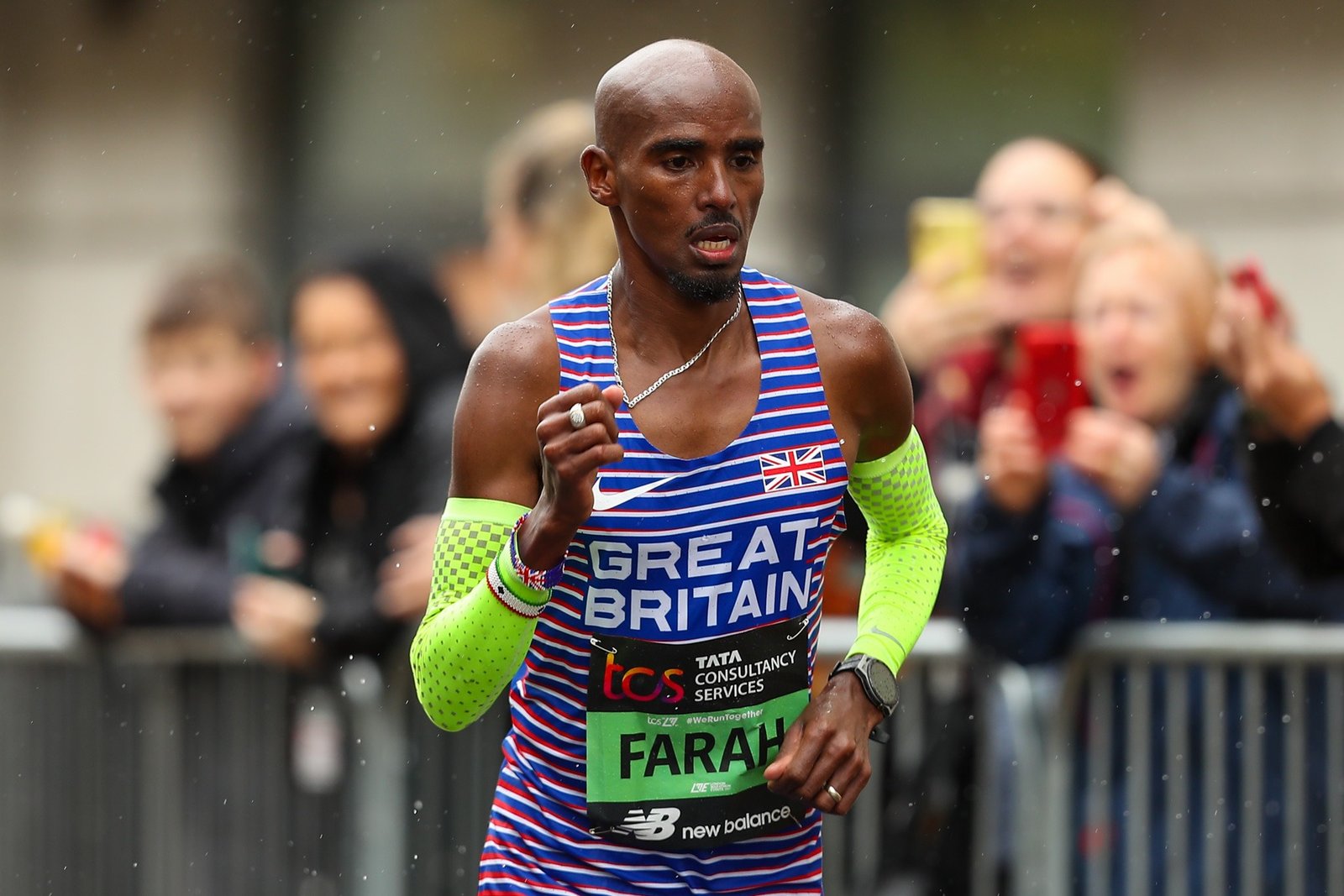
On the evening of Saturday 4 August 2012, British sport had its greatest night. Inside a roaring Olympic Stadium in east London, three gold medals arrived within the space of 44 extraordinary minutes, and two of them belonged to the athletes at the heart of this story. Jessica Ennis-Hill won the heptathlon in front of 80,000 people who had come to see her, and a little over half an hour later Mo Farah won the 10,000 metres, dropping to the track in disbelief. It made Farah and Ennis-Hill the faces of a golden generation.
Fourteen years on, they were reunited in November 2026 as special guests at the Pho3nix Sport with Purpose Charity Gala in London, alongside Greg Rutherford, the third member of that Super Saturday trio. The reunion was a reminder of how rare their achievement was: two athletes from very different backgrounds who reached the top of their sport at exactly the same moment. Between them they won six Olympic medals and nine world titles.
The Night That Changed British Athletics
Super Saturday, as 4 August 2012 came to be known, began with Ennis-Hill. She had carried the weight of a nation’s expectation into the Olympic Stadium, the poster girl of the home Games, and she delivered. She won the heptathlon with 6,955 points, a British record, finishing with a commanding run in the final event, the 800 metres.
Then came Farah. In the 10,000 metres final he ran the perfect race, sitting in the pack before unleashing his finishing kick to beat his training partner Galen Rupp. Seven days later he won the 5,000 metres too, completing a distance double only a handful of athletes have managed at a single Olympics. By the end of the night, Britain had won three athletics gold medals in less than an hour.
Mo Farah: From Somaliland to the Double-Double
He was born Hussein Abdi Kahin on 23 March 1983 in what is now Somaliland. His father was killed by a stray bullet in the civil conflict when Farah was around four years old, and he was separated from his mother and his twin brother Hassan. At about nine, a woman he had never met brought him to Britain, travelling under false papers that carried the name of another child, Mohamed Farah. That borrowed name stayed with him for life.
For years, the story the world knew was simpler: a boy born in Mogadishu who had come to London with his family. Only in 2022, in the BBC documentary The Real Mo Farah, did he reveal the truth: he had been trafficked to the UK and forced into domestic servitude in the household that took him in. The revelation stunned the country and reframed everything he had achieved.
What saved him was sport. A PE teacher at Feltham Community College, Alan Watkinson, spotted his talent and steered him towards running. Early supporters included the marathon runner Paula Radcliffe, who paid for his driving lessons, and the philanthropist Sir Eddie Kulukundis, who covered the legal fees for his naturalisation as a British citizen. He became a British citizen in 2000, and a year later won the European junior 5,000 metres title.
He won European titles at 5,000 and 10,000 metres in 2010, then moved to Portland, Oregon, in 2011 to train under Alberto Salazar. At the 2011 World Championships he won gold in the 5,000 metres and silver in the 10,000, and from there he barely lost a major race for six years. London 2012 brought the double, and further doubles followed at the 2013 and 2015 World Championships. At Rio 2016 he did it again, completing the double-double, only the second man in history after Finland’s Lasse Virén to defend both titles at consecutive Games.
Knighted in the 2017 New Year Honours, Farah was the most decorated athlete in British athletics history, with ten global titles: four Olympic golds and six world championship golds. He won a final world gold in the 10,000 metres at the London World Championships in 2017, then switched to the marathon, winning Chicago in 2018 in 2:05:11, a European record. His career ended at the Great North Run in September 2023, where he finished fourth in his final race.
Jessica Ennis-Hill: Sheffield’s Golden Girl
If Farah’s story is one of survival and reinvention, Ennis-Hill’s is one of patience and precision. Born Jessica Ennis on 28 January 1986 in Sheffield, she was discovered almost by accident at a schools event at the Don Valley Stadium, where a coach spotted her talent at eleven. She joined the City of Sheffield Athletic Club and began working with coach Toni Minichiello, a partnership that lasted her whole career.
The heptathlon is the most demanding event in track and field: seven disciplines across two days, from the 100 metres hurdles to the 800 metres. It punishes weakness in any event, and Ennis-Hill had none: fast over the hurdles, strong in the high jump, and a superb 800 metres runner. She won her first world title in Berlin in 2009, the world indoor pentathlon title in 2010, and defended her heptathlon crown in Daegu in 2011.
London 2012 made her a household name. She was the face of the home Olympics, her image on posters across the country, and she had to deliver in front of a home crowd. She did it with a performance rarely matched, winning the heptathlon with 6,955 points and breaking the British record. Her hurdles time of 12.54 seconds in the opening event was the fastest ever recorded in a heptathlon.
She missed the 2013 season with injury, then took time away to start a family, giving birth to her son Reggie in July 2014. Many assumed her career was over. Instead, she returned thirteen months later to win a third world heptathlon title in Beijing in 2015, one of the great comebacks in British sport. At Rio 2016 she won silver behind the Belgian Nafissatou Thiam. She announced her retirement in October 2016, and two months later was made a Dame in the 2017 New Year Honours, the same honours list in which Farah received his knighthood.
Two Champions, One Golden Summer
What binds Farah and Ennis-Hill together is not just the date on the calendar. Both reached their peak at a home Olympics, under pressure few athletes ever face, and both delivered. And both understood what their success meant beyond the track. Farah, a Black Muslim refugee who arrived in London unable to speak English, became the most successful British track athlete in Olympic history. Ennis-Hill, a working-class girl from Sheffield, became the face of the Games and a role model for a generation of young women in sport.
Neither courted celebrity for its own sake. Farah’s warmth and humour, and the Mobot celebration, made him one of the most recognisable figures in British sport. Ennis-Hill was quieter, letting her performances speak, and after her comeback from childbirth she spoke openly about the lack of support for athletes returning from pregnancy, a conversation that has since changed policy across British sport.
Life After the Track
Retirement has taken them in different directions, but their paths keep crossing. Farah has thrown himself into charity work through the Mo Farah Foundation, which supports projects in East Africa. In 2025 he teamed up with Ennis-Hill again for the Weetabix All-Stars campaign, alongside the England women’s football captain Leah Williamson, urging the nation to set small goals and build towards bigger ones.
Ennis-Hill has built a second career around health and fitness, founding the Jennis app, which offers training and guidance for women through different stages of life, including pregnancy and menopause. She has also become one of the BBC’s leading athletics pundits, covering major championships including the Paris Olympics in 2024, and has used her voice to push for better support for women athletes, particularly around motherhood and funding.
Why They Still Matter
British athletics has produced great champions before and since, but no pair has matched what Farah and Ennis-Hill achieved together. Farah’s ten global titles and Ennis-Hill’s three world championships and Olympic gold put them among the most decorated athletes this country has ever produced. Super Saturday remains the high-water mark of British Olympic sport, a night that still defines how a generation remembers London 2012.
Their stories endure for a different reason, too. Farah’s journey from a trafficked child to a knight of the realm is a reminder of what sport can rescue, and his decision to tell the truth about his childhood in 2022 took a courage no medal can measure. Ennis-Hill’s comeback from childbirth to a world title showed that an athlete’s career does not have to end when she becomes a mother. In the tradition of great British sporting partnerships such as Ben Stokes and Joe Root, they represent something larger than their medals: proof that Britain’s golden generation was built on talent, resilience, and refusal to give up.