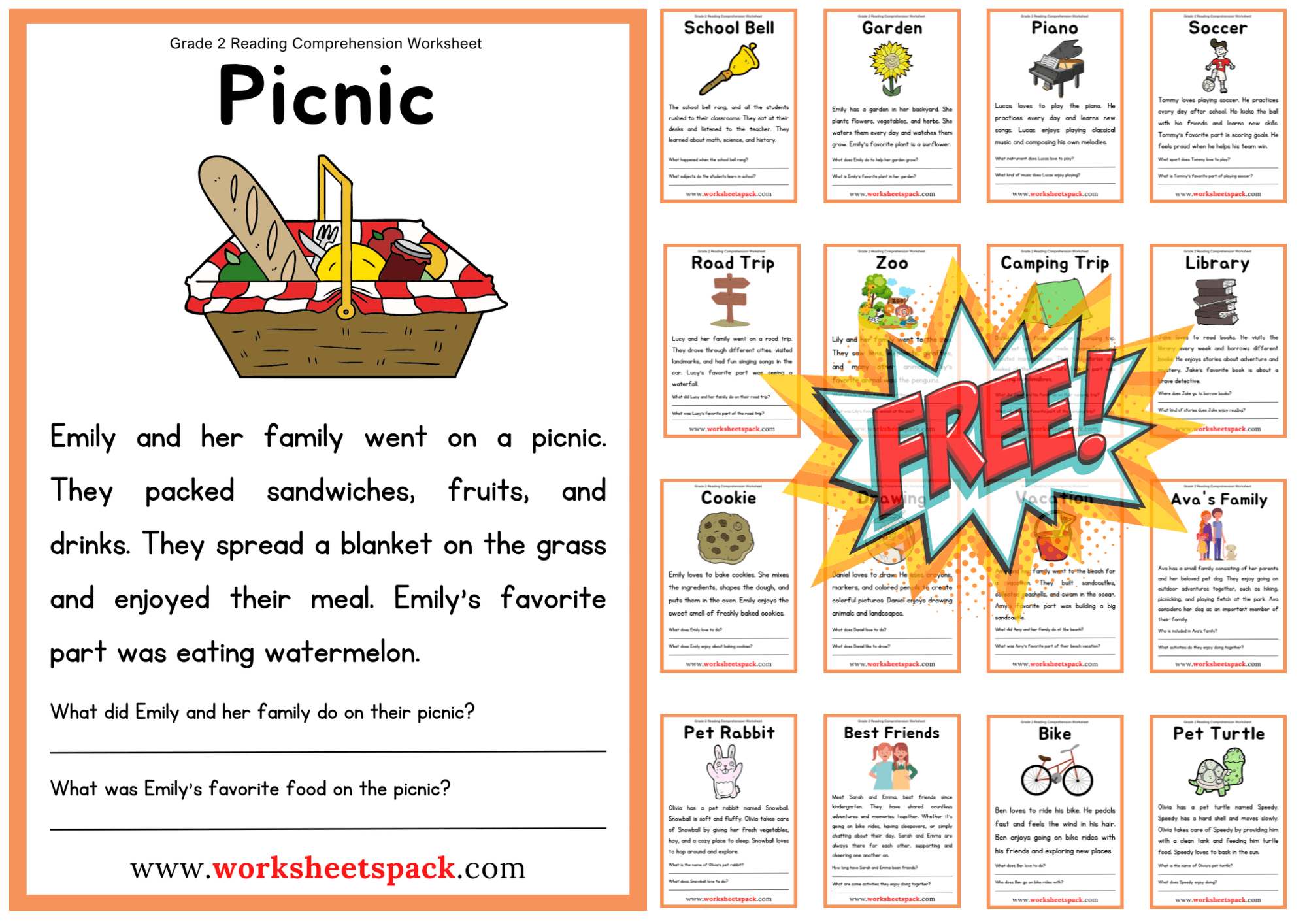
Helping children build a strong foundation in reading starts with true understanding, not just recognizing individual words on a page. That’s where targeted Year 2 comprehension worksheets become indispensable assets for both educators and parents. At this critical stage in a child’s development, reading comprehension serves as the essential cognitive bridge between learning to decode text and actively reading to absorb new information. These structured activities are meticulously designed to reinforce that bridge—engaging young minds with accessible short texts, thoughtful analytical questions, and age-appropriate themes that spark natural curiosity while deepening conceptual understanding.
During Key Stage 1 (KS1), and specifically throughout Year 2 (ages 6 to 7), pupils are expected to transition rapidly from phonetic decoding to reading fluency. It is no longer sufficient for a child to simply articulate the words out loud; they must begin to extract underlying meaning, make logical inferences, predict outcomes, and connect disparate text ideas. Highly optimized Year 2 comprehension worksheets facilitate this academic transition smoothly by providing systematic, enjoyable activities that perfectly suit formal classroom lessons, independent desk work, and targeted home practice. Furthermore, they serve as diagnostic tools for identifying hidden gaps in a child’s structural literacy, allowing teachers and guardians to build essential communication skills progressively.
Understanding the Core Framework of Year 2 Reading Comprehension
When analyzing what makes a Year 2 reading comprehension resource effective, it is crucial to align the content directly with the developmental milestones of the 6-to-7 age bracket. At this juncture, children are shifting away from pure phonics mechanics. They are beginning to look at sentences as complete units of thought rather than collections of isolated sounds.
An effective worksheet pack consists of two balanced halves: an engaging reading passage and an explicitly structured question set. The text passages must be brief enough to prevent cognitive fatigue but complex enough to feature varied sentence structures and introductory vocabulary words. The subsequent questions serve as the primary vehicle for assessment, forcing the child to revisit the text, evaluate the writer’s intent, and formulate a coherent written response. This process fundamentally trains the brain to treat reading as an active problem-solving exercise rather than a passive visual routine.
Direct Alignment with the UK National Curriculum (KS1 Standards)
To ensure that educational content carries genuine academic value and performs well on modern search engines, it must directly reflect the statutory requirements of the UK National Curriculum for Key Stage 1. Year 2 serves as the capstone of this key stage, making it a high-stakes period for literacy development. High-quality printable resources must explicitly target the specific reading domains outlines by educational authorities:
1. The Retrieval Domain (Literal Direct Finding)
Retrieval forms the absolute bedrock of early reading comprehension. Worksheets targeting this domain require children to act as text detectives, scanning the sentences to find facts that are explicitly stated. Typical questions include “What color was the character’s coat?” or “On what day did the event take place?” This skill builds scanning speed, keyword recognition, and memory retention.
2. The Inference Domain (Reading Between the Lines)
Inference is often where Year 2 pupils require the most targeted guidance. It requires children to use clues within the text combined with their own real-world knowledge to understand something that the author has not directly stated. For instance, if a passage states that “Liam put on his rain boots and grabbed his umbrella,” the child must infer that the weather outside is rainy. Worksheets that practice this domain teach children to look deeply at contextual clues.
3. The Vocabulary and Context Domain
At age 6 and 7, expanding a child’s working vocabulary is critical for long-term academic success. Curriculum-aligned worksheets deliberately introduce new adjectives, verbs, and adverbs within the text. The corresponding questions then challenge the pupil to deduce the meaning of an unfamiliar word based strictly on the sentences surrounding it. This process instills a strategic mindset for tackling complex books independently in later school years.
The Teacher & Parent Diagnostic Assessment Console
| Reading Comprehension Marker | Target Year 2 Benchmark Skill | Common Warning Signs of Gaps | Suggested Worksheet Strategy |
| Decoding & Fluency | Reads 60–90 words per minute accurately without pausing excessively to blend individual phonics sounds. | Sounding out every syllable; robotic reading tone; losing place frequently on the page. | Utilize short-passage poetry or repetitive fiction texts to build natural reading rhythm. |
| Literal Retrieval | Successfully locates and extracts explicit facts (names, dates, objects) from a 100-word text passage. | Guessing answers without looking back at the text; confusing separate characters. | Highlight-and-find worksheets where children underline the answer in the text before writing it. |
| Logical Inference | Connects textual clues to explain a character’s feelings, motives, or unstated environmental conditions. | Only understanding the literal actions; inability to explain why an event occurred. | Multiple-choice inference prompts that present guided logical options to scaffold deeper thinking. |
| Vocabulary Retention | Explains the meaning of basic contextual words and identifies simple synonyms or antonyms within a story. | Skipping over unfamiliar words entirely; limited descriptive vocabulary in written answers. | Match-the-word exercises integrated directly into the margins of non-fiction reading prints. |
To maximize the practical utility of these resources, educators and parents can utilize the systematic data console below to track a child’s progress across distinct reading comprehension markers. This console helps identify exactly where a child is thriving and where they may require additional reading interventions.

Exploring the Varieties of Year 2 Reading Material
A uniform approach to reading can quickly cause disengagement in young learners. To keep interest levels consistently high, Year 2 comprehension worksheets should be categorized into three primary structural text types, each offering distinct learning opportunities:
Fiction and Narrative Worksheets
Narrative texts, such as traditional fables, modern short stories, and classic fairy tales, are ideal for testing a pupil’s understanding of chronological plot progression, character dynamics, and setting changes. These sheets encourage children to predict what might happen next based on character behavior, boosting both their imaginative faculties and their structural understanding of creative storytelling.
Non-Fiction and Informational Worksheets
Informational texts introduce real-world facts focusing on topics like animal habitats, space exploration, historical figures, or simple science experiments. Non-fiction prints teach children how to navigate structured text elements like bold headings, bullet points, labeled diagrams, and instructional timelines. This style of worksheet is highly effective for building general knowledge while teaching pupils how to extract hard data efficiently.
Poetry and Rhyming Worksheets
Poetry provides an entirely different structural flavor for Year 2 pupils. By exploring short rhyming poems, children develop an acute awareness of linguistic rhythm, alliteration, word patterns, and basic figurative language. Poetry exercises are exceptionally useful for building verbal fluency and showing children how structural layout changes the emotional delivery of written language.
Practical Implementation: How to Use Worksheets Effectively

To extract the maximum educational value from printables, structure and delivery are everything. Whether you are a classroom teacher managing thirty pupils or a parent working one-on-one at a kitchen table, consider implementing the following step-by-step methodology:
- The Active Read-Aloud: Begin by reading the selected text passage together. For children building confidence, take turns reading alternating sentences. This reduces initial performance anxiety and models proper vocal inflection.
- The Structural Text Scan: Before diving straight into the written questions, ask the child to scan the page. Point out layout details such as titles, paragraph breaks, or illustrations that provide structural hints about the content.
- The Question Deconstruction: Read the first question out loud. Ask the child to identify the “clue word” in the question (e.g., if the question asks “Where did Sarah find the puppy?”, the clue word to scan for in the text is “puppy” or “Sarah”).
- The Verification Step: Encourage the student to physically point to the exact sentence in the text passage where the answer resides before they pick up their pencil to write. This simple physical habit drastically reduces careless guessing and reinforces data-driven accuracy.
Architectural Blueprint: Identifying Premium Resource Platforms
When hunting for high-quality, printable Year 2 reading comprehension PDFs, it is easy to become overwhelmed by the sheer volume of choices available online. To ensure you are downloading resources that truly optimize learning, evaluate them against these core structural criteria:
- Differentiated Layouts: Top-tier platforms offer differentiated learning sheets for the same text passage. This means the reading text remains identical, but the question sets are divided into low, medium, and high difficulty tiers, allowing you to tailor the academic challenge to the child’s exact reading placement.
- A Balanced Mix of Question Formats: Avoid sheets that rely exclusively on multiple-choice ticks. Premium worksheets balance quick check-boxes with open-ended lines that require the pupil to write out complete, structured sentences, thereby improving simultaneous handwriting and grammar application.
- Explicit Answer Keys: For busy teachers and parents, printable packets that bundle an exact answer sheet save hours of administrative time and make feedback cycles instantaneous.
Reputable educational databases such as Twinkl, K5 Learning, Headstart Primary, and Teachit Primary remain gold standards for sourcing curriculum-verified layouts. By incorporating clean fonts, spacious writing lines, and subtle thematic illustrations, these platforms ensure that early learning remains highly visual, organized, and stress-free.
Frequently Asked Questions (FAQs)
How often should a Year 2 child practice reading comprehension worksheets?
Consistency is vastly superior to cramming. For optimal skill retention, aim for two to three short worksheet sessions per week, lasting roughly 15 to 20 minutes each. This frequency keeps the analytical skills fresh in the child’s mind without causing academic burnout.
Are Year 2 comprehension printables helpful for preparing for Key Stage 1 SATs?
Yes, absolutely. Standardized KS1 reading assessments focus heavily on direct retrieval and foundational inference skills. Practicing with structured printables familiarizes children with standard exam layouts, question phrasing, and the discipline of looking back into a text to locate factual proof.
What should I do if a child can read the words fluently but cannot answer the comprehension questions?
This is a very common developmental phase known as “hyperlexia” or passive decoding. The child’s mechanical phonetic skills are advanced, but their cognitive processing is lagging behind. To remedy this, halt independent reading sessions and pivot back to guided reading, stopping after every single sentence to ask a verbal question about what just occurred.
Can these worksheets be adapted for struggling readers or children with SEN?
Yes. If a child is struggling with a Year 2 layout, scale down smoothly by utilizing targeted Year 1 text packages to build initial confidence. Alternatively, you can read the Year 2 text aloud to the child to assess their listening comprehension independently of their mechanical decoding capability.
Should I insist on complete sentences when a child writes down their answers?
In the initial stages of Year 2, focus primarily on factual accuracy. However, as the school year progresses, encourage the child to frame their answers using parts of the question. For example, instead of writing just “Under the bed,” encourage them to write, “The lost toy was under the bed.” This builds essential syntax skills for Key Stage 2.
Conclusion
Year 2 comprehension worksheets are foundational assets for turning developing readers into confident, analytical liflong learners. By offering carefully structured, highly engaging, and curriculum-aligned text passages, these resources prompt children to explore language, evaluate meaning, and take joy in independent text discovery. Whether implemented smoothly as part of a school literacy unit or utilized at home as an engaging weekend routine, these printables safeguard vital early literacy benchmarks. With a massive variety of free, high-caliber printable options available across trusted educational hubs, there has never been a more opportune moment to establish consistent, high-reward reading comprehension habits that will benefit children for a lifetime.
You may also read: Sunday Roasts and Seasonal Specials