Home fitness has evolved rapidly over the past few years, shifting away from basic, isolated machinery toward deeply integrated, software-driven training ecosystems. NordicTrack has remained at the forefront of this evolution by focusing on how people actually train at home rather than simply adding flashy, superficial features.
However, buying premium fitness equipment is a significant financial investment. To make an informed decision, you must look past the polished marketing brochures and evaluate the real-world usability, structural differences, and long-term running costs of these machines. This guide takes a practical, honest, and user-first look at the NordicTrack lineup—helping you determine which machine, if any, is the right fit for your home gym, training goals, and budget.
What Makes NordicTrack Structurally Different?
NordicTrack does not compete on price. Its market presence is built on two primary structural pillars: heavy-duty hardware build quality and automated machine response.
Heavy-Duty Structural Bases
Unlike budget-tier alternatives that shake, rattle, or shift when you pick up speed, NordicTrack machines are built with thick-gauge steel frames and wide, stabilized bases. This heavy footprint is intentional; it mimics the stable, planted feel of commercial health-club equipment. While this makes the units incredibly sturdy and durable for daily training, it also makes them exceptionally heavy and difficult to move once assembled.
Auto-Adjusting Technology
The core hardware differentiator is NordicTrack’s digital integration. Instead of forcing you to constantly press buttons to adjust speed, resistance, or incline mid-workout, the machines feature built-in smart solenoids and motors. When following a workout program, the machine dynamically changes your parameters on the fly based on the trainer’s instructions or the virtual terrain. This allows you to focus purely on your form, breathing, and effort levels.
The iFIT Integration: Cost vs. Reality
It is impossible to discuss NordicTrack without discussing iFIT. The hardware and software are designed to be a unified ecosystem. While this integration offers an immersive, world-class training experience, it also introduces ongoing subscription costs that you must factor into your buying decision.
The Automated Training Experience
When paired with an active iFIT subscription, your NordicTrack machine transforms. You aren’t just staring at progress rings or generic tracks; you are virtually running, riding, or rowing alongside elite trainers in locations worldwide—from the Swiss Alps to the beaches of Thailand. The automatic adjustment of incline, decline, and speed matches the actual topography of the video on your screen, creating a highly engaging and intuitive training session.
The No-Subscription Reality: What Happens if You Cancel?
Can you use a NordicTrack machine without paying for iFIT? Yes, but with significant limitations.
If you choose not to subscribe to iFIT or let your membership lapse, your premium, high-definition touchscreen console is largely restricted.
- Manual Mode Only: The screen will display a basic, retro-style track interface with simple metrics (time, distance, speed).
- No Scenic Rides/Runs: You lose access to the global outdoor workout library and trainer-led studio classes.
- Active Controls: You will have to manually adjust your speed, incline, and resistance using the physical console buttons.
| Feature | With iFIT Subscription | Without iFIT (Manual Mode) |
| Console Display | Interactive 10″ to 32″ HD Scenic Video | Basic Digital Matrix / Metrics Track |
| Incline/Resistance | Automated (Changes with terrain) | Manual (Adjusted via button presses) |
| Workout Library | 10,000+ Global & Studio Workouts | 1-3 Generic Calendar Workouts |
| Progress Tracking | Cloud-based profiles, metric history | Live metrics only (Not saved long-term) |
NordicTrack Treadmills: Finding the Right Series
NordicTrack treadmills are highly regarded for their proprietary cushioning and expansive incline decks. However, the brand offers multiple distinct lines tailored to different running styles.
       [T Series] ──> Affordable, Folding, Casual Jogging
           │
       [Commercial Series] ──> The Sweet Spot (1750/2450), Heavy Running
           │
       [Incline Trainers] ──> Elite Training, 40% Incline, Max Burn
The T Series (Entry to Intermediate)
Designed for walkers, casual joggers, and those with tight floor plans. These models (like the T 6.5 S or T 8.5 S) feature space-saving SpaceSaver folding decks with EasyLift Assist. They offer moderate motor power (typically 2.6 to 3.0 CHP) and compact running surfaces, making them highly accessible but less ideal for competitive marathon training.
The Commercial Series (The Sweet Spot)
The Commercial 1750 and Commercial 2450 are the gold standards of home running. Built with powerful Continuous Horsepower (CHP) motors (3.5 to 3.6 CHP), these machines can comfortably handle long, high-speed runs without overheating.
- Cushioning: They feature advanced deck cushioning that actively absorbs joint impact, which is highly noticeable during long road-running preparation.
- Decline Capability: Unlike standard budget treadmills, these offer a -3% decline up to a 12% to 15% incline, allowing you to train downhill muscles.
The Incline Trainer Series (High-Performance & Hiking)
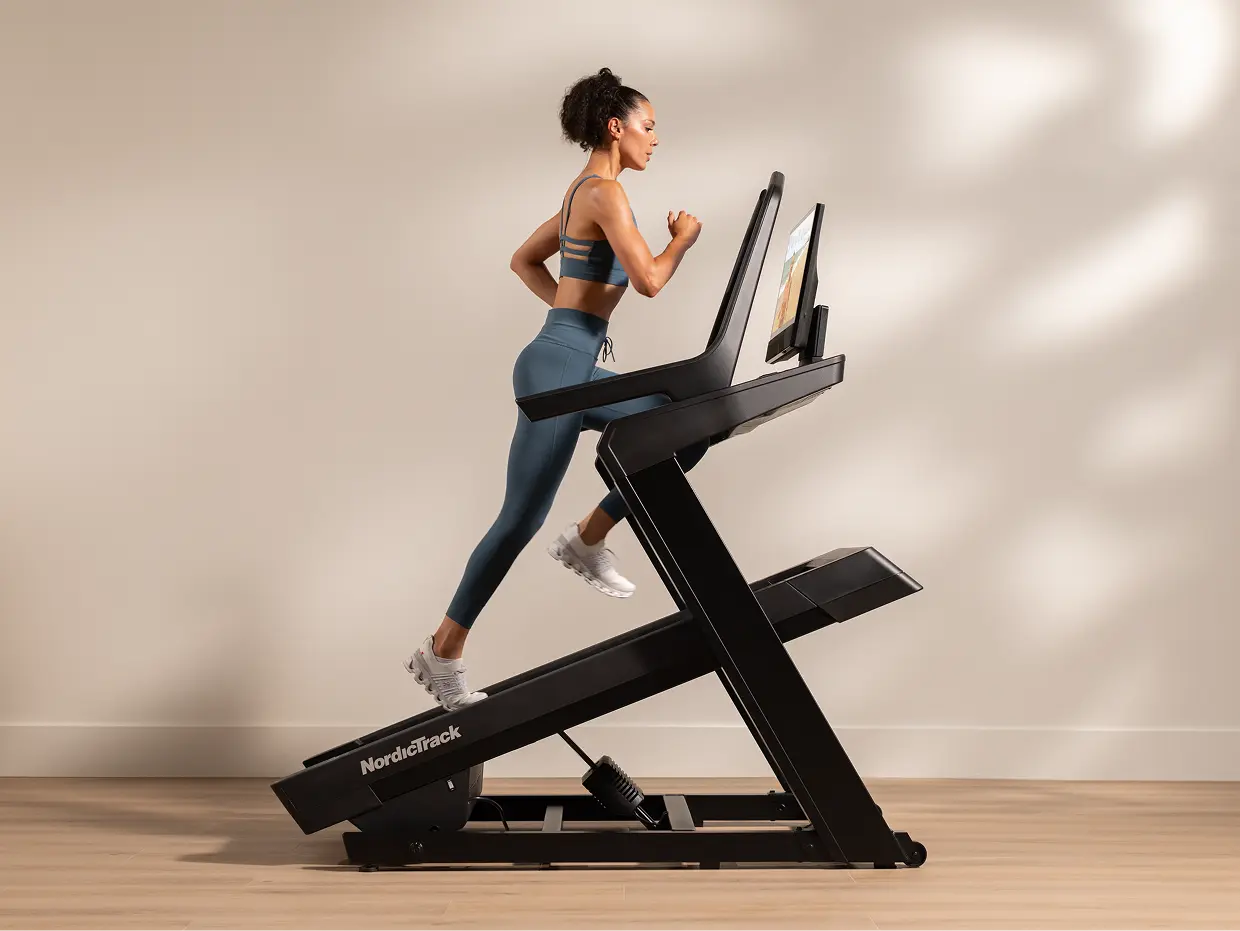
For those focusing on steep hiking, mountain running, or maximum calorie expenditure, the Incline Trainers (like the X22i or X32i) are unmatched. They feature an incredible -6% decline up to a massive 40% incline deck. Walking at a 40% incline burns calories at up to five times the rate of walking on a flat surface, making it an incredibly efficient, low-impact cardio option.
Cycling, Rowing, and Low-Impact Cross-Training
Commercial Studio Cycles: S22i and S27i
NordicTrack’s stationary exercise bikes are designed to directly compete with high-end studio brands, but they add a physical twist: real-time mechanical incline and decline.
- The S22i and S27i Studio Cycles physically tilt up (up to 20%) and down (down to -10%) as you ride. If your trainer is climbing a mountain in Italy, your bike physically lifts, forcing you to shift your posture and engage your climbing muscles.
- Silent Magnetic Resistance (SMR): The transition between resistance levels is completely silent and incredibly smooth, eliminating the jerky friction feel common in cheaper magnetic spin bikes.
Ellipticals and Cross Trainers: Fluid, Low-Impact Movement
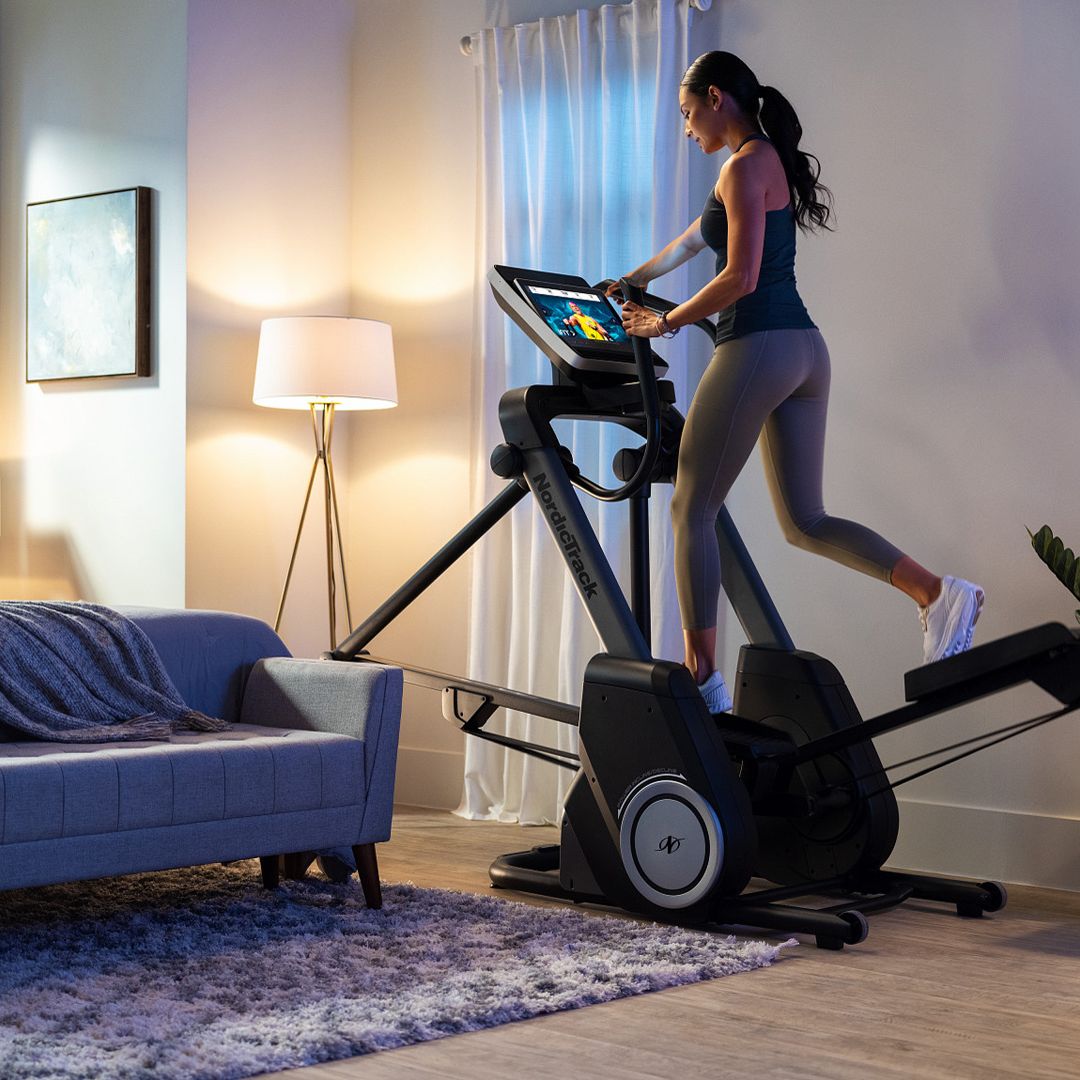
For users recovering from injuries or wanting a total-body workout without the joint strain of running, the Front-Drive (Commercial Vu) and FreeStride Trainer ellipticals are excellent.
- Adjustable Stride: High-end models allow you to dynamically adjust your stride length up to 32 inches, letting the machine adapt to your natural gait.
- Power Ramp Incline: By raising the ramp angle, you can target specific lower-body muscle groups (glutes, quads, or calves) while maintaining a low-impact motion.
RW Series Rowing Machines: Smooth Magnetic Pulls
The RW series (such as the RW900) provides a highly efficient, full-body workout. While many traditional rowers rely purely on noisy air resistance, NordicTrack combines air and Silent Magnetic Resistance (SMR). This dual-resistance design keeps the machine quiet enough to use in a shared household, while iFIT guided workouts help beginners master proper rowing form before attempting high-resistance power pulls.
Delivery, Weight, and Assembly: A Critical Reality Check
Before placing an order, it is vital to understand the logistics of bringing a commercial-grade fitness machine into a private home. Many buyers overlook the sheer physical scale of these units.
- The Weight Penalty: Premium NordicTrack treadmills and incline trainers routinely weigh between 110kg and 160kg (240lbs to 350lbs) in their shipping boxes.
- Delivery Classifications: Standard free delivery is almost always “curbside only.” This means the delivery driver will leave a pallet containing a massive, 150kg box on your driveway or at your curb. If you live in an apartment, have stairs, or live alone, you must plan for help.
- White-Glove Service: If available, it is highly recommended to upgrade to “room-of-choice” delivery or professional assembly. Having trained technicians handle the complex wiring, hydraulic folding linkages, and heavy motor decks protects your home from damage and ensures the machine is calibrated correctly.
Expert Note: Never attempt to move or assemble a Commercial Series treadmill or Incline Trainer alone. The motor deck and steel uprights are incredibly top-heavy and can easily cause injury if dropped during assembly.
Pros and Cons of NordicTrack Equipment
To ensure you make a balanced purchase, consider the following objective trade-offs of the brand:
Advantages
- Incredible Automatic Immersion: The auto-adjusting speed, resistance, and incline features make following workouts effortless.
- Excellent Shock Absorption: The deck cushioning systems are among the best in the industry, significantly reducing joint stress.
- True Decline Training: The ability to train on downhills (-3% to -6%) is a rare feature that prepares runners for real-world road conditions.
- Robust Build Quality: Heavy, commercial-grade steel frames provide an incredibly stable, vibration-free workout platform.
Limitations
- High iFIT Dependence: The overall value of the premium touchscreen console drops significantly without an active monthly subscription.
- Large Footprint & Weight: These machines are not designed for small, mobile spaces; they are heavy, semi-permanent fixtures.
- Premium Price Point: The initial investment, combined with ongoing subscription costs, makes it a premium fitness route.
Conclusion: Who is NordicTrack Best For?
NordicTrack continues to set the benchmark for connected home fitness by treating the training experience as an active, dynamic journey rather than a chore. If you are looking for cheap, basic machinery to casually step on while watching television, a simpler, purely manual machine will serve you better and save you money.
However, if you are a dedicated runner, cyclist, or fitness enthusiast who values structured progression, realistic outdoor simulation, and premium joint protection, NordicTrack is an exceptionally rewarding investment. By choosing the correct series for your space, understanding the ongoing iFIT subscription structure, and planning your home logistics carefully, you can build a highly effective, commercial-grade fitness hub that will keep you motivated for years to come.
Frequently Asked Questions (FAQs)
Can I watch Netflix, YouTube, or TV on the NordicTrack screen?
No. The built-in high-definition consoles are locked strictly to the iFIT operating system. You cannot download external streaming apps or cast video from your phone to the screen.
Does NordicTrack offer interest-free financing in the UK?
Yes. Major retail partners (like John Lewis) and the official NordicTrack storefront frequently offer interest-free credit and split-payment financing terms (e.g., 12 to 36 months) to help offset the premium upfront cost.
What is the difference between Commercial 1750 and Commercial 2450?
Both share similar running decks, decline capabilities, and motor strengths. The primary difference is the console size. The Commercial 2450 features a larger, 22-inch rotating touchscreen display compared to the 14-inch screen found on the Commercial 1750.
How do I clean and maintain the running deck?
To protect the motor and electronics, wipe down the console, handlebars, and running deck after every workout to prevent sweat corrosion. Additionally, check and apply 100% silicone treadmill lubricant underneath the running belt every 3 to 6 months depending on usage.
You may also read: Diverse Products at Lawsons: From Timber to Specialised Fencing