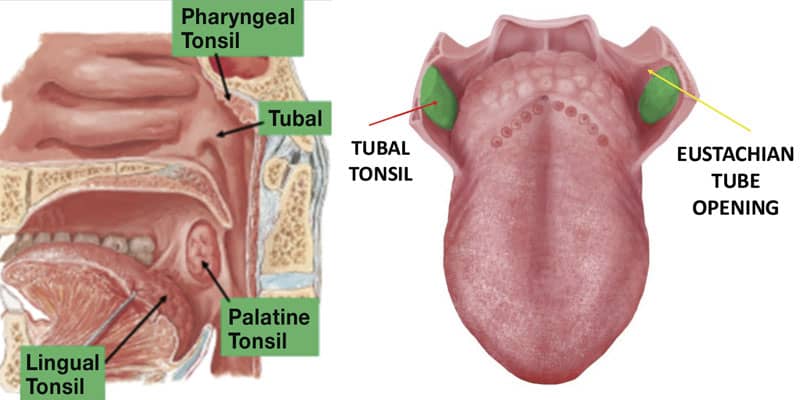
The lingual tonsils are small but important masses of lymphoid tissue located at the very back of the tongue. They form part of the body’s immune defense system and help protect against bacteria, viruses, and other harmful microorganisms that enter through the mouth and upper respiratory tract. Although they are not visible during a normal oral examination, they play a continuous role in monitoring pathogens and supporting immune activity in the throat region. Their function is often unnoticed in everyday life, but they are constantly active in protecting overall health.
Lingual tonsils are present in almost all individuals and remain functional throughout life as part of a larger immune structure known as Waldeyer’s ring. This ring also includes the palatine tonsils and adenoids, which work together to create a coordinated defense system in the upper airway. Even though lingual tonsils are hidden, they are biologically significant because they act as early detectors of infection. Their immune response helps prevent pathogens from spreading deeper into the respiratory system, making them essential for maintaining throat and airway health.
Location and Anatomy of Lingual Tonsils
The lingual tonsils are located at the posterior one-third of the tongue, specifically at its base near the entrance of the throat. This area lies between the circumvallate papillae and the epiglottis, making it difficult to observe without specialized medical instruments. The surface of this region may naturally appear slightly uneven or bumpy due to the presence of lymphoid tissue, which is a normal anatomical feature and not usually a cause for concern.
From an anatomical perspective, lingual tonsils consist of multiple small lymphoid nodules embedded within mucosal tissue rather than forming a single distinct structure. These nodules contain immune cells that actively monitor the oral environment for pathogens. Because of their deep location, they cannot be easily examined during routine dental or throat checks. Instead, healthcare professionals rely on internal visualization tools to assess this area when necessary. Their hidden placement allows them to function effectively without interference from external exposure.
Immune Function and Role in the Body
The primary role of the lingual tonsils is to support the immune system by acting as a first line of defense against harmful microorganisms. They contain specialized immune cells, including lymphocytes, that detect and respond to bacteria and viruses entering through the mouth. When these pathogens come into contact with the lingual tonsils, the immune system is activated, triggering a protective response that helps limit infection and prevent it from spreading further into the respiratory tract.
In addition to immediate defense, lingual tonsils contribute to immune system coordination with other lymphatic tissues in Waldeyer’s ring. This interconnected system ensures a rapid and efficient response to infections affecting the throat and oral cavity. Over time, they also help the body develop immune memory, allowing faster responses to previously encountered pathogens. Although small in size, lingual tonsils play a continuous and important role in maintaining immune balance and protecting the upper airway from repeated infections.
Common Conditions and Disorders Affecting Lingual Tonsils
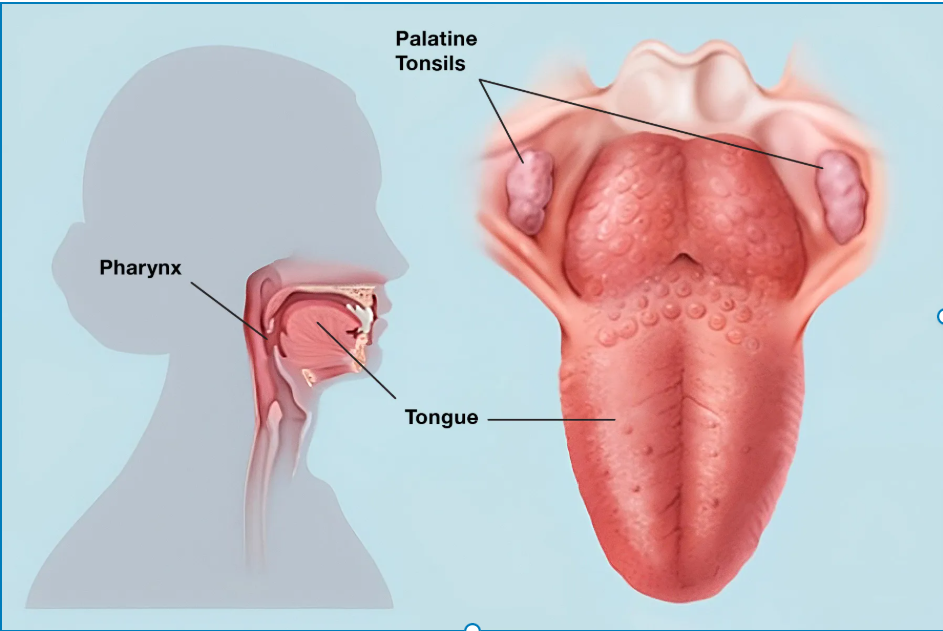
One of the most frequently discussed conditions affecting lingual tonsils is lingual tonsil hypertrophy, which refers to enlargement or swelling of the tissue. This condition may develop due to chronic irritation, allergies, repeated infections, or acid reflux. In many individuals, it does not cause noticeable symptoms, but in others, it may lead to discomfort, difficulty swallowing, or a persistent sensation of fullness in the throat. These symptoms can vary depending on the severity of the enlargement and underlying cause.
Lingual tonsillitis, or inflammation of the lingual tonsils, is another condition that can occur and may present with sore throat, pain while swallowing, fever, and sometimes ear discomfort. In more severe cases, enlarged lingual tonsils have been associated with sleep-related breathing issues such as snoring or obstructive sleep apnea. While most cases are harmless and treatable, persistent or uneven swelling should always be evaluated by a healthcare professional to rule out more serious underlying conditions and ensure proper care.
Diagnosis and Treatment Options for Lingual Tonsil Issues
Diagnosis of lingual tonsil conditions typically requires evaluation by an Ear, Nose, and Throat (ENT) specialist because these tissues cannot be seen during a standard oral examination. Doctors often use a flexible endoscope, which is a thin camera device, to view the back of the tongue and throat area in detail. This allows them to identify inflammation, enlargement, or abnormal tissue changes that may not be visible externally. In some cases, further tests may be recommended to confirm the diagnosis.
Treatment depends on the underlying cause of the condition. If a bacterial infection is present, antibiotics may be prescribed, while viral infections are usually managed with rest, hydration, and pain relief medications. When swelling is linked to chronic issues such as acid reflux or allergies, treatment focuses on managing those conditions to reduce irritation. In rare cases where severe enlargement affects breathing or quality of life, surgical removal of the lingual tonsils may be considered under specialist supervision.
When to Seek Medical Attention for Lingual Tonsil Symptoms
Medical attention should be sought if symptoms related to the lingual tonsils persist for an extended period or become progressively worse. Common warning signs include ongoing difficulty swallowing, persistent sore throat, unexplained voice changes, or a constant sensation of a lump in the throat. These symptoms may indicate inflammation or enlargement that requires proper medical evaluation to determine the underlying cause and appropriate treatment.
Immediate consultation with a healthcare professional is especially important if symptoms include breathing difficulties, severe throat pain, unexplained weight loss, or swelling that appears on one side only. While many lingual tonsil conditions are not dangerous, early diagnosis is essential for ruling out serious issues and ensuring timely treatment. Professional evaluation helps provide clarity, reduce anxiety, and prevent complications by addressing the root cause effectively.
Frequently Asked Questions (FAQ)
What are lingual tonsils?
Lingual tonsils are small clusters of lymphoid (immune) tissue located at the back of the tongue. Their main function is to support the immune system by helping detect and respond to bacteria, viruses, and other harmful particles that enter through the mouth and throat. They are part of a larger immune structure called Waldeyer’s ring, which also includes the palatine tonsils and adenoids. Most people do not notice them in daily life because they are hidden deep in the throat and only become relevant when inflammation or swelling occurs.
Where exactly are lingual tonsils located?
Lingual tonsils are found at the posterior one-third of the tongue, near the base where the tongue meets the throat. This area lies close to the epiglottis and behind the circumvallate papillae. Because of this deep position, they cannot be seen during a normal mouth examination without medical tools. Their location allows them to effectively monitor incoming pathogens from food, air, and saliva before they travel deeper into the respiratory system.
Can lingual tonsils become enlarged?
Yes, lingual tonsils can become enlarged, a condition known as lingual tonsil hypertrophy. This may happen due to chronic irritation, infections, allergies, or acid reflux. In some cases, enlargement causes no symptoms at all, but in others, it may lead to discomfort, difficulty swallowing, snoring, or a sensation of something stuck in the throat. Although often harmless, persistent enlargement should be checked by a healthcare professional to rule out underlying conditions and ensure proper management.
What are the symptoms of lingual tonsil problems?
Symptoms can vary depending on whether the tonsils are inflamed or enlarged. Common signs include sore throat, pain while swallowing, a feeling of fullness in the throat, coughing, voice changes, and sometimes ear discomfort. In more severe cases, enlarged lingual tonsils may contribute to breathing difficulties during sleep, including snoring or sleep apnea. If symptoms are long-lasting or worsen over time, medical evaluation is recommended for accurate diagnosis and treatment.
How are lingual tonsils examined or diagnosed?
Because lingual tonsils are not visible during a standard oral exam, doctors usually rely on specialized tools for diagnosis. An Ear, Nose, and Throat (ENT) specialist may use a flexible endoscope, a thin camera inserted through the nose or mouth, to view the back of the tongue and throat. This allows them to assess swelling, inflammation, or abnormal tissue changes. In some cases, additional tests may be required depending on symptoms and severity.
What is the treatment for lingual tonsil problems?
Treatment depends on the underlying cause. If infection is present, antibiotics may be prescribed for bacterial cases, while viral infections are managed with rest, hydration, and pain relief. If swelling is caused by allergies or acid reflux, treatment focuses on controlling those conditions. In rare and severe cases where enlarged lingual tonsils affect breathing or quality of life, surgical removal (lingual tonsillectomy) may be considered under specialist care.
Are swollen lingual tonsils dangerous?
In most cases, swollen lingual tonsils are not dangerous and may resolve with appropriate treatment or lifestyle changes. However, persistent or one-sided swelling, difficulty swallowing, breathing problems, or unexplained symptoms should always be evaluated by a doctor. While serious conditions are rare, proper medical assessment is important to rule out infections or, in very uncommon cases, more serious underlying issues.
When should I see a doctor for lingual tonsil symptoms?
You should consult a healthcare professional if you experience ongoing sore throat, difficulty swallowing, persistent throat discomfort, or a constant sensation of a lump in the throat. Immediate medical attention is needed if there are breathing difficulties, severe pain, unexplained weight loss, or worsening symptoms. Early diagnosis ensures proper treatment and helps prevent complications related to infection or airway obstruction.
You may also read:
Introduction: What “No Win No Fee” Truly Means for UK Claimants
Saving, Editing, and Managing Screenshots Efficiently