The wolf spider UK refers to a group of fast-moving, ground-dwelling spiders belonging to the Lycosidae family, widely found across Britain. Unlike web-building spiders, wolf spiders actively hunt their prey, using speed, camouflage, and strong eyesight rather than silk traps. This hunting behaviour is the reason behind their name, as they chase insects in a way that resembles a wolf pursuing prey.
In Britain, wolf spiders are among the most commonly encountered spiders in outdoor environments. British arachnological records indicate that there are around 38 species within this family across the British fauna. Among them, species such as Pardosa amentata are frequently seen in gardens and grasslands, making them familiar to many people. Despite their appearance and quick movements, wolf spiders are not dangerous and are considered beneficial due to their role in controlling insect populations.
What Is a Wolf Spider UK? Key Characteristics and Overview
A wolf spider in the UK is not a single species but part of a broader family of spiders known for their active hunting behaviour. These spiders do not rely on webs to capture prey and instead move across the ground in search of insects. Their ability to detect movement and respond quickly makes them effective predators in natural environments.
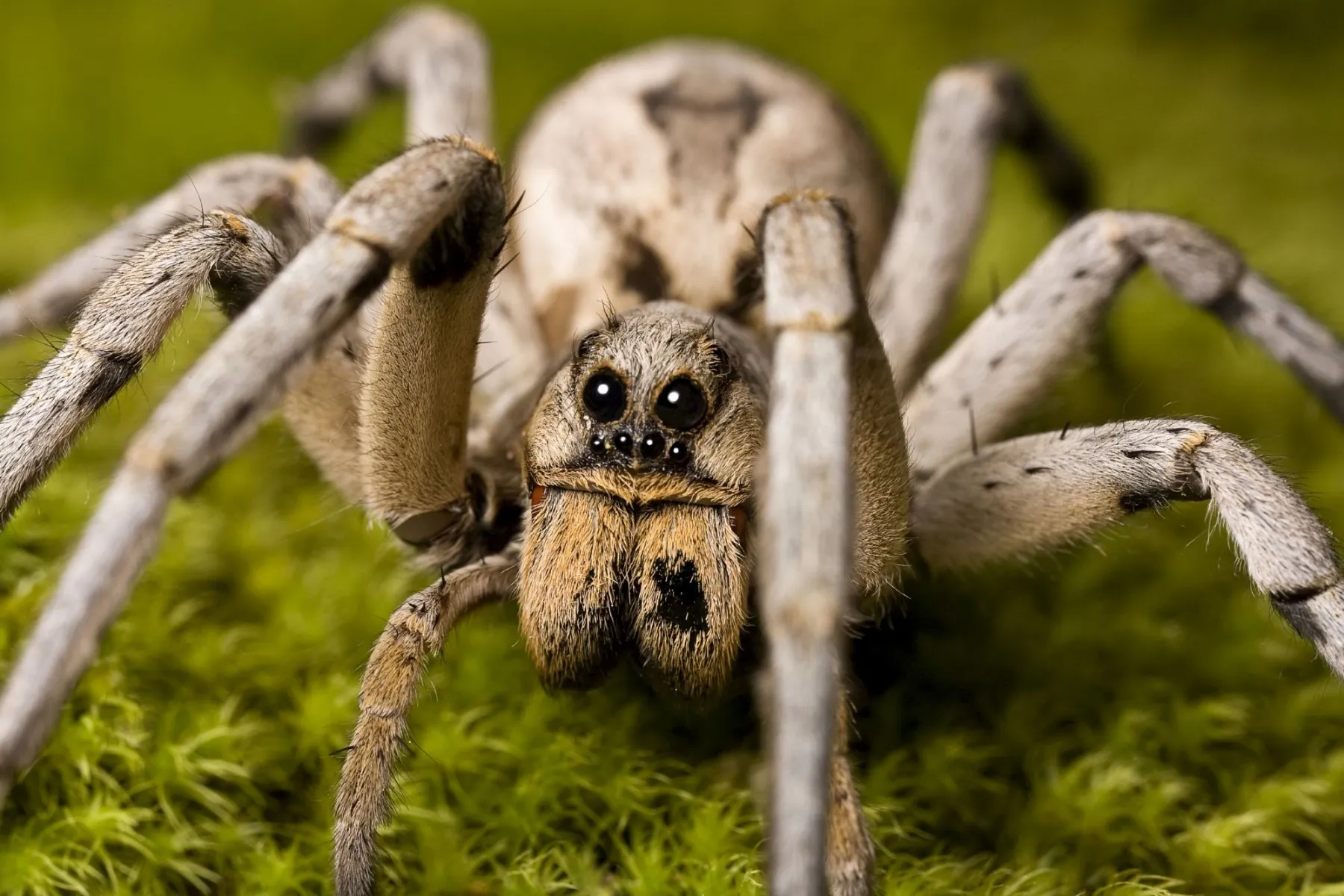
Wolf spiders are typically brown, grey, or dark in colour, often with subtle patterns that allow them to blend into soil, leaf litter, or vegetation. Their body size varies depending on the species, but many commonly observed UK wolf spiders fall within a moderate size range. A key identifying feature is their eye arrangement: eight eyes positioned in three rows, with two larger forward-facing eyes that help them judge distance and track prey accurately.
Where Are Wolf Spiders Found in the UK? Habitat and Distribution
Wolf spiders are widely distributed across the UK and can be found in a range of outdoor habitats. They are commonly seen in gardens, grasslands, farmland, heathlands, and woodland edges. Many species prefer open ground where they can move freely, making lawns, pathways, and low vegetation ideal hunting areas.
Some species, including commonly observed ones, are associated with damp or semi-natural environments such as marshes, riverbanks, and moorland areas. Their adaptability allows them to survive in both rural and semi-urban settings. While they may occasionally enter homes, this is usually accidental, and they do not establish indoor populations. Their primary activity occurs outdoors, where they contribute to natural ecological balance.
How to Identify a Wolf Spider in the UK
Identifying a wolf spider UK requires attention to both physical features and behaviour. These spiders generally have a robust body covered in fine hairs, with long legs suited for running rather than climbing webs. Their colouring tends to be earthy, helping them remain hidden against natural backgrounds.
One of the most reliable identification features is the eye pattern. Wolf spiders have eight eyes arranged in three distinct rows, with the middle pair noticeably larger. When light is directed at them in low conditions, these eyes may reflect, making them visible. In addition to appearance, behaviour is also a strong indicator. If a spider is seen running quickly across the ground rather than sitting in a web, it is likely to be a wolf spider.
Behaviour and Hunting Style of Wolf Spiders
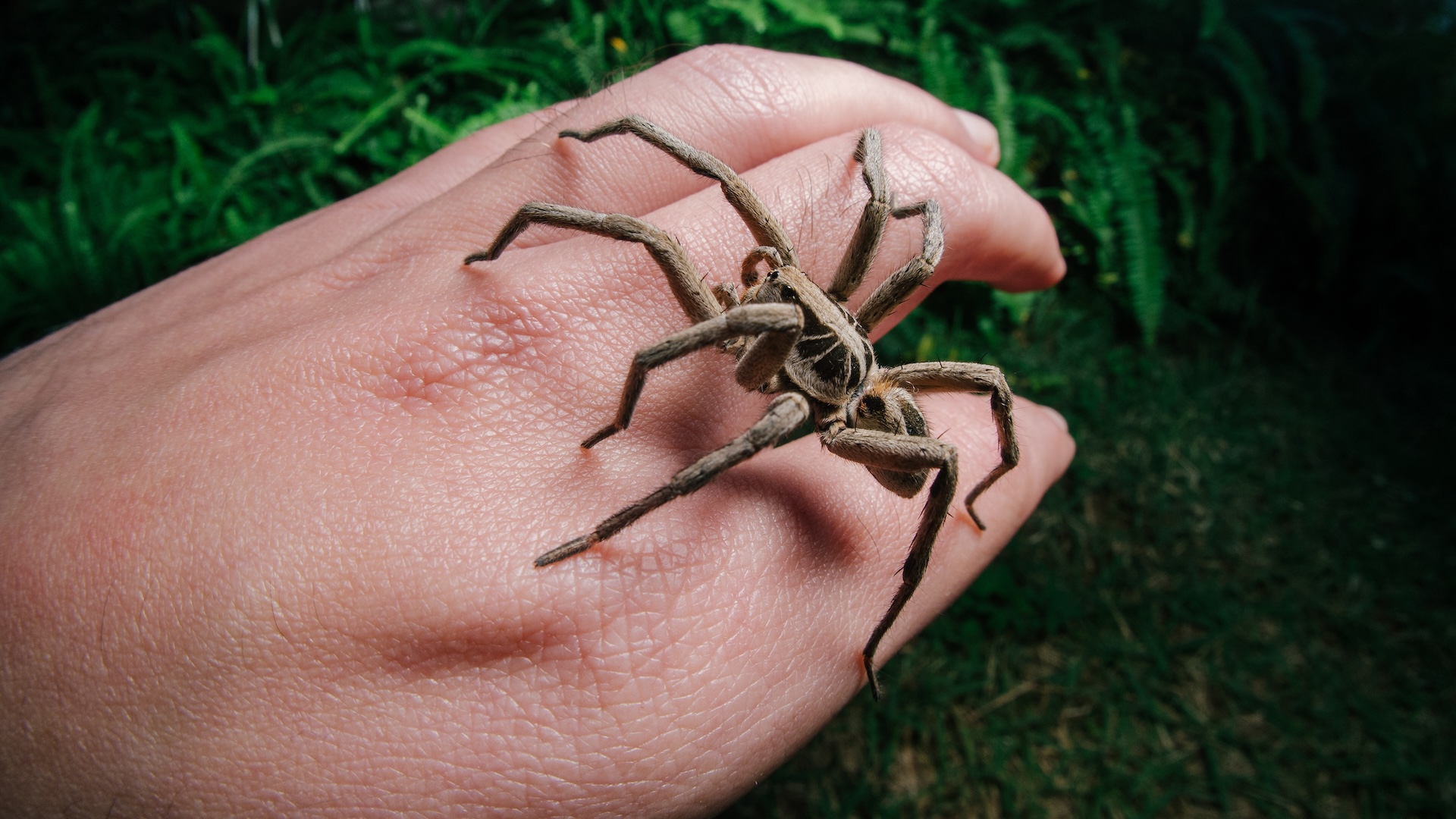
Wolf spiders are active hunters that rely on movement and precision rather than traps. They typically search for prey on the ground and either chase it over short distances or wait until the right moment to strike. This hunting strategy allows them to target a variety of insects, including small pests found in gardens and agricultural environments.
Another notable behaviour is their method of caring for offspring. Female wolf spiders carry their egg sacs attached to their spinnerets at the rear of the abdomen. After the eggs hatch, the young spiders climb onto the mother’s back and remain there for a short period. This level of parental care is uncommon among spiders and is one of the distinguishing features of the wolf spider family.
Are Wolf Spider Bites Dangerous in the UK?
Wolf spiders in the UK are not considered dangerous to humans. They are not aggressive and will usually attempt to escape rather than bite. Bites are uncommon and typically occur only when the spider is handled or accidentally trapped against the skin.
If a bite does occur, the effects are generally mild and may include slight redness, swelling, or irritation at the site. These symptoms usually resolve without medical treatment. Their venom is adapted for subduing small prey and is not medically significant for humans in normal circumstances. As a result, wolf spiders should not be regarded as a threat in everyday environments.
Size, Species Diversity, and Variation in the UK
Wolf spiders in the UK vary in size depending on the species, with many commonly observed individuals being relatively small to medium in body length. While some species are only a few millimetres long, others can appear larger due to their leg span and active movement.
British arachnological sources report approximately 38 species within the wolf spider family in the British fauna. This diversity means that appearance, habitat preference, and behaviour can vary between species. For example, Pardosa amentata is one of the most frequently encountered species in gardens and grasslands, particularly during warmer months when activity levels increase.
Why Wolf Spiders Are Beneficial in the UK Environment
Wolf spiders play an important role in maintaining ecological balance by feeding on insects. They help control populations of small pests such as aphids and flies, which can otherwise damage plants or disrupt ecosystems. Their presence is often a sign of a healthy environment with a functioning food chain.
Because they hunt actively rather than relying on webs, wolf spiders can target a wide range of insects in different habitats. This makes them particularly useful in gardens and farmland, where they contribute to natural pest management. Encouraging biodiversity, including the presence of spiders, can reduce the need for chemical pest control methods.
Common Misconceptions About Wolf Spiders in the UK
Wolf spiders are often misunderstood due to their name and appearance. Many people assume they are dangerous or aggressive, but this is not accurate. Their fast movement and relatively large size can make them appear intimidating, but they are generally shy and avoid human contact.
Another misconception is that they live indoors or build webs in homes. In reality, wolf spiders do not rely on webs and prefer outdoor habitats. Occasional indoor sightings are usually accidental and temporary. Understanding these behaviours helps reduce unnecessary concern and supports a more balanced view of their role in nature.
FAQ: Wolf Spider UK
Are wolf spiders common in the UK?
Yes, wolf spiders are common across the UK, particularly in gardens, grasslands, and natural habitats. Several species are regularly encountered during warmer months.
Do wolf spiders bite humans?
Bites are rare and usually occur only if the spider is handled or threatened. The effects are mild and not considered medically significant.
How can I identify a wolf spider?
Look for a fast-moving spider on the ground with brown or grey colouring and a distinctive eye arrangement featuring two large forward-facing eyes.
Do wolf spiders build webs?
No, wolf spiders do not use webs to catch prey. They actively hunt insects on the ground.
Are wolf spiders useful in gardens?
Yes, they help control insect populations naturally, making them beneficial for gardens and ecosystems.
Conclusion
The wolf spider UK represents a diverse group of active, ground-hunting spiders that are widely distributed across Britain. With around 38 species recorded, they are an important part of the country’s natural environment. Their behaviour, including active hunting and maternal care, sets them apart from many other spiders.
Although they are often misunderstood, wolf spiders are not dangerous and provide clear ecological benefits by controlling insect populations. A better understanding of their characteristics and behaviour helps shift perception from fear to appreciation. In both rural and urban settings, these spiders play a valuable and largely unnoticed role in maintaining balance within the ecosystem.
You may also read:
Audi Q7 2025 – UK Price, Specs, Interior & Full Review
Heathrow Airport Food in Terminal 3: Fast Service and Familiar Brands