If you have heard a nutrition expert say you should eat 30 different plants every week, you have almost certainly encountered the idea through Professor Tim Spector. The Tim Spector 30 plants a week list is not a diet in the traditional sense — there are no banned foods, no calorie counting and no complicated rules. Instead, it is a simple counting challenge built on one powerful insight from gut science: the diversity of plants you eat matters at least as much as the quantity.
The concept comes from large-scale microbiome research, including the American Gut Project, which found that people who ate 30 or more different plant types per week had markedly more diverse gut microbiomes than people who ate fewer than ten. Because the gut microbiome influences digestion, immunity, inflammation and even mood, the Tim Spector 30 plants a week list has become one of the most talked-about healthy eating frameworks in the UK. This guide explains exactly how it works, what counts, and how to reach the target without turning your kitchen upside down.
What Is the Tim Spector 30 Plants a Week Challenge?
Professor Tim Spector is a genetic epidemiologist at King’s College London and one of the world’s leading researchers on the gut microbiome. Through his research and his work co-founding the personalised nutrition company ZOE, he popularised the finding that plant diversity — not just eating “five a day” — is a key driver of gut health. The 30 plants a week challenge is his practical translation of that science: count every different plant you eat across a week, and aim for thirty or more.
Unlike restrictive diet plans, the challenge is built on addition rather than subtraction. You are not asked to eat more food overall, or to give up meat, dairy or treats. You simply broaden the range of plant foods passing through your kitchen. Each different plant brings its own fibres and polyphenols, and those compounds feed different species of beneficial gut bacteria. A wider menu of plants, in other words, farms a wider community of microbes — and a diverse microbiome is consistently linked with better metabolic and immune health.
The Complete 30 Plants a Week List by Category
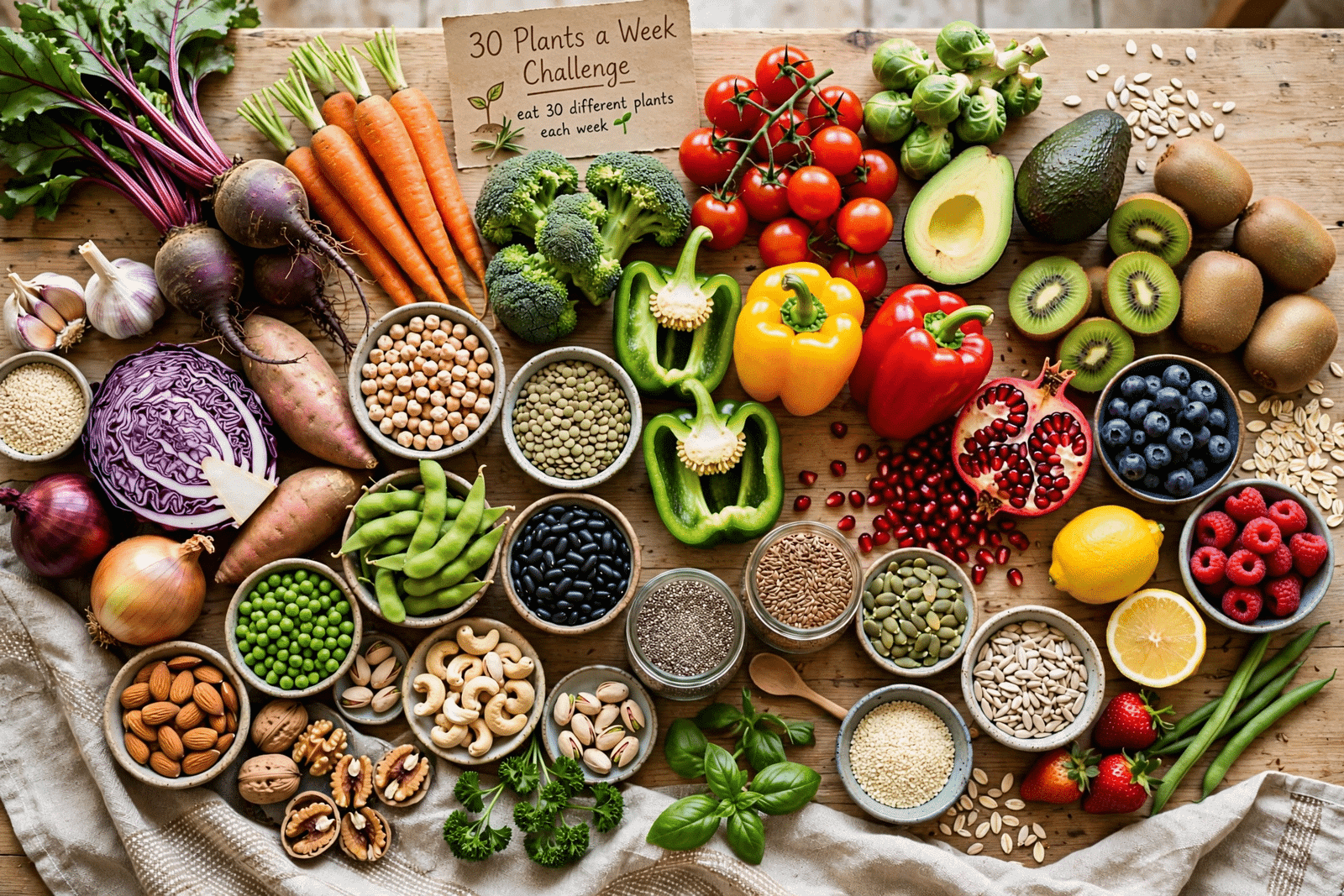
The Tim Spector 30 plants a week list is best understood as six flexible categories rather than a fixed shopping list. Vegetables form the backbone: spinach, carrots, broccoli, peppers, onions, mushrooms, sweet potatoes, courgettes and cabbages all count individually. Fruits add a second easy win — apples, bananas, berries, grapes, pears, citrus and stone fruits each count as separate plants, and frozen fruit counts exactly the same as fresh.
The remaining categories are where most people find their missing points. Legumes such as lentils, chickpeas, kidney beans, black beans and peas bring fibre and plant protein. Whole grains — oats, quinoa, barley, brown rice, wholemeal bread and rye — count individually too, as do nuts and seeds like almonds, walnuts, cashews, chia, flax and pumpkin seeds. Finally, herbs and spices, from turmeric and cumin to basil and cinnamon, add flavour and plant compounds in small but meaningful amounts.
How the Plant Points System Works
To make counting manageable, Spector’s system uses plant points. Each unique plant food you eat in a week scores one point, no matter how many times you eat it — spinach five times is still one plant. Herbs and spices, because they are eaten in small quantities, are usually counted as a quarter of a point each, so using four different spices across the week adds a full point to your total.
Different varieties can count separately, which rewards curiosity: red, yellow and green peppers, or different colours of onion, can each add to your tally depending on how strictly you track. Most people who count honestly for the first time are surprised to find they only reach ten to fifteen plants a week, even on what feels like a healthy diet. That gap between perception and reality is exactly what the Tim Spector 30 plants a week list is designed to close.
Health Benefits of Eating 30 Plants a Week
The headline benefit is gut microbiome diversity. Each plant contains different fibres, and different gut bacteria specialise in fermenting different fibres, producing short-chain fatty acids that nourish the gut lining and calm inflammation. A more diverse microbiome is associated with steadier digestion, less bloating and better nutrient absorption, which is why so many people report feeling the difference within a few weeks of widening their plant range.
The benefits appear to extend well beyond the gut. Diets rich in diverse plants are associated in research with lower risks of heart disease, type 2 diabetes and obesity, thanks to the antioxidants, vitamins and anti-inflammatory compounds plants provide. There is also growing interest in the gut-brain axis: because the gut and brain communicate constantly, a healthier microbiome may support mood, stress resilience and sleep quality. Plant diversity is not a cure for anything, but as a foundation habit it is unusually well supported by evidence.
How to Reach 30 Plants a Week Without Stress
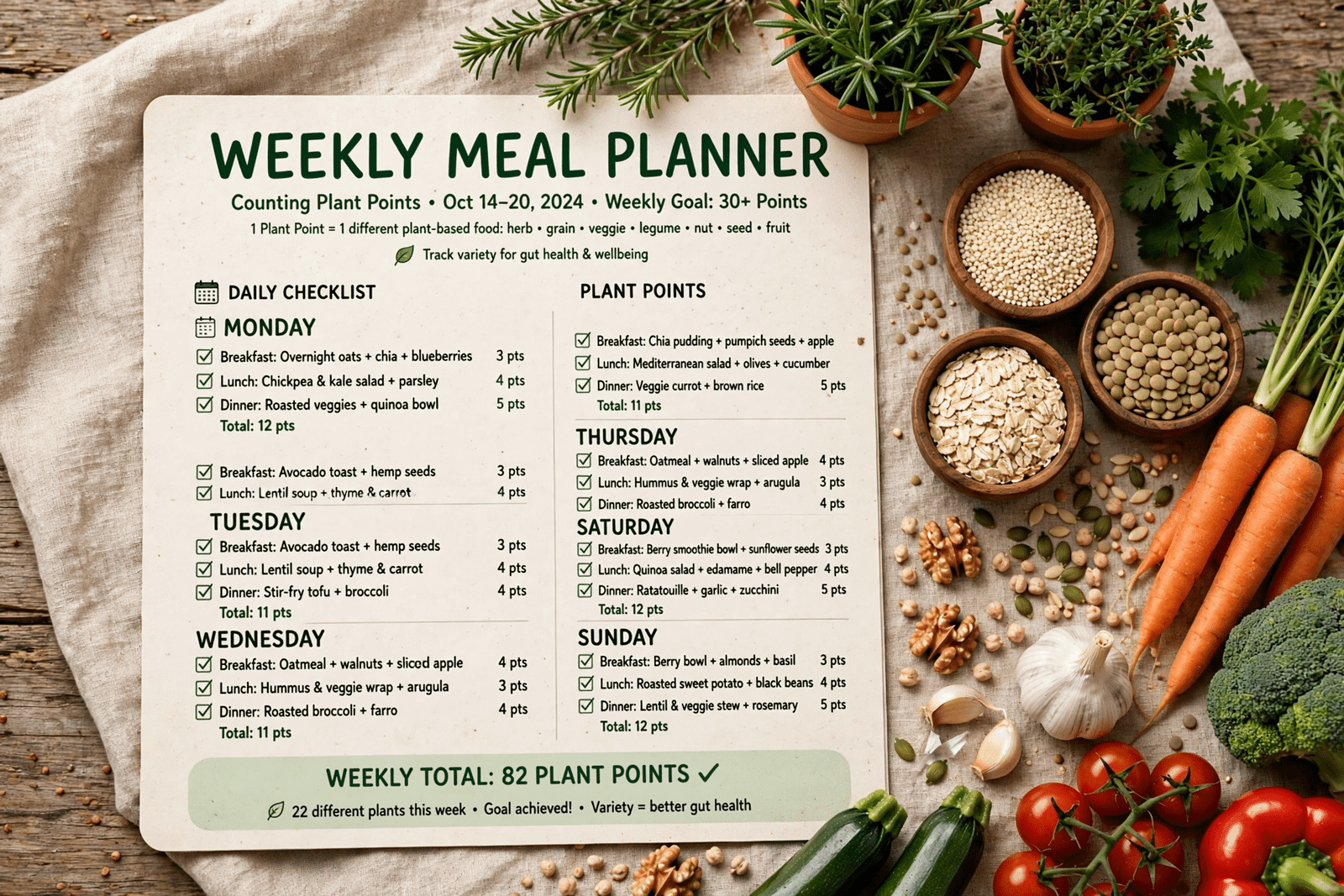
The easiest way to climb the Tim Spector 30 plants a week list is to build variety into meals you already cook. A stir-fry, soup, curry or salad can easily contain six to ten different plants in a single bowl: swap a single-vegetable side for a mixed pack, add a tin of mixed beans to chilli, scatter seeds over porridge, and stir a handful of spinach or frozen peas into pasta sauces. Small upgrades beat heroic overhauls, because they are the changes you will still be making in six months.
Official guidance backs this pattern of eating: the NHS 5 A Day guidance encourages a wide variety of fruit and vegetables, and the 30 plants approach simply extends that variety across all plant groups, all week long. Practical tricks include keeping a running tally on the fridge, buying one unfamiliar vegetable each week, choosing mixed-grain bread and rice, and treating herbs, spices, coffee, tea and dark chocolate as the bonus points they legitimately are.
Common Mistakes to Avoid
The most common mistake is confusing quantity with diversity. Eating a mountain of broccoli every day is good for you, but it still only counts as one plant. The challenge is about range: ten different plants in modest portions will do more for your microbiome than three plants eaten in bulk. If your weekly shop looks identical every week, your points will stall no matter how healthy each individual item is.
The second mistake is forgetting the small stuff. People routinely undercount herbs, spices, grains, coffees and teas, then conclude the target is impossible. The third is turning counting into a source of stress. Spector’s own framing is that 30 is a direction of travel, not a pass-fail exam — moving from twelve plants to twenty is a genuine health win, even if you never hit thirty every single week.
Conclusion
The Tim Spector 30 plants a week list endures because it replaces restriction with curiosity. Instead of asking what you should cut out, it asks what you could add: one more bean in the chilli, one more seed on the porridge, one new vegetable in the trolley. Those tiny additions compound into a genuinely different diet — one that feeds a broader, more resilient gut microbiome and supports long-term health on multiple fronts.
You do not need to reach thirty overnight, and you do not need special products or supplements to start. Count your current plants honestly, add a few each week, and let variety become the habit. Your gut bacteria will notice the difference long before the tally on the fridge door is complete.
Frequently Asked Questions
What counts as a plant in the 30 plants a week challenge?
Vegetables, fruits, legumes, whole grains, nuts, seeds, herbs and spices all count. Coffee, tea and dark chocolate also count because they come from plants. Each different plant counts once per week, however many times you eat it.
Do frozen vegetables count towards 30 plants a week?
Yes. Frozen and cooked plants count exactly like fresh ones, because their fibre and most of their nutrients remain intact. Frozen mixed vegetables are actually one of the easiest ways to add several plants in a single meal.
How many points are herbs and spices worth?
Herbs and spices are usually counted as a quarter of a point each, because they are eaten in small amounts. Using four different herbs or spices across your cooking therefore adds roughly one full point.
Is 30 plants a week scientifically proven?
The target comes from the American Gut Project, which found people eating 30 or more plant types weekly had significantly more diverse gut microbiomes than those eating under ten. It is a well-supported guideline rather than a strict medical prescription, and any increase in diversity helps.
Can I still eat meat on the 30 plants challenge?
Yes. The challenge is about adding plant diversity, not removing animal foods. Many people following the Tim Spector 30 plants a week list eat meat, fish, eggs and dairy alongside their thirty plants.
How long before I notice benefits?
Gut microbes respond quickly to dietary change — studies show shifts within days — but most people report steadier energy, digestion and bloating improvements after three to four consistent weeks of higher plant diversity.
If you are building healthier eating habits, pairing plant diversity with smart protein choices makes a real difference — our guide to high protein fast food shows how to order well even on busy days.
For more practical nutrition ideas that fit real life, explore our high protein fast food meal ideas and keep your weekly menu working harder for you.