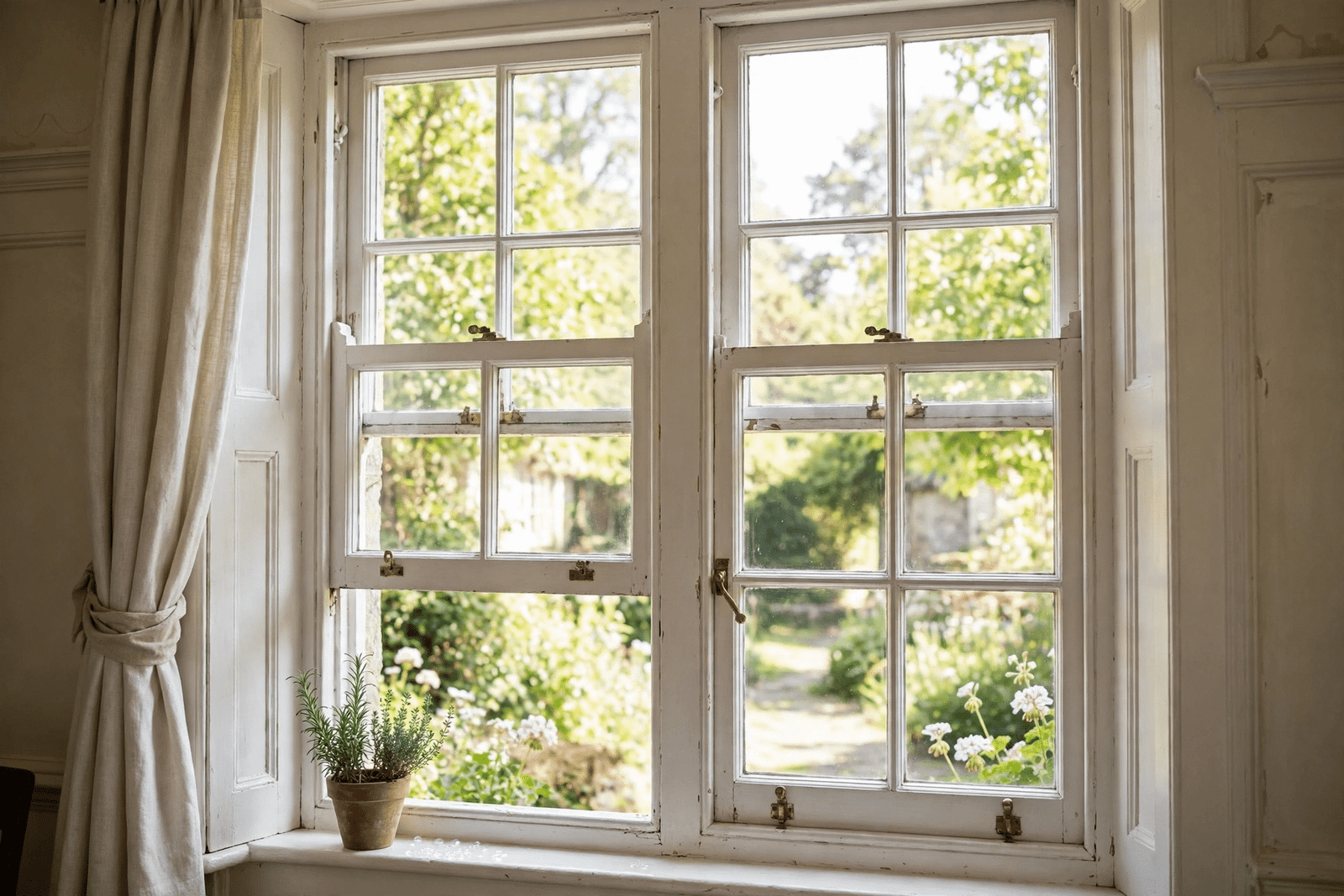
It is a familiar and faintly alarming moment in any period home: you lift the bottom sash to let in some air, let go — and the window crashes back down like a guillotine. When a sash window won’t stay up, the problem is almost never the window itself. Behind the frame, hidden in the box on either side, sits a simple and brilliant balancing system of weights, cords and pulleys — and when a sash window won’t stay up, some part of that system has failed.
The good news is that counterweight problems are among the most fixable faults in an old house. Sash windows were designed to be serviced, not replaced, and a window that slams, sticks or rattles can usually be restored to a smooth, finger-light glide for far less than the cost of a new unit. This guide explains how the counterweight system works, how to spot which part has failed, what repair involves, and when a specialist is genuinely worth calling.
How Sash Window Counterweights Actually Work
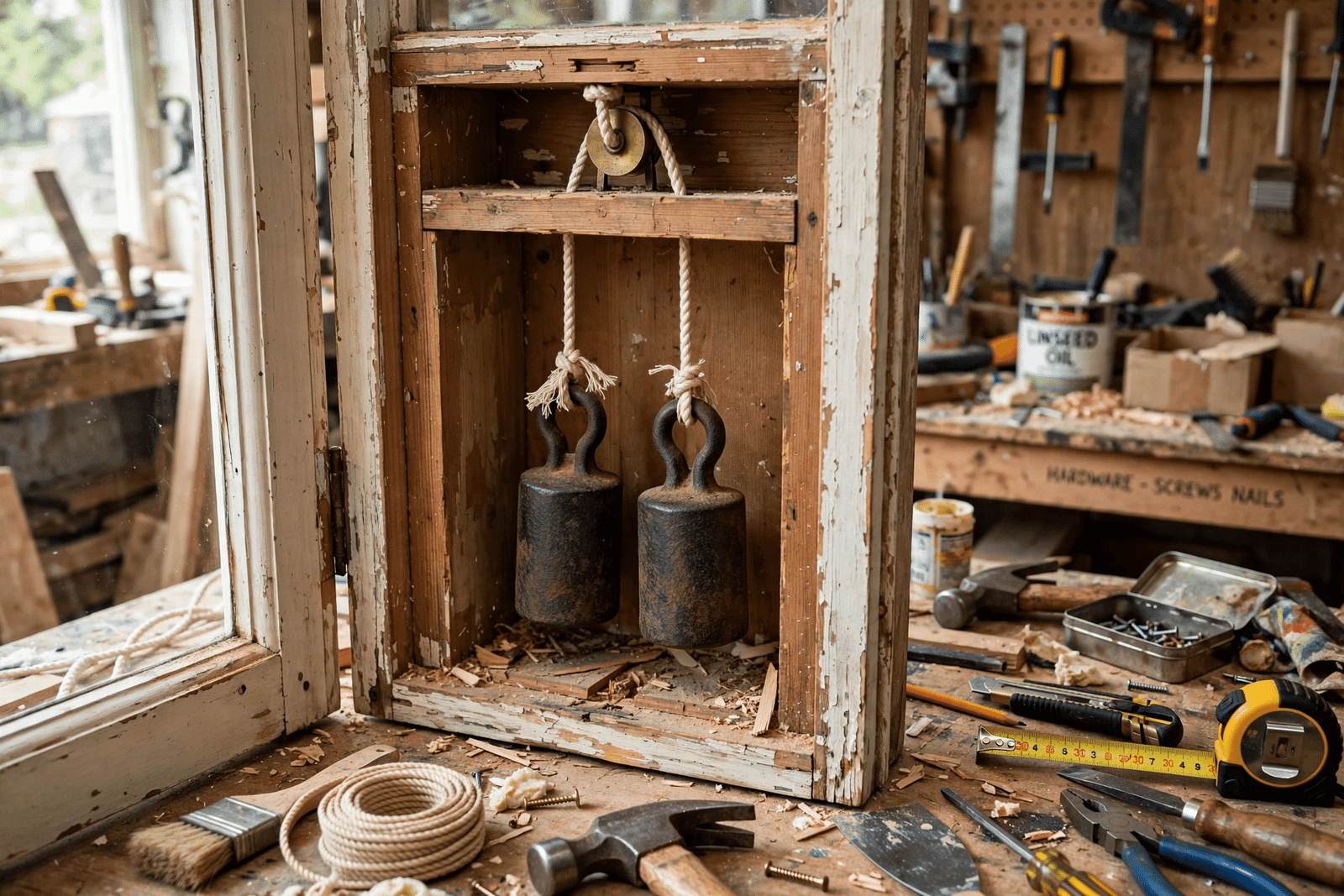
Inside each side of the window frame is a hollow box containing a heavy weight — traditionally cast iron or lead — attached to the sash by a cord that runs over a pulley at the top of the frame. When you lift the sash, the weight descends inside the box, and because the weight closely matches the weight of the sash itself, the window feels almost weightless and stays exactly where you leave it. Each sash has its own pair of weights, which is why both the top and bottom sashes can move independently.
The elegance of the system is its balance, and that is also its weakness. Add heavier glass to a sash — slimline double glazing, for example — without adding weight to the counterweights, and the sash will creep down. Let a cord fray through, and the weight drops to the bottom of the box with a muffled thud, leaving the sash completely unsupported. When a sash window won’t stay up, it is this balance, or the cord that maintains it, that has been lost.
Signs Your Counterweights Need Attention
A sash rarely fails without warning. The earliest sign is usually a change in feel: a window that once glided begins to move jerkily, needs a firm shove to start, or drifts down a few centimetres after you position it. Frayed cords are visible where they pass over the pulley, and a cord that has already snapped often leaves the sash noticeably heavier on one side, so it twists slightly as it moves.
More dramatic symptoms follow if the problem is ignored. A sash that drops suddenly can crack glass, damage the frame, and is a genuine injury risk to fingers — especially children’s. Rattling sashes, visible gaps at the meeting rail, and new draughts are all signs that the sashes are no longer sitting square in the frame, which is frequently a balance problem rather than a joinery one. If your sash window won’t stay up at all, assume a snapped cord or a detached weight until proven otherwise.
Why Well-Balanced Sashes Matter
Balanced counterweights do far more than make a window pleasant to open. A sash that closes evenly and sits square seals properly against its beads, cutting the draughts that make period homes expensive to heat. With energy costs where they are, a set of windows that shut properly can make a measurable difference to both comfort and bills, without any change to the appearance of the house.
There is a safety and longevity argument too. Sashes that slam put repeated shock through old glass and timber joints, loosening putty and opening gaps for water to enter — and water is what rots sash boxes. A balanced window moves gently, stresses nothing, and keeps the whole frame in good order. Well-maintained timber sashes routinely outlast their modern replacements by generations, which is why repair is almost always the right first instinct.
Repair, Replacement and Upgrade Options
Many counterweight faults need nothing more than re-cording and rebalancing: the sashes are removed, the old cords replaced, the pulleys cleaned and checked, and the weights adjusted so each sash balances correctly. If a weight has gone missing over the decades — it happens more often than you would expect — replacements in cast iron or modern modular steel can be fitted to the box. Heavier modern glazing simply needs additional make-weights added to restore the balance.
Alternatives exist where the original system is beyond saving. Spiral balances replace weights and cords with a spring mechanism inside a tube, and they can be a practical retrofit in shallow boxes, though purists generally prefer the authenticity and longevity of proper weights. For period and listed homes, the guidance from Historic England on caring for traditional windows is clear that repair and upgrading — including discreet draught-proofing — is preferred over replacement, and conservation officers will usually expect original windows to be retained wherever possible.
What a Professional Repair Involves
A typical professional repair begins with removing the staff bead and parting beads so both sashes can be lifted out safely. Small pocket pieces cut into the side of the box are then opened to reveal the weights inside. The repairer checks the weights against the actual weight of each sash, replaces cords, frees or replaces seized pulleys, and knots everything back together before refitting the sashes and beads.
The whole job for one window usually takes half a day or less, and it is commonly combined with draught-proofing, new brush seals, and minor timber repairs while the sashes are out. Costs vary with region, window size, and condition, but re-cording and balancing a standard window costs a fraction of even the cheapest replacement sash — and doing several windows in one visit brings the per-window price down noticeably, since the tools and setup are already on site.
DIY or Specialist: Making the Call
Confident DIYers can re-cord a sash window, and plenty do. The work needs care rather than rare skill: support the sash before cutting any cord, never let a weight drop uncontrolled inside the box, and weigh the sash accurately before deciding on counterweights. The first window is a slow learning curve; after that, the rhythm becomes familiar.
There are clear cases for calling a specialist instead. Listed buildings may require consent for anything beyond like-for-like repair; rotten boxes or sills need joinery skills; and large or multi-light bays are heavy, awkward, and unforgiving of mistakes. If your sash window won’t stay up and the box itself is soft with rot, that is a professional job. Specialists also earn their fee on whole-house projects, where balancing, sealing, and decorating in one pass transforms every window at once.
Keeping Sash Windows Running Smoothly
Once repaired, sash windows ask for very little. Once a year, run each sash through its full travel, check the cords where they pass over the pulleys for early fraying, and confirm the pulleys still spin freely. A tiny drop of suitable lubricant on the pulley axles keeps movement light, and keeping paint off the cords and pulley faces prevents the sticking that owners often mistake for balance problems.
Every few years, look at the paintwork and putty, because the system’s real enemy is water entering the box. Keep the exterior paint sound, clear debris from sills, and deal with small cracks before they open a route for damp. Timber sash windows last for generations when they are kept dry, painted, and balanced — most of the “failed” windows specialists are called to were simply neglected a little too long.
Conclusion
When a sash window won’t stay up, it is telling you something simple: the hidden partnership between sash, cord, and counterweight has broken down. Restore that balance — by re-cording, adjusting the weights, and checking the pulleys — and the window returns to the light, silent glide its makers intended, along with better sealing, lower draughts, and safer operation.
Whether you tackle one window yourself or hand a whole house to a specialist, treat the fault as maintenance rather than failure. These windows have already worked for a century or more; with their counterweights back in order, there is every reason to expect another century from them.
Frequently Asked Questions
Why does my sash window keep sliding down?
The usual cause is a snapped or detached sash cord, which disconnects the sash from its counterweight. A sash that has been re-glazed with heavier glass without adding counterweight can also creep down, because the balance has been upset.
How much does it cost to fix a sash window that won’t stay up?
Re-cording and rebalancing a single window typically costs far less than replacement — usually a few hundred pounds depending on region and condition. Whole-house projects lower the per-window cost, and adding draught-proofing at the same time is good value.
Can I fix a sash window counterweight myself?
Yes, if you are a confident DIYer. You will need to remove the beads and sashes, open the weight pockets, and replace or reattach cords carefully. Weigh the sash before choosing weights, and take great care not to drop a weight inside the box or let a sash fall.
How long do sash cords last?
Traditional cotton cords often last a few decades; modern braided polyester cords last significantly longer. Longevity depends on use — windows opened daily wear cords faster than rarely used ones — and on keeping paint away from the cord and pulley.
Will balancing my windows stop draughts?
It helps a great deal, because a balanced sash sits square and closes evenly against its beads. For the best results, combine rebalancing with renewed parting beads, staff beads, and discreet brush-pile draught-proofing fitted while the sashes are out.
Should I replace sash windows that keep failing?
Almost never as a first step. Sash windows were built to be repaired, and even badly neglected examples usually respond to re-cording, rebalancing, and localised timber repair at a fraction of replacement cost — while keeping the character that made the house attractive in the first place.
Planning exterior work beyond the windows? Our guide to how long vinyl siding lasts explains realistic cladding lifespans before you budget.
For more home improvement guides that respect period features, see our breakdown of vinyl siding lifespan and maintenance next.