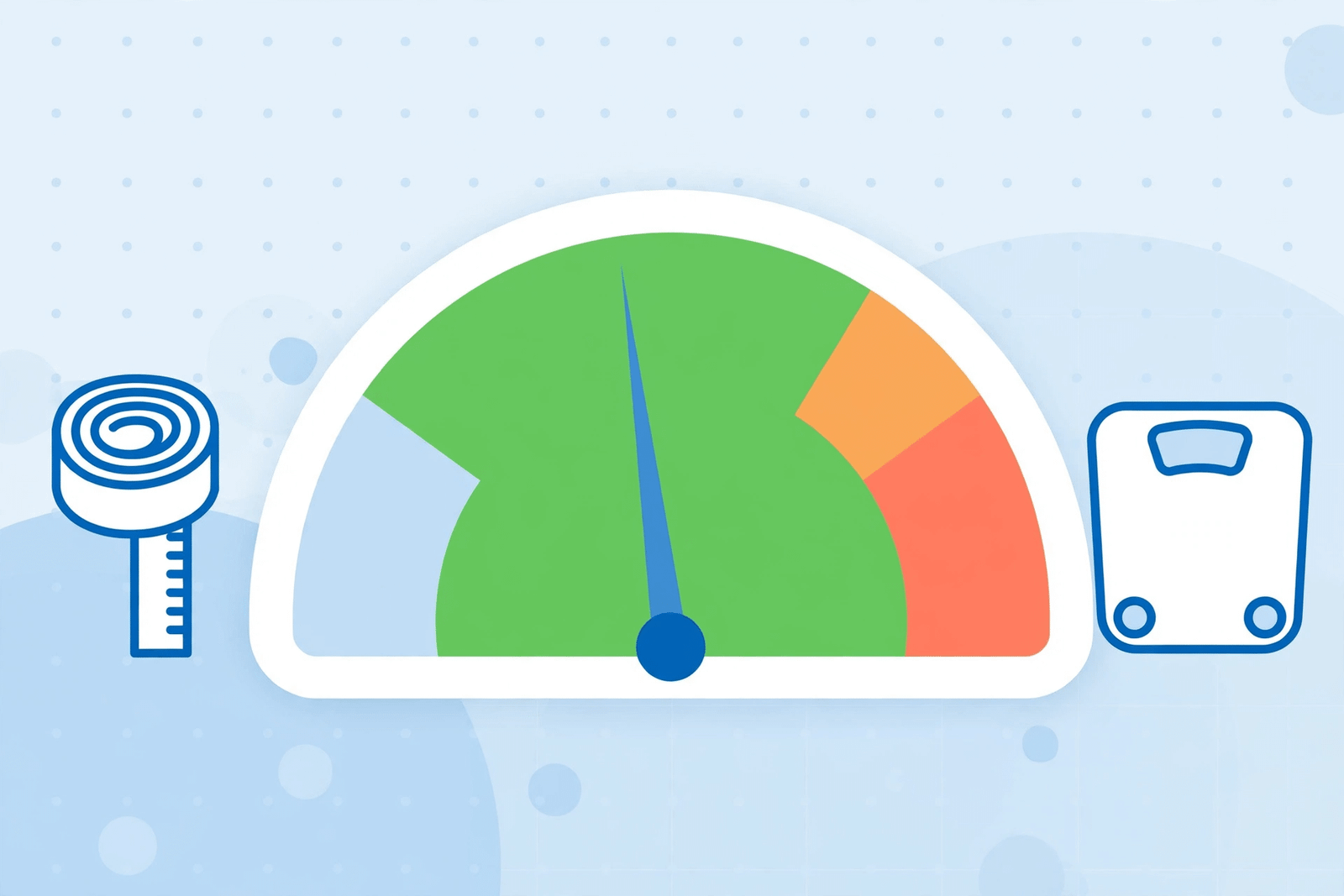
The BMI calculator NHS is the National Health Service’s own online tool for estimating whether an adult’s weight falls within a healthy range for their height. BMI stands for body mass index, and it is calculated with a single long-established medical formula: your weight in kilograms divided by your height in metres squared. The NHS provides this calculator free of charge because excess weight is one of the biggest drivers of preventable illness in the United Kingdom, linked to type 2 diabetes, heart disease, stroke, and several cancers. More than a quarter of adults in England are now classified as obese and a further third as overweight, which is why the health service wants everyone to have a quick, trustworthy first check they can do at home. You can find the official tool on the NHS website at https://www.nhs.uk/live-well/healthy-weight/bmi-calculator/, and it takes less than a minute to use.
What makes the NHS version different from the dozens of generic BMI tools online is the context wrapped around the number. Instead of simply spitting out a figure, the official tool places your result inside the NHS weight categories, explains what the category means for your health, and points you toward the appropriate next step, whether that is maintaining healthy habits, measuring your waist, or speaking to a GP or pharmacist. It is designed as a screening aid rather than a diagnosis, which is an important distinction the NHS stresses repeatedly. A screening tool flags people who might benefit from a closer look; it does not decide on its own whether you are healthy or ill, and understanding that difference is the key to using the result wisely.
How to Use the BMI Calculator NHS Step by Step
Using the official NHS calculator takes less than a minute and asks for only the essentials. You enter your height and your weight, choosing metric units (centimetres and kilograms) or imperial units (feet, inches, stones, and pounds) depending on what you know. The calculator squares your height and divides your weight by that figure, instantly returning your body mass index to one decimal place along with your weight category. For the most accurate reading, weigh yourself in the morning before eating, wearing light clothing, and measure your height standing straight against a wall without shoes, since small errors in either input can shift the result by a meaningful amount and push you across a category boundary.
It helps to understand the maths so the result never feels like a mystery. Take someone who weighs 70 kilograms and stands 1.75 metres tall: squaring the height gives 3.0625, and dividing 70 by 3.0625 produces a BMI of 22.9, which sits comfortably inside the healthy range. If you work in imperial units, the equivalent formula is your weight in pounds multiplied by 703, divided by your height in inches squared. The previous version of this article noted that the process behind the BMI calculator NHS is designed to be simple enough for anyone to complete without medical assistance, a point echoed in community health discussions such as those on the Diabetes UK forum at https://forum.diabetes.org.uk, where people regularly compare notes on home health checks and what their results meant for them.
NHS BMI Categories and What Your Result Means
The NHS calculator sorts adult results into four main categories that are used consistently across UK healthcare. A BMI below 18.5 is classed as underweight, 18.5 to 24.9 is a healthy weight, 25 to 29.9 is overweight, and 30 or above is obese, with obesity further divided into class 1 (30 to 34.9), class 2 (35 to 39.9), and class 3 (40 and above). These cut-offs come from decades of population research linking weight ranges to the risk of conditions such as high blood pressure, coronary heart disease, and type 2 diabetes. They are not arbitrary lines in the sand; each boundary marks a point where, on average across large populations, health risks begin to climb in a measurable and meaningful way.
Crucially, a category is a starting point for a conversation, not a verdict on your health. A rugby player with substantial muscle mass can land in the overweight band while carrying very little body fat, because BMI cannot tell muscle apart from fat. Conversely, someone with a healthy BMI but a large waistline may still carry risky levels of visceral fat around their organs. The NHS is explicit that BMI works best as one piece of a wider picture that includes waist measurement, activity levels, diet, smoking, alcohol, blood pressure, and family history. If your result surprises you in either direction, treat it as a prompt to look deeper rather than a reason to celebrate or panic, and consider the waist check described below before drawing any conclusions.
The Waist Check: The Follow-Up Step the NHS Wants You to Take
One of the most valuable updates to NHS guidance in recent years is the advice to measure your waist alongside your BMI, and the health service now offers its own waist-to-height ratio calculator for exactly this purpose at https://www.nhs.uk/health-assessment-tools/calculate-your-waist-to-height-ratio. The rule is memorable: keep your waist measurement to less than half your height. To measure correctly, find the bottom of your ribs and the top of your hips, wrap a tape measure around your waist midway between those two points, and breathe out naturally before reading the number. Divide your waist by your height, both in the same units, and you have your ratio. A result between 0.4 and 0.49 is considered healthy, 0.5 to 0.59 signals increased health risk, and 0.6 or above indicates high risk, and this applies even to people whose BMI calculator NHS result sits in the healthy band.

This matters because abdominal fat behaves differently from fat stored on the hips or thighs. Fat carried around the middle is more metabolically active and more closely tied to insulin resistance, type 2 diabetes, high blood pressure, and cardiovascular disease. That is why NICE, the body that writes clinical guidelines for England, now advises adults with a BMI below 35 to check their waist-to-height ratio as a routine part of assessing weight-related risk. The measurement is quick, free, and works for both sexes, all ethnic groups, and even very muscular adults for whom BMI alone misleads. The one exception is that waist readings lose accuracy when BMI is above 35, during pregnancy, or in children under two, in which case professional assessment is the better route to take.
Who Should Not Rely on the BMI Calculator NHS Alone
The NHS BMI tool is built for typical adults, and the NHS is refreshingly honest about the groups it does not serve well. Children and teenagers under 18 should never use the adult tool, because growing bodies change shape constantly and a single number cannot capture healthy development. The NHS instead assesses young people with growth charts that express BMI as a centile for their exact age and sex, with the 91st centile marking overweight and the 98th marking very overweight. Pregnant women should also set the calculator aside, since pregnancy weight gain follows its own healthy pattern that a general formula cannot judge. Anyone with a growth disorder or another condition that affects height will likewise get a distorted reading that no online tool can correct.
Two further groups deserve a clear warning. First, people who are very muscular — athletes, manual workers, regular weightlifters — will often score as overweight or even obese despite low body fat, because muscle is denser than fat and BMI counts every kilogram exactly the same. Second, and just as important, anyone who has been diagnosed with an eating disorder, or who suspects they might have one, should avoid BMI calculators unless a clinician specifically advises otherwise, since fixating on the number can feed harmful patterns rather than support recovery. Older adults need caution too: ageing naturally reduces muscle and bone mass, so BMI can drift downward while body fat quietly rises, hiding real risk behind a reassuring number. For all of these groups, a GP, practice nurse, or pharmacist can offer body-composition checks and waist measurements that tell a truer story.
Ethnicity changes how BMI should be read, and this is one of the areas where NHS guidance has become notably more precise in recent years. Research shows that people from South Asian, Chinese, other Asian, Middle Eastern, Black African, and African-Caribbean backgrounds tend to develop weight-related conditions such as type 2 diabetes at lower BMIs than people of White European heritage, partly because of differences in where the body stores fat. For these groups, the NHS and NICE use adjusted thresholds: a healthy BMI is considered to be below 23 rather than below 25, increased health risk begins at 23 to 27.4, and high risk starts at 27.5. If you belong to one of these backgrounds, read your result against these lower cut-offs and mention your background to your GP so that your risk is assessed accurately rather than underestimated.
What to Do After Your Result: NHS Support and Next Steps
A BMI result is only useful if it leads somewhere, and the NHS has built a clear ladder of next steps for every outcome. If you land in the healthy range, the advice is straightforward: protect it with the fundamentals the NHS repeats across all its Live Well guidance, which means a balanced diet built around the Eatwell Guide, at least 150 minutes of moderate activity each week, limited alcohol, and not smoking. If your result is underweight, the priority is finding out why, because an unexpectedly low BMI can signal thyroid problems, digestive disorders, or mental health difficulties that deserve proper investigation. In that situation your GP can arrange the right checks rather than leaving you to guess, and early investigation almost always leads to better outcomes.
If your BMI falls in the overweight or obese ranges, the NHS advice is deliberately undramatic: aim for small, sustainable changes rather than crash diets, which almost always end in regained weight and damaged confidence. Practical starting points include the free NHS weight-loss resources, food diary apps, and the calorie checker on the NHS website, all of which help you understand where your calories actually come from instead of relying on guesswork. Your GP surgery can refer you to local weight-management services — typically twelve-week programmes combining nutrition advice, activity support, and behaviour coaching — and community pharmacists can also offer weight advice and blood-pressure checks without an appointment. People with a BMI of 30 or above, or 27.5 and above with weight-related health conditions, may be eligible for more intensive NHS support, so a conversation with your GP is genuinely worthwhile rather than something to postpone indefinitely.
Frequently Asked Questions
Is the BMI calculator NHS accurate? For most adults it is a reliable screening tool, but it is not a precision instrument. It cannot distinguish muscle from fat, it says nothing about where fat is stored on your body, and it needs adjusted thresholds for some ethnic backgrounds to avoid underestimating risk. The NHS positions its calculator as a first check to be read alongside waist measurement and lifestyle factors, not as a medical diagnosis. Used that way — as a prompt for a closer look rather than a final verdict — it is genuinely useful, and its simplicity is exactly why GPs and public-health campaigns have relied on it for decades.
Can children use the BMI calculator NHS? No — children and teenagers under 18 should not use the adult calculator, because their bodies are still growing and a single number cannot capture healthy development at different ages. The NHS assesses young people using BMI centiles plotted on growth charts that account for exact age and sex: between the 2nd and 91st centiles counts as a healthy weight, the 91st centile and above is overweight, and the 98th centile and above is very overweight. If you are concerned about a child’s weight, speak to a GP, health visitor, or school nurse rather than trying to interpret an adult BMI figure on your own.
Why does the NHS now tell me to measure my waist too? Because BMI misses the most dangerous kind of fat. Fat stored around the abdomen is more strongly linked to type 2 diabetes, high blood pressure, heart disease, and stroke than fat stored on the hips or thighs, and two people with identical BMIs can carry very different amounts of it. NICE guidance therefore advises adults with a BMI below 35 to check that their waist measures less than half their height, using the NHS waist-to-height calculator linked above. It takes thirty seconds with a tape measure and catches risks that BMI alone would quietly let slip through.
My BMI is healthy but my waist is over half my height — what should I do? Take it seriously but stay calm, because this combination is exactly what the waist check was designed to catch. It suggests you may be carrying excess visceral fat despite a normal overall weight, a pattern sometimes called normal-weight obesity. The sensible response mirrors standard NHS advice: review portion sizes and sugary drinks, build up to 150 minutes of weekly activity with some strength work to protect muscle, and consider a GP or pharmacist check of blood pressure and blood sugar. You do not need a drastic diet; you need the same steady habits that keep every other adult healthy, applied a little more deliberately and consistently.
When should I see a GP about my BMI result? Book an appointment if your BMI is 30 or above, if it is below 18.5 without an obvious explanation, if it has changed rapidly without you trying, or if your waist-to-height ratio is 0.5 or higher. Also see your GP if you have symptoms that might be weight-related, such as breathlessness, joint pain, or very high blood pressure, or if you come from a background with lower BMI thresholds and sit close to the adjusted cut-offs. Take your BMI and waist numbers with you to the appointment — they give the GP a concrete starting point and often unlock a referral to an NHS weight-management service.
Conclusion
The BMI calculator NHS remains one of the simplest genuinely useful tools in public health: a free, sixty-second check that places your weight in context and tells you what to do next. Its strength was never precision — it cannot see muscle, it cannot see where your fat sits, and it reads differently across ethnic backgrounds — but as a screening step paired with the waist-to-height check, it does exactly what the NHS designed it to do. It turns a vague worry about weight into a concrete number, a category, and a next action, which is more than most health apps and gadgets manage, and it costs nothing.
Use it once, read the result honestly, measure your waist, and then act on what you find rather than admiring or fearing the number itself, because a number you act on is useful while a number you only worry about is not. Real change rarely comes from dramatic overhauls; it comes from the small, repeatable choices around food, movement, and sleep that the NHS guidance keeps returning to. For extra motivation, read our related article on a famous UK weight-loss journey here: https://pogeo.co.uk/alison-hammond-weight-loss/ — it shows how steady habits beat quick fixes every time. Check your numbers, take the small steps, and let the NHS guidance do the rest.